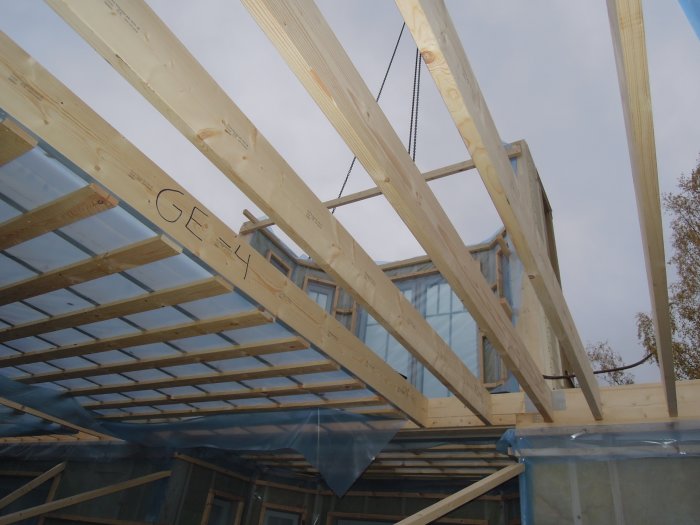
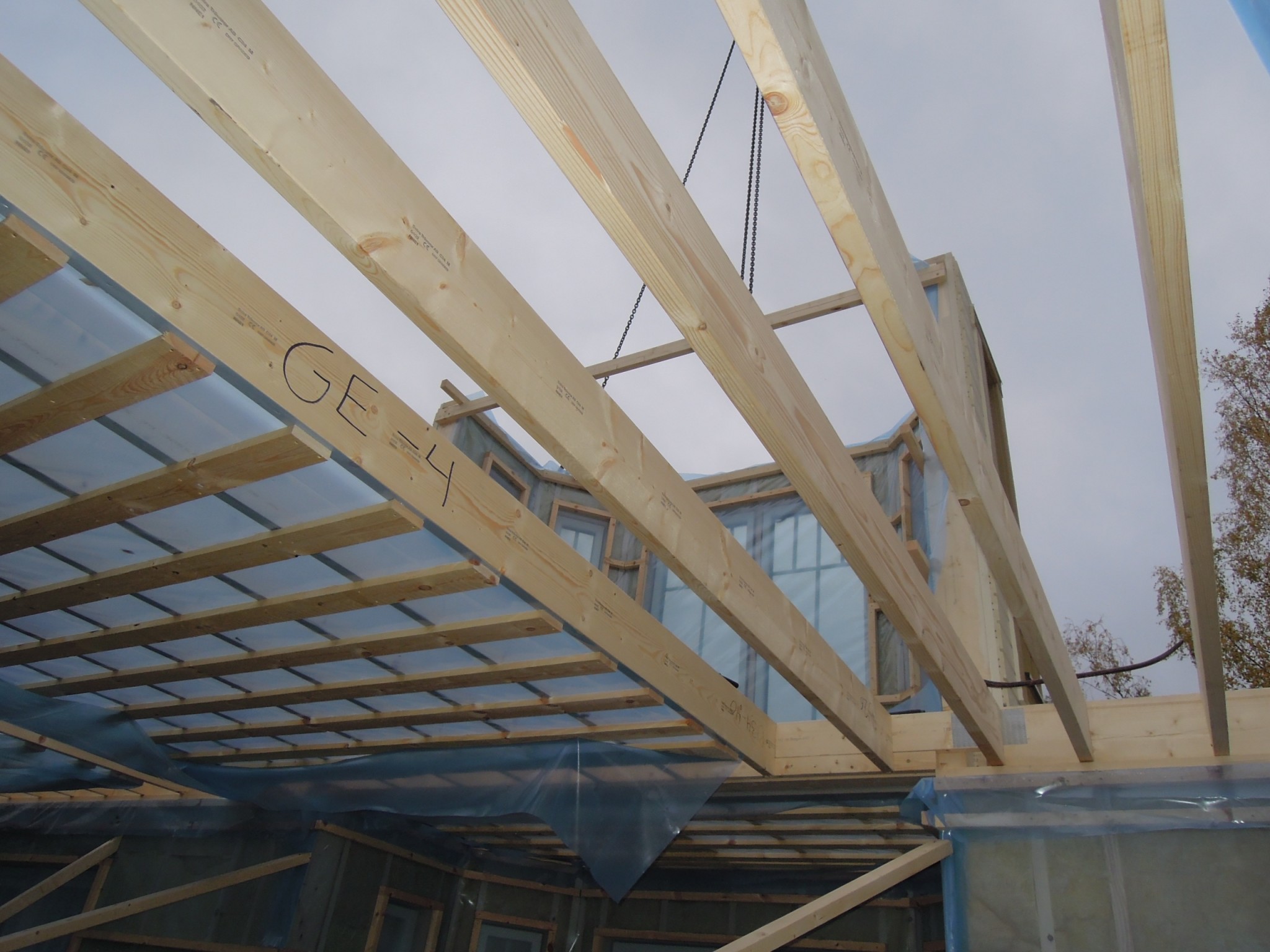
I have heard different opinions about using plastic film in intermediate floors. I was thinking of using vapor barrier plastic only as support for soundproofing insulation between the joists. I then heard from one source that vapor barrier plastic is not suitable for intermediate floors and that you should use a pedestrian protection film or other permeable plastic, fabric, or paper instead. From another source, I heard that you should have vapor barrier plastic in the ceiling of wet rooms to prevent moist air from penetrating into the intermediate floor. Do you actually need plastic at all to keep the insulation in place? Is there a risk that it will sag between the slats and get in the way for any future electrical installations, etc.?
Plastic is not needed.
I had spaced 30cc in the ceiling of the lower floor and then insulated.
Now I have loose-fill insulation in the intermediate floor, and in that case, you staple windproof paper before spacing.
For your own safety and that of others (craftsmen), you must (preferably) have penetration protection.
Don't know what the law says if you're building yourself.
The penetration protection doesn't need to be vapor-barriered.
Regarding vapor barriers in bathroom ceilings, it's like in exterior walls with vapor plastic and a vapor barrier behind the tiles, where is the moisture supposed to go!
My house from '08 has penetration protection and no vapor barrier in the bathroom ceiling, but mechanical ventilation.
The gut feeling is that I skip the plastic there and trust that the moisture-resistant paint will hold tight enough. I have mechanical exhaust that should do the job.
What is the purpose of penetration plastic, to prevent people from falling through the intermediate floor before the upstairs floor is installed, or? Only necessary during the construction process I assume, even though it apparently can be used to hold the insulation in place? Or something that should remain IF someone opens the floor in the future and gets injured?
If it is to fulfill the purpose indicated by the name, I assume it is a reinforced material and should be properly attached, not just stapled under the joists?
It will be squeezed between beams and spars so it's firmly in place. I hardly think tramp protection is a requirement for a home builder but in this case, there wasn't a huge price difference between fabric and felt.
Aha. That gave me the idea to use some of the scaffolding plastic I have lying around as a temporary combination of fall-through protection and protection against the spillage of sawdust and wood pieces (and dropped tools) into the foundation. Although I can attach it over the floor joists...
I'm happy to join the discussion here. My house had an unfinished upper floor with a walk-on secure vapor barrier in the intermediate floor structure. Now that I'm insulating the upper floor, should I remove the vapor barrier under the future bathroom then? Otherwise, you would never notice if there is a leak from the bathroom as the water would flow into the floor structure. Or am I wrong?
I'm happy to join in here. My house had an unfinished upper floor with a walk-through-safe vapor barrier in the intermediate joist layer. Now that I'm insulating the upper floor, should I remove the vapor barrier under the future bathroom? Otherwise, you would never notice if there is a leak from the bathroom because that water will spread into the joist. Or am I wrong?
The point is probably that the moisture barrier on the bathroom floor/walls should stop water, or am I thinking wrong!
Yes, but then it would first be the moisture barrier in the bathroom floor, then the insulation in the intermediate floor, and then another moisture barrier consisting of the tram-proof foil that has been there since the house was built. I read earlier that one should avoid having moisture barriers on two sides due to the risk of condensation. Hence the question. Before we insulated the upper floor, the tram-proof foil was "outermost" but not anymore.
Bringing up an old thread again... need some feedback from knowledgeable people!
I have the following thoughts/problems:
In our two-story house (the picture), the floors are like separate cells for the plastic, so it must be "sealed" between the plastic on the ceiling downstairs and the wall, and the wall upstairs and the floor, and of course the ceiling, or am I out to lunch? But if you want to do it by the book, there would be plastic on both sides of the joists... and that sounds so wrong! If you had connected the floors with each other with plastic, it would have been much easier, but now the joists are "open" to the outside sheathing. So how should it be done, plastic on both sides of the joists or just fold out the plastic from the walls of the upper floor onto the floorboards and have it "open" under them? If it matters, there will be underfloor heating.
For your own health and that of others (craftsmen), you must (preferably) have penetration protection.
Don't know what the law says if you build yourself.
The penetration protection does not need to be diff barriered.
Regarding the diff barrier in bathroom ceilings, it's probably like in exterior walls with diff plastic and a diff barrier behind the tiles, where is the moisture supposed to go!
My house from -08 has penetration protection and no diff barrier in the bathroom ceiling, but mechanical ventilation.
Late but still wondering: in what way is health threatened if you don't have penetration protection?