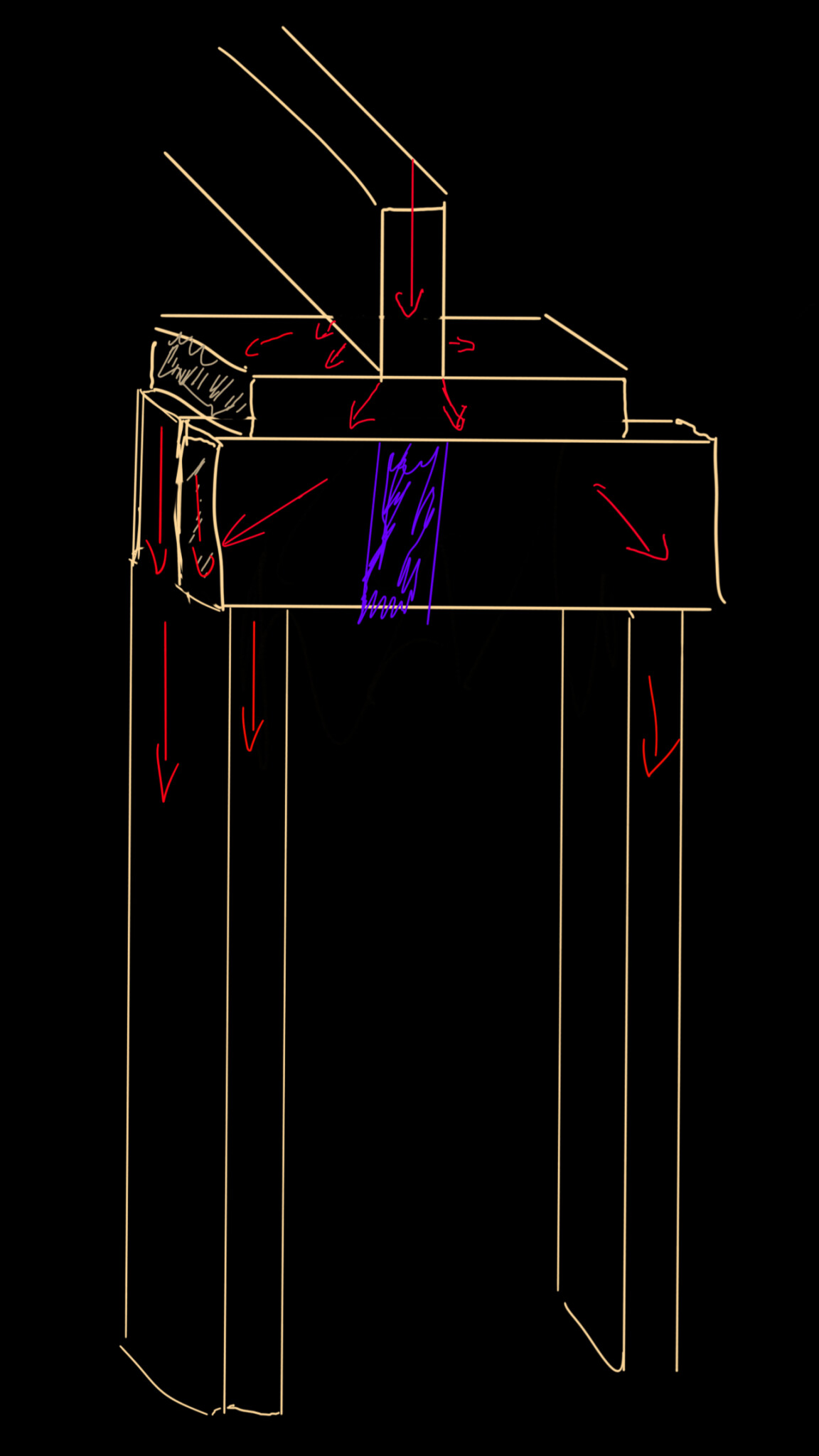
One should naturally consider safety during the construction phase. Even if the panel material on the facade provides sufficient rigidity in the finished building, it's not so fun if the whole thing collapses while it's being built.
Regarding carpenters/amateurs, it remains common knowledge to understand that you need some form of bracing to prevent a building frame from collapsing. Just think about all the shelves of the "Billy" type and similar that people have at home - have you never wondered why they have cross braces?
Strange that you mention Billy, one of IKEA's classics that has never had cross braces but instead relies on the back panel. Ivar, Niklas, and similar shelves, on the other hand, use/used cross braces.
It doesn't matter since the load-bearing beam is present. Where is this 45x45 you are talking about?
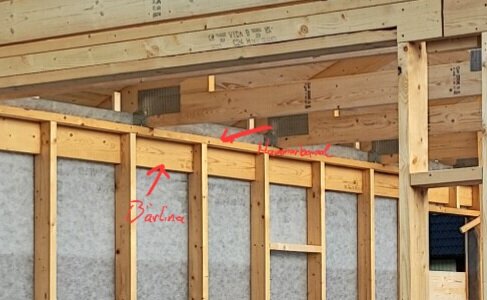
The purlin acts as an intermediate layer but carries nothing itself. When two 45mm thick studs cross each other, the contact surface is 45x45 mm. In this case, with the purlin as an intermediate layer.
This isn't exactly rocket science.
We probably won't get any further; I prefer to have upright studs under the rafters, while others apparently see no advantage in that. 🙂
The discussion about the wall plate seems redundant.
As it appears, the recessed rule is sufficient to distribute the weight from the trusses onto the standing studs. Completely okay and the correct solution. Sure, you can center the trusses on standing studs, but it shouldn’t be necessary here.
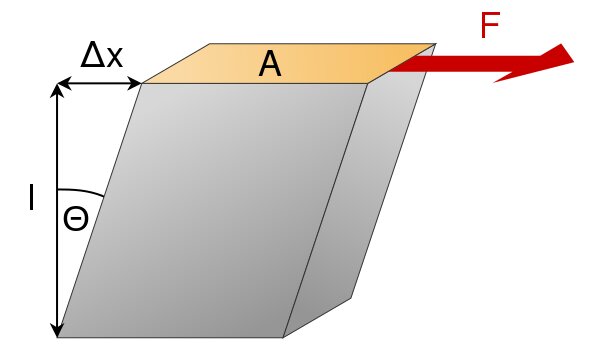
The problem, as already noted, is the lack of diagonal bracing/reinforcement against shearing. That is the big risk here, even if you have nailed the panel on the outside. Sheet material helps a lot. But I would have placed braces in suitable compartments.
The wall plate lies as an intermediary, but does not carry anything itself.
You can essentially consider the construction as homogeneous if it's screw-glued. But in this case, it shouldn't be a problem anyway. Sure, the construction can become stronger with an upright stud directly under the truss, but it probably won't matter here.
Strange that you mention Billy, one of IKEA's classics that never had cross braces but relied instead on the back panel. Ivar, Niklas, and other shelves on the other hand use/used cross braces.
My bad, I've never owned a Billy (or Ivar or Niklas for that matter). I thought Billy was without a back panel, but I was obviously wrong. I was naturally referring to book/storage shelves without a back panel and took a (what I thought to be) suitable example.
The discussion about the hammarband seems redundant.
[image]
As it appears, the recessed rule is sufficient to distribute the weight from the rafters onto the standing studs. Completely okay and the right solution. Sure, one could center the rafters on standing studs, but it shouldn't be necessary here.
The problem, as already noted, is the lack of cross bracing/reinforcement against shear. That is the big risk here, even if paneling is nailed on the outside. Sheet material helps a lot. But I would have placed braces in suitable compartments.
[image]
Yes, but it is still a bit interesting to understand what forces might be involved. The span looks quite large on the rafters in this case, so it's dealing with large weights with the roof + full snow load.
Where is the limit for a load-bearing surface of 45x45 mm wood?
Thinking that over time it compresses somewhat if it is not heartwood. It should be a number of kN.
Yes, but it's a little interesting to understand what forces might be involved. The span looks quite large on the roof trusses in this case, so it's about significant weights with the roof + full snow load.
Where is the limit for a bearing surface on 45x45 mm wood?
I think it compresses over time if it's not core wood. It should be a number of kN.
Let go of the thought of 45x45...
You must of course look at the whole.
7m seems to be the width.
Snow load zone 1.5kN/m2 (Västra Götaland), so half the load that roofs here (Dalarna, south of Siljan) should be able to handle.
Forget the idea of 45x45...
You must, of course, look at the entirety.
The width appears to be 7m.
Snow load zone 1.5kN/m2 (Västra Götaland), that is, half of the load that roofs here (Dalarna, south of Siljan) should handle.
Well, you can't ignore how the construction looks.
Ok, then just the weight of the snow is about 7.5x1.2= 9kN on 45x45mm. Say the roof weighs 2 tons on the same roof area, then the force is 11kN on 45x45mm. That corresponds to the weight of about 5 SUVs or 7 regular cars...
Well, you can't overlook how the construction is designed.
Ok, then the weight of the snow alone is about 7.5x1.2= 9kN on 45x45mm. Let's say the roof itself weighs 2 tons on the same roof area, then the force is 11kN on 45x45mm. That's equivalent to the weight of about 5 SUVs or 7 regular cars...
Exactly! Then think of the lone wood fiber that's closest to the roof truss. ALL the weight is on it!!!!!
Well, you can't ignore how the construction looks.
Ok, then just the weight of the snow is about 7.5x1.2= 9kN on 45x45mm. Say the roof weighs 2 tons on the same roof area, then the force becomes 11kN on 45x45mm. That corresponds to the weight of about 5 SUVs or 7 regular cars...
You're complicating things when you start mixing in different types of cars, especially as you're calculating a bit wrong...
11kN roughly corresponds to 1100kg, and not 11000kg.


Nissens said:
MultiMan said:
EddieHansson said:
The discussion about the hammarband seems redundant.FredrikR said: