
18,410 views ·
19 replies
18k views
19 replies
Transition from traditional baseboard to door casing?!
Hello!
I've bought a house that we have started renovating room by room. Due to large holes and generally poor plaster at the bottom edge against the floor, we have to use relatively high baseboards. We have installed these skirting boards in one room and we are really satisfied so far, but there's one thing I just can't get over - how do you solve the transition from the baseboard to the smooth door casing? 🤯
How would you do it? If anyone else has high antique baseboards combined with narrow casings, please feel free to show a picture of how you've done it.
I have tried with a plinth block but it's not an option as long as I can't find one that's taller than 120mm. In the photos, you can see how it looks today. Disregard my messy caulking and placement of wall outlets, that will be fixed in connection with the transition tinkering.
Link to the baseboard: https://www.byggmax.se/sockel-21x120-allmoge-vit-p08621120
Thanks in advance! 🫡
I've bought a house that we have started renovating room by room. Due to large holes and generally poor plaster at the bottom edge against the floor, we have to use relatively high baseboards. We have installed these skirting boards in one room and we are really satisfied so far, but there's one thing I just can't get over - how do you solve the transition from the baseboard to the smooth door casing? 🤯
How would you do it? If anyone else has high antique baseboards combined with narrow casings, please feel free to show a picture of how you've done it.
I have tried with a plinth block but it's not an option as long as I can't find one that's taller than 120mm. In the photos, you can see how it looks today. Disregard my messy caulking and placement of wall outlets, that will be fixed in connection with the transition tinkering.
Link to the baseboard: https://www.byggmax.se/sockel-21x120-allmoge-vit-p08621120
Thanks in advance! 🫡

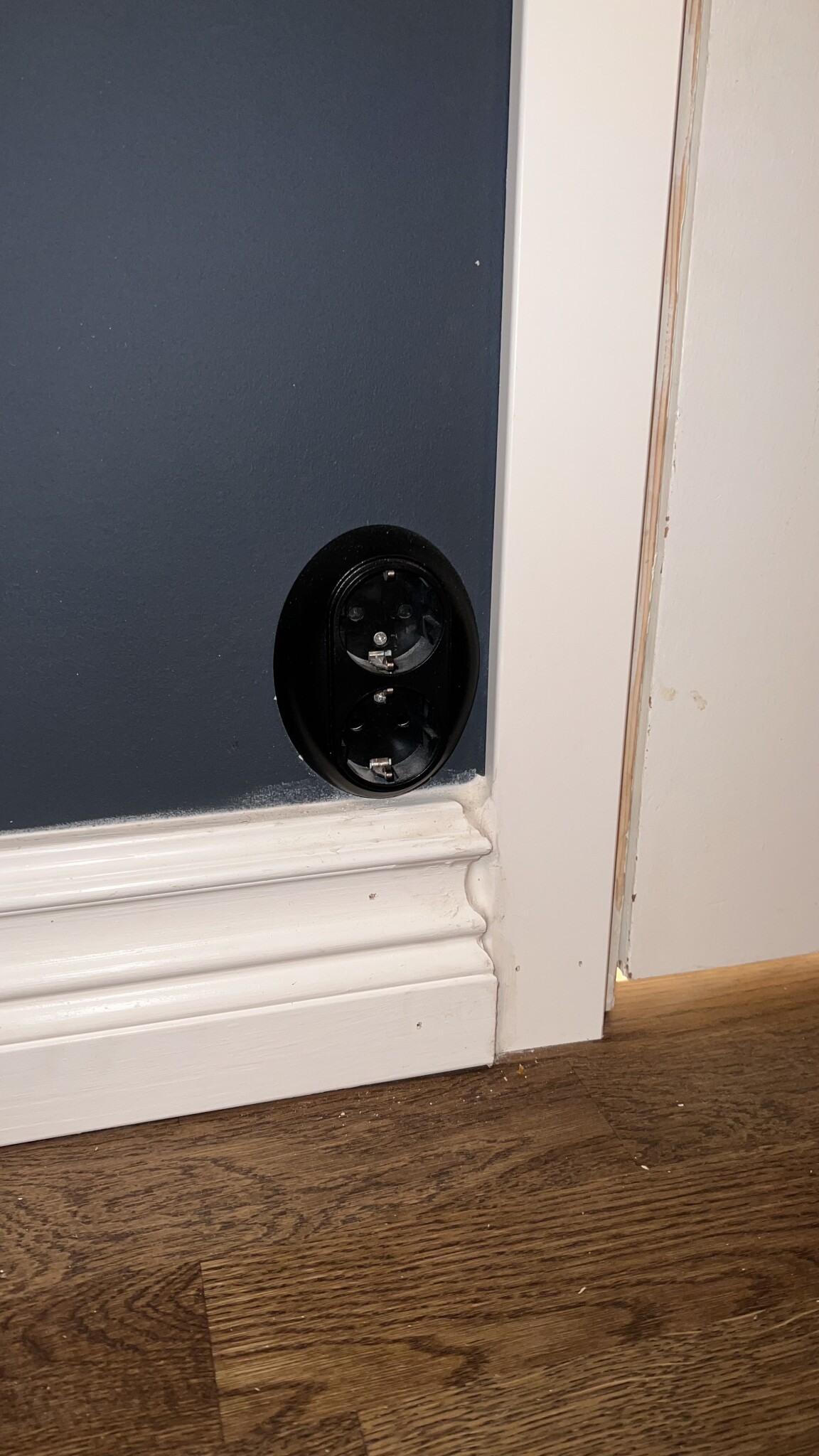
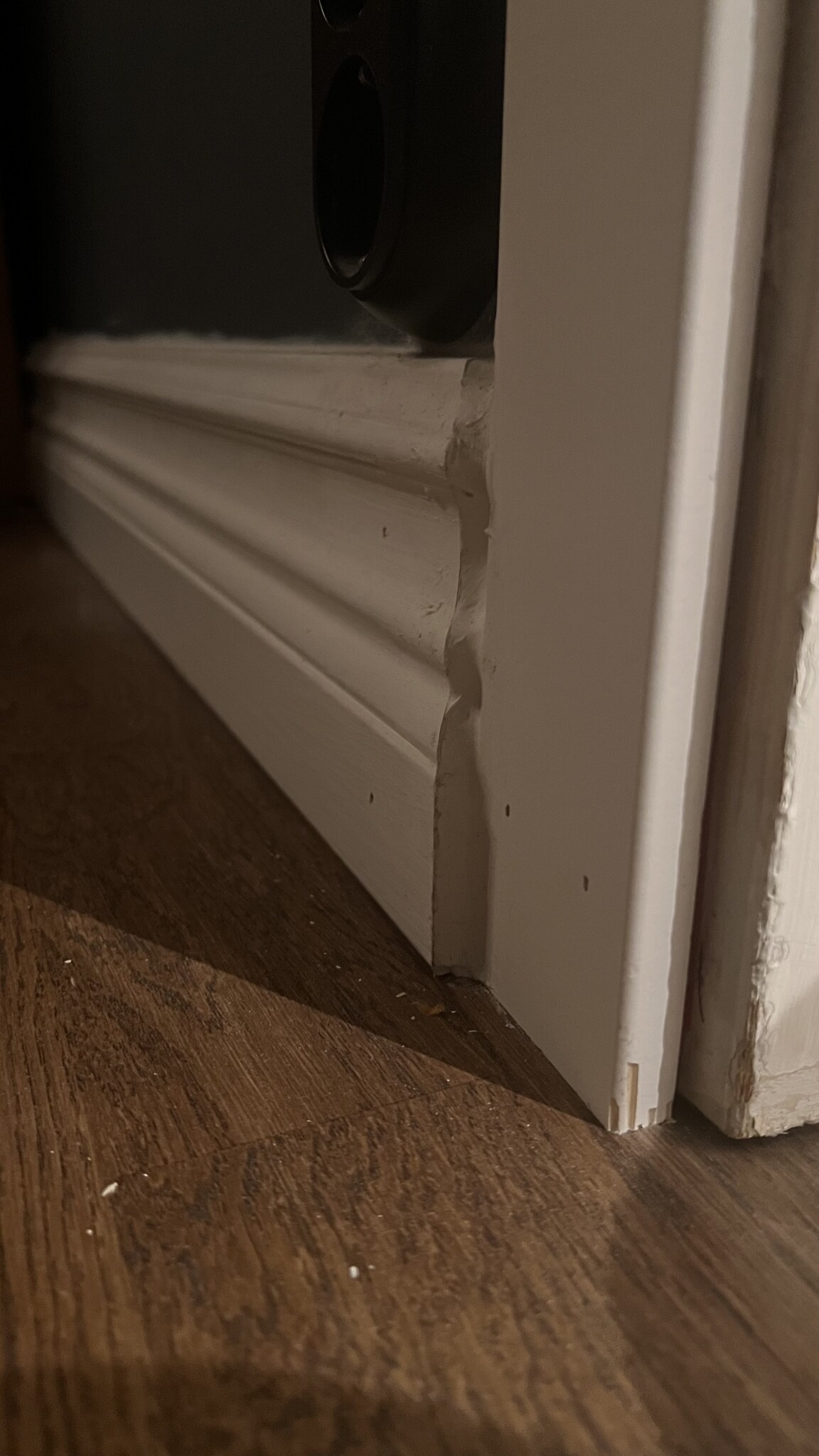
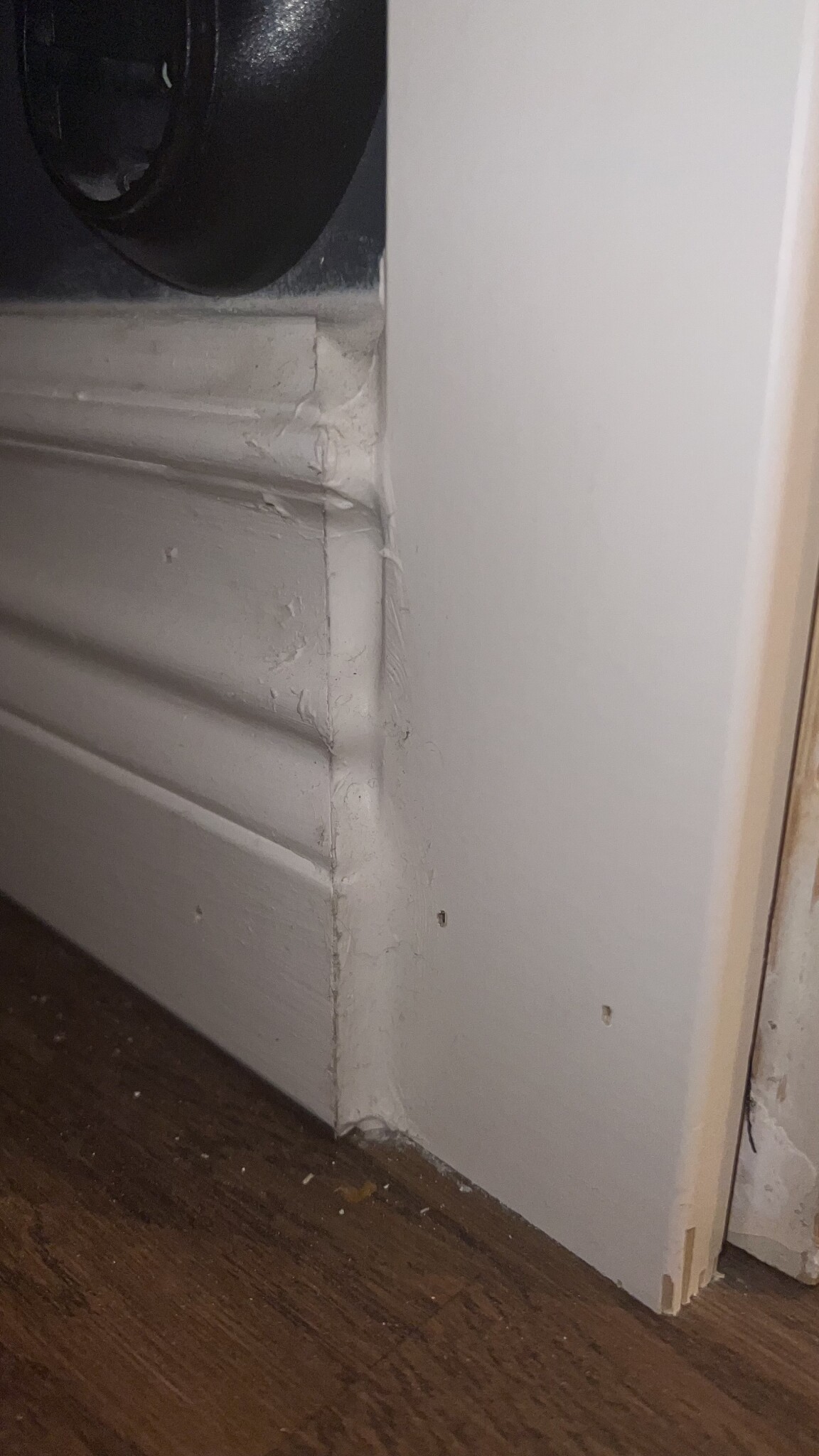
Thought - found a corner block online that's 140mm high but only 20mm thick, i.e., 1mm thinner than the baseboard. How much thicker should it be?Danosbananos said:
Hello!
We've bought a house that we're renovating room by room. Due to large holes and generally poor plaster at the bottom edge against the floor, we have to go with relatively high baseboards. We've installed these baseboards in one room and we're really satisfied so far, but there's one thing I just can't let go - how do you solve the transition from the baseboard to the smooth door trim? 🤯
What would you have done? If anyone else has high antique baseboards along with narrow trims, feel free to show a picture of how you've done it.
I've tried using a corner block, but it's not an option unless I find one that's taller than 120mm. In the pictures, you can see how it looks today. Disregard my messy sealant and the placement of wall outlets, that will be fixed in conjunction with the transition tinkering.
Link to baseboard: [link]
Thanks in advance! 🫡
I would have also changed the door casings to 21x95 allmoge, mixing allmoge and smooth mouldings is not a cool combo🥴😊
Unfortunately, I can't find any that are 21x95. The closest you get is probably this one which is 15x95, then you have to use base blocks to hide the thickness difference: https://www.byggmax.se/dörrfoder-allmoge-furu-p08615097#913=83026T Timmermannen77 said:
Saw your own moulding blocks from suitable planed wood.
A classic 19th-century trick is to hand plane a small 45-degree bevel on the outside of the baseboard so that the outermost end has the same thickness as the outer edge of the moulding.
A classic 19th-century trick is to hand plane a small 45-degree bevel on the outside of the baseboard so that the outermost end has the same thickness as the outer edge of the moulding.
either the door casing has been skimmed so it's at the same level as the baseboard
or the baseboard has been cut shorter at 45 and with a smaller 45 piece on both sides so it starts to look like end caps, thus no need for caulk
or the baseboard has been cut shorter at 45 and with a smaller 45 piece on both sides so it starts to look like end caps, thus no need for caulk
Shim out the casing 6mm? Not an option. Then it's better to "make" the baseboard thinnerHogeN said:
Shim out the casing 6mm? Not an option. Then it's better to "make" the baseboard thinner by cutting off the last bit at 45°, from top to bottom (see image). The allmoge baseboard is only 21mm thick at the bottom and much thinner at the top.
Your second suggestion with 45° corner as an end is exactly what I've done in the picture. I filled with acrylic because it looked dreadful with the allmoge baseboard against the sleek casing.

No, not at all like you have done. The method I suggested is to saw off the end at 90 degrees and then just take a small 45-degree bevel of the protruding corner. In the opposite direction of your 45-degree miter.Shim out the casing 6mm? Not an option. It's better to "make" the baseboard thinner
Shim out the casing 6mm? Not an option. It's better to "make" the baseboard thinner by cutting off the last bit at 45°, from top to bottom (see image). The molding is only 21mm thick at the bottom and significantly thinner at the top.
Your other suggestion with a 45° corner as an end is exactly how I have done it in the image. I filled with acrylic because it looked terrible with the molding against the smooth casing.
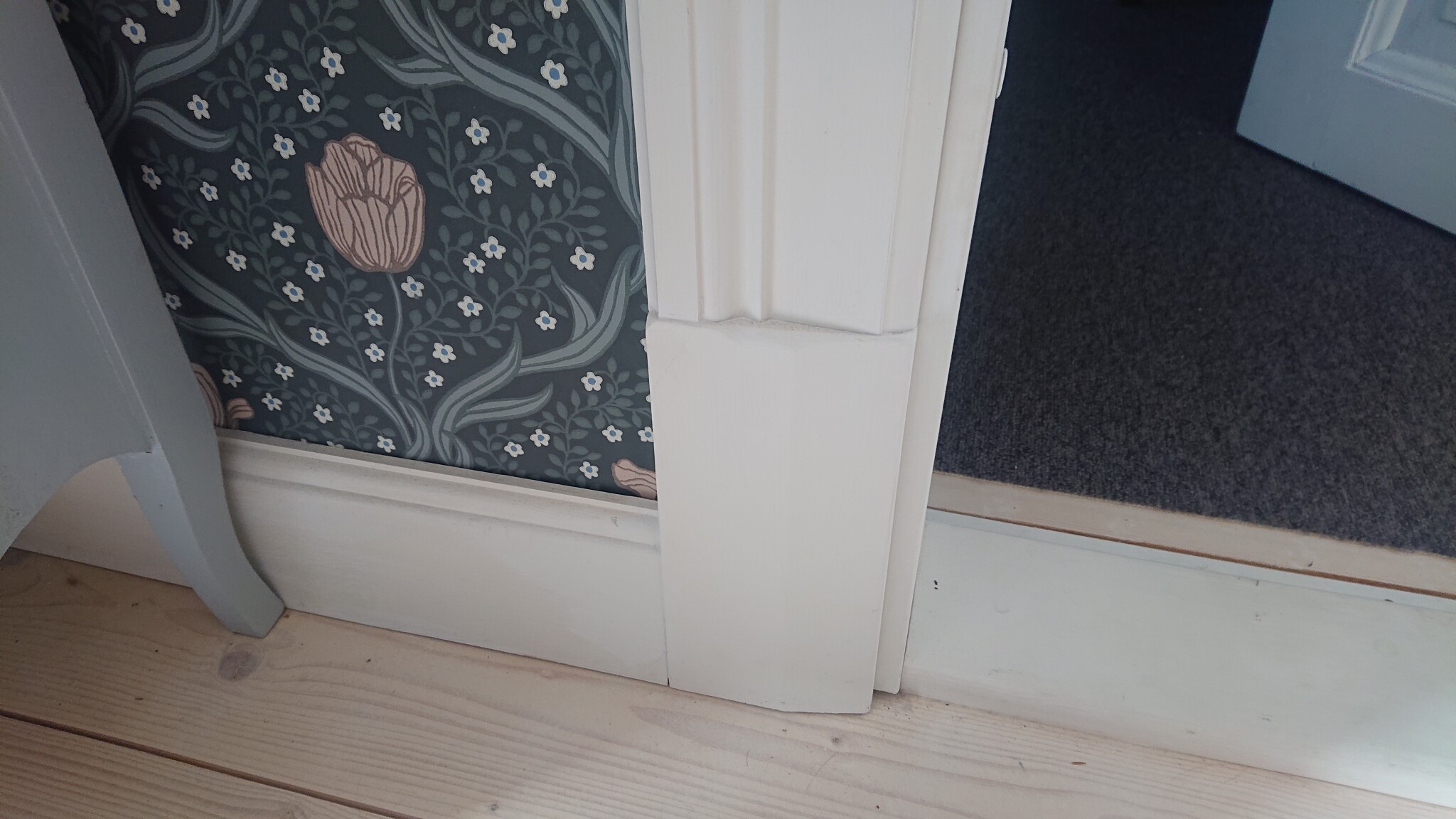

In our house from 1891, it looks like that; rooms being renovated are restored with newly manufactured moldings, trims, and skirting blocks.X xLnT said:
Same profiles and dimensions.
I personally think it looks a bit cluttered if the skirting block is too low.
But taste is, as they say, very personal, and in those days, every builder had their own standards.


Thanks for the good help. That might fit better for us, not as massive. Don't you think I should go with the same allmoge molding but in other dimensions?P Porsibygg said:
21x120 https://www.byggmax.se/sockel-21x120-allmoge-vit-p08621120
15/95 https://www.byggmax.se/dörrfoder-antik-furu-p08613069

Last edited: