Hello,
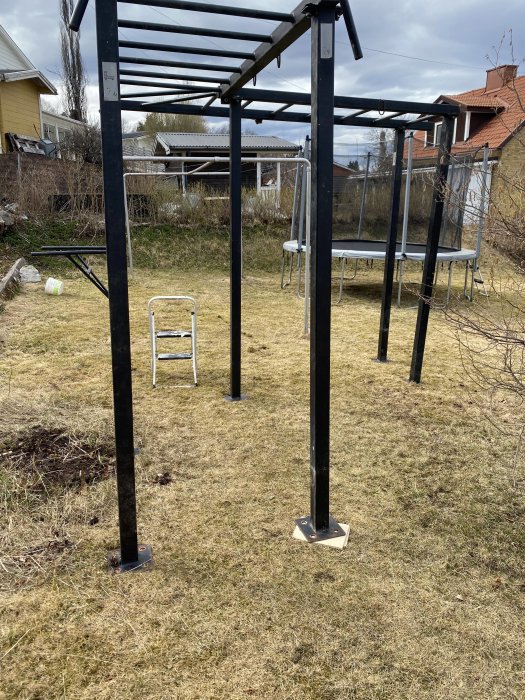
I would like some tips on how you would attach this outdoor gym to the lawn.
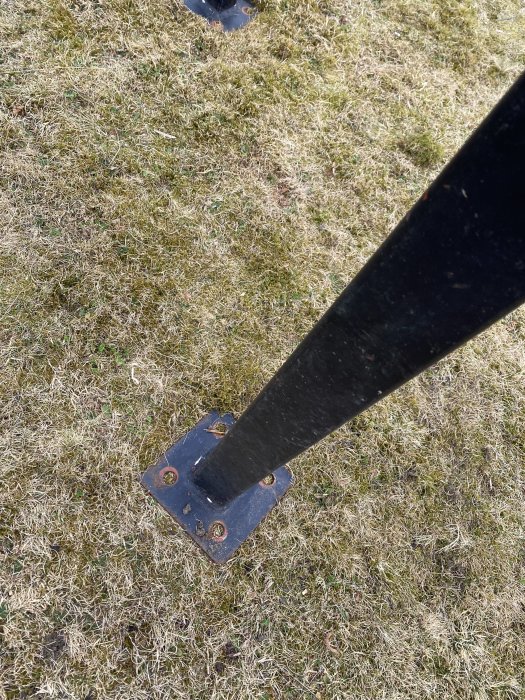
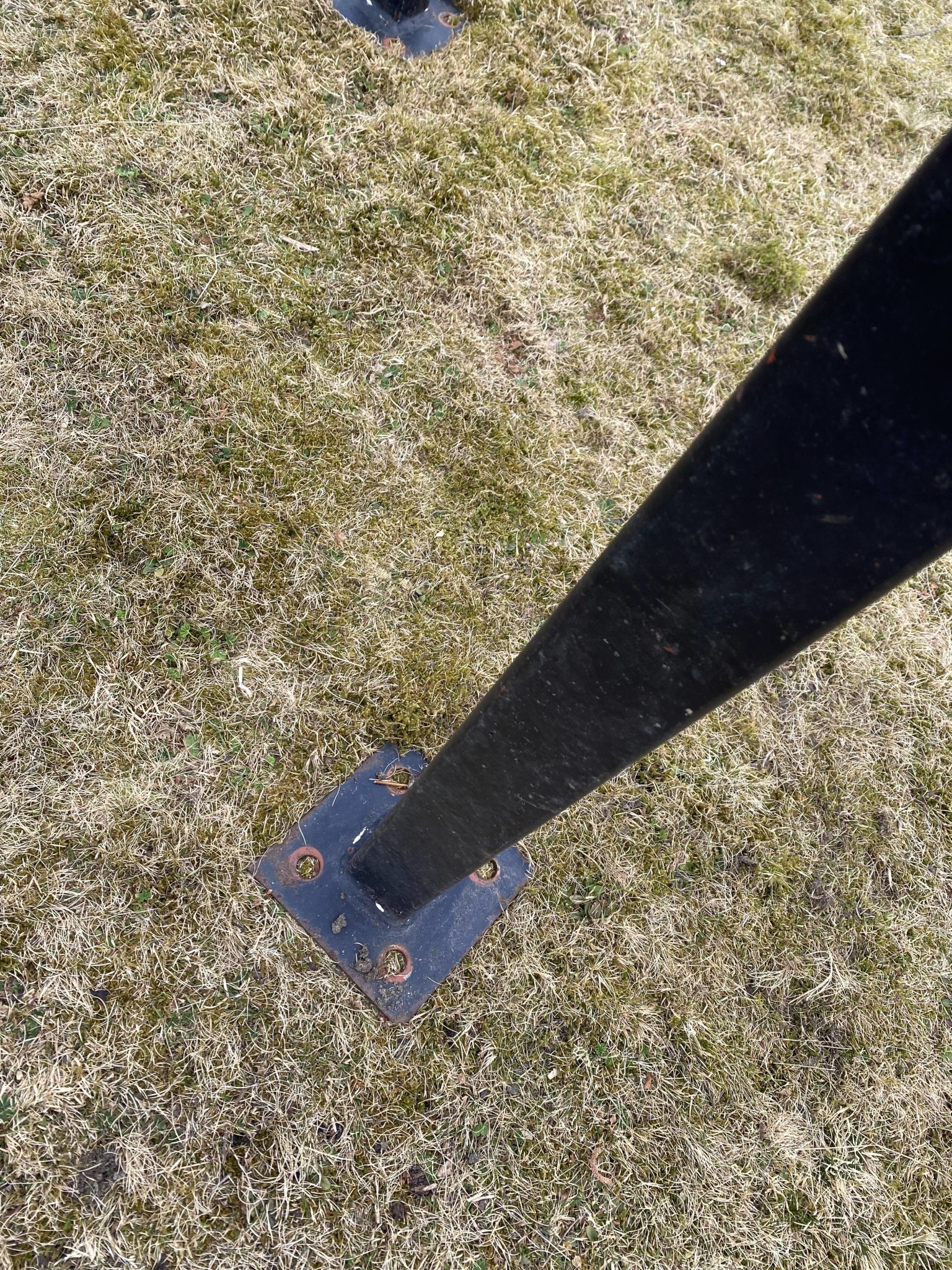
It's made of steel and, as mentioned, it's heavy. The idea was to cast and screw the legs down, but I wanted to check first to see if there were any other recommendations.
If you want exact measurements, you can give Hornbach a call and double-check with them what the dimensions are on the top of them. I also don't think you need to set brackets at the base of all these, but only the 4 outermost ones. The other feet can most likely just as well rest on a stone slab that you ensure is laid on 1-2 dm of gravel or crushed stone to avoid frost heave. Another thought is that it is likely enough to bolt down 2 per leg. I doubt there are forces generated that risk tearing it up with 2.
But a semi-alternative is still to buy the ready-made brackets and either
1. pour a splash of reinforced concrete on top of them to "spread out the top" and ensure that the small amount of concrete you add is anchored in the brackets (quick and easy with anything you want to reinforce with and anchor in the brackets by either using the pre-threaded top or drilling 1-2 holes in them)
2. or use some stone slabs that you attach flush with the brackets using 1-2 holes + concrete screw or plug + stainless steel screw and place the outdoor gym on these.
What size are these feet? I found that the pier blocks I picked up from Hornbach were quite generous in their top size. Plint BENDERS deck excluding post shoe 700mm - buy at HORNBACH.se
If you want exact measurements, you can give Hornbach a call and double-check with them what the dimensions are on the top side. Also, I don't think you need to put pier blocks at the base of all of them, just the 4 outermost ones. The other feet can most likely rest on a stone slab that you ensure sits on 1-2 dm of gravel or crushed stone to prevent frost heave. Another thought is that it's likely enough to bolt down 2 per leg. I doubt the forces generated risk pulling it up with 2.
But a semi-alternative would still be to buy the ready-made pier blocks and
1. either pour a splash of concrete with reinforcement on top of them to "widen the top" and ensure that the little concrete you add is anchored into the pier blocks (this can be done quickly and easily with whatever you want to reinforce with and anchor into the pier blocks either using the pre-threaded top or drilling 1-2 holes in them)
2. or use some stone slabs which you attach tightly to the pier blocks using 1-2 holes + concrete screws or plugs + stainless steel screws and place the outdoor gym on these.
They are 20 cm, so it would be convenient with pier blocks directly. But your semi-alternatives sound interesting. As mentioned, the frame stands firmly, but it gets a little wobbly when climbing, and if the feet rest directly on the grass, it becomes asymmetrical. The frame is a few years old, and to keep it straight, you have to force the legs together a bit.
Isn't it simpler and cheaper to cast footings directly? Then you can add some reinforcement in the upper part while you're at it.
Otherwise, dig holes, lay macadam, a pile of coarse concrete, and press the footing upside down to the right height. Cut part of the fitting beforehand.
Click here to reply
Vi vill skicka notiser för ämnen du bevakar och händelser som berör dig.