Hello,
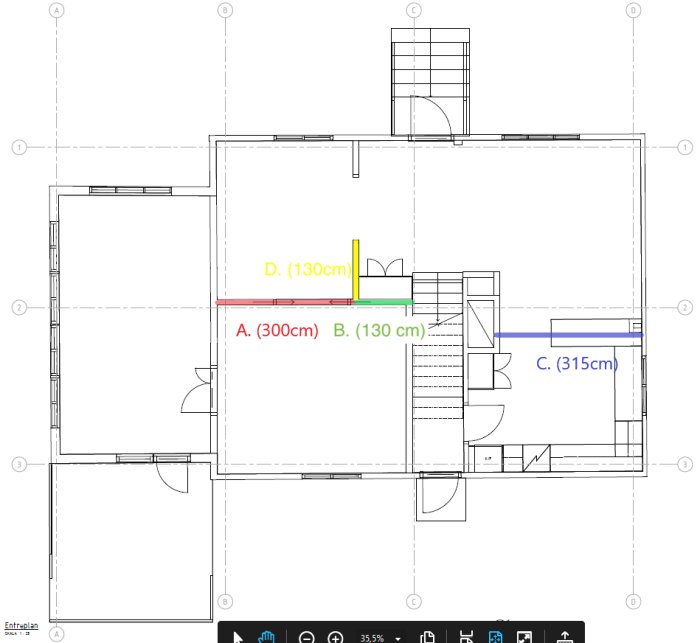
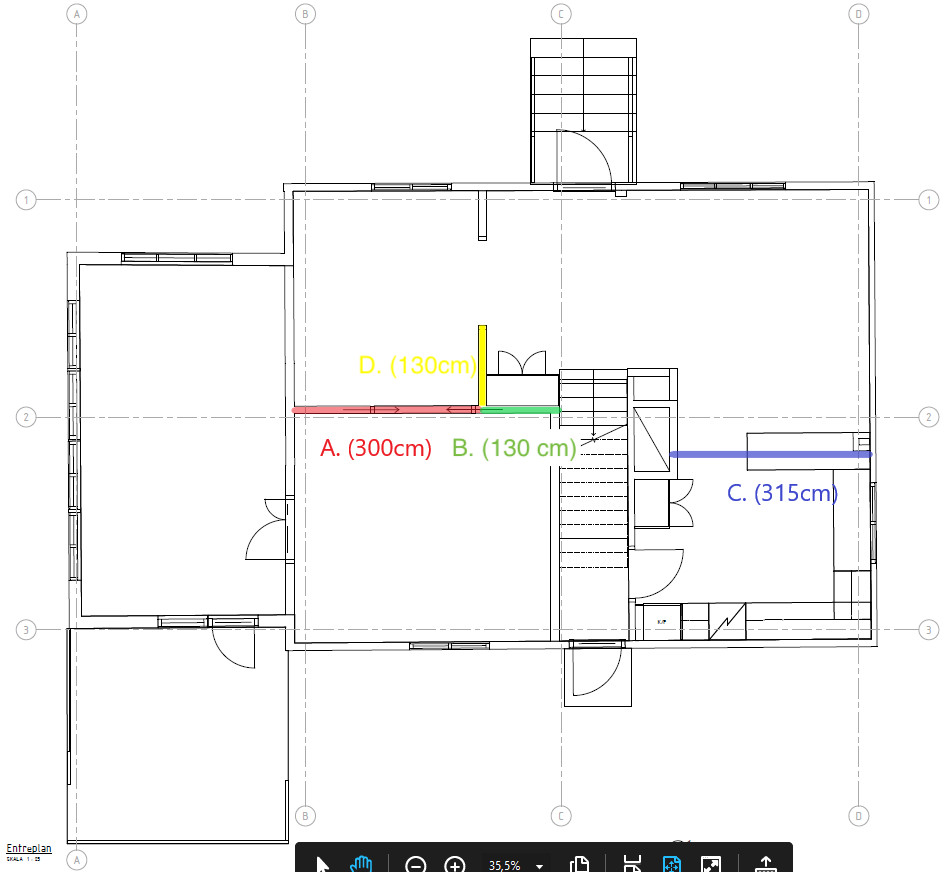
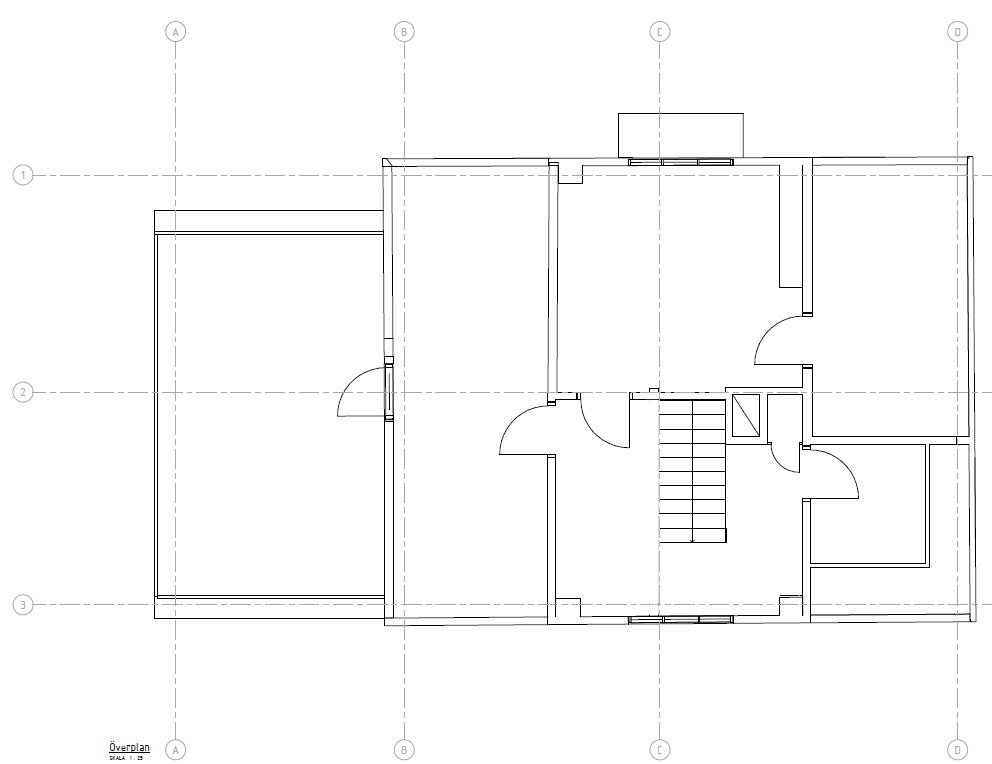
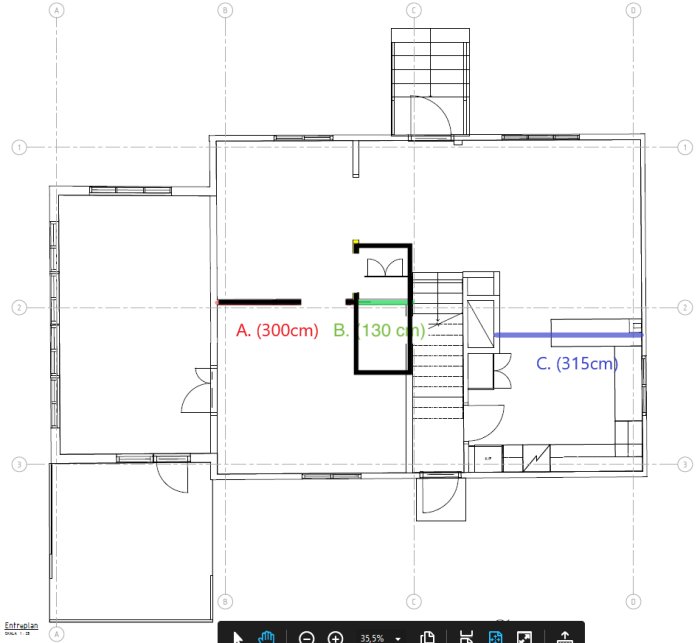
We are about to remodel a small bathroom and are considering opening up part of a load-bearing wall, marked B in the attached image. An opening for a door to the future bathroom is also planned in the wall marked (D).
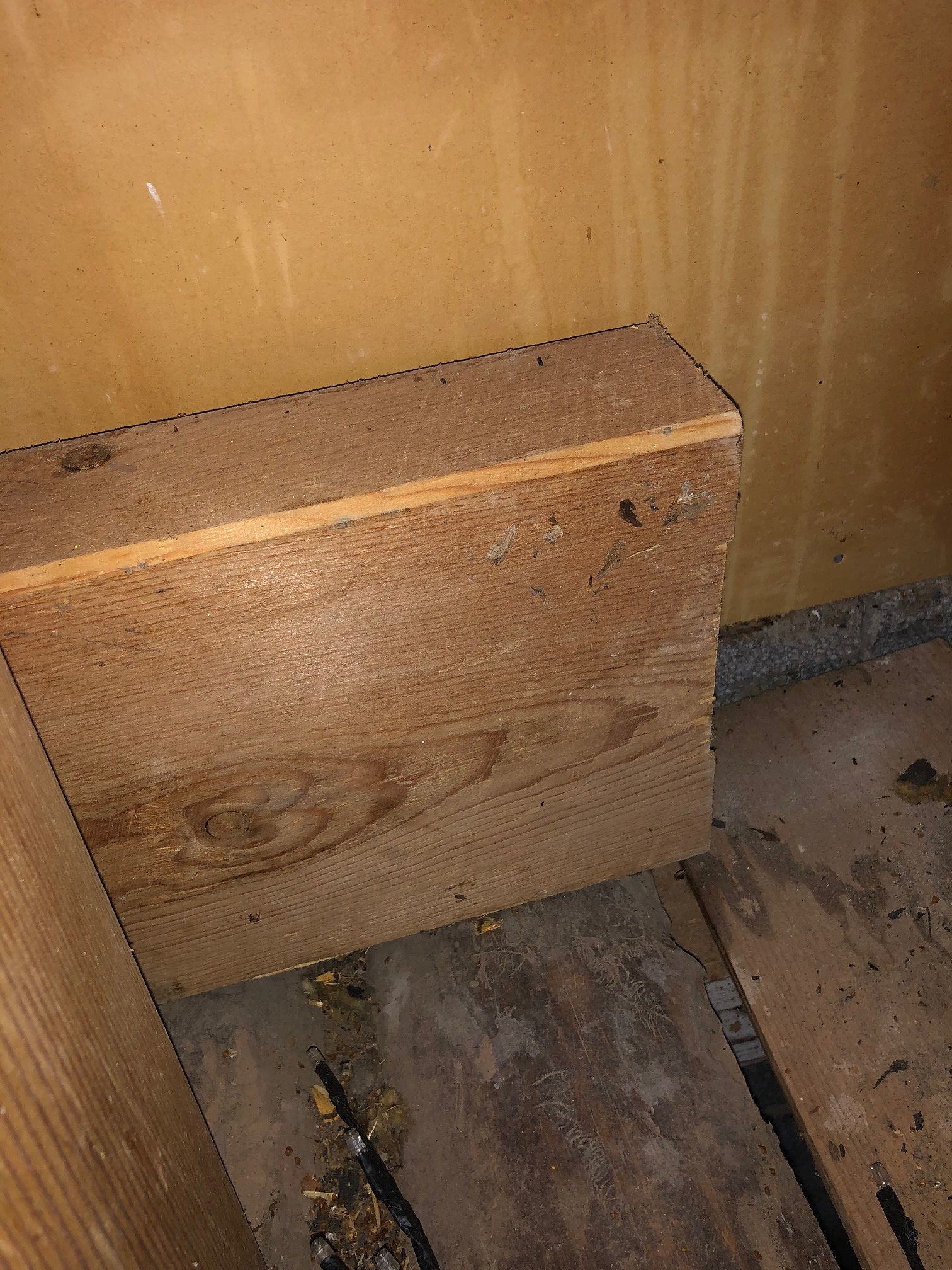
The wall A+B is partly "hollow" for a couple of sliding doors, the upstairs floor joists rest on the wall, which consists of a slender "beam" (75mm high) and then 35mm tongue-and-groove standing planks on each side of the hollow space for the sliding doors (where the doors do not run, there seems to be a 50mm plank clamped between the walls). The wall marked D consists of 95mm thick (not tongue-and-groove, but skew-nailed) planks of varying width.
What does the collective expertise of building experts say, is it a good idea to open up section B? How should the beam be dimensioned? The posts will likely need to be built into the bathroom's walls; how thick should they be? Of course, it would be nice to keep them as slim as possible to not take away space from the small bathroom. We will certainly hire experts for the project, but it would be interesting to get a sense of how it could turn out and if it is feasible.
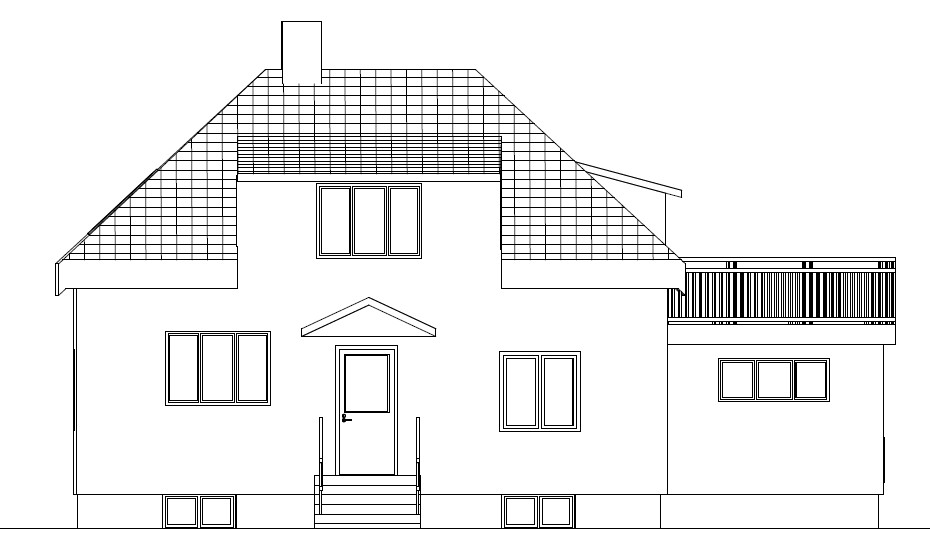
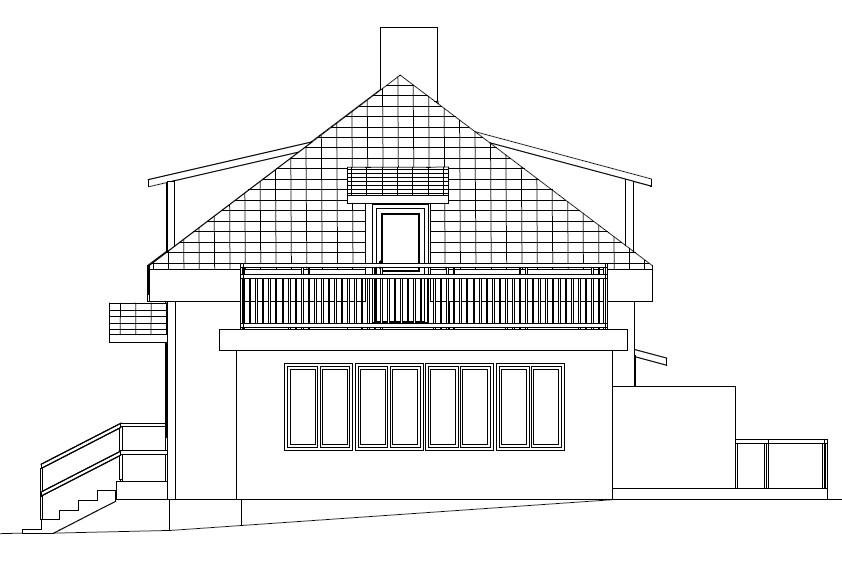
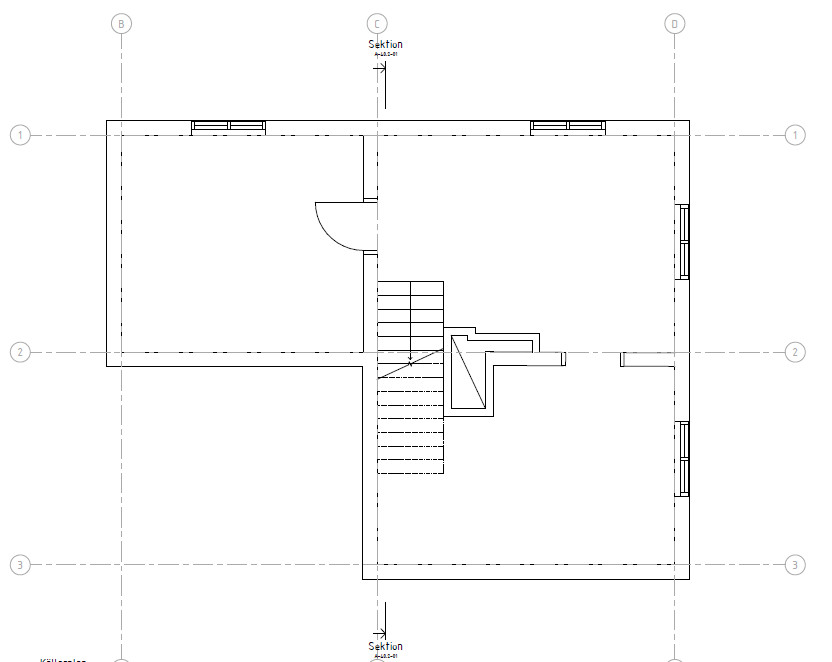
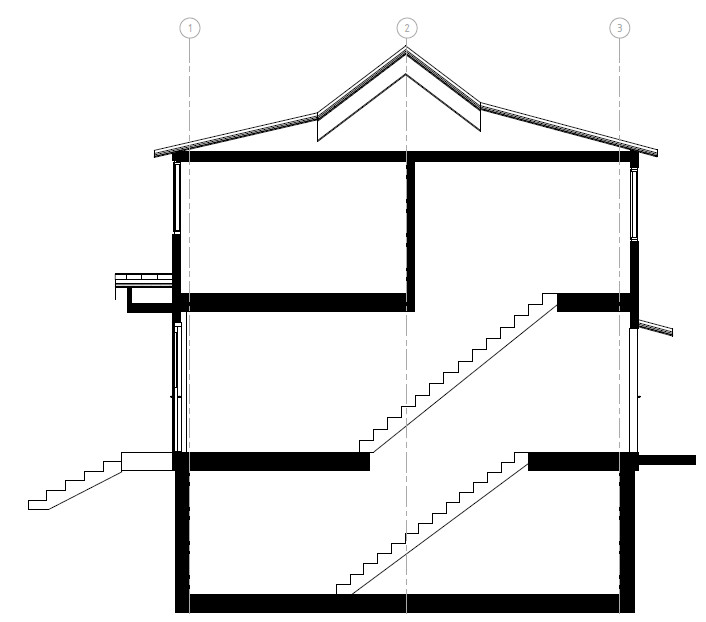
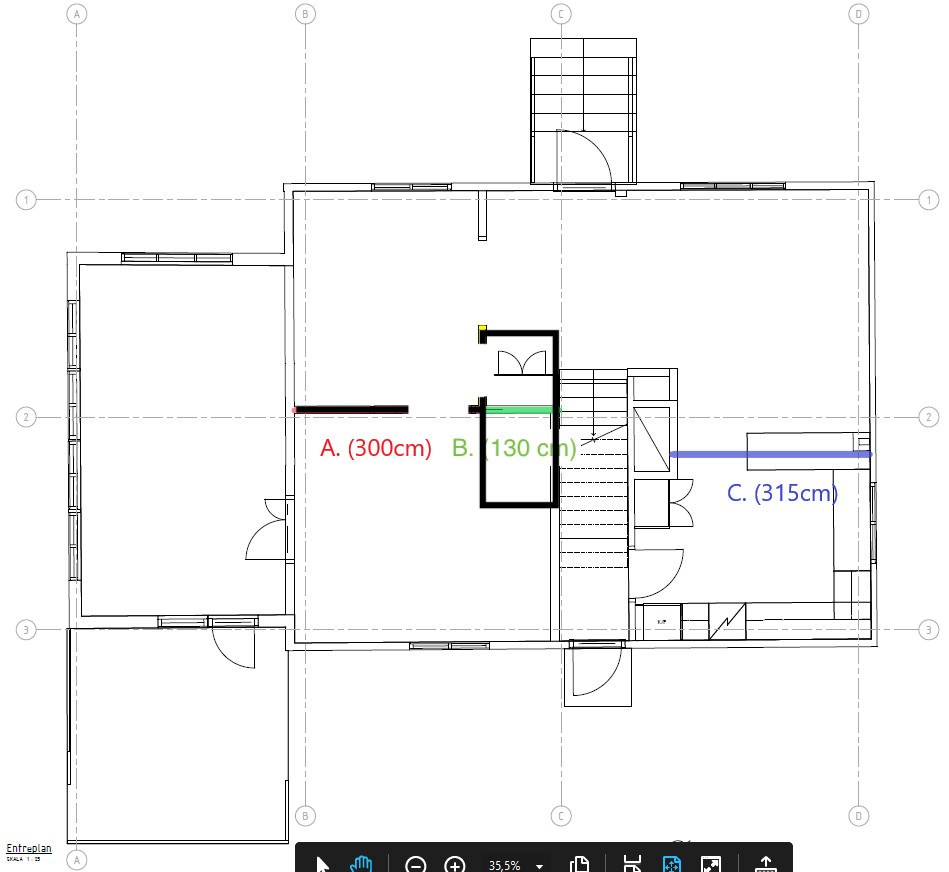
The house is a plank house from 1938. No original drawings exist, attaching drawings from a 3D scan of the house.
Hello!
The floor plan is intended to be approximately like the black marked area in the image below. The sliding doors will be replaced with a regular door.
Then I'm with you. You can replace the green part with a beam. The dimensions will be modest with such a short span. To calculate it, the building's main dimensions are needed, information about the snow zone, and preferably a sectional drawing. A photo from the upper floor might suffice with a bit of luck.
Snow zone is 2.5 (or on the border with 2.0). The building's dimensions are 9.6m x 7.5m. From the basement wall to the ridge, it's 7m. The exterior walls are approximately 3.5m from the basement wall to the roof connection (excluding the dormers). Unfortunately, I don't have any sectional drawing apart from the one I attached in the first post. It's from a 3D scanning of the house and might not have the necessary information.
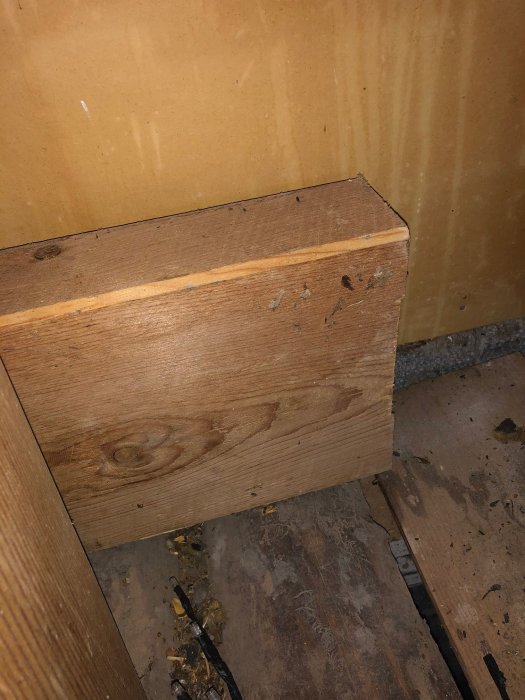
Photo from the upper floor, is there any specific detail that might be helpful for the question?
I got a bunch of potential beams when I opened up for a door in the yellow wall D. They are 95mm thick and of varying widths from maybe 140mm up to 230mm. Could they be useful?
I should add that the span is slightly shorter than the 130cm I mentioned, depending on what is meant by span - it will rather be 110cm between the posts!
Span is the free measurement between the posts, i.e., 1.1 meters. With such a short span, a glulam beam measuring 42x180 mm is sufficient, which is the smallest available dimension. The smallest glulam posts have dimensions of 90x90 mm. Probably, it is easier if the beam is also 90 mm wide.
Would you dare to use, say 95x180mm but not glue-laminated? (thinking if I can reuse the planks from the wall I described above). Or is it just penny-wise foolish?