
10,259 views ·
33 replies
10k views
33 replies
Open up a larger doorway.
We have started to waffle a bit since we don't want the costs to run away.Krille-72 said:

Now it might sound harsher than I intend, but those pictures are as helpful as if you had stood in a "regular" doorway and taken pictures of the door frame.I Icemania88 said:

I stand by my previous answer. I think it will be difficult to -- without removing drywall or whatever type of wall covering it is so that you can see how it is supported -- determine what kind of opening you can create. If you can take down the sliding door, you might be able to see a bit more (but most likely not enough), but based on what's there now, the short answer is no, you shouldn't risk opening up even a little bit.
Then you have to make up your mind first!I Icemania88 said:
Or call a constructor so you can find out the cost to start with.
Since you have a sliding door there which I understood is 70 cm, the opening is already at least 140 cm if you remove the sliding door. So you don't need a huge beam if you want to increase the opening to 2 m.

The wall is undoubtedly load-bearing. For the sliding door, there is already a transfer of at least 140 cm. However, there is a big difference between 140 and 200 cm in terms of beam dimension requirements. Whoever is going to calculate this needs access to complete drawings. The house is more complicated than usual.
Well! If Ts strips the wall, an experienced engineer will be able to quickly determine what is needed without any drawings.J justusandersson said:The wall is undoubtedly load-bearing. There is already a header for the sliding door of at least 140 cm. However, there is a big difference between 140 and 200 cm when it comes to beam dimension requirements. The person who will calculate this needs to have access to complete drawings. The house is more complicated than usual.
We used to work a lot with an older gentleman who unfortunately retired at 75. He would take a quick look and then tell us what was needed. For safety's sake, he would go back to his office to do some calculations and check the structural drawings (if there were any).
Then the report came. I can't remember a single time that any dimension changed from what he first said on site.
I can do that too, but hardly all who are available.
In other words, could one open up the wall to the full width of the sliding door and some extra measures as it is already lintelled?J justusandersson said:The wall is undoubtedly load-bearing. For the sliding door, there is already a lintel of at least 140 cm. However, there is a big difference between 140 and 200 cm in terms of beam size requirements. Whoever is going to calculate this needs access to complete drawings. The house is more complex than usual.
New to this, so maybe a bit of odd questions.
You can absolutely tear down the sliding door. It has no supporting function. The offset is located above the sliding door.I Icemania88 said:
Sounds good, then we'll get a slightly larger opening at least about 20-30 cm because then the fridge will come, and we don't want it to be "outside" the opening.
Question from the wife. She's wondering if it's always the case that sliding doors are lintelled when they are in load-bearing walls?
I'm going to remove the frame and open one side of the wall tonight to see what's behind the panels, etc.
Sliding doors are always supported to their double width. Otherwise, they wouldn't work.
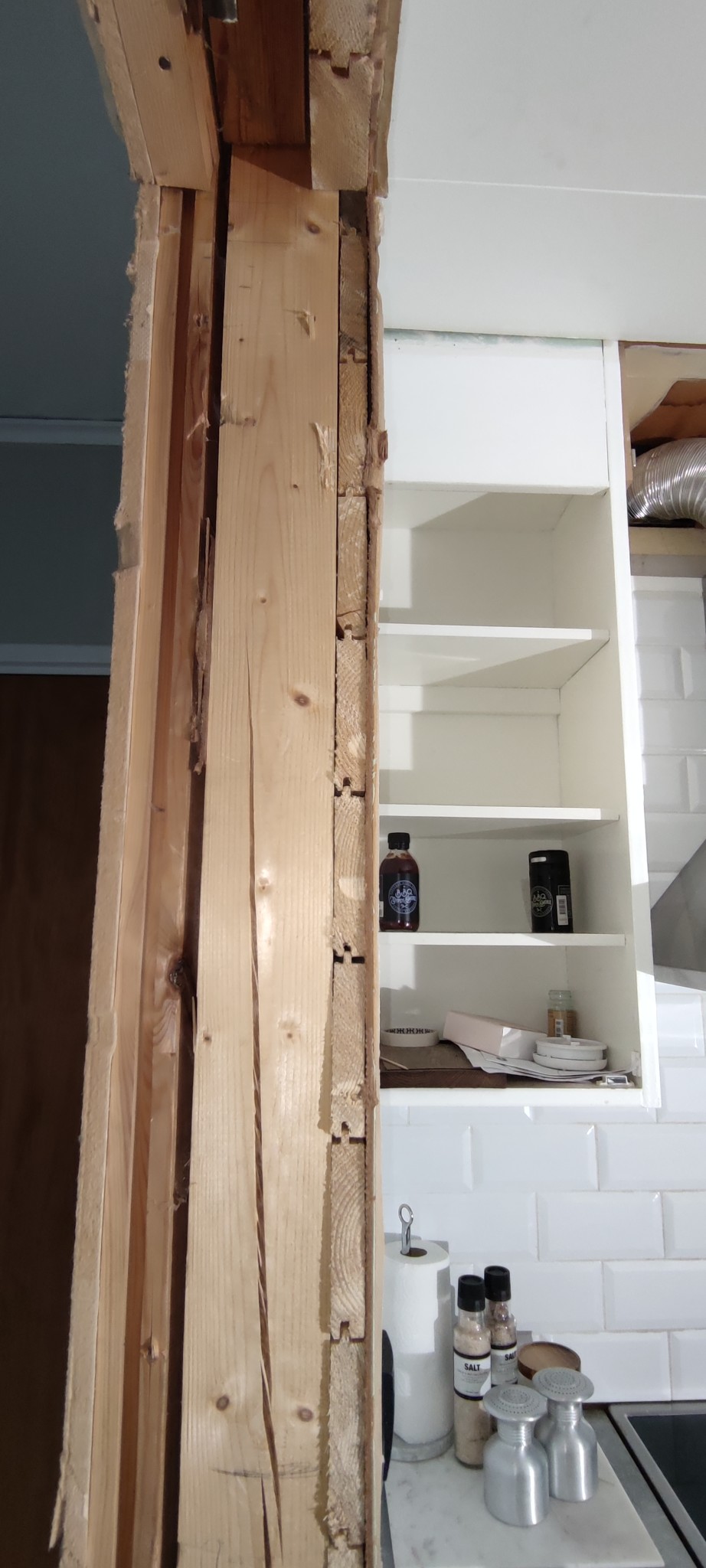
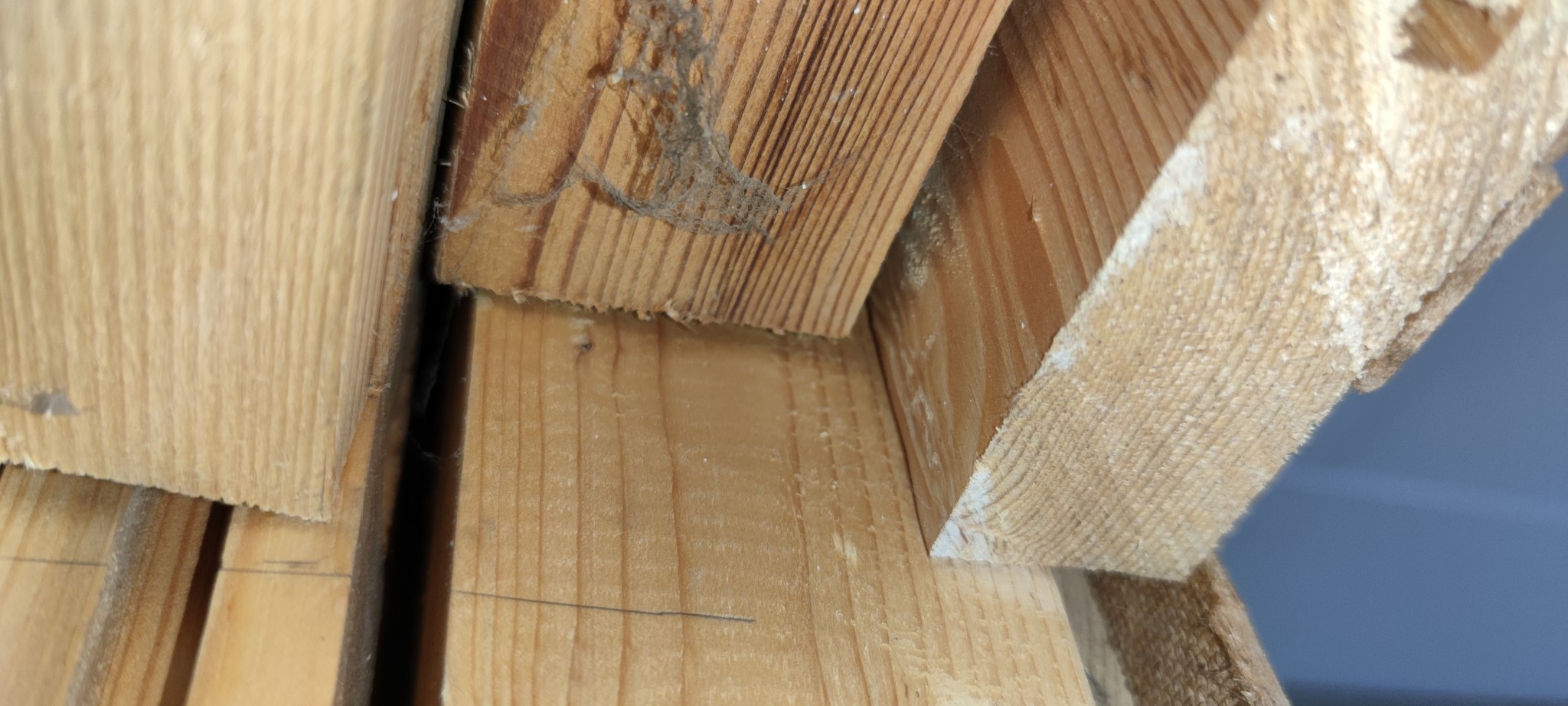


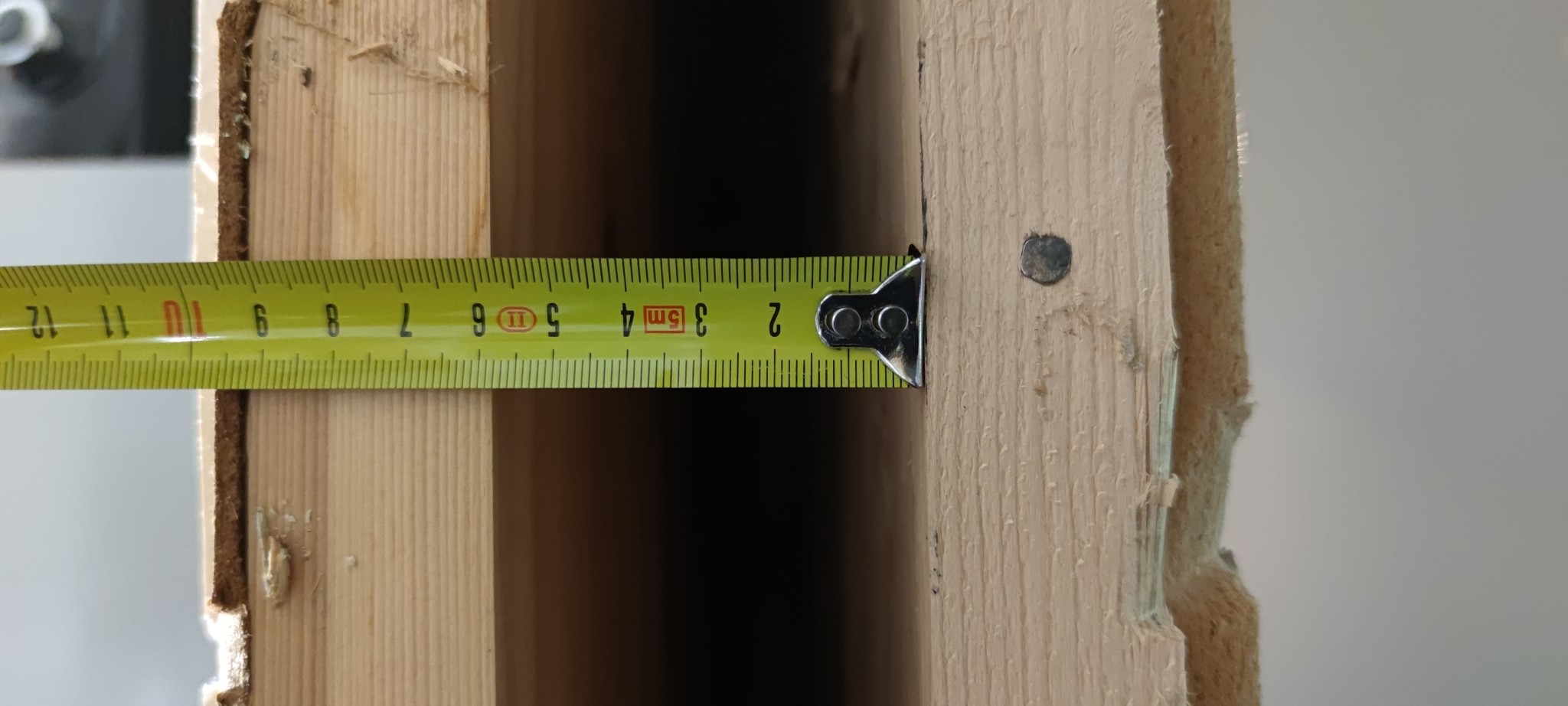
It also looks like the beam doesn't rest on any support but appears to be nailed on the side—maybe that's how it usually is?
It looks a bit homemade. The smallest transfer beam at 140 cm, I guess, is glulam 42x180. That corresponds to approximately 45x195 C 24.