
4,450 views ·
18 replies
4k views
18 replies
Old Molded Garden Slabs
Now I'm at it again.
Quick question:
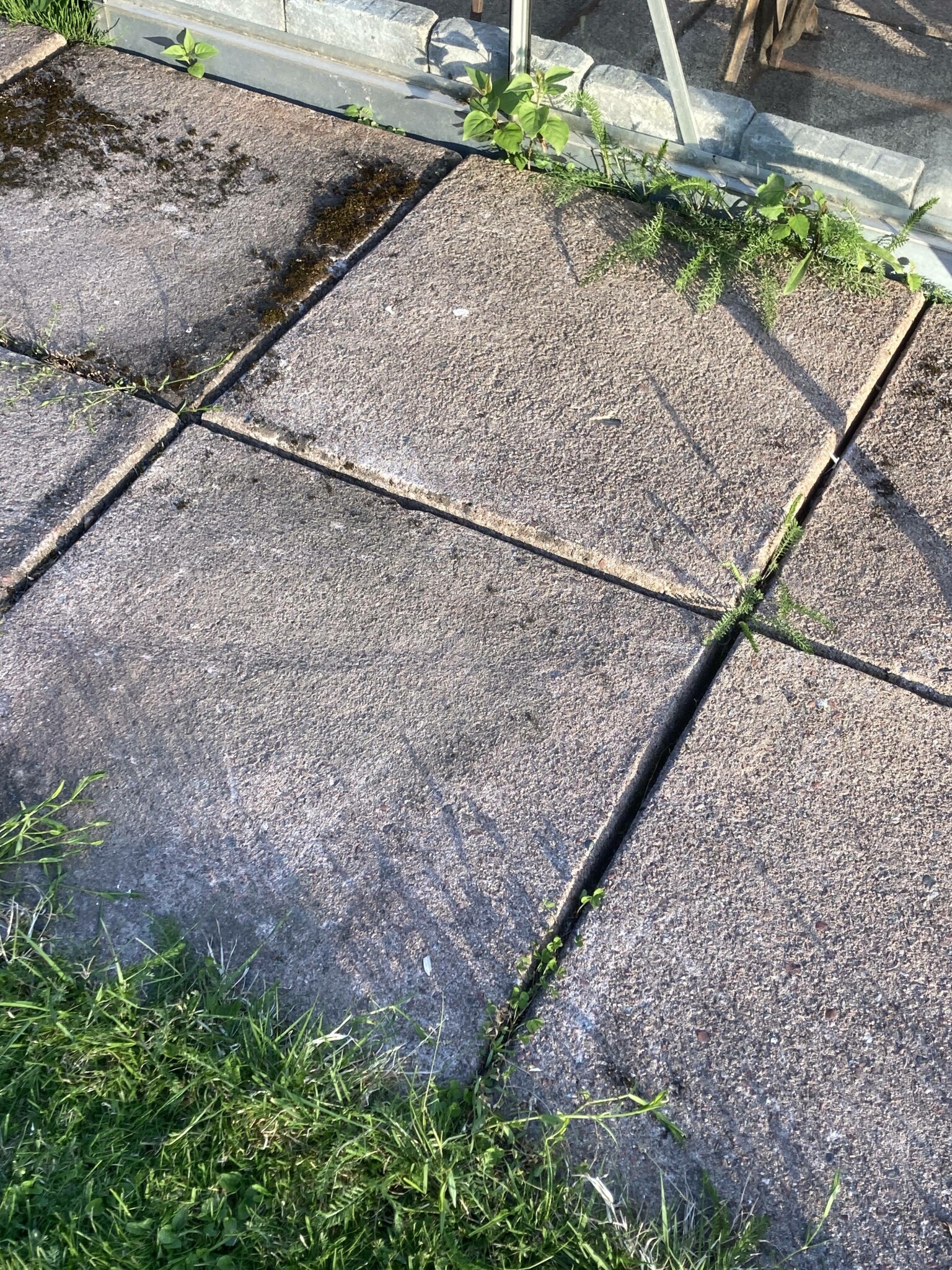
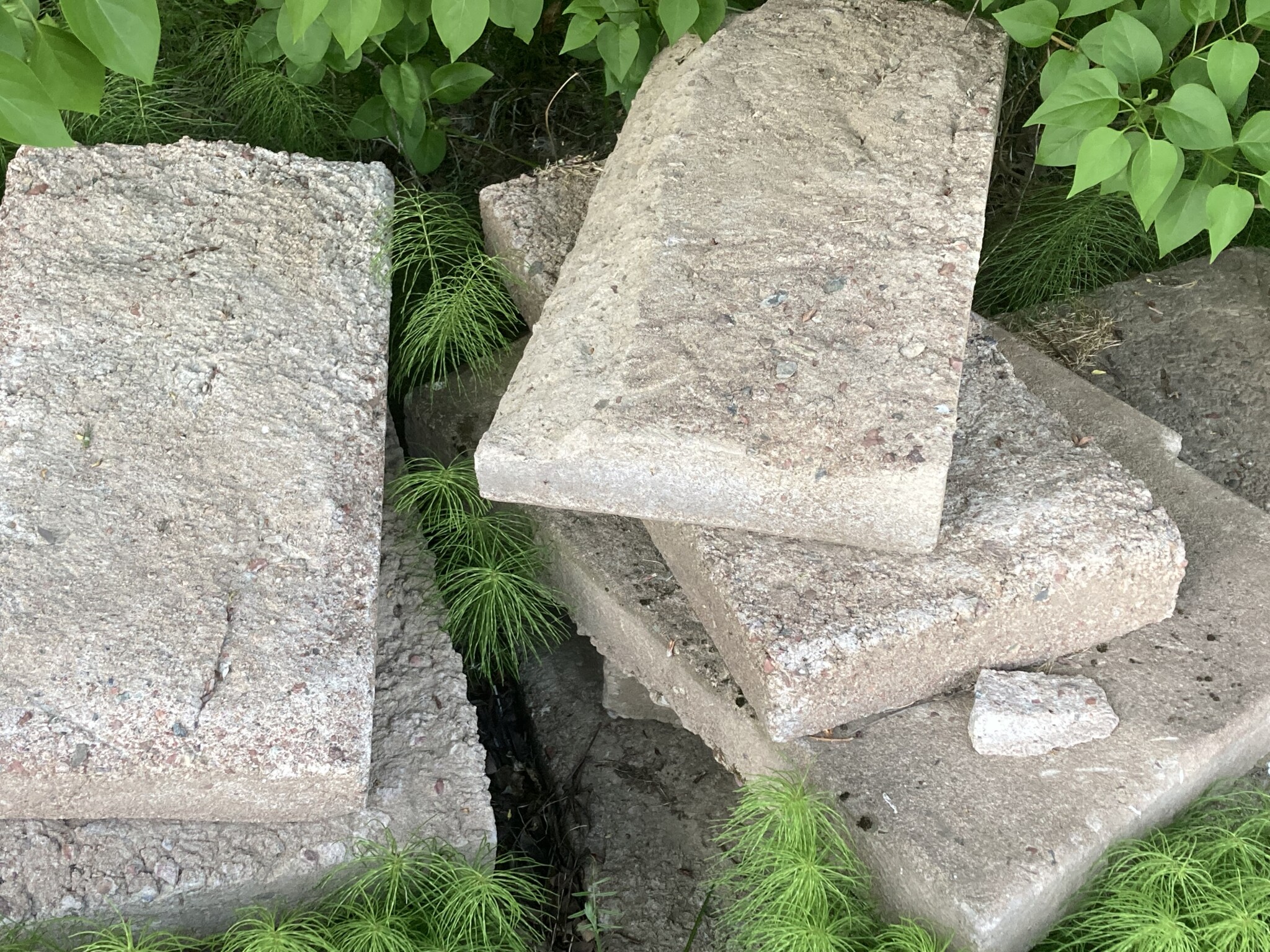
What do you think is the likelihood that they used asbestos as reinforcement when they cast these very heavy old large garden slabs?
They're filled with, among other things, stone.
Using the slabs as flooring in a greenhouse, and I started thinking about this.
Paranoid, yes, one might say, but I still want to ask the question.
Quick question:
What do you think is the likelihood that they used asbestos as reinforcement when they cast these very heavy old large garden slabs?
They're filled with, among other things, stone.
Using the slabs as flooring in a greenhouse, and I started thinking about this.
Paranoid, yes, one might say, but I still want to ask the question.
Ugh, that was not a fun answer... but thank you for the answer!
QUOTE="Peterpettersson, post: 5260996, member: 304892"]Quite a big risk, when asbestos was banned in '72 it became very expensive to get rid of the asbestos, the solution was to fill castings with it, especially paving stones. A lot is released in connection with watering and sunlight.[/QUOTE]
QUOTE="Peterpettersson, post: 5260996, member: 304892"]Quite a big risk, when asbestos was banned in '72 it became very expensive to get rid of the asbestos, the solution was to fill castings with it, especially paving stones. A lot is released in connection with watering and sunlight.[/QUOTE]

Homeowner
· Småländska höglandet
· 5 874 posts
Not to be that person, but the sale of newly manufactured asbestos materials was banned in 1982. It didn't become "very expensive" to dispose of asbestos until the new legislation in the landfill sector closed down a lot of dumps in the 2000s. Wrong on 2 points so far, can we suspect that your other claims are also factually questionablePeterpettersson said:
 ?
?TS, consider the plausibility that 40 years ago someone stood at a cement factory crushing asbestos material into small pieces to then use as filler in the mixture when casting garden slabs. And if that were the case, are you yourself planning to crush the slabs and thereby release the well-bound asbestos fibers?
Thanks for your response!
I don't quite understand what you mean by considering the reasonableness? That it is reasonable that there is asbestos in the tiles, or do you mean the opposite? I don't quite follow. Grateful for clarification.
I don't quite understand what you mean by considering the reasonableness? That it is reasonable that there is asbestos in the tiles, or do you mean the opposite? I don't quite follow. Grateful for clarification.
Not to be that way, but the sale of newly manufactured asbestos materials was banned in 1982. "Very expensive" to get rid of asbestos didn't happen until the new legislation in the landfill area shut down a lot of dumps in the 2000s.
Wrong on 2 points so far, can we suspect that your other claims might also be factually questionable
TS, consider the reasonableness of someone 40 years ago standing in a cement factory crushing asbestos materials into small bits to then use as filler in the mix when casting garden tiles. And if so, have you yourself planned to crush the tiles and thereby release the well-bound asbestos fibers?
Homeowner
· Småländska höglandet
· 5 874 posts
There were only 3 pure asbestos cement factories in all of Sweden, none of them had garden slabs in their production as far as known. I find it unreasonable that regular cement factories would buy used asbestos materials to use as filler when casting garden slabs.
I sincerely hope you are completely right in your reasoning. It would be extremely difficult to try to get rid of these... They are enormously heavy and cumbersome...
That thing about asbestos being good for reinforcement, could that be a reason why there might be asbestos in the slabs? Or does the stone that the concrete is mixed with argue against that? That is, does the stone serve the function that asbestos would otherwise have had, as reinforcement?
That thing about asbestos being good for reinforcement, could that be a reason why there might be asbestos in the slabs? Or does the stone that the concrete is mixed with argue against that? That is, does the stone serve the function that asbestos would otherwise have had, as reinforcement?
Homeowner
· Småländska höglandet
· 5 874 posts
I have relatively extensive knowledge in the subject, yes. At a professional level.
The properties of asbestos fibers, primarily their durability and heat resistance, made them useful in materials where such properties were needed. Fire protection, roofing, and facade materials, insulation. Not garden tiles!
If we delve further, asbestos mineral is mined in quarries, the nearest being in Russia. So it's not entirely easy to get hold of, not even 40+ years ago. Gravel is found everywhere in Sweden, even 40+ years ago. What do you think they chose when they wanted to make a cheap, simple product like garden tiles?
By the way, I have watered the rhubarb and various other plants today. With rainwater from the asbestos-cement roof.
The properties of asbestos fibers, primarily their durability and heat resistance, made them useful in materials where such properties were needed. Fire protection, roofing, and facade materials, insulation. Not garden tiles!
If we delve further, asbestos mineral is mined in quarries, the nearest being in Russia. So it's not entirely easy to get hold of, not even 40+ years ago. Gravel is found everywhere in Sweden, even 40+ years ago. What do you think they chose when they wanted to make a cheap, simple product like garden tiles?
By the way, I have watered the rhubarb and various other plants today. With rainwater from the asbestos-cement roof.
I hope you are completely right in your assumption. I think I will send it in for analysis; only then will I know for sure. It must not be asbestos, because then I'll have a real h-ll getting rid of it.
B BSOD said:
Professional level? Working with the issue? Makes me a bit curious.
Yes, I really hope you're right in your wise speculations. No one would be happier than me if that's the case. Having to move these enormously heavy and cumbersome slabs would be a total nightmare for me...
Yes, I really hope you're right in your wise speculations. No one would be happier than me if that's the case. Having to move these enormously heavy and cumbersome slabs would be a total nightmare for me...
I have relatively much knowledge on the subject, yes. At a professional level.
The properties of the asbestos fiber, primarily its durability and heat resistance, made it used in materials where such properties were needed. Fire protection, roofing and facade materials, insulation. Not garden slabs!
If we delve even further, asbestos minerals are mined in quarries, the nearest being Russia. It is therefore not very easy to obtain, nor was it 40+ years ago. Gravel can be found everywhere in Sweden, even 40+ years ago. What do you think they chose when casting a cheap, simple product like garden slabs?
In other news, I've watered the rhubarb and various other plants today. With rainwater from the asbestos-cement roof.
It is completely unreasonable for the tiles to contain asbestos.
Sure, it is good to be prudent, but taking asbestos samples from these crosses the line into paranoid absurdity by a wide margin.
@SågspånPappspikEternit has already provided wise and good answers that should be sufficient.
Sure, it is good to be prudent, but taking asbestos samples from these crosses the line into paranoid absurdity by a wide margin.
@SågspånPappspikEternit has already provided wise and good answers that should be sufficient.
Hope you're right! No one would be happier than me if that's the case.
But, did you see Peterpettersson's comment? The first in the thread. He seemed to believe the exact opposite… high probability, according to him.
Hopefully, he's wrong and you others are right.
QUOTE="Lärospånet, post: 5261424, member: 173362"]It is completely unreasonable for the slabs to contain asbestos.
Sure, it's good to be cautious, but taking asbestos samples from these is to cross the line into absurd paranoia with a vengeance.
@SågspånPappspikEternit has already given wise and good answers that should be sufficient.[/QUOTE]
But, did you see Peterpettersson's comment? The first in the thread. He seemed to believe the exact opposite… high probability, according to him.
Hopefully, he's wrong and you others are right.
QUOTE="Lärospånet, post: 5261424, member: 173362"]It is completely unreasonable for the slabs to contain asbestos.
Sure, it's good to be cautious, but taking asbestos samples from these is to cross the line into absurd paranoia with a vengeance.
@SågspånPappspikEternit has already given wise and good answers that should be sufficient.[/QUOTE]
Homeowner
· Småländska höglandet
· 5 874 posts
Yes, even though asbestos has been banned for more than 40 years, many professions still need to handle it. There is an enormous amount of research and facts about the health risks, and just as much knowledge about how to protect oneself from exposure, and it is fairly simple; make sure not to inhale large amounts of asbestos fibers during your lifetime. Essentially, everyone who dies are those exposed in the workplace and neglect protective equipment.S Slottsfrun said:
As for your garden slabs, I don't understand what the problem is? They are in your greenhouse, and you walk on them occasionally. Let them be! Walking on slabs or watering slabs, regardless of the material, is completely harmless from a health perspective.
What you should not do if you care about your health is process or crush them without using protective equipment. Materials based on stone and gravel often contain quartz particles, which are released during processing. Exposure to quartz dust is harmful to the lungs and can lead to silicosis, formerly known as pneumoconiosis, with excessive (occupational) exposure.
Protection against exposure to harmful dust from quartz (and also asbestos) is a half-mask with a P3 type filter, preferably combined with water spraying to reduce dust formation.
In this modern society, we cannot possibly avoid all health-hazardous substances, but we can seek knowledge and learn how to handle the risks that exist, and protect ourselves as much as possible.
You have asked a question; now use the answers to seek more knowledge. Imagination can conjure up all sorts of dangers and risks; they are often much scarier than reality. When you have knowledge, fear disappears; often, we are most afraid of what we do not understand!
Good luck!
Do not be afraid of PeterPetterson's comment, irony and sarcasm are not easy to detect in writing.
Frankly, you probably have more reason to worry about, for example, plastic lunch boxes, than garden tiles.
Frankly, you probably have more reason to worry about, for example, plastic lunch boxes, than garden tiles.
Last edited: