
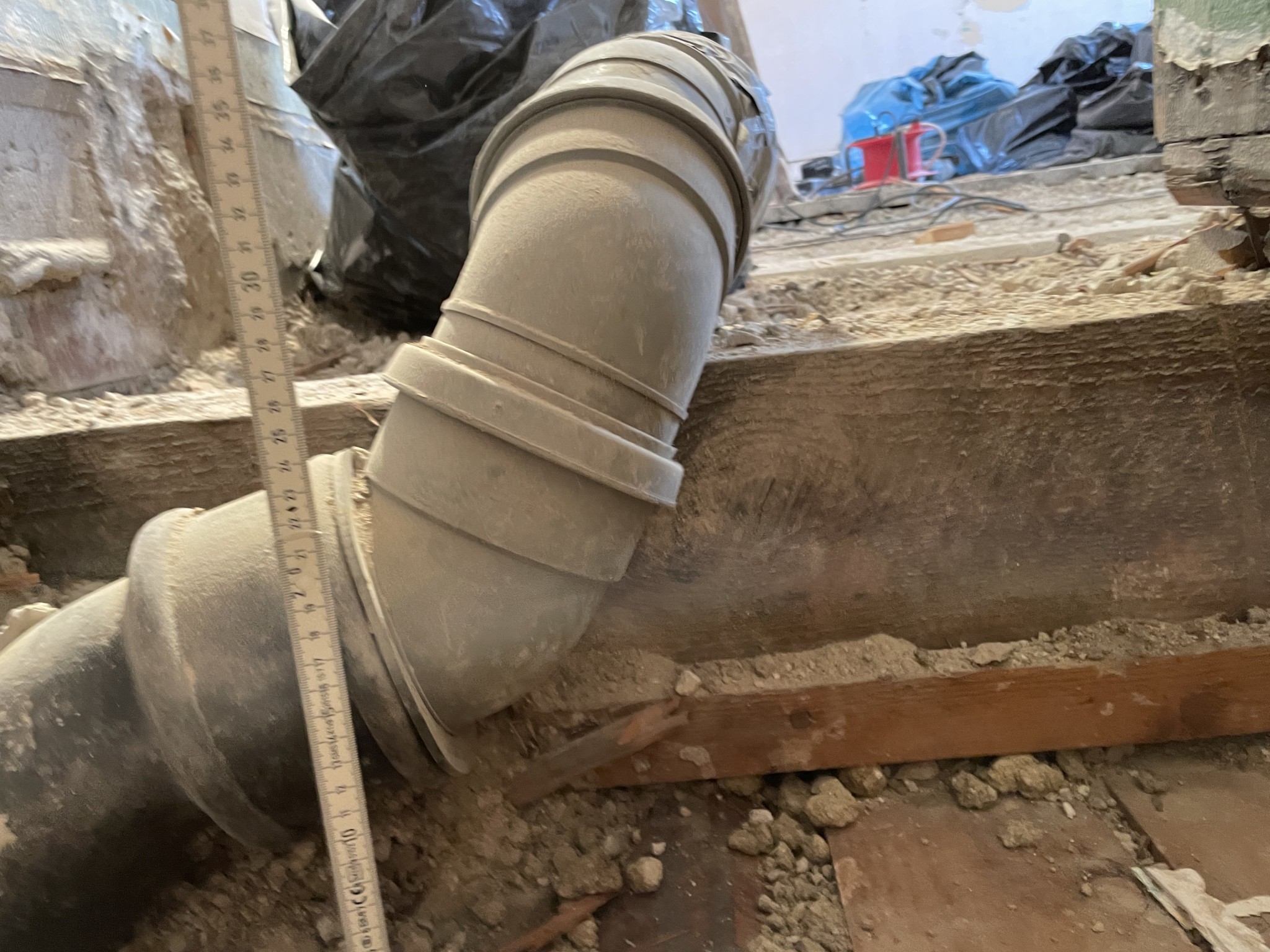
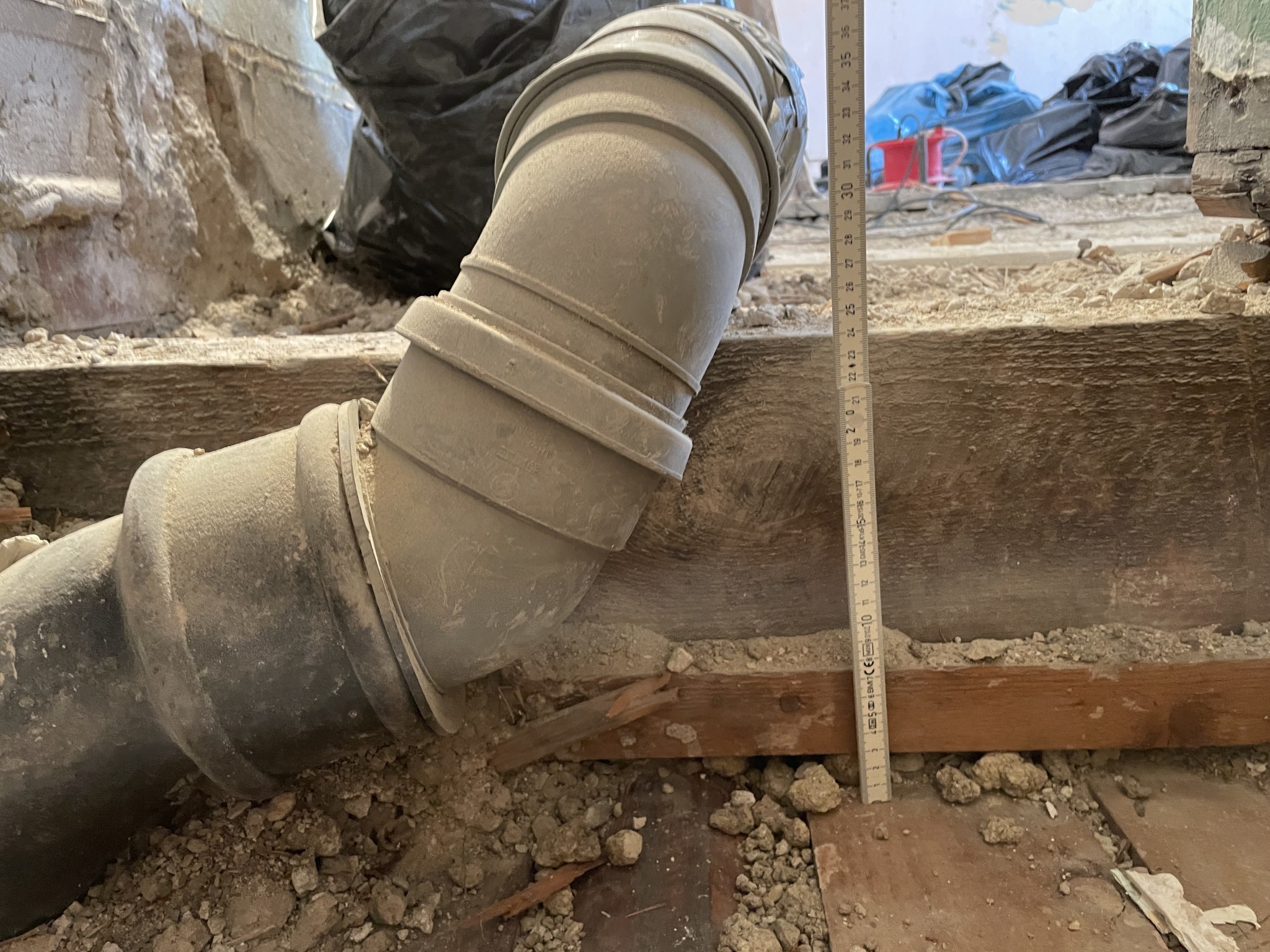
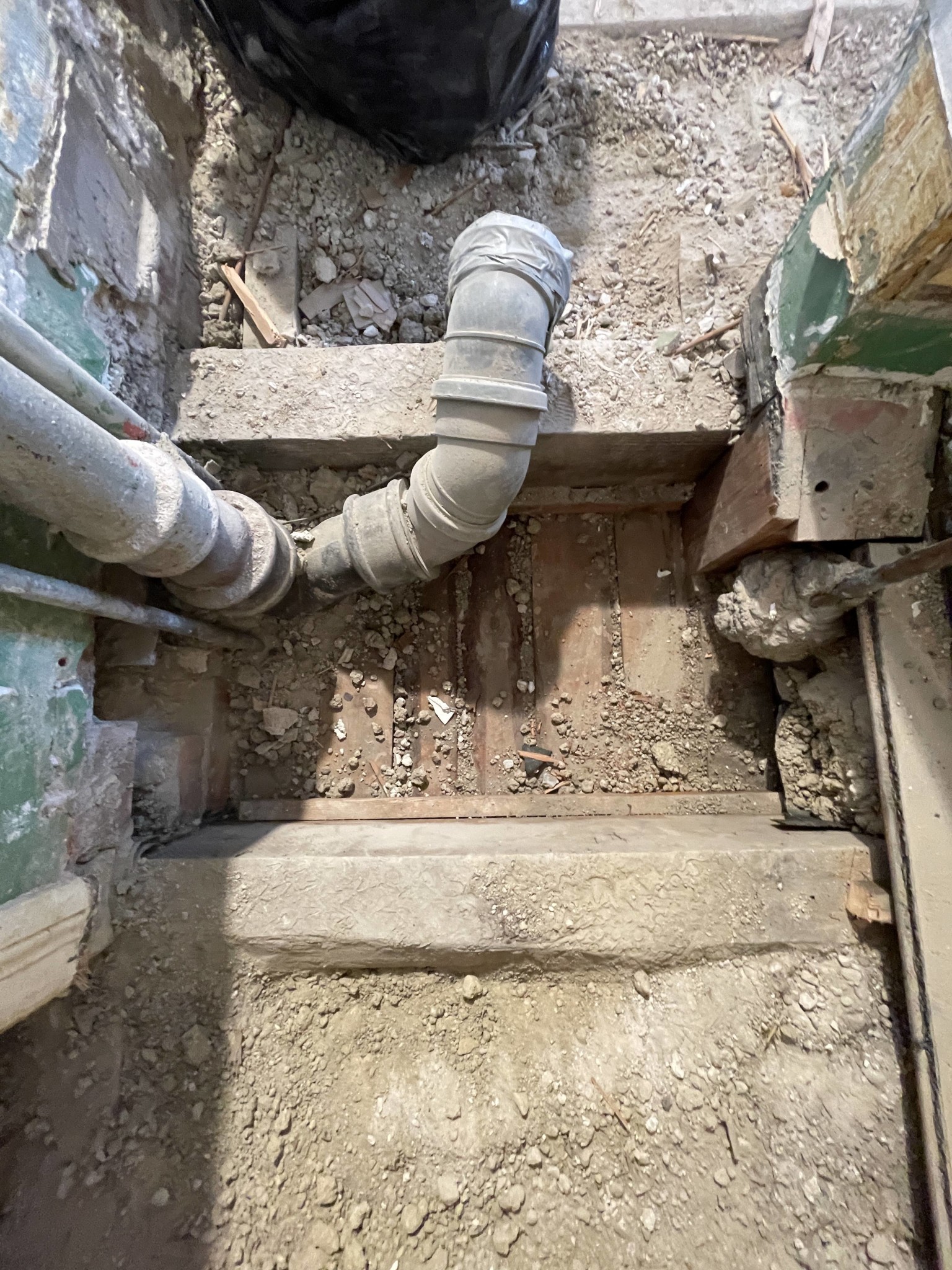
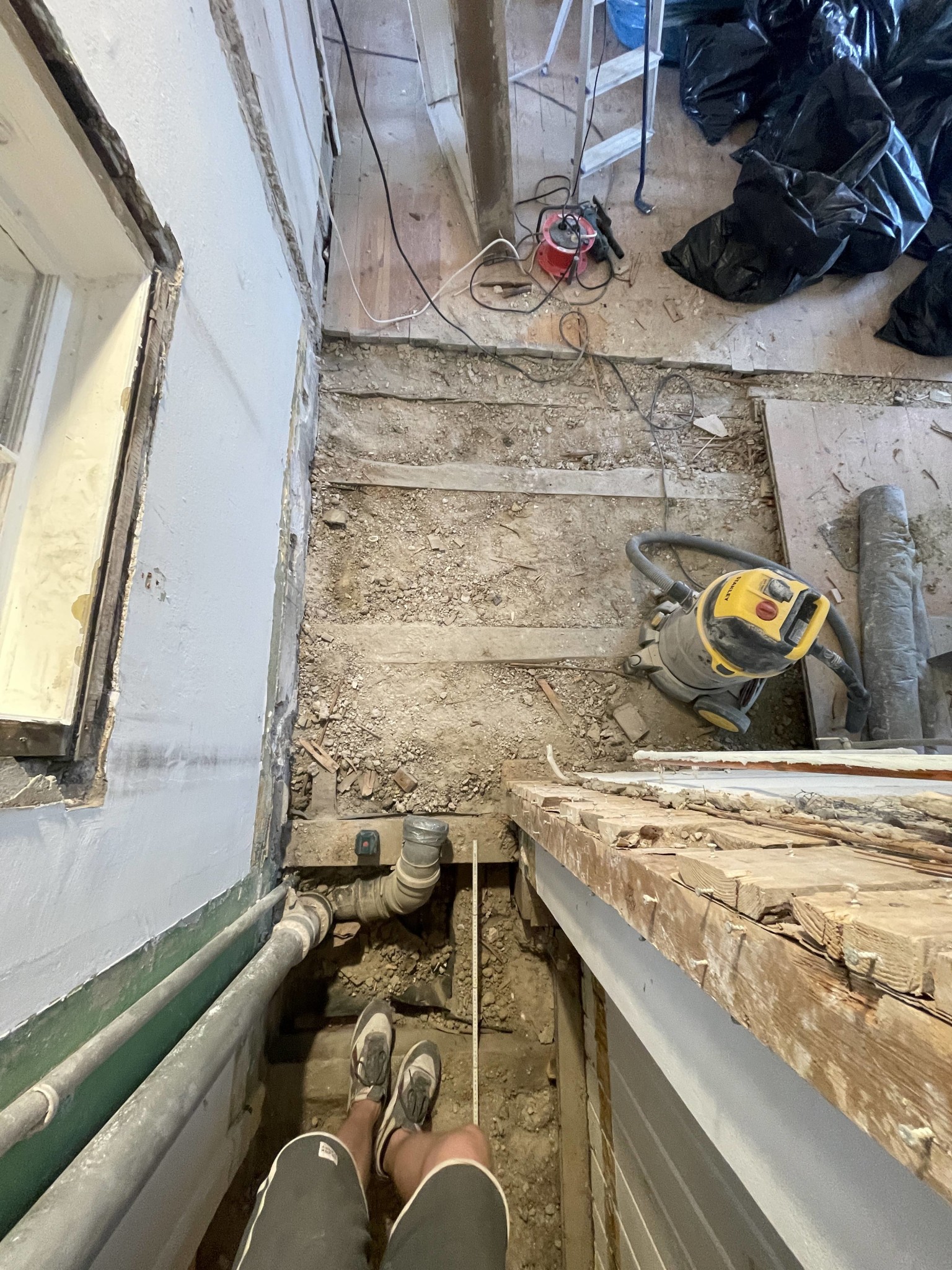
Hey, I'm in the process of renovating/remodeling a bathroom in a condo in a turn-of-the-century building (1905). I have completely stripped away the old structure. Cleared the floor to explore the possibility of lowering the drain pipes a bit so that we can avoid having a bathroom with a mega threshold (as it was before). We will not touch the association's main line, and it is positioned at a height where a circular cutout in the middle of the beam is not feasible as it would result in backfall.
My question is, can a smaller cutout be made at the top and be satisfied with reinforcing it with plywood on the sides? To me, it feels not good to make cutouts at the top instead of circular ones, but maybe it works?
My question is, can a smaller cutout be made at the top and be satisfied with reinforcing it with plywood on the sides? To me, it feels not good to make cutouts at the top instead of circular ones, but maybe it works?

Electronics enthusiast
· Västra Götaland
· 671 posts
You can always reinforce with a glue-screwed stud under, for example, a 70 or 90 stud, whichever fits underneath on both sides. So you glue-screw along both sides of the notch.
Yes, indeed. The bjälklag is a part of the house and you shouldn't tamper with it just like that. It's probably possible to both drill and saw through the bjälkar to some extent. But to be safe, you should make sure not to damage the construction without having black and white proof that it will work.
As I understand it, you need to bring in a structural engineer because they then give some form of "certificate"? I'm an engineer myself, so I'm used to being able to calculate load cases and beams, but I'm having a bit of trouble understanding how to do that on a house from 1905 where probably all forms of any construction drawings are non-existent.
In my view, you should therefore assume that the beam's load-bearing capacity, bending stiffness, and any torsional rigidity must be reinforced in such a way that after the intervention it is equal to or greater in all these factors.
In my view, you should therefore assume that the beam's load-bearing capacity, bending stiffness, and any torsional rigidity must be reinforced in such a way that after the intervention it is equal to or greater in all these factors.
it is probably no danger purely spontaneously. But at one time, they have neglected to recess the drainage into the joists. Probably to avoid guessing.S senegym said:As I understand it, you need to bring in a constructor so they can provide some form of "certificate"? I'm an engineer myself, so I'm used to being able to calculate load cases and beams, but I find it a bit difficult to understand how one can do that on a house from 1905 where probably all forms of construction drawings are non-existent. In my view, you should then assume that the beam's load-bearing capacity, bending stiffness, and possible torsional stiffness must be reinforced in such a way that after the intervention, it is equal to or more in all these factors.
Last edited:
Click here to reply
Similar threads
-
Reinforcing joists with transverse glulam beams
Building Materials and Construction Technology -
Uppflyttning av balkar i mellanbjälklag på 1/3 av huset
Lösvirke & Timmerhus -
Minska antal plintar med extra balkar under golvbjälklaget?
Attefallshus, friggebod, garage & andra småhus -
Reparera eller byta sågade träbalkar/bjälklag
Lösvirke & Timmerhus -
Reinforcement of joists, drain cutout
Building Materials and Construction Technology