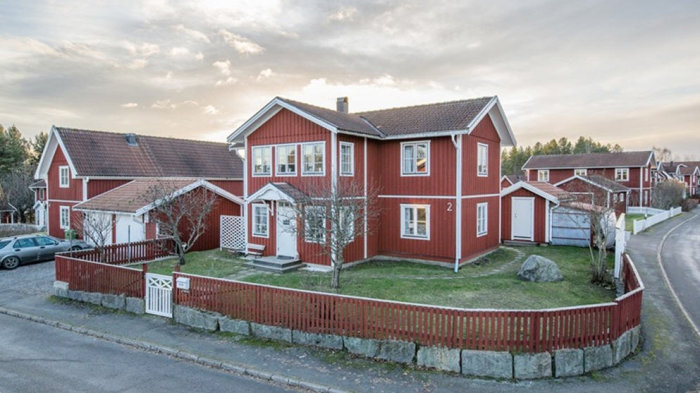
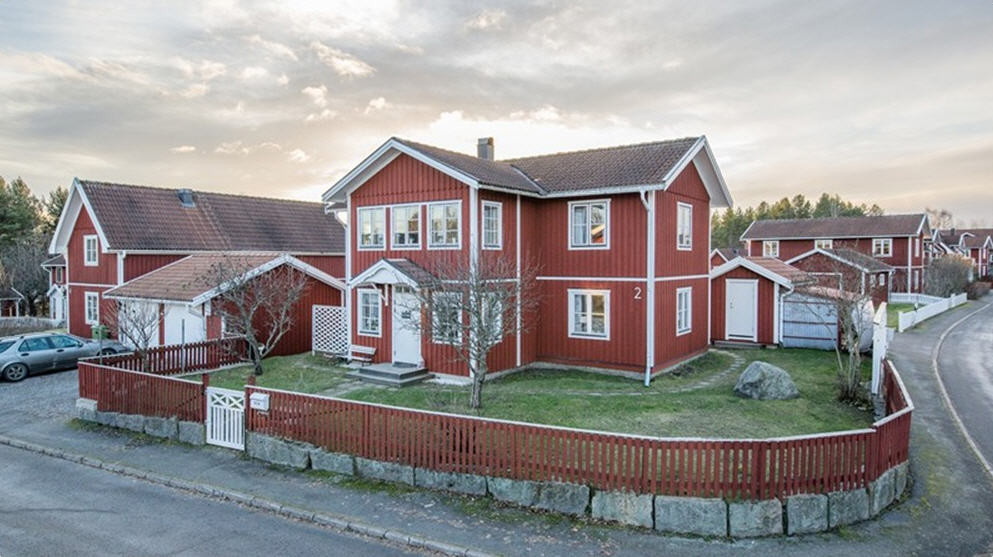
Hello, we are going to redo our fence as it has rotted and is generally unstable.
We have stone blocks around the entire property line that the current fence is attached to with post shoes.
However, it "wobbles" today between the stone and the post shoe and between the post shoe and the post. So when we redo it, we naturally want it to be sturdy, so I have a few questions
1) Distance between the posts?
2) How to secure the posts to the stone blocks in the best way
3) Dimensions of the posts?
4) Can you use impregnated posts and nail battens?
5) The house is painted with Falu red, does it work for the fence as well?
6) How do you handle the bottom edge? Today the fence follows the stones, i.e. no straight edge at the bottom.
1200mm should suffice depending on how much load it needs to withstand. The municipality usually specifies this in the request documents when they want oak fences and the like around plantings.
I read that post anchors are preferable for fences instead of post shoes. But how does it work for my situation? i.e., when you have stone blocks to attach them to?
Feel free to answer my other questions as well from someone knowledgeable (I'm not).
This is how I would do it, and did about 2 years ago:
1200 mm center to center between 70x70 pressure-treated posts. These are attached with anchor mass (if it's 14mm rebar, you drill 16mm, blow it clean, and press in the mass, then your post shoe). Make sure to set your post shoe the "right" way, with the stop facing outward. Then it's rock-solid.
I bought ready-made fences at the hardware store, it was a good price and fit well with the style we wanted, though the impregnation wasn't top-quality, so the following year I chose to spray oil everything, and then painted everything white. It looked great against the red house. However, you need to maintain white a bit better, for you, it would suit well with fences high up from the road.
My fence is at various slopes in different places and follows that slope. Personally, I think you should try to follow the line at the bottom, then you can always cut straight at the top if there's not too much of a difference (it would look odd with 200 mm higher/lower posts here and there).
You can paint the fence with red paint if you know you won't touch it much. Our porch railing is painted with red paint from before, and everything that touches the railing gets pigment on it, a bit annoying. Probably matters less with a regular fence but still
This is how I would do it, and did about 2 years ago
1200 mm cc between 70x70 pressure-treated posts. These are attached with anchor mass, (if it's 14mm reinforcement, drill 16mm, blow clean and press in the mass, then your post shoe) Make sure to set your post shoe the "right" way, with the stop outward. So it sits like a rock.
Do you mean this way?
smedbror said:
I bought the fence ready-made from the builder's merchant, it was a good price and matched the style we wanted, although the impregnation wasn't high quality, so the following year I chose to spray oil everything and then painted it all white. It looked very good against the red house. However, you have to maintain the white a bit better, it would suit you nicely, with the fence high up from the road
Yes, it would be convenient to buy pre-painted sections, but I haven't found any that I like. I'd welcome suggestions if you have a link.
smedbror said:
My fence stands at varying inclines in different places and follows those inclines. Personally, I think you should try to follow the line at the bottom edge, then you can always cut straight at the top edge, if it doesn't differ too much (it would look odd with 200 mm higher/lower pickets here and there)
Yes, I guess I'll have to follow the line of the stone blocks, which varies a bit here and there.
Nope, I think the bracket should be placed the other way. That way, the fence gets some stability from the bracket outward/inward. As your picture shows, I don't think it helps much. The fence itself becomes very stable lengthwise regardless of how you turn the bracket.
Bought simple sections from Krauta when they were on sale.
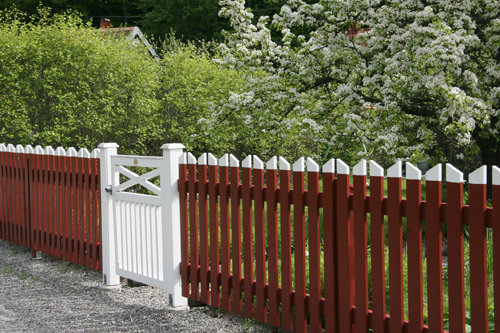
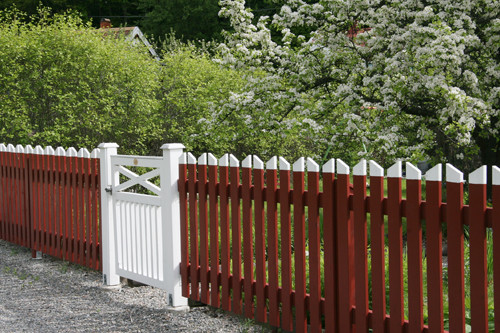
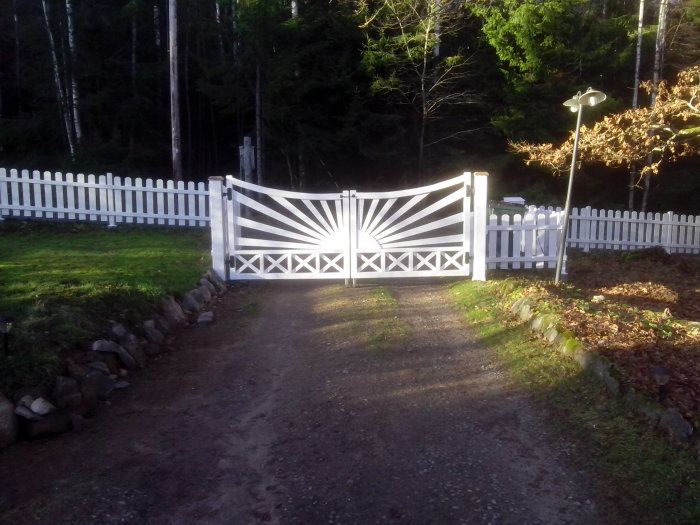
Here's how mine turned out
I built the gate myself though
It turned out very well, but this summer it needs to be washed. 2 years since the last coat and the surrounding spruces make it prone to some growth
It will probably be fine, whichever way you choose
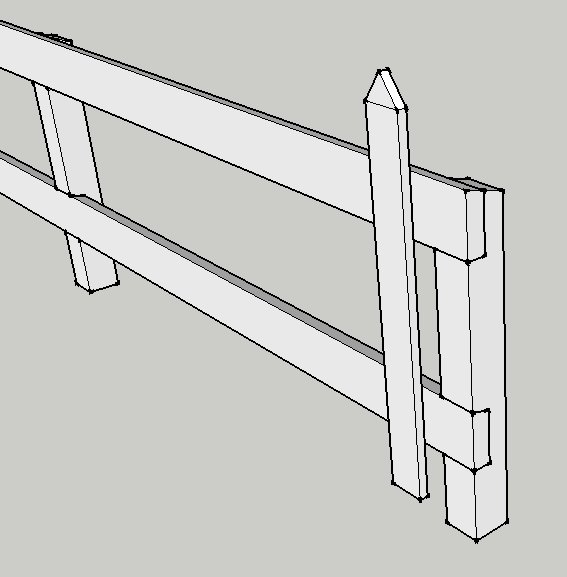
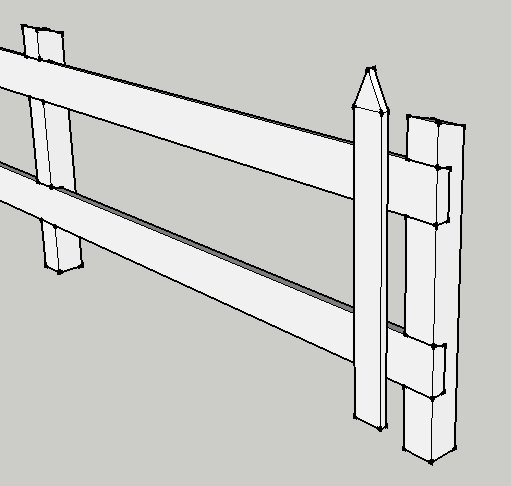
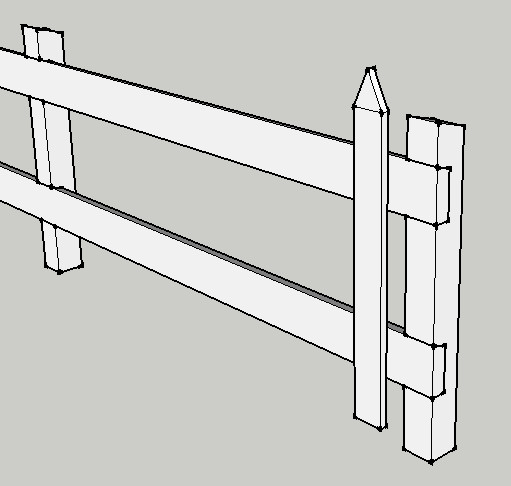
I have started sketching a bit on the posts. Which of these is the best? I think the top one looks the nicest.
The fence is 1000mm high, the posts are 95x95, and the rails are 45x145. 1800 between the posts. Does it look too "heavy"?
Where can you buy rails that are beveled at the top? I have Byggmax, Beijer, and Karl Hedin in my city.
I have changed my mind about painting the fence, I will build it with pressure-treated wood to reduce maintenance and construction time.
I think it will look a bit "clunky" with such large posts and a spiked rail of 45x145.
My fence has T-profiles in steel that are about 4mm thick and 1000mm high, with 45x70 screwed into them to attach the fence pickets. The CC measurement of the posts varies between 1500-1700mm.
Surprisingly sturdy, as the T-profiles were originally for a Gunnebo fence that was over 30 years old before we tore it down.
Beijer has 34x145 in pressure-treated. It might feel easier. Then to get it beveled, you probably have to solve it yourself. Beijer might have a rip saw and can help you.