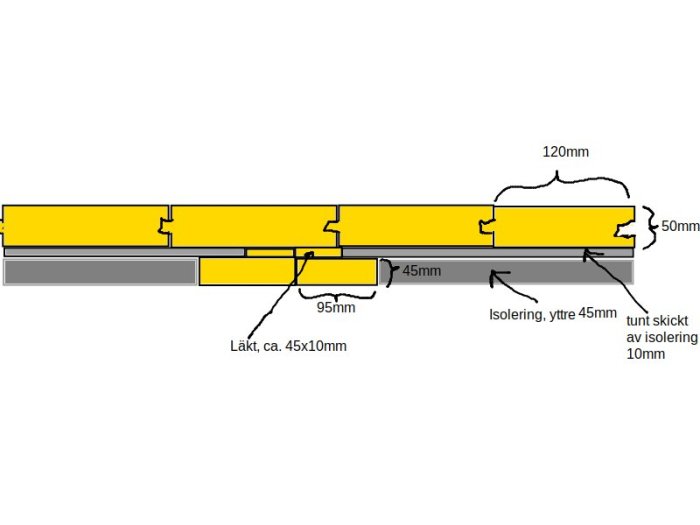
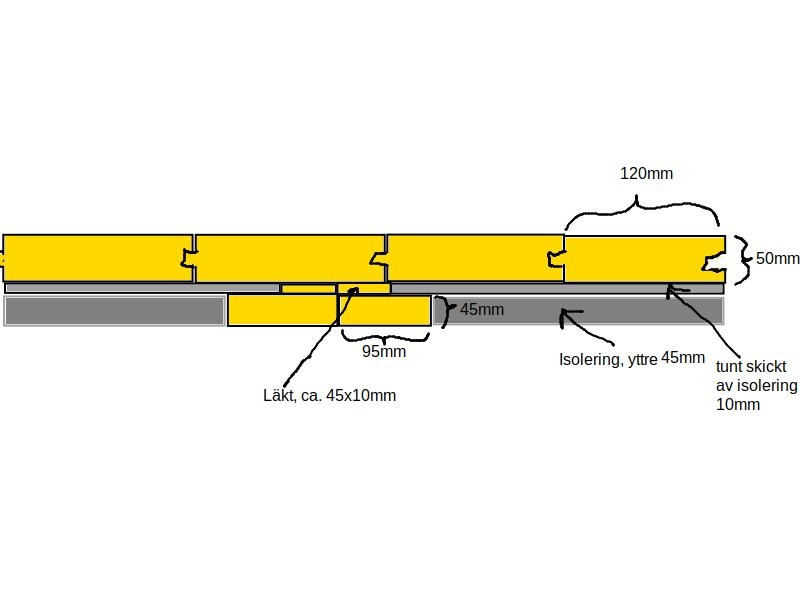
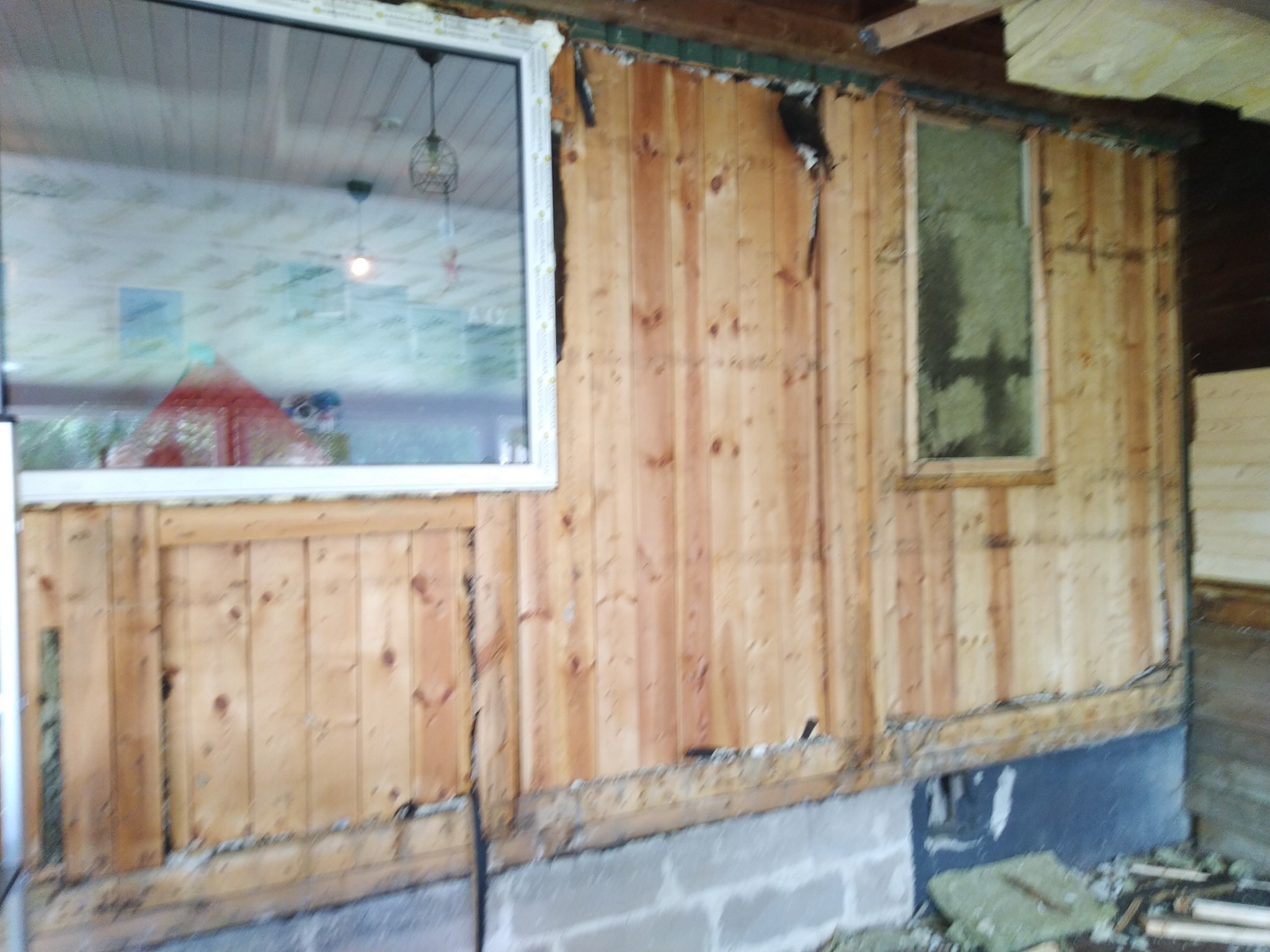
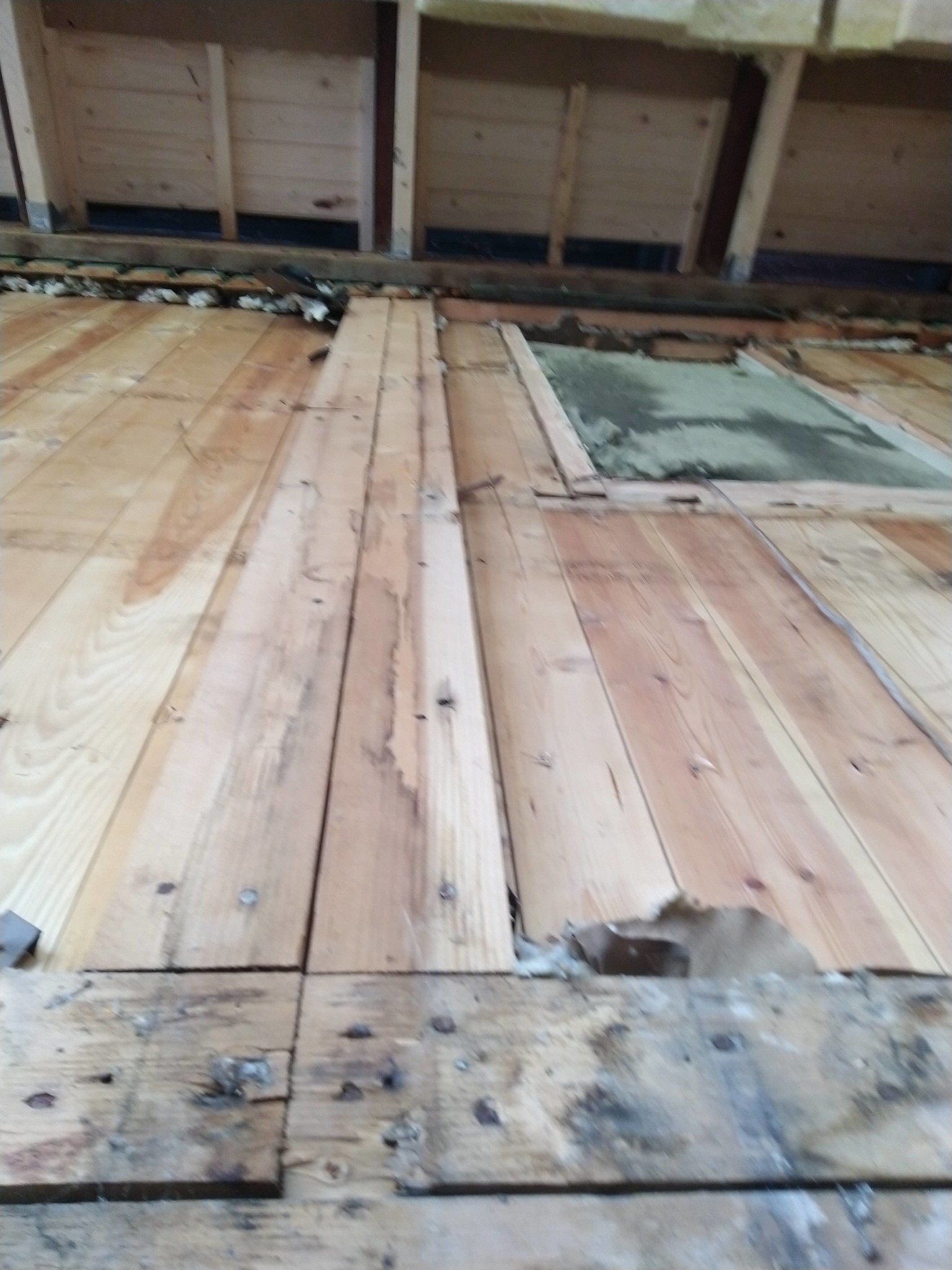
I have a 50s house, single-story, built with solid wood, 120x45 along all exterior walls, as seen in the picture. Outside this 45mm thick wooden wall, it has been insulated 45mm. I have already removed the horizontal 45 studs outside the solid structure (the ones the exterior paneling was once attached to). The vertical ones seen in the picture, however, which are 90mm wide, I'm not sure if I dare to remove. Could they be necessary for the load-bearing structure?
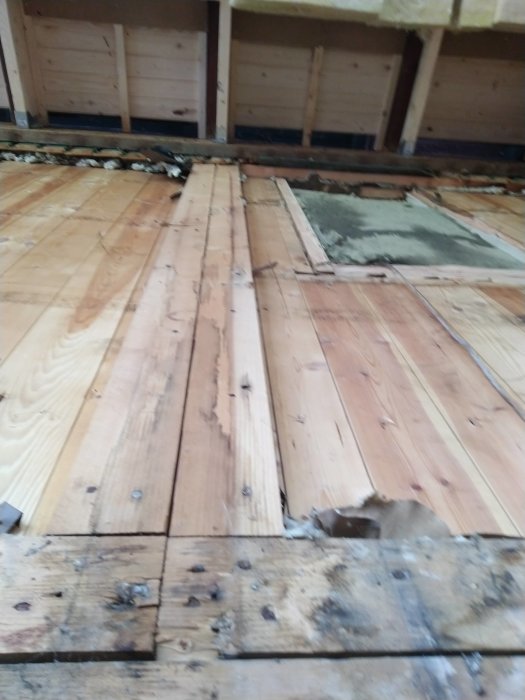
It's an old patio being furnished. The wall in the pictures is the one towards the main building from the patio. I would like a single smooth wall that can be sanded and become part of the finished structure.
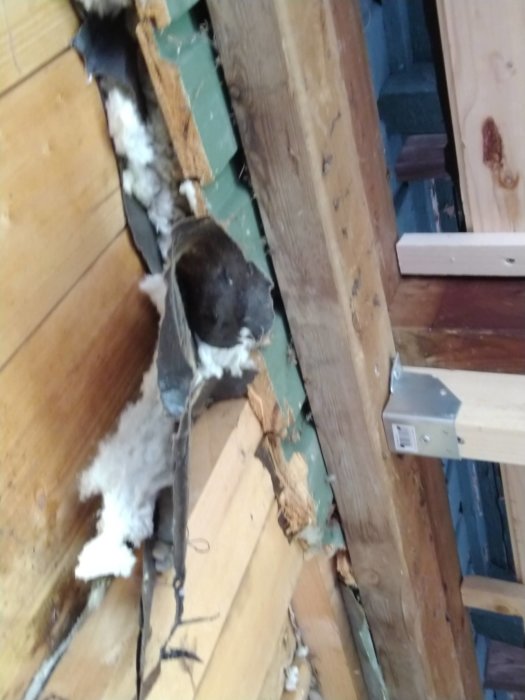
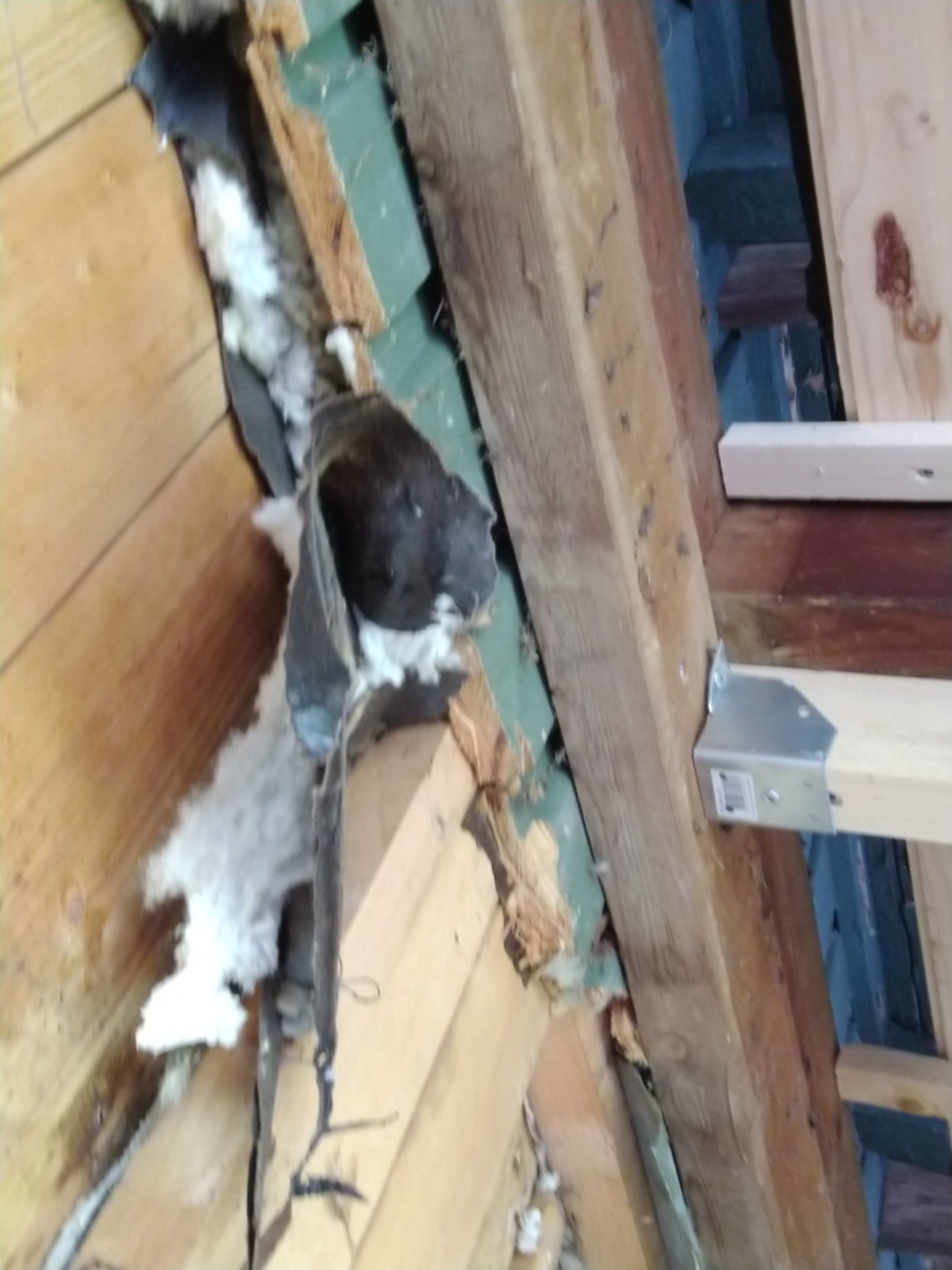
In the picture focusing on the corner between the patio roof and the wall, you can see through to under the main building's roof edge, where the green-blue sticking out from the wall is the edge of a rafter supporting the roof overhang.
The main point of the question is whether a 45mm solid wood wall is sufficient as a load-bearing structure for the approximately 2 meters in question. (if I cut it off, I will screw the part that remains above the wooden wall to the wooden wall above)
The vertical ones visible in the picture, which are 90mm wide, I'm not sure if I dare to remove them. Could they be necessary for the load-bearing structure?
I'm not a construction engineer, but it seems to me that such a vertical post is under each roof beam, and in that case, it seems reasonable that they are very important.
Any intervention in the load-bearing structure requires an approved building notification, and submitting a building notification in a condition that it can be approved may mean needing to hire a structural engineer.
KKojfabriken said:
I would like to have a single smooth wall that can be sanded and become part of the finished structure.
Don't you get that if you put up drywall on the plank frame?
I'm not a structural engineer, but it seems like there's a vertical post under each roof beam, and if that's the case, it seems reasonable that they're very important.
Any modifications to the load-bearing structure require an approved building application, and submitting a building application in a condition that it can be approved may mean you need to hire a structural engineer.
Don't you get that if you put up plasterboard on the plank frame?
Thanks for the response. The two studs in the picture are under a truss, yes, but the next similar pair is four trusses away. So if anything, it might help support the beam that the trusses rest on at one end.
I'm sure you can put up plasterboard, but the idea is to have the plank frame as the wall in the room for aesthetic reasons.
Perhaps this illustration can make it clearer. Additionally, the 95s have been battened out to make room for a very thin layer of insulation in between. It seems strange to me that one would do so if it was part of a load-bearing construction, but what do I know.
Another reason to remove them is to make it somewhat airtight (or at least air-resistant), so that there isn't leakage between the main building and the new part, by having foam sealant against the plank frame from both sides. It can still be solved, just a bit more complicated.
Click here to reply
Vi vill skicka notiser för ämnen du bevakar och händelser som berör dig.



BirgitS said:
I'm not a structural engineer, but it seems like there's a vertical post under each roof beam, and if that's the case, it seems reasonable that they're very important.