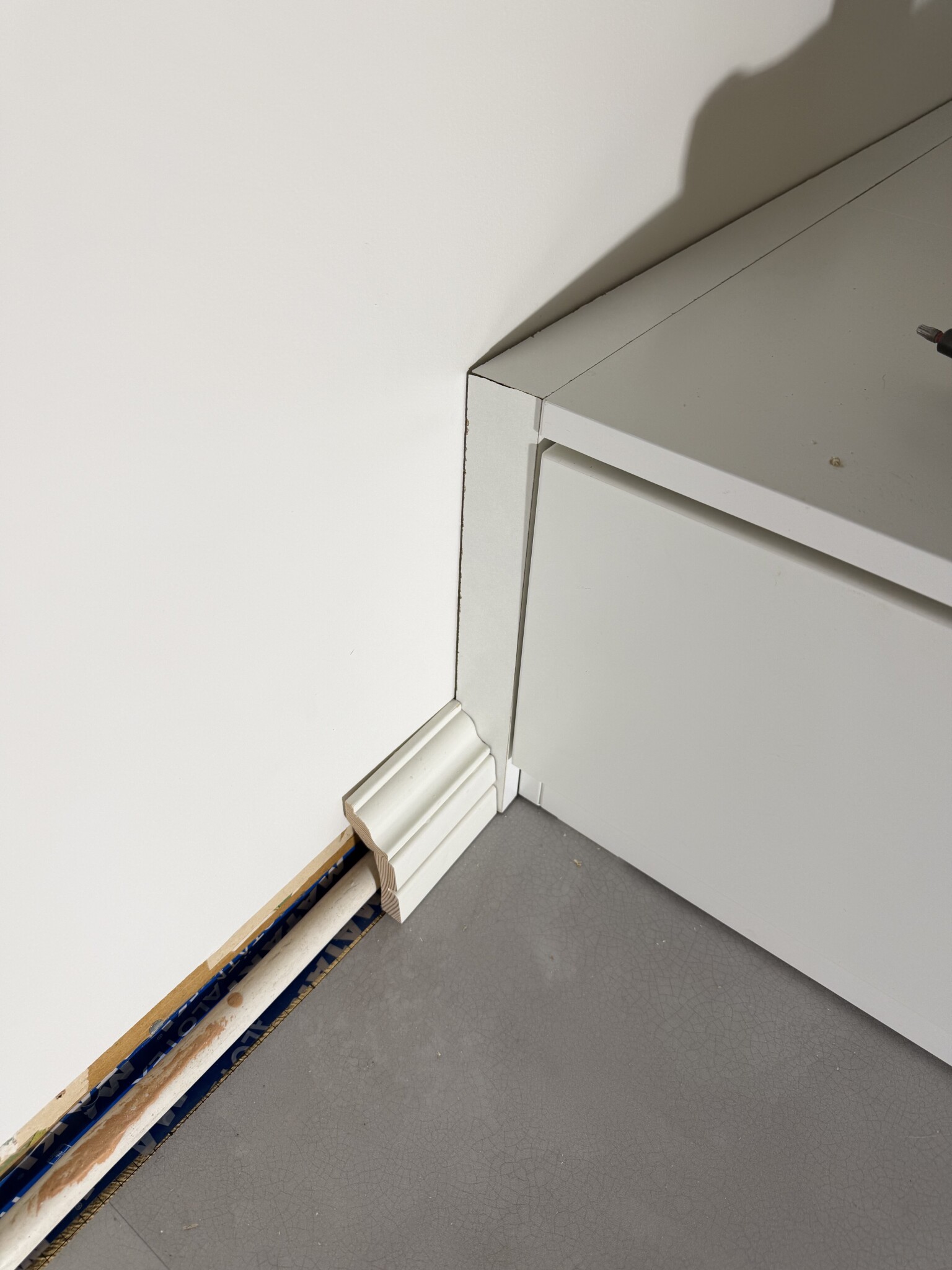
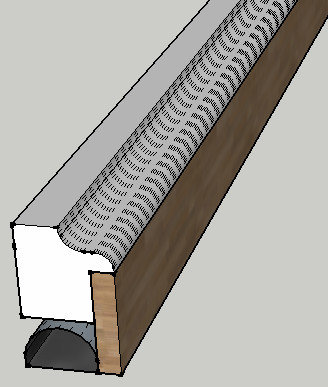
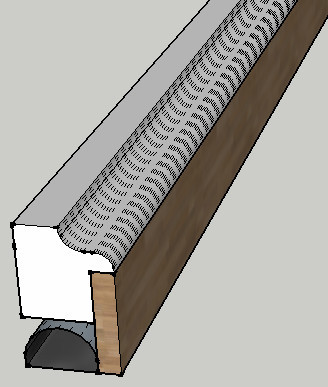
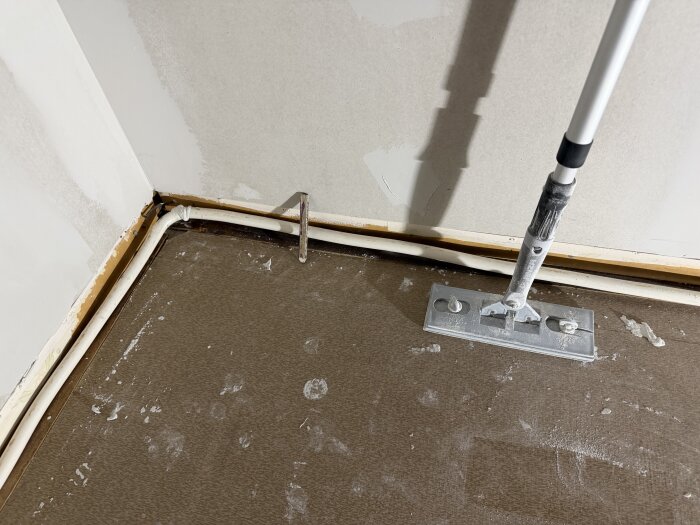
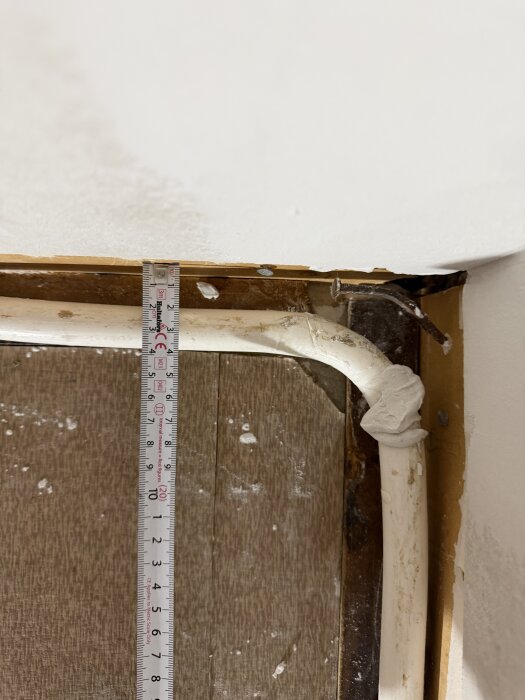
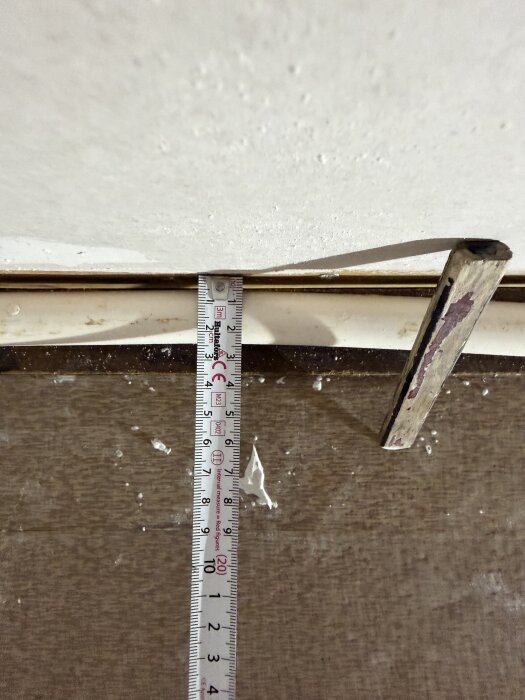
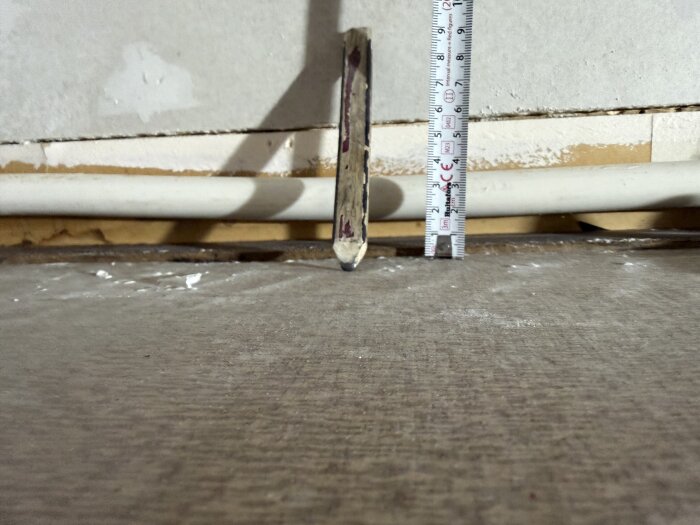
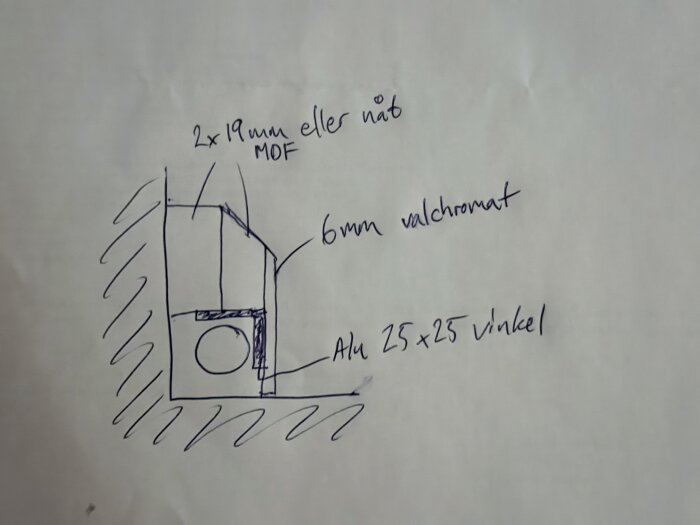
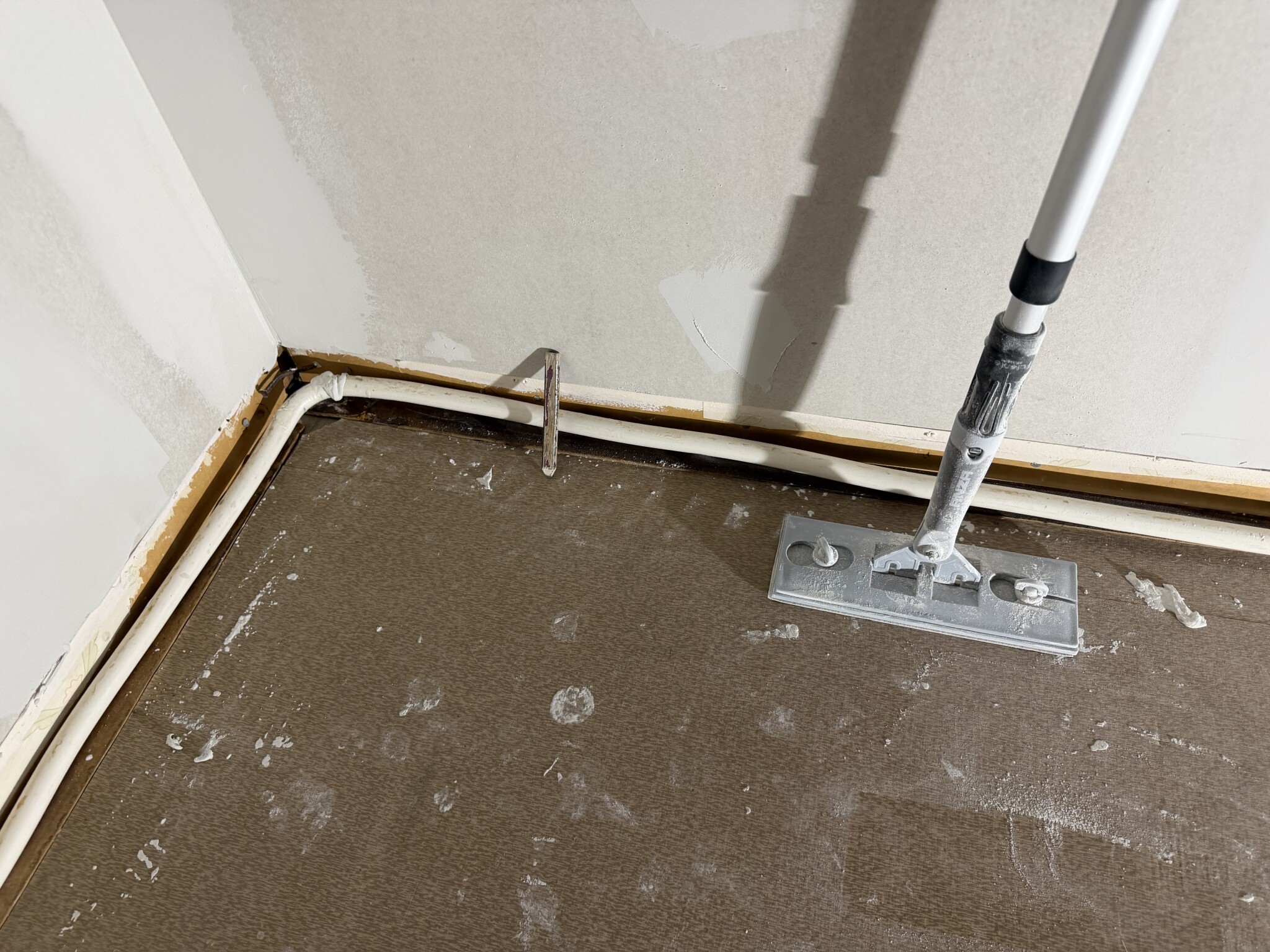
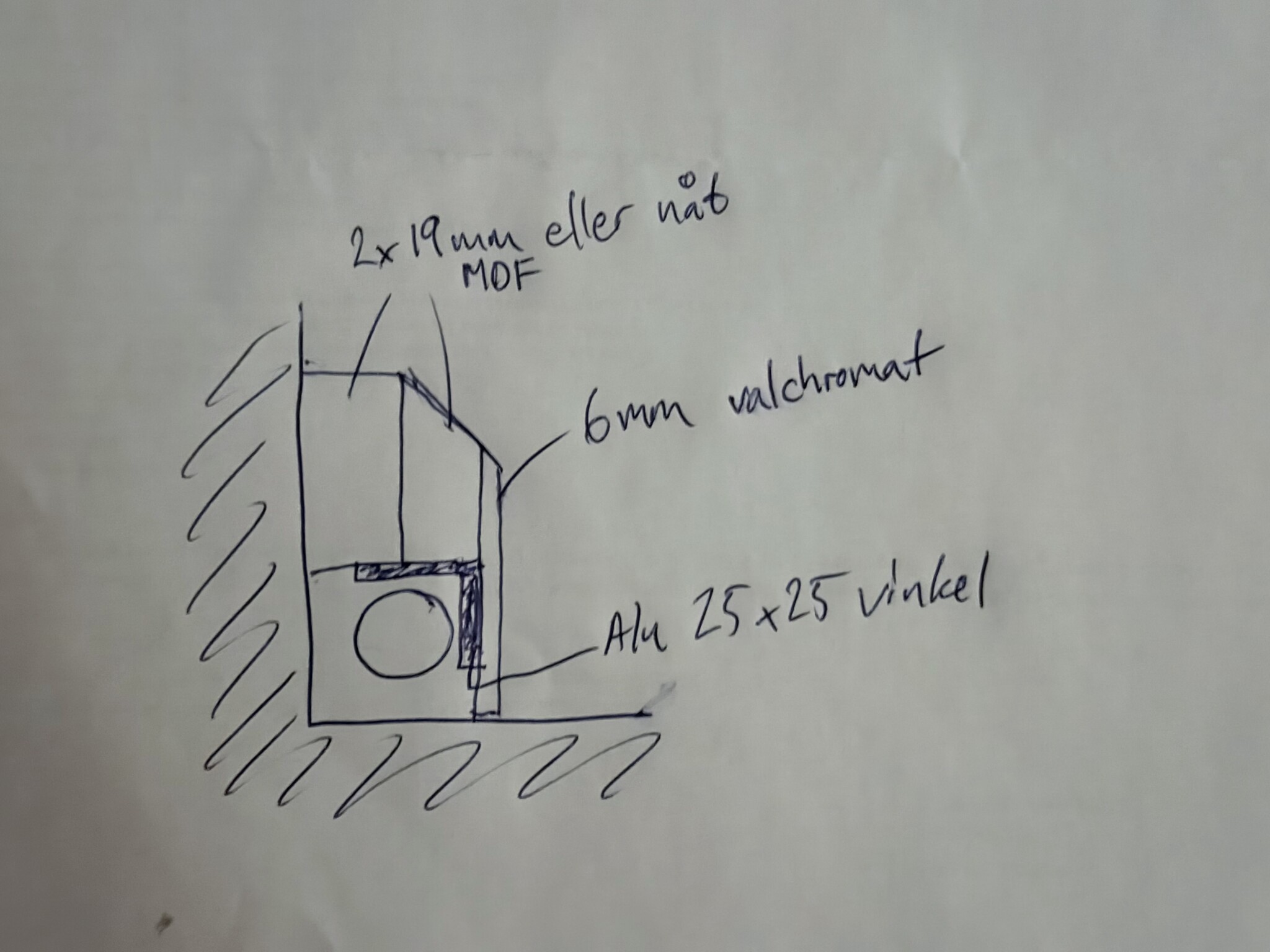
We live in a prefabricated house from Mockfjärd from '72 and have a single-pipe system for the radiator system. These pipes run along the floor by the walls and are originally covered by a thin (and rather unattractive and fragile) metal strip. We have now renovated one of the rooms with these metal strips and want to install something else like baseboards to cover/protect the pipes. Since we have laid an 8 mm click-lock floor, the pipes protrude up to 16 mm and extend 25 mm from the wall at the joints. I have sketched a homemade baseboard made partly of click-lock flooring cut into strips and partly of white-painted wood, according to the sketch below:
However, it's quite a bit of work, so if anyone has suggestions for better solutions, I am interested.
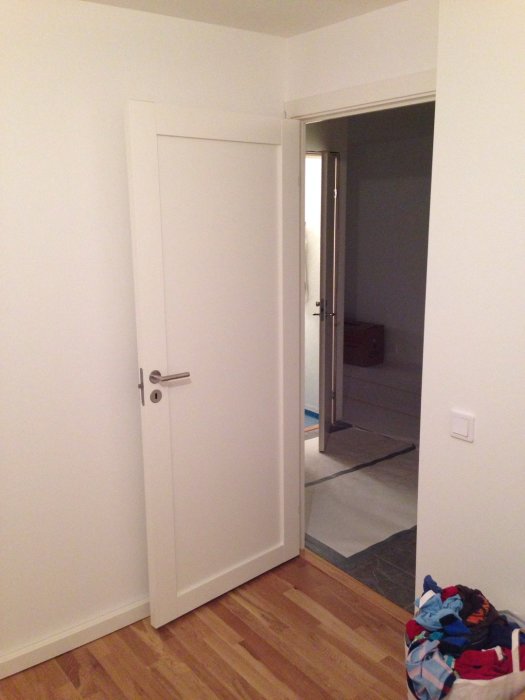
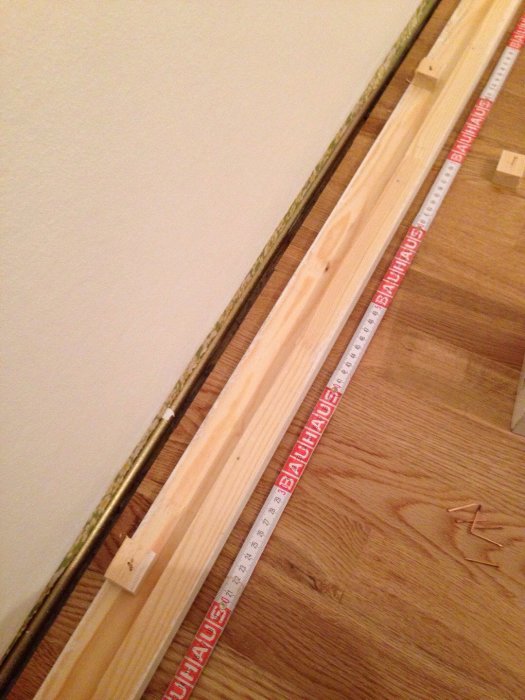
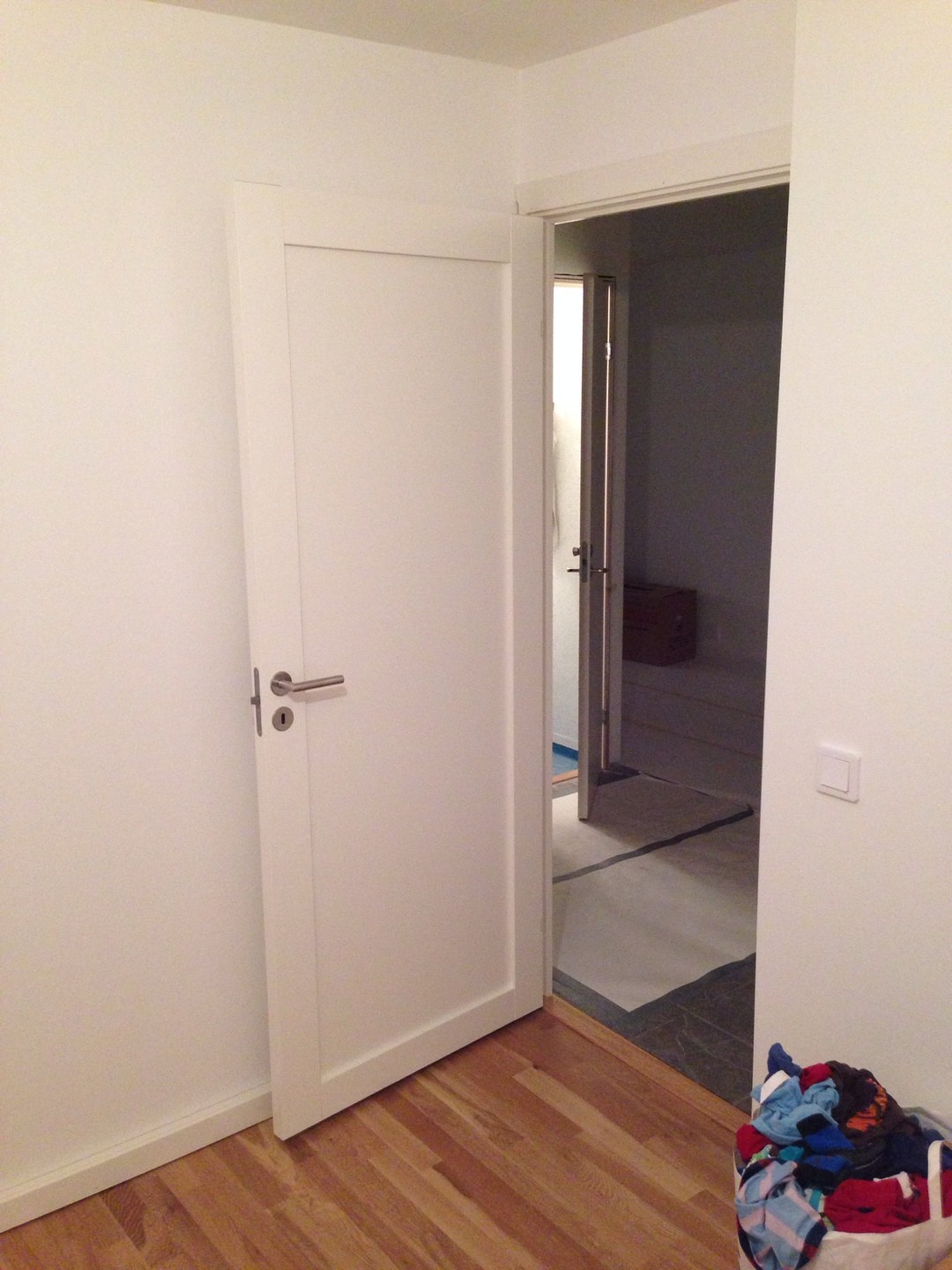
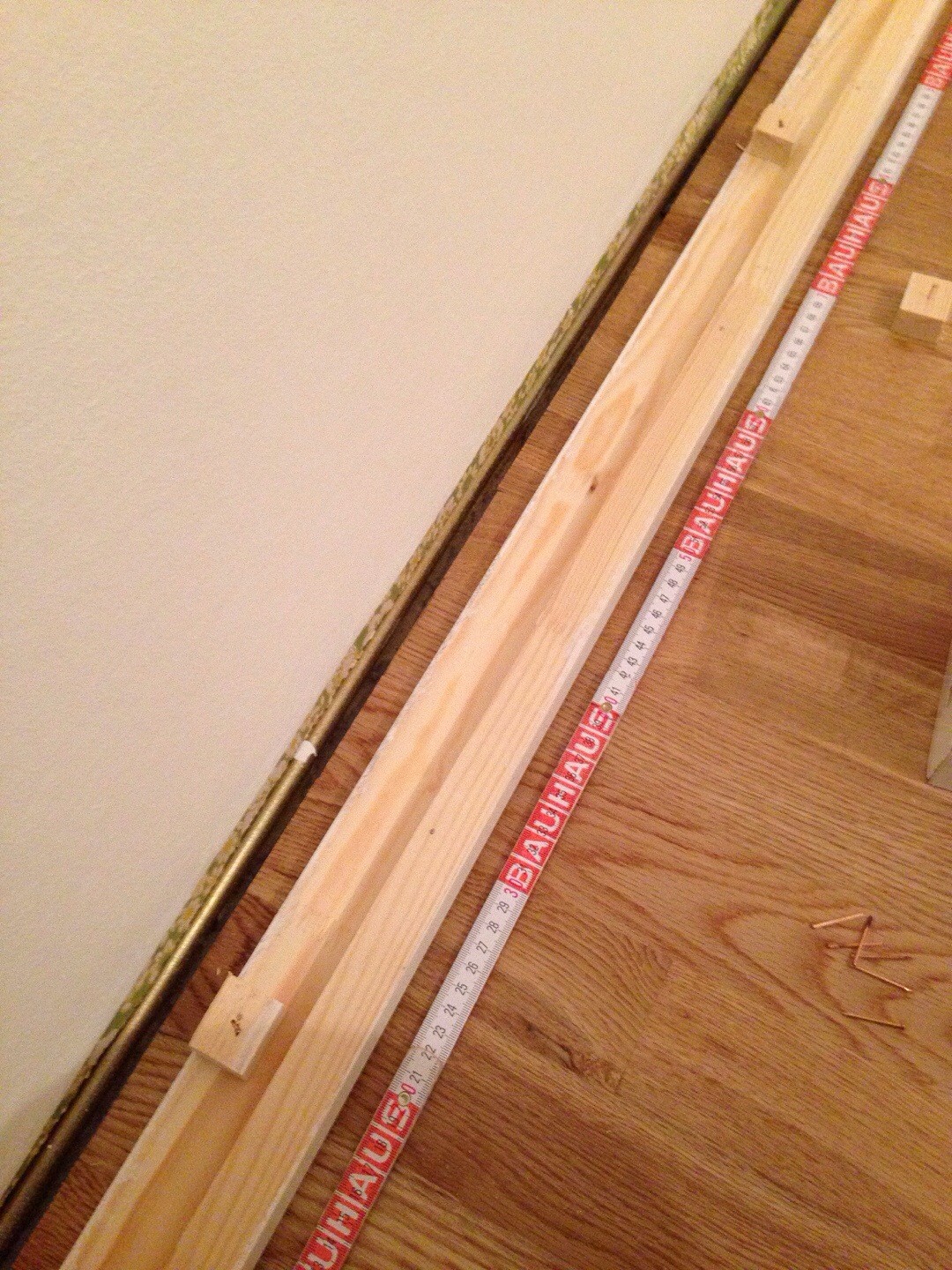
I have the exact same problem in the house I'm renovating right now. I've decided to use the same baseboard (12x69) as on the pipe-free walls, but to come out from the wall where the pipes are, I'm nailing a salningslist that is 19mm wide behind the baseboard.
It might be hard to see in the picture, also small support blocks at the bottom of the baseboard for support.
I'm nailing the salningslist a little higher than the baseboard, so it sticks up a bit behind the baseboard. I'm satisfied with the result.
Facing the same challenge and will hopefully make my own baseboards in the style of the one above.
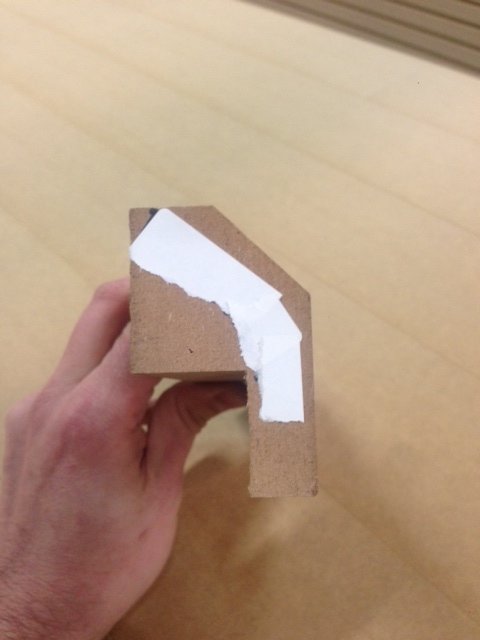
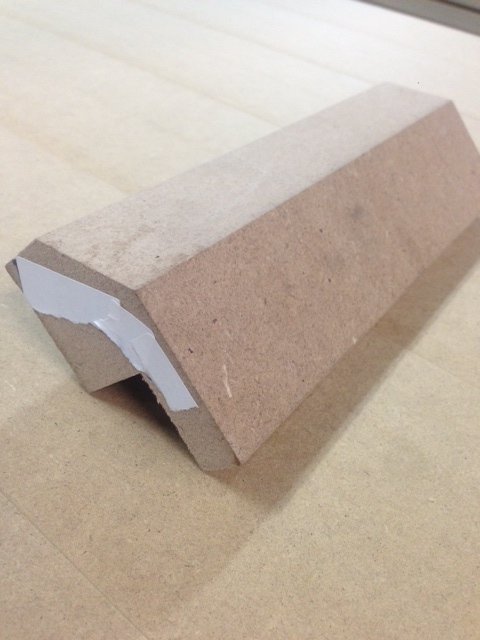
But you want them to be as sleek as possible, they're big enough already. The pipe space needs to be about 40x40 mm in my case, maybe more in the corners, so the distance from the outer edge of the baseboard to the inner wall is at least 46 mm if you choose 6 mm valchromat. But then maybe an aluminum angle on the inside is required for reinforcement? Valchromat on the outside due to moisture resistance (floor cleaning/leaking water pipes/sloppy kids).
What do you think? Is 6 mm strong enough without reinforcement from behind?
I would like my element house to remain after the operation. Replacing pipes is not out of the question, mostly to make them straighter, but I won't mill horizontally in the outer walls for obvious reasons. Much of the load-bearing capacity would be lost then.
My dad installed radiator pipe casings (single-pipe system), with the side that was supposed to be facing outwards (the concave side) facing inwards, and the three sides that were meant to face the wall/ceiling facing outwards.
In broad terms, my solution looks like the drawing at the start of the thread, but with some practical simplifications. Today, it consists of three parts:
A square strip that is screwed into the wall
A cove molding (15 or 20 mm, can't remember exactly) that is attached on top of it and protrudes five to six mm beyond the strip
A strip of click flooring set vertically as a covering against the above and finally encapsulating the pipe. In the basement, it is also equipped with slots every 50 cm to allow the air to circulate better.
The click flooring thus replaces valchromat. It also matches the floor, making the solution a bit less visible.
What do you think? Is 6 mm strong enough without reinforcement from behind?
A good question. Don't you have a piece to test how durable it is at 6 mm? Is there a difference besides moisture resistance between Valchromat and regular MDF, otherwise a piece of regular MDF should suffice for testing?
If there's space to place a 3 - 12 mm thick strip (hardboard, wood, MDF) on the floor under the pipes and against the wall, it would serve as a backrest at the bottom, which should mean that it would take something heavy, hard, and more or less sharp to pierce a 6 mm strip. I would be greatly surprised if that wouldn't hold.
Ok, I hate vacuuming and easily get angry 😡 about it, which leads to brutal use and handling of the nozzle and vacuum cleaner, so there's a durability threat there. But it requires having a robust vacuum cleaner/nozzle that can withstand such treatment... 🫣










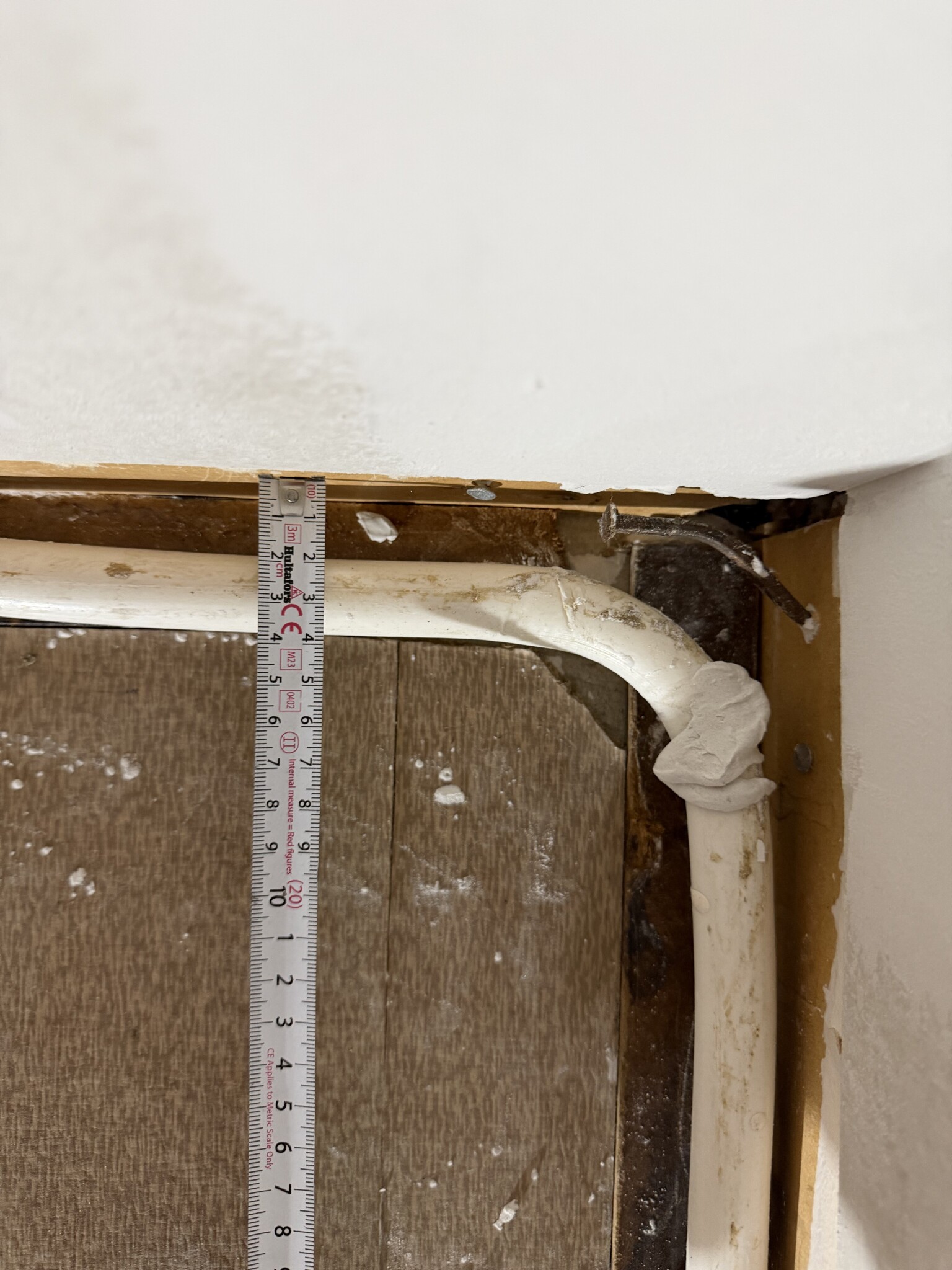
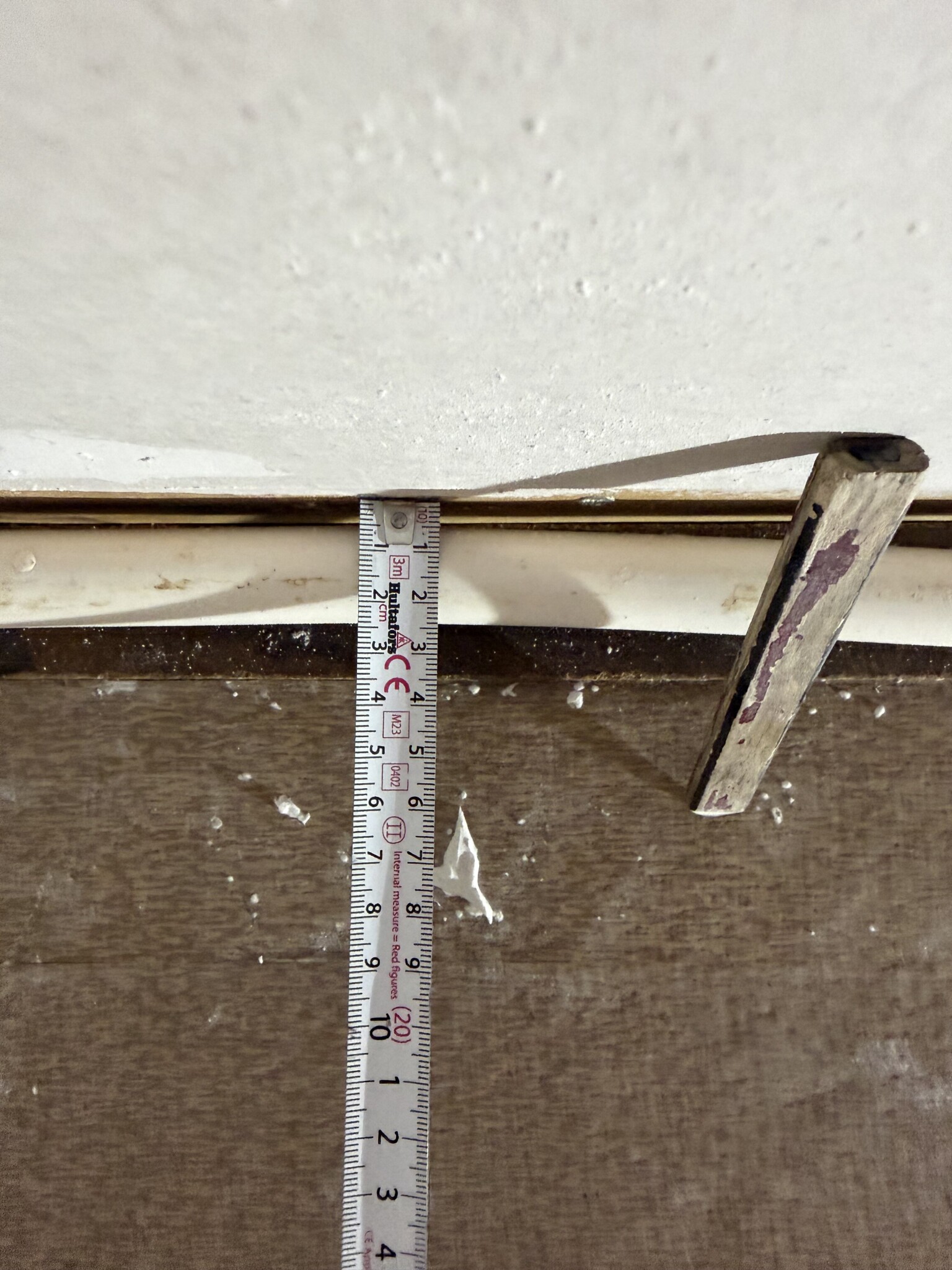
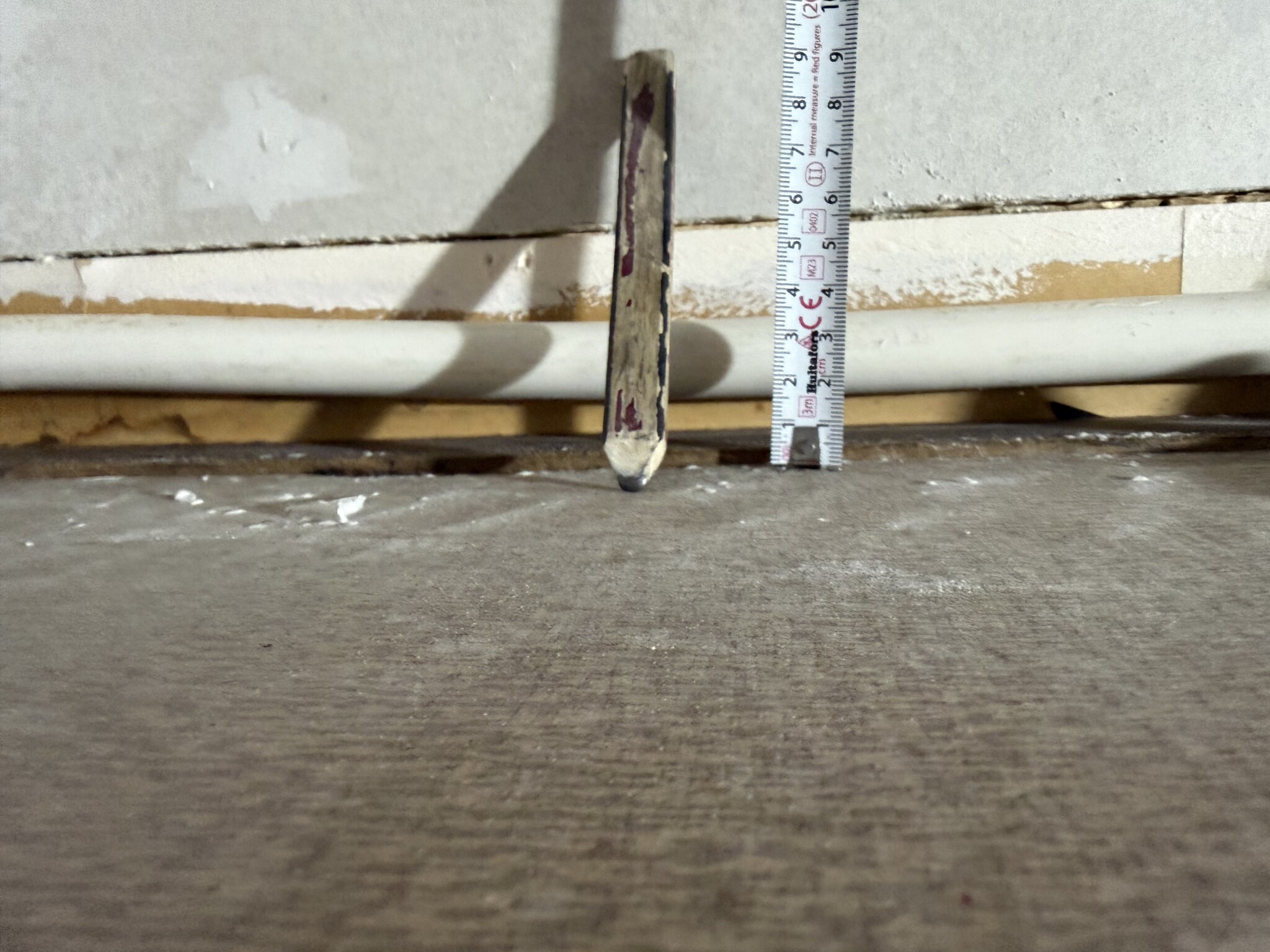

pjgb said: