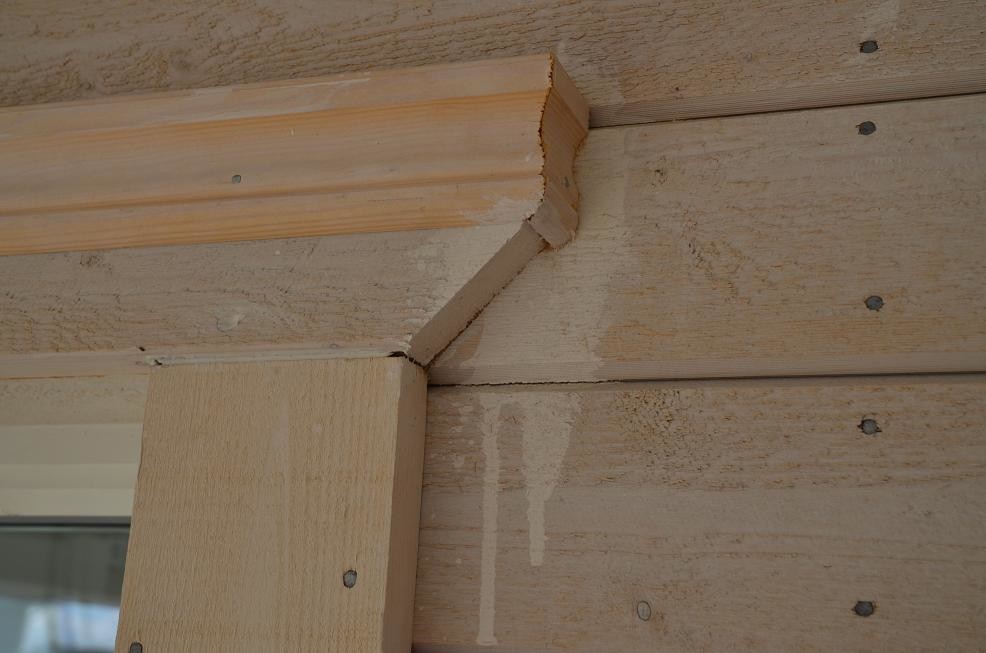
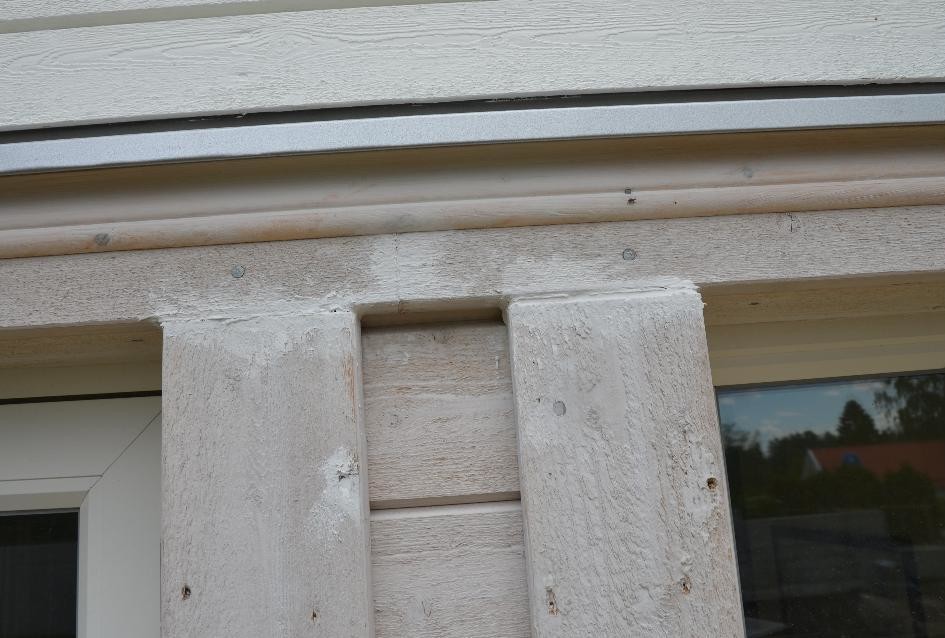
Are there any regulations on what is allowed in the joints on moldings and trims on the facade in small house contracts?
I have heard that caulk cannot be used to conceal these gaps, spaces.
However, a 2 mm gap is allowed. A gap over 2 mm should be addressed by replacing the wood or moving the existing wood.
Where can these regulations be found?
Is my statement correct?
What is commonly done is one thing, but what does the regulation say?
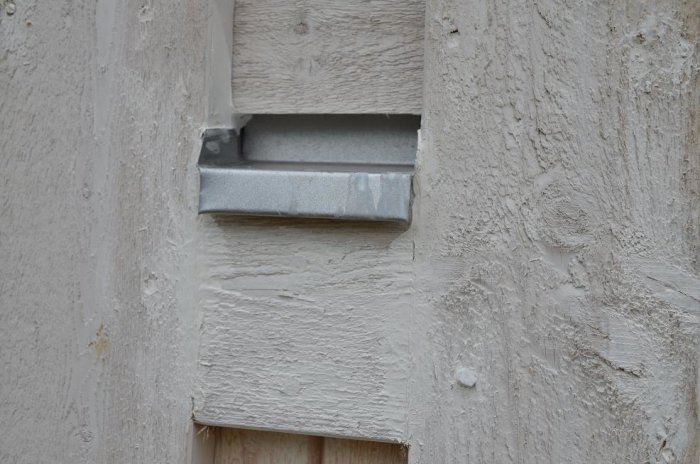
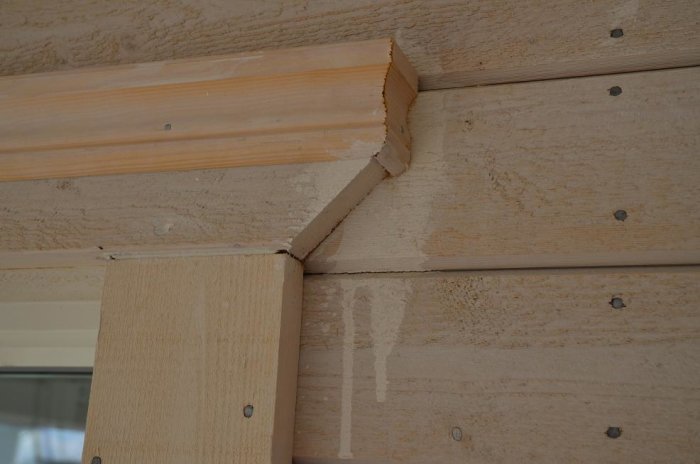
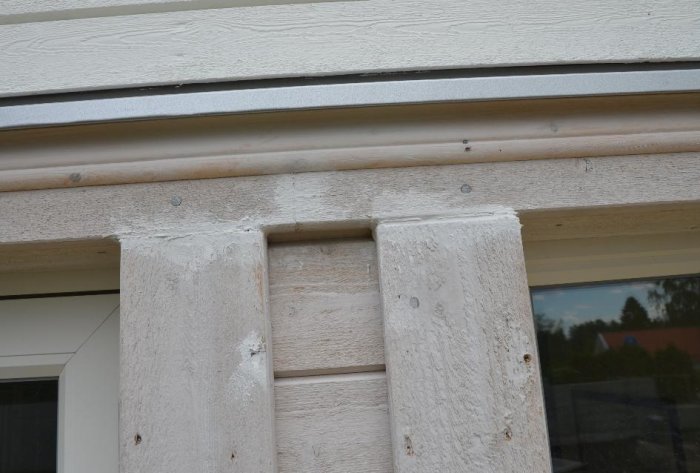
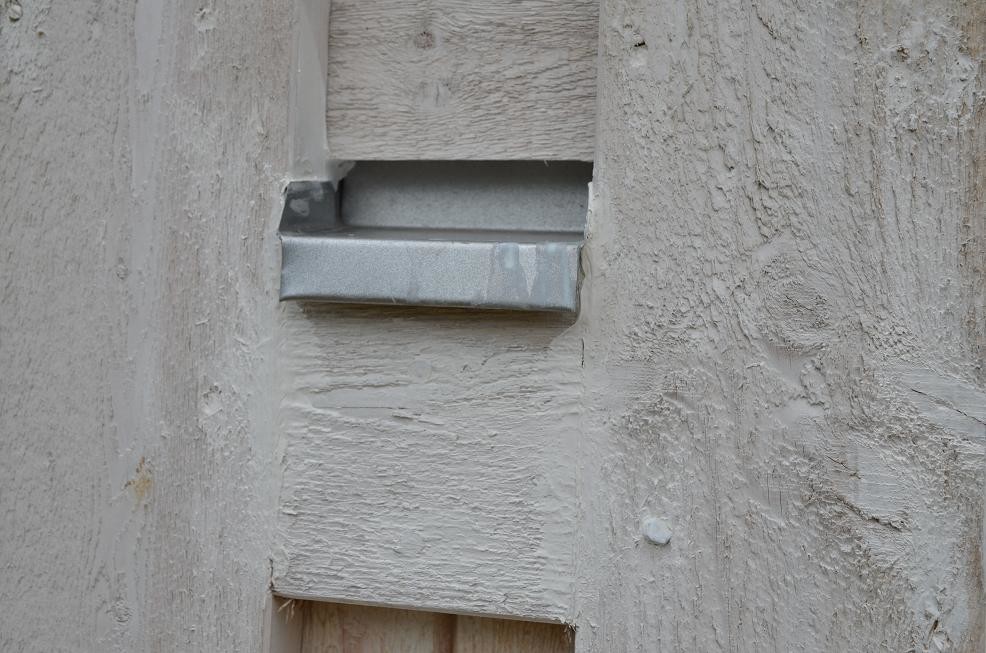
The pictures basically represent how all the joints and trims look on the house.
As far as I know, there is no law that stipulates the size of gaps in facade materials. Wood moves, so gaps are hard to avoid. Now, I am definitely not a builder, so I am very likely wrong, but I believe people usually seal with an elastic sealant precisely so that it can move. The important thing is that water cannot become trapped behind the sealant. I think it looks okay in your case. Shouldn't there be paint applied there later on too?
There is no law that stipulates gap sizes in facade materials that I know of. Wood moves, so gaps are difficult to avoid. Now, I am definitely not a builder, so I am very likely wrong, but I have the impression that you usually caulk with an elastic sealant precisely so that it can move. The important thing is that water cannot get trapped behind the sealant. It looks okay in your case. Should there be some paint there later on?
Spoke with an authorized Inspector for the Chamber of Commerce, and he said the following:
Sealant should not be used
Gaps must be a maximum of 2 mm
Gaps over 2 mm must be addressed, but not with filler and sealant.
Something that is perhaps stated in Bygg / Hus AMA 11?
That probably looks the same on most wooden houses, I don't see any problem with it! You can always find faults if you look long enough!
You don't need to look here, as it is over all facade parts and BM said it was the worst he has seen through his entire career, and he is retiring in 2 years.
Called the homeowners:
House AMA 11, HSD 167, states the following ...
- The wood should be fully edged (i.e. 90-degree corners all around)
- Molding, casings, trims, etc. externally "joints in angle shall be designed in fitting," which indirectly means no sealant is needed, according to the inspector.
Many carpenters call caulk the "white gold"... It is indeed invaluable for concealing small fitting errors. However, I think your pictures seem just fine, and once painted, it won't be noticeable.
In picture 1, where you see a strange little metal sheet, I think the carpenter did the right thing by sealing the gaps. Water will run from the metal along the seams, so making it extra tight there is just good.
In picture 2, there is nothing to complain about, I think? Is the gap really larger than 2mm?
Picture 3 looks a bit messy. Maybe not entirely okay. But as I said, with paint on, it should turn out fine?
It is perfectly fine to seal as long as you use a high-quality paintable SMP/MS construction sealant for outdoor use. It is best to seal after the wood is primed and base-coated but before the final coats. Once painted over with the correct paint, it lasts as long as the paint, and when it's time to repaint the house, you scrape off any bad sealant and apply new. It looks much nicer with sealant in the gaps, and you get even better protection for the end grain, which becomes almost fully protected.
If you look at the carpentry in the early years, you will see that new "joints" appear as the wood changes over the seasons due to humidity and because new construction wood is still not completely dry. It also twists a little.
Then you should take this "The wood must be full-edged (i.e., 90-degree corners all around)" with a grain of salt because, for example, some primed wood has a chamfer upon delivery, so "all wood" should have it is not true.
But the foundation should still be a well-executed carpentry job where construction joints should not be a solution to hide poorly executed work.
looks boring, but unfortunately that's how it has to look when you can't or don't know how it's supposed to look. Those builders could perhaps learn to plan the job.
On my own build, I haven't used sealant to seal gaps because there aren't any, none of the timber on my house has moved since it was put up 3 years ago. All the timber on the outside is nailed with stainless steel ring shank nails according to the rulebook, whereas in the TS pictures there are big blobs from the 3-inch nails.
If you look at the carpentry in the first few years, you'll see new "joints" appearing as the wood changes with the seasons due to humidity, and that new timber isn't completely dry yet. It also twists slightly. Then you should take "The wood should have full edges (i.e., 90-degree corners all around)" with a grain of salt since, for example, some primed wood has a chamfer upon delivery, so "all wood" should have it is not accurate.
But the foundation should still be a well-executed carpentry job, and a building joint must not be a solution to hide poorly executed work.
Exactly, and since there may not be building joints on 5 molding seams out of a total, say, 200, I mean that it's to hide. More the rule than the exception.
The regulations should be followed, in my opinion, like "- Molding, jambs, trims, etc. externally "joints at angles should be made to fit",
If you've paid for wood, you shouldn't get caulk. I've looked around at all the houses/neighbors and there's not a trace of caulk with them.
But the line isn't just there, all damages have been repaired with caulk too, so that explains the builder's attitude.
But you here on the forum might think it's okay to buy furniture from IKEA where the components don't quite fit? Send a tube of caulk with it, and that's okay? ! Or?
looks dull, but unfortunately that's how it has to look when you don't know or haven't learned how it's supposed to look. Those builders maybe should learn to plan the job.
On my own build, I haven't used caulk to seal gaps as there are none; no timber on my house has moved since it was put up 3 years ago. All the wood on the outside is nailed with stainless steel ring nails, according to the rulebook, while in the TS pictures there are large heads from the 3-inch nails.
[bild]
[bild]
How has it gone with the house? Has the siding held up against rot?
So you've cut the siding exactly to fit against the trim. And haven't used any caulking?
I wouldn't want any caulking between the wood pieces as it only traps water there. I can understand that they've caulked at the metal, but otherwise, I just think it looks like an attempt to hide the gaps.
Vi vill skicka notiser för ämnen du bevakar och händelser som berör dig.