The question is: How high does the mold go in my damaged inner wall?
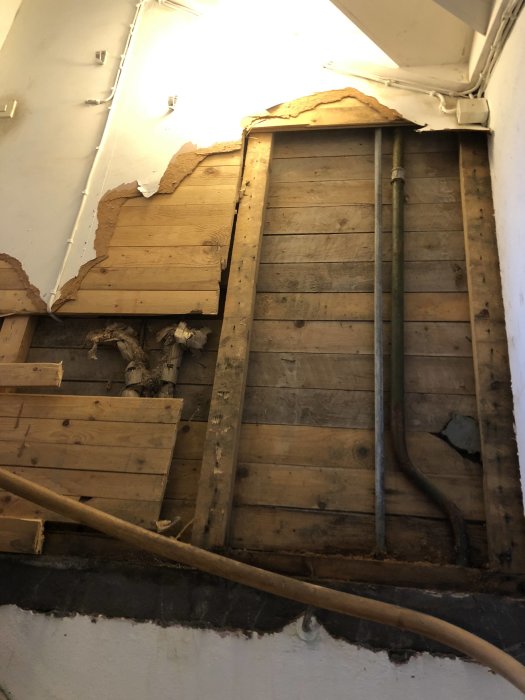
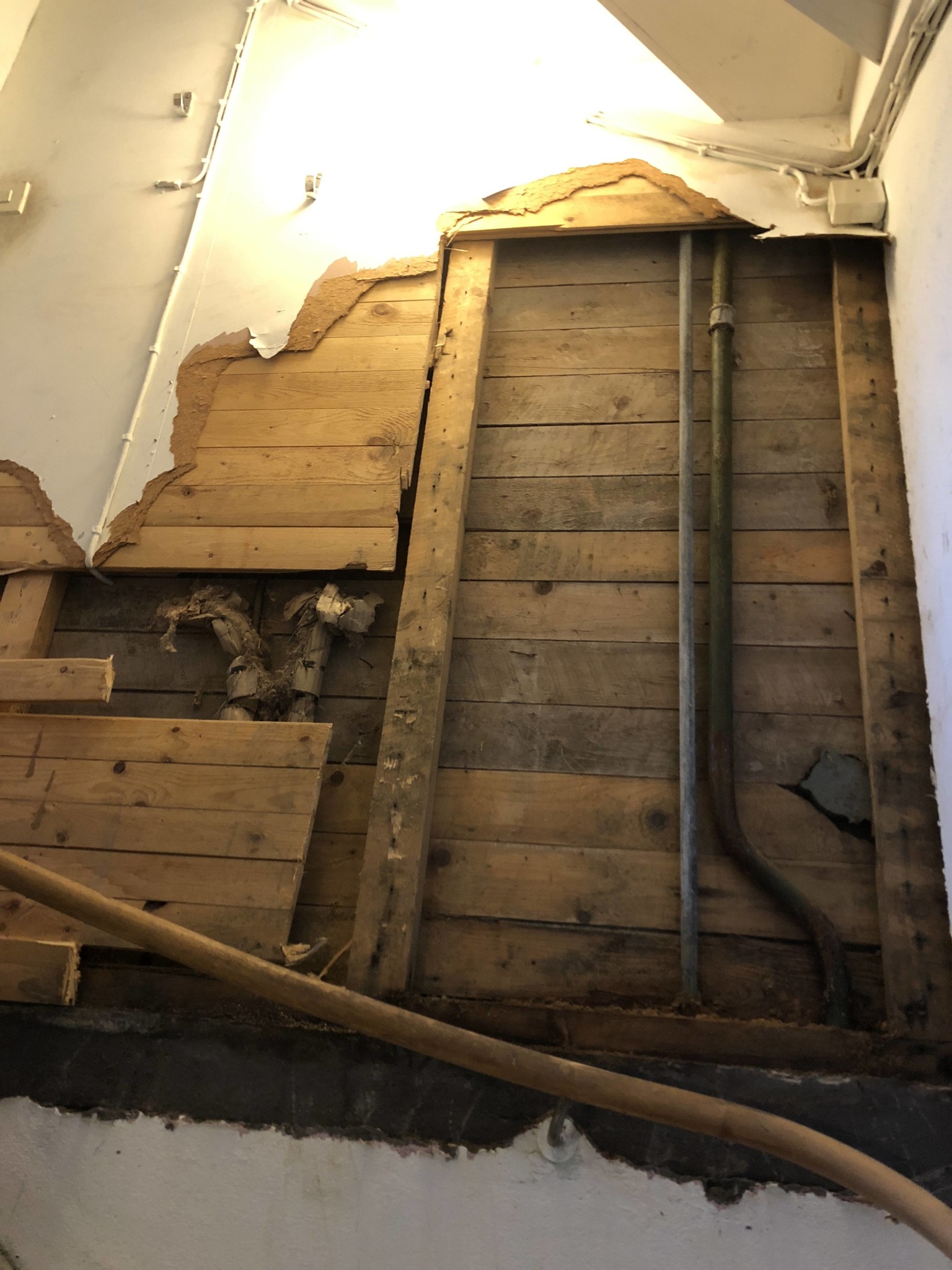
We've got water damage, and I'm currently breaking open the first wall (basement stairs), where it was the worst. Here's what it looks like after some time with a crowbar and circular saw:
Picture taken from the bottom of the stairs; use the railing and light switch for size comparison. I've removed the masonite and parts of one plank wall, which was quite green and fuzzy.
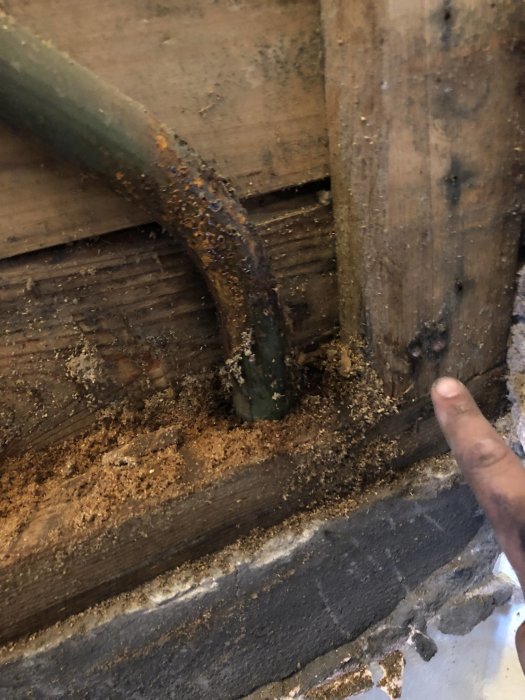
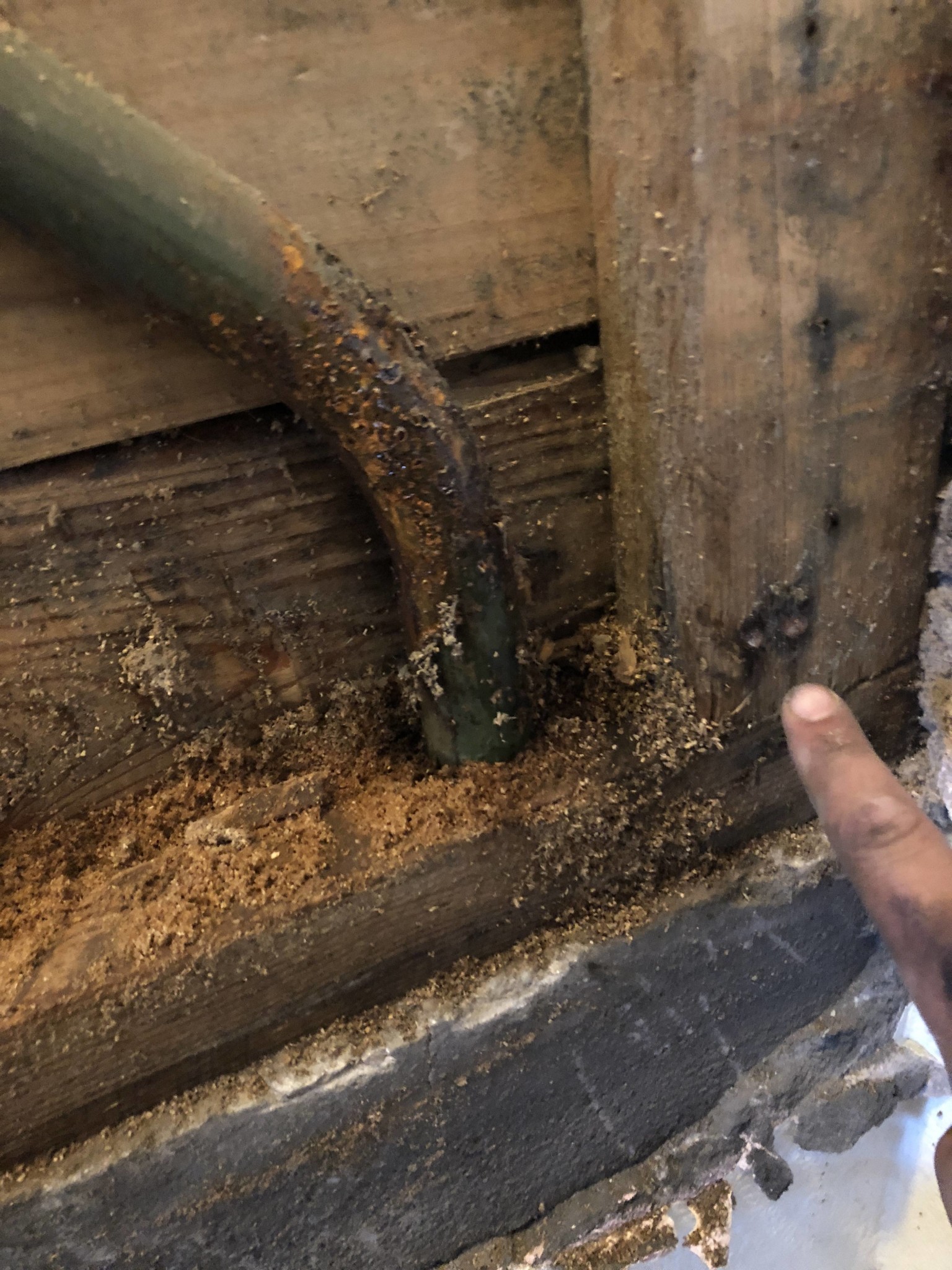
Here you can see mold growth on decaying studs, at the bottom corner. The moisture damage occurred because water ran along the pipe to the left.
The question is whether the mold made its way up into the partition wall and also into the next stairwell?
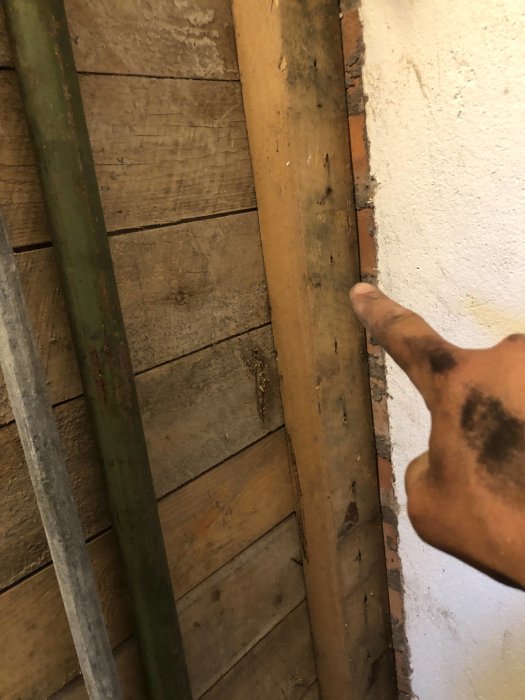
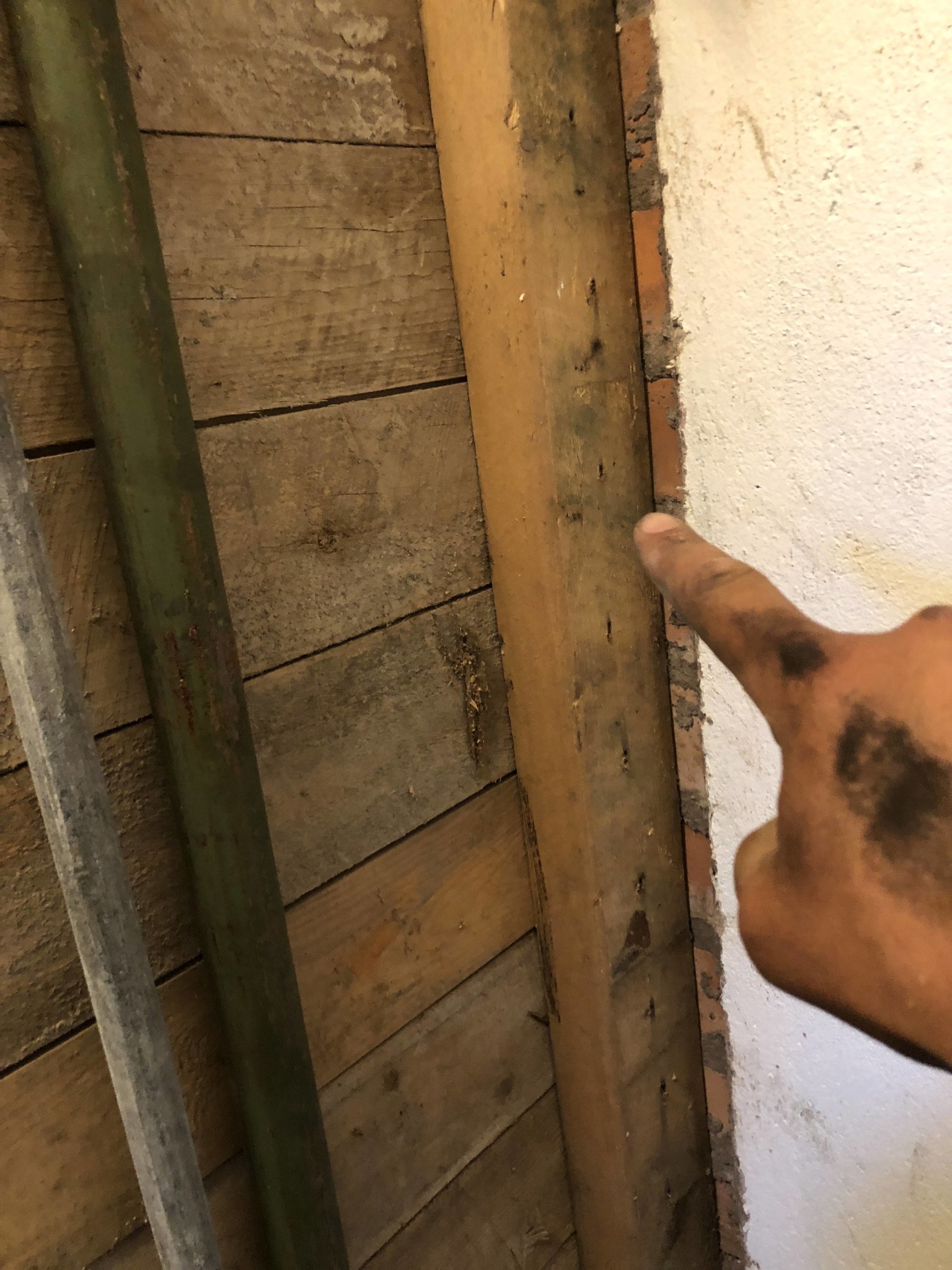
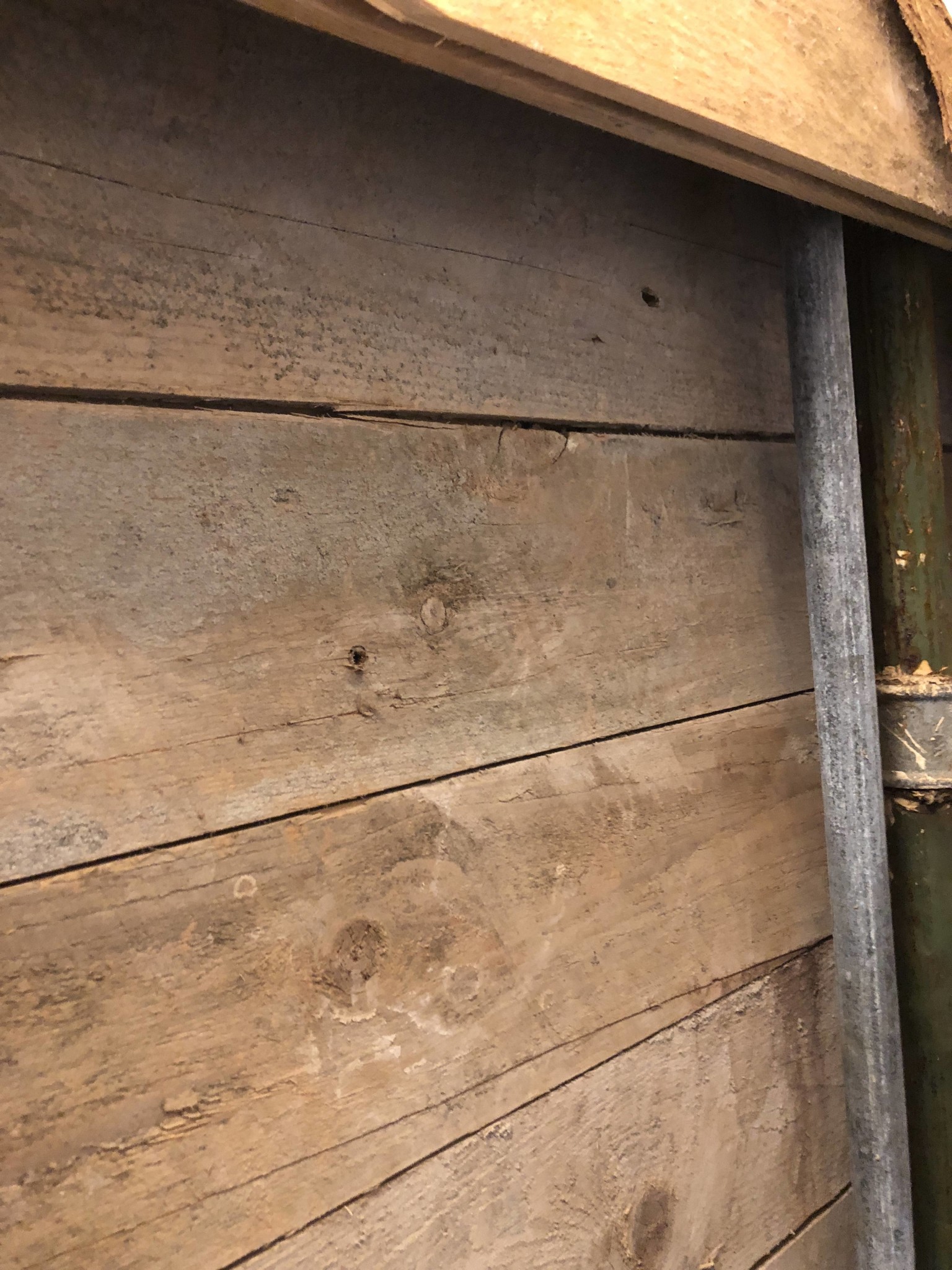
Halfway up the opened section, about 15-20 cm, it looks like this:
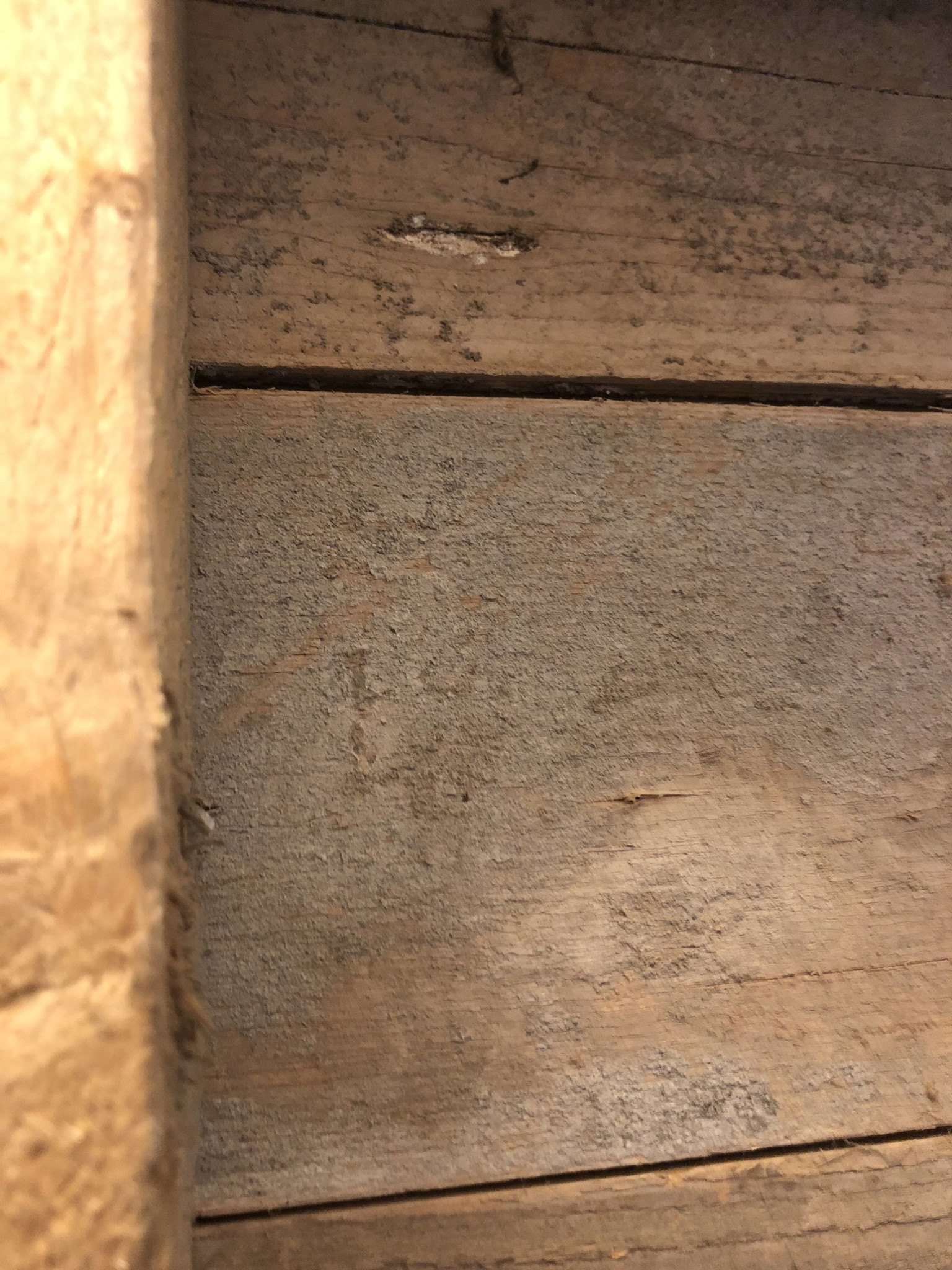
Continued mold spots at the very back. But - on the other side, it looks like this:
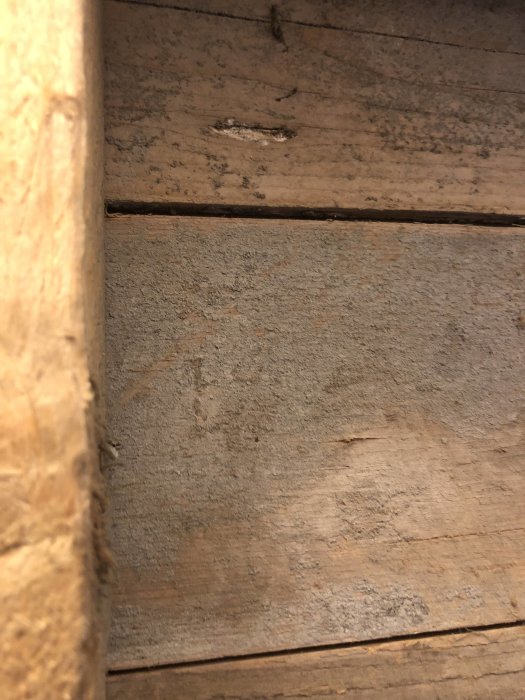
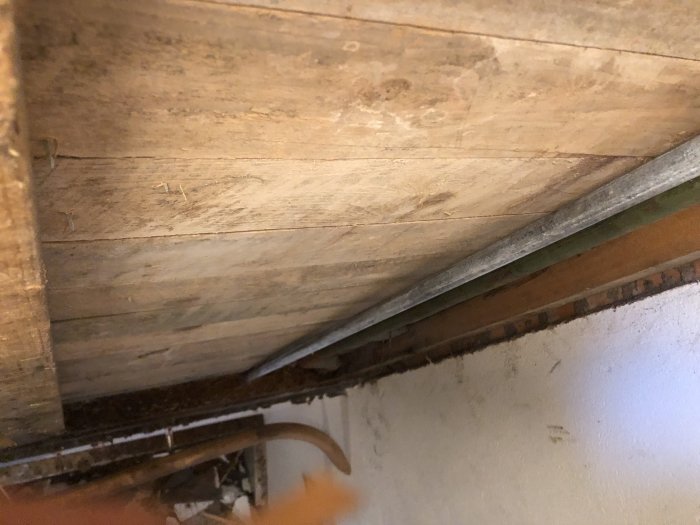
This gray area - is it mold, or natural aging? (The house is 60+ years old.)
Close-up:
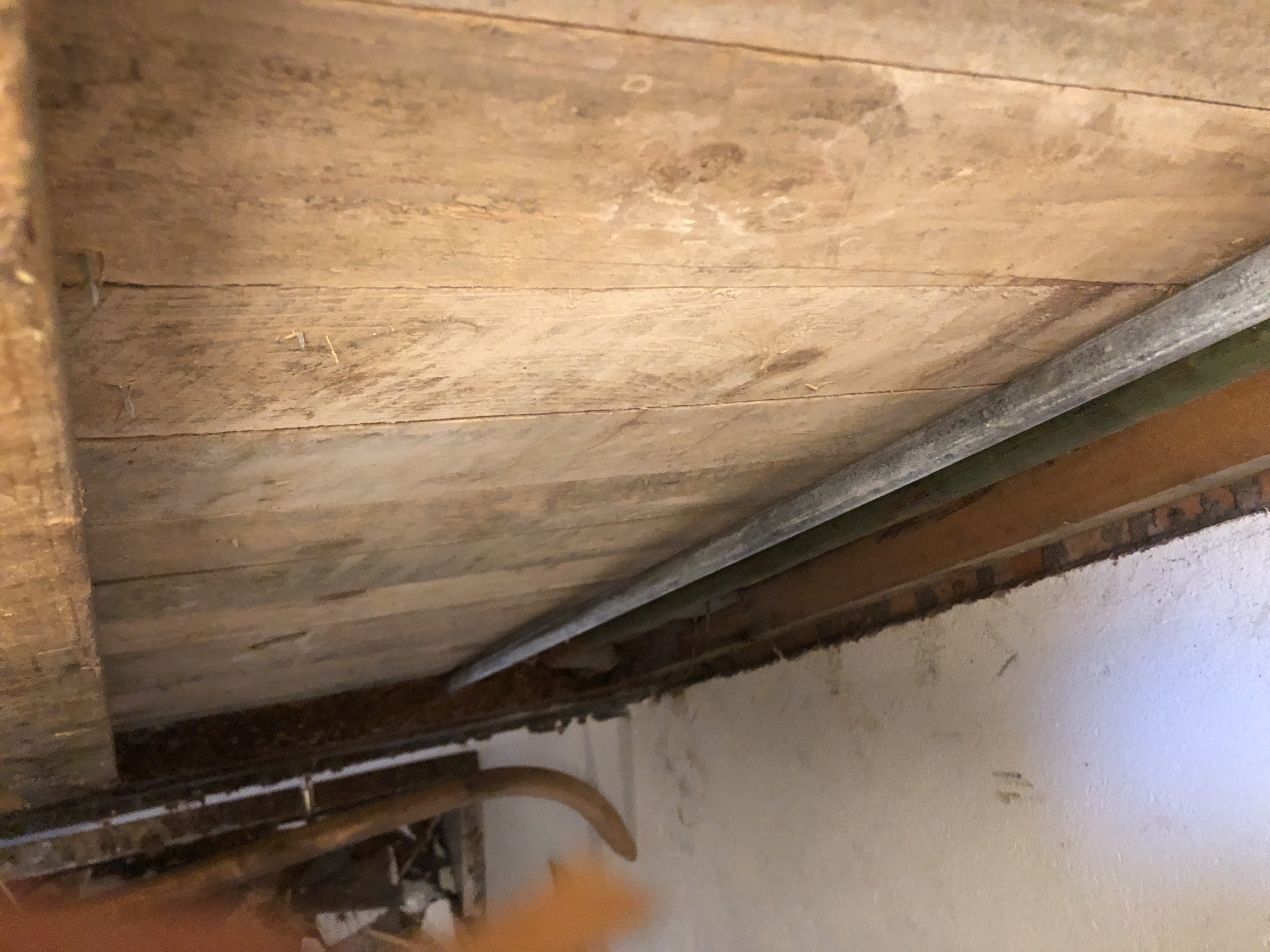
Overview taken from top to bottom along the wall:
So what do you think? Could the mold have spread all the way up into the next stairwell as well? Or is it enough to just dry out (and replace the wood at the bottom)?
Not an expert in this area but it seems like you have ripped sufficiently. The wood with gray on it looks at first glance like formwork that has been reused, meaning that there are concrete residues. But you should probably be able to determine that by scraping it and seeing if it's hard.
The wood with gray on it at first glance looks like reused formwork, meaning it has concrete residues.
You could very well be right about that! I didn't think of it (is/was it common to do so?)
I scraped a little on it now, and it sure does look like concrete residues indeed.
YOU might be very right about that! Didn't think about it (is/was it common for people to do that?)
Scratched a little on it now, and it does seem to always look like concrete residues.
[video]
Don't know how common it is but I've found it here and there in our house from 1929.
I think the film shows growth. I've encountered concrete residues in reclaimed planks in old buildings, and you can't scrape it off with a nail.
There are lots of mold varieties and fungi whose growth gives different appearances and structures. But if you want to know, you can send for analysis. Otherwise, the best thing is to address the cause, replace as much material as you can manage, and clean the rest with mold remediation fluid. A water damage that has been damp for a long time can create a favorable climate for mold even high up in the structure.
Buy a moisture meter and check if the wood is moist
Yes, exactly, but I already know that it's moist, it's been measured and confirmed by the insurance company's representative. What I'm wondering about is the risk of how far the mold might have spread.
We choose cash compensation and to do the work ourselves. That way we can have more control over it ourselves.
Sure, but the insurance company must have prepared a basis for any subcontractor about what needs to be done, check how much the insurance company "requires" you to remove so you don't save and then find out you still have mold left. (the insurance company is unlikely to cover a second mold damage there)
Vi vill skicka notiser för ämnen du bevakar och händelser som berör dig.



Peter_Henry said:
In my experience with water damage, working a lot with Relita and water damage, that is very likely a fungus and not concrete residue.
ricebridge said: