
8,310 views ·
17 replies
8k views
17 replies
Moisture in basement wall
Hi!
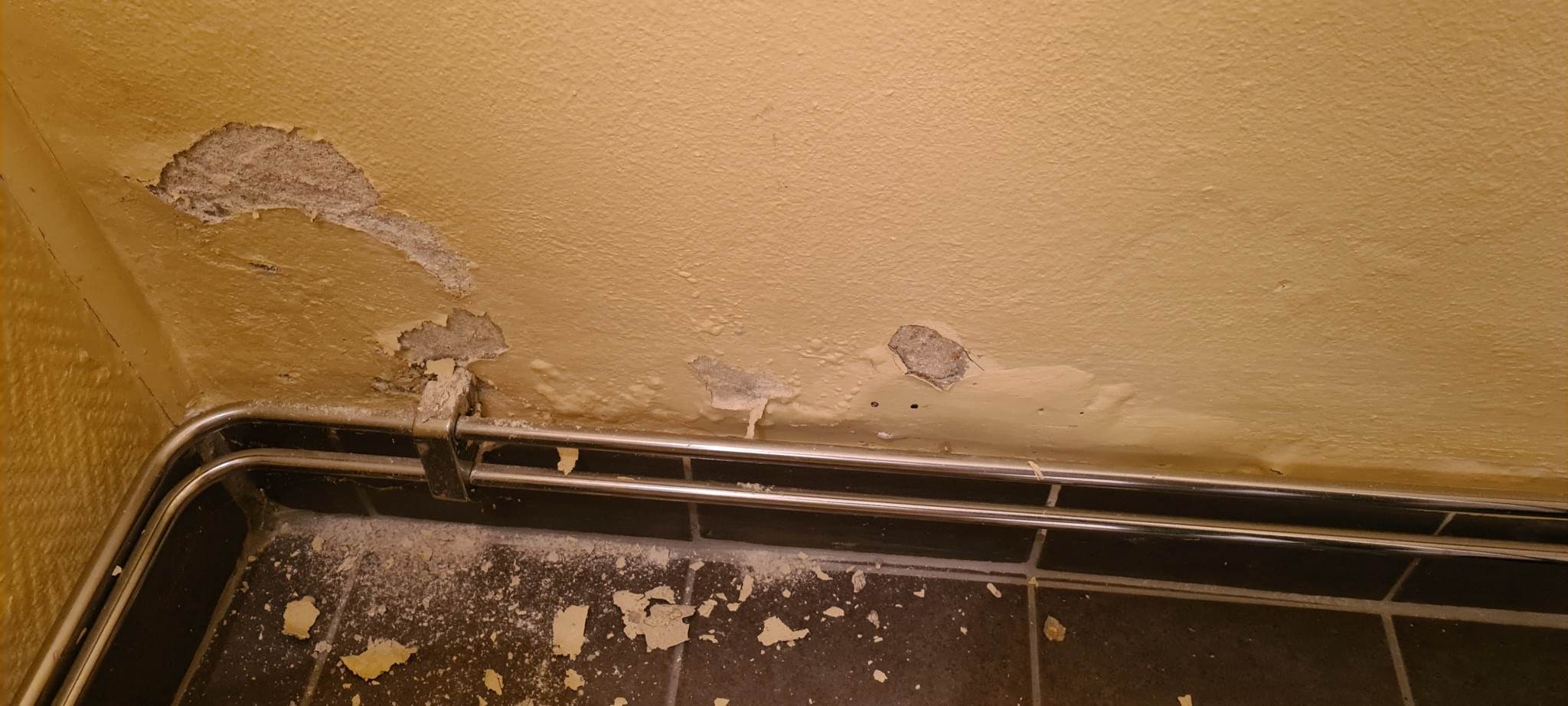
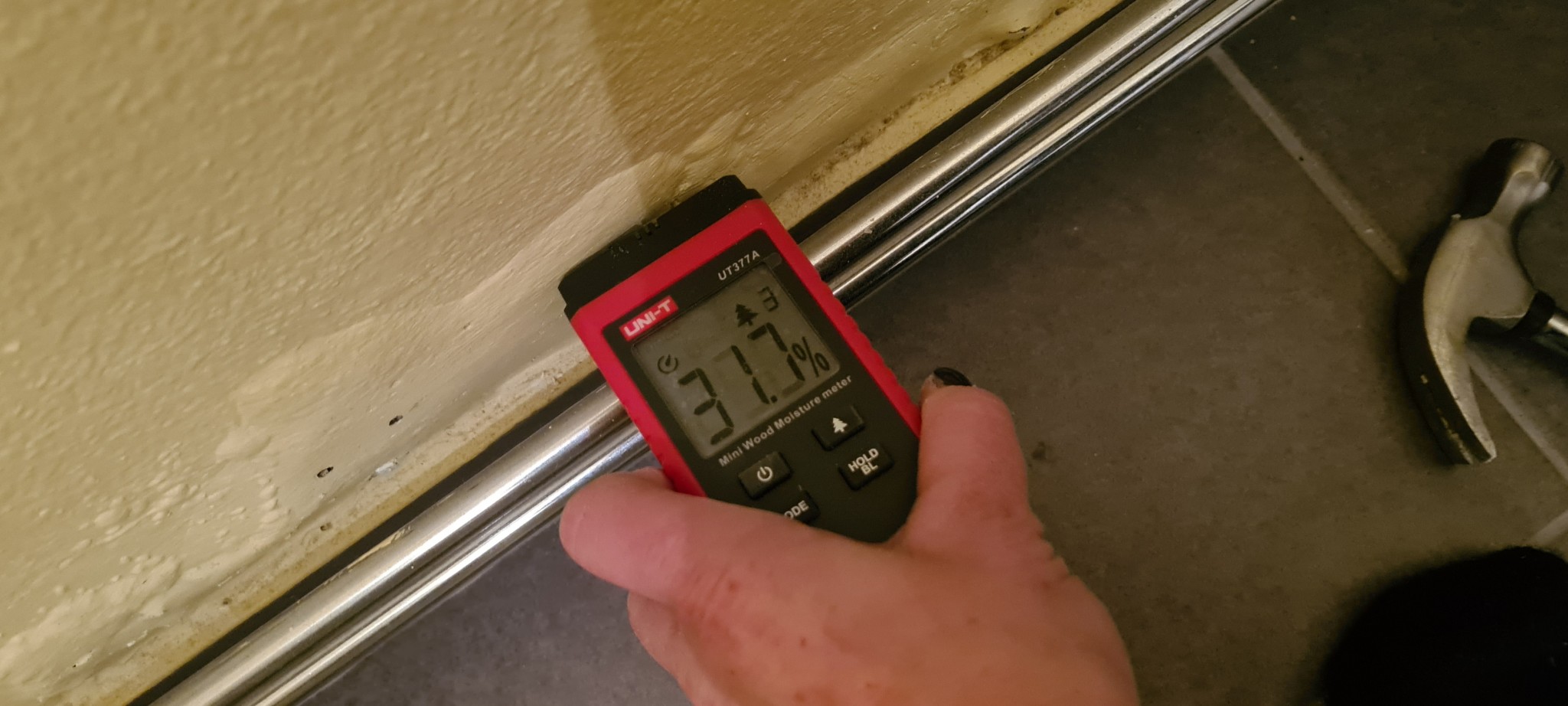
This summer, several basement walls started to blister and crack with salt deposits (on the inside) in certain areas. In the pictures, it's an exterior wall, but the other two are interior walls (not pictured). It's low on the wall. I measured with a moisture meter for wood and could insert it a bit into the porous wall. It reads up to about 32%. I live in Norrbotten, so right now the air is quite dry and cold, but in the summer, the air in the basement gets quite humid.
The air right now is about 30% in the basement.
I was thinking of applying cement render for repairs since it breathes and painting with silicate paint.
Should I be worried, or is there anything else that might be good to consider?
The house was built in 1954.
This summer, several basement walls started to blister and crack with salt deposits (on the inside) in certain areas. In the pictures, it's an exterior wall, but the other two are interior walls (not pictured). It's low on the wall. I measured with a moisture meter for wood and could insert it a bit into the porous wall. It reads up to about 32%. I live in Norrbotten, so right now the air is quite dry and cold, but in the summer, the air in the basement gets quite humid.
The air right now is about 30% in the basement.
I was thinking of applying cement render for repairs since it breathes and painting with silicate paint.
Should I be worried, or is there anything else that might be good to consider?
The house was built in 1954.
Looks the same in our basement, as I've figured out the problem, you should re-drain, chip away loose plaster, apply rödgrund, let it cure, apply cement mortar, let it dry for a few months, paint with silicate paint. Install a dehumidifier  , preferably a sorption dehumidifier so you won't have to empty it all the time.
, preferably a sorption dehumidifier so you won't have to empty it all the time.Thanks for the response! I had a guy here from a company that also drained around this house about 20 years ago. He said it's not uncommon for older houses with basements to have these blister formations, and since it’s mostly interior walls, it's highly suspected that the moisture comes from the slab below and that in 1954 the slabs were made of different materials than today, which can explain the moisture transport.Schwen92 said:
Looks the same in our basement, as far as I've determined the problem, you should re-drain, chip away loose plaster, apply red primer, let it cure, apply mortar, let dry for a few months, paint with silicate paint. Install a dehumidifier
Yes, if it was drained 20 years ago, you shouldn't need to drain it again unless it was done completely wrong. As you say, it is surely the capillary action that draws up moisture and you can't avoid that (at least not in any reasonable way). As always, it's about good ventilation, heat, and non-organic materials to create a healthy indoor environment for both you and the house.

Moisture on interior walls. There is likely water under the slab, which is probably lying directly on the ground, common at that time. If you have a closet or similar space, cut a hole about 30 cm in diameter and dig down to 0.5 meters to see if it fills with water. The only way then is to install a sump pit as deep as possible to remove the water. The floor must not have a waterproof coating of paint or a tight mat, as that will cause moisture to rise into the walls.
Thanks for the response. Digging a hole feels a bit cumbersome though. I have a breathable carpet in one room. The floor was previously painted with plastic paint (which flaked), and I scraped off all the paint before the carpet was put in place. Otherwise, there are tiles and painted concrete floor. There were so many blisters in several places this summer that are not adjacent to the newly fixed areas.J jonaserik said:Moisture on interior walls. Then there is water under the slab that is likely directly on the ground, common at that time. If you have a closet or so, cut a hole about 30 cm in diameter and dig down to 0.5 meters and see if it fills up with water. The only way then is to install a sump pump as deep as possible to remove the water. The floor must not have a waterproof layer of paint or tight carpet, as the moisture will then rise into the walls.
Hello! We have a similar problem (drainage done 20 years ago and moisture in the inner walls from below), but we also have elevated moisture levels in the outer wall across the inner walls.
We received an explanation that the drainage is probably not done correctly and that the water "gets stuck" on the ledge on the outside and then finds its way into the bottom of the inner walls along the reinforcement.
Do you think that's true? Or is it ground moisture in combination? Or just ground moisture spreading to the outer wall from the inner walls? It doesn't feel like we can avoid drainage, or what do you think?
Thanks for the help!
We received an explanation that the drainage is probably not done correctly and that the water "gets stuck" on the ledge on the outside and then finds its way into the bottom of the inner walls along the reinforcement.
Do you think that's true? Or is it ground moisture in combination? Or just ground moisture spreading to the outer wall from the inner walls? It doesn't feel like we can avoid drainage, or what do you think?
Thanks for the help!
The action of removing dense surface layers from the heart wall and basement walls can prove very successful in some cases, including ours.
We did not re-drain since there were no indications that it was needed, just did the above. In this case, we applied repair mortar, which is quite fine-grained, let it dry for a few months (necessary because a lot of water is needed in the plastering process). Then we applied silicate primer and paint.
It has held up well for 20 years since the measure, so I feel confident that this can be a good method.
The condition is, of course, that there is not a high moisture load from below, and that existing drainage works. In our case, it was quite unproblematic since the house is located high in the area, with no significant moisture loads from the ground outside. And as mentioned, the old drainage from around 1972 continued to work well.
We did not re-drain since there were no indications that it was needed, just did the above. In this case, we applied repair mortar, which is quite fine-grained, let it dry for a few months (necessary because a lot of water is needed in the plastering process). Then we applied silicate primer and paint.
It has held up well for 20 years since the measure, so I feel confident that this can be a good method.
The condition is, of course, that there is not a high moisture load from below, and that existing drainage works. In our case, it was quite unproblematic since the house is located high in the area, with no significant moisture loads from the ground outside. And as mentioned, the old drainage from around 1972 continued to work well.
The ground is always moist and you cannot drain away the soil moisture no matter how much you pay for the measure. Agree with Harald B. The best way to handle moderate soil moisture in a basement is to let it pass.
Any tight surface layer will crumble/bubble sooner or later. Plaster with the same plaster that was used originally and paint with the right paint that lets the vapor out.
Any tight surface layer will crumble/bubble sooner or later. Plaster with the same plaster that was used originally and paint with the right paint that lets the vapor out.
Thanks for the response! I completely agree with you, but it's the moisture at the bottom of the exterior walls that worries me. I dug a little outside and it seems like the drainage plates that are there look like white styrofoam, not at all what I expected. I thought it would be like podrän. Do you know what they might have used for drainage? Thanks!!!!
Probably not, the Platon mat has a longer lifespan than that. It feels like it's moisture rising from underneath through the concrete that's creating the problem.C Ccc Ccc said:
The only issue I see from the outside is if the drainage pipes are clogged, preventing water from being diverted to a soakaway/drain, causing water to fill up the ground and then seep in behind the mat.
Check if it's possible to film the drainage pipe to see if it's clogged, otherwise it's likely ground moisture seeping up through the slab.
There is of course a chance that those who did the drainage didn't extend the Platon mat over the ledge where the foundation wall sits, but it's difficult to check without pictures or digging down at one spot to check.