
376 views ·
21 replies
376 views
21 replies
LUBONYL PVC AVL Pipe - question about date

Hello,
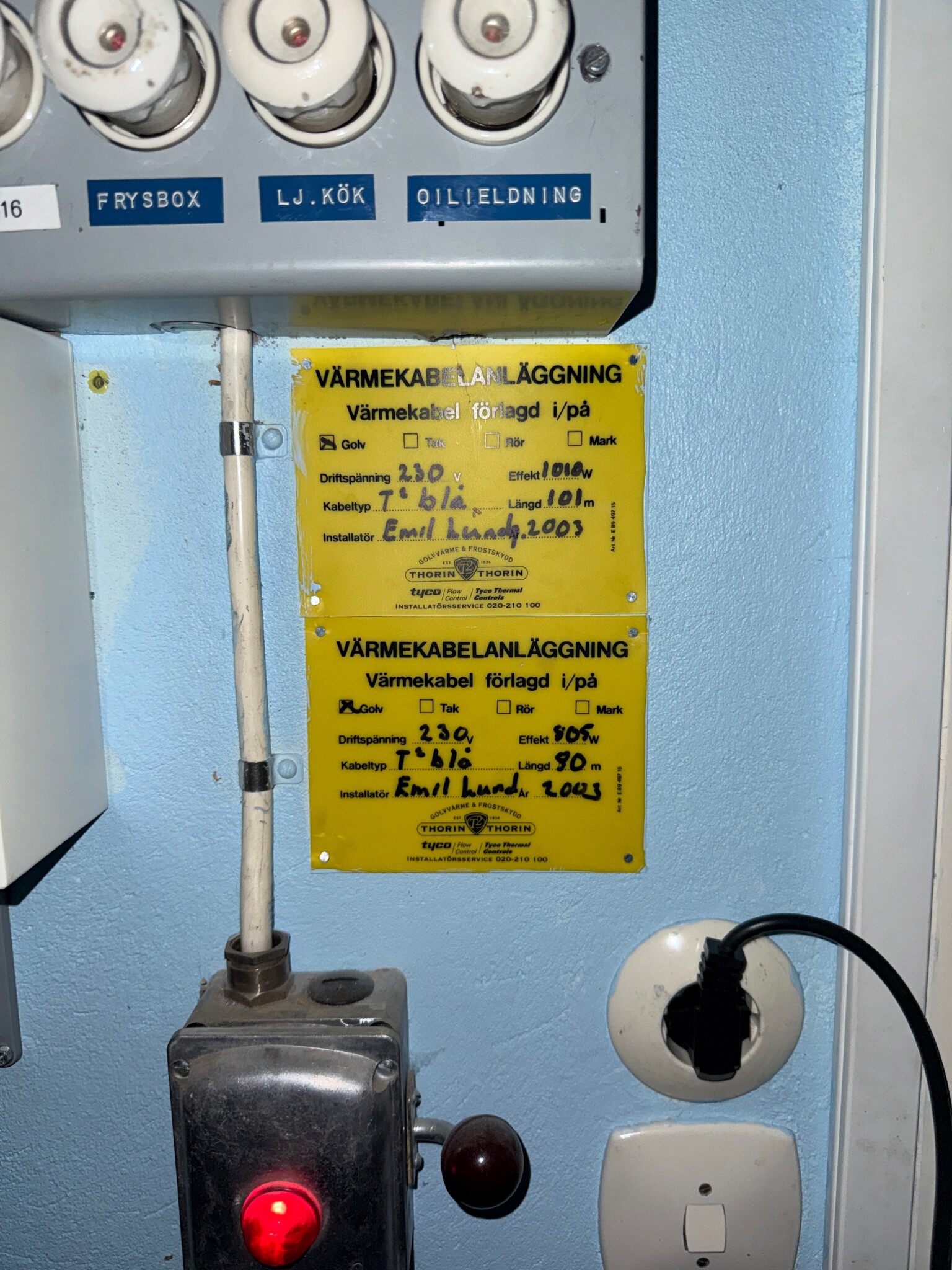
I am investigating the sewer pipes in the house and have a question about the timeline of previous renovations. According to the documentation, underfloor heating was installed here in 2003.
When I now inspect the sewer pipes, I see that the marking on one of the plastic pipes is as follows, which takes all the wastewater??:
LUBONYL PVC AVL 100 SIS 326 - 0436 N 9
Since the designation 0436 indicates that the pipe was manufactured in week 36, 2004, some questions arise about how the work was carried out. It seems logical that you wouldn't lay new pipes after casting in underfloor heating in the same space.
My questions to you are:
Is it a common scenario that sewer pipes were replaced underground/platte at an earlier stage, and that the pipe I see from 2004 is part of the remaining installation (e.g., standing stack or connections above ground) that was done afterward?
And how should the rest of the date marking on the pipe be interpreted? For example, what does the marking N 9 stand for in this context, and does the standard SIS 326 confirm that it's a specifically approved ground or indoor sewer pipe from that time?
Thankful for your expertise and help in sorting this out!
I am investigating the sewer pipes in the house and have a question about the timeline of previous renovations. According to the documentation, underfloor heating was installed here in 2003.
When I now inspect the sewer pipes, I see that the marking on one of the plastic pipes is as follows, which takes all the wastewater??:
LUBONYL PVC AVL 100 SIS 326 - 0436 N 9
Since the designation 0436 indicates that the pipe was manufactured in week 36, 2004, some questions arise about how the work was carried out. It seems logical that you wouldn't lay new pipes after casting in underfloor heating in the same space.
My questions to you are:
Is it a common scenario that sewer pipes were replaced underground/platte at an earlier stage, and that the pipe I see from 2004 is part of the remaining installation (e.g., standing stack or connections above ground) that was done afterward?
And how should the rest of the date marking on the pipe be interpreted? For example, what does the marking N 9 stand for in this context, and does the standard SIS 326 confirm that it's a specifically approved ground or indoor sewer pipe from that time?
Thankful for your expertise and help in sorting this out!
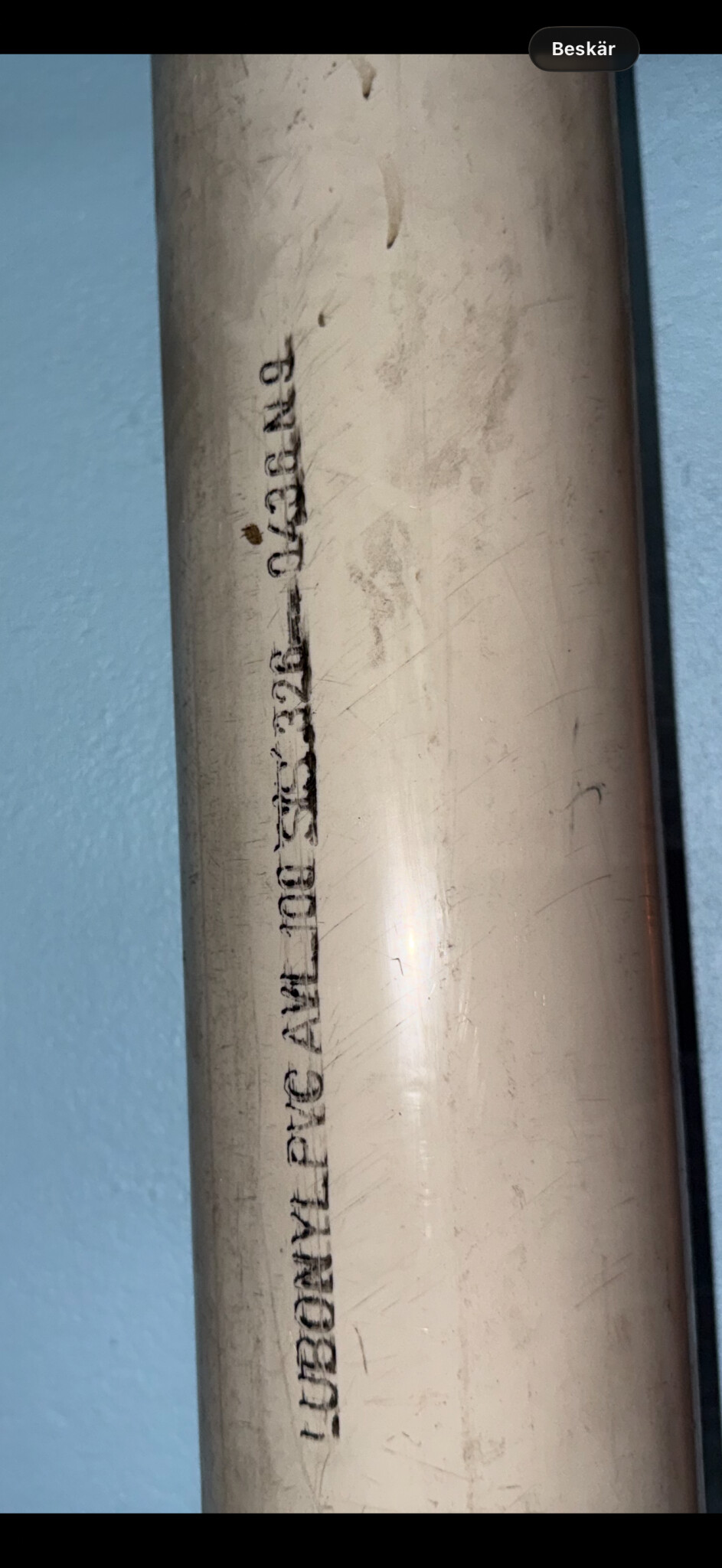
The color and marking with Lubonyl PVC AVL make it very likely that these are egg shell pipes from the early 1970s. The construction year also indicates this. Lubonyl was acquired in the early 1980s, so it cannot be later than that.
Edit: Here you have the same (but in 70mm) built in 1967: https://www.byggahus.se/forum/threads/avloppsror.403497/
Edit: Here you have the same (but in 70mm) built in 1967: https://www.byggahus.se/forum/threads/avloppsror.403497/
There is probably no date in the designation. But light gray PVC pipes are the first generation of plastic sewage pipes and were used until the early 70s. Then came PP pipes in darker gray plastic, and ground pipes that are orange.
According to what I can find, it's not possible to determine a year. N stood for "normal," but what was considered normal has varied over time. When these tubes came about, it was evidently thought that very thin tubes were sufficient for N-tubes.
If everything is good right now, then there's nothing to worry about?
I am not a plumber, but as I understand it, the problem was partly that they were too thin, but mainly that the plasticizers did not stay in the PVC plastic and migrated out, which makes the pipes very brittle and even minor impact or vibrations can cause them to crack.
If you plan to stay, maybe relining would be something to consider while the pipes are still intact?
If you plan to stay, maybe relining would be something to consider while the pipes are still intact?
Yes, we're considering that. It's typical that they didn't fix the pipes when they installed the underfloor heating in 2003. I had hoped they fixed everything underground then… Can you check and see if this is resolved or not?MultiMan said:
I'm not a plumber, but as I understand it, there were problems partly because they were too thin, but mainly because the plasticizers didn't stay in the PVC plastic but migrated out, making the pipes very brittle, and even minor damage or vibrations can cause them to crack.
If you plan to stay, maybe a relining might be something to consider, while the pipes are still intact?
We're considering relining, doing everything below ground only and nothing above ground. What's the usual cost for that?
Wondering how the pipes run, if they're under the entire slab towards the street or how it usually works? If they run towards the street, there's very little under, maybe 2-3 meters in the basement.
It is possible to send down a camera and see what it looks like. Either you get one yourself or hire someone.
I can't comment on the price. There are likely to be many different factors that determine it.
I can't comment on the price. There are likely to be many different factors that determine it.
Will ask someone to check the pipes later, no problem now so I'm thinking "pipe" nothing that works until we've decided. Can always start calling around for quotes, but if it's not cast iron, I'm satisfied.