
I have started the renovation of one of the rooms on the upper floor, and it turned out to be a bigger renovation than I initially thought 
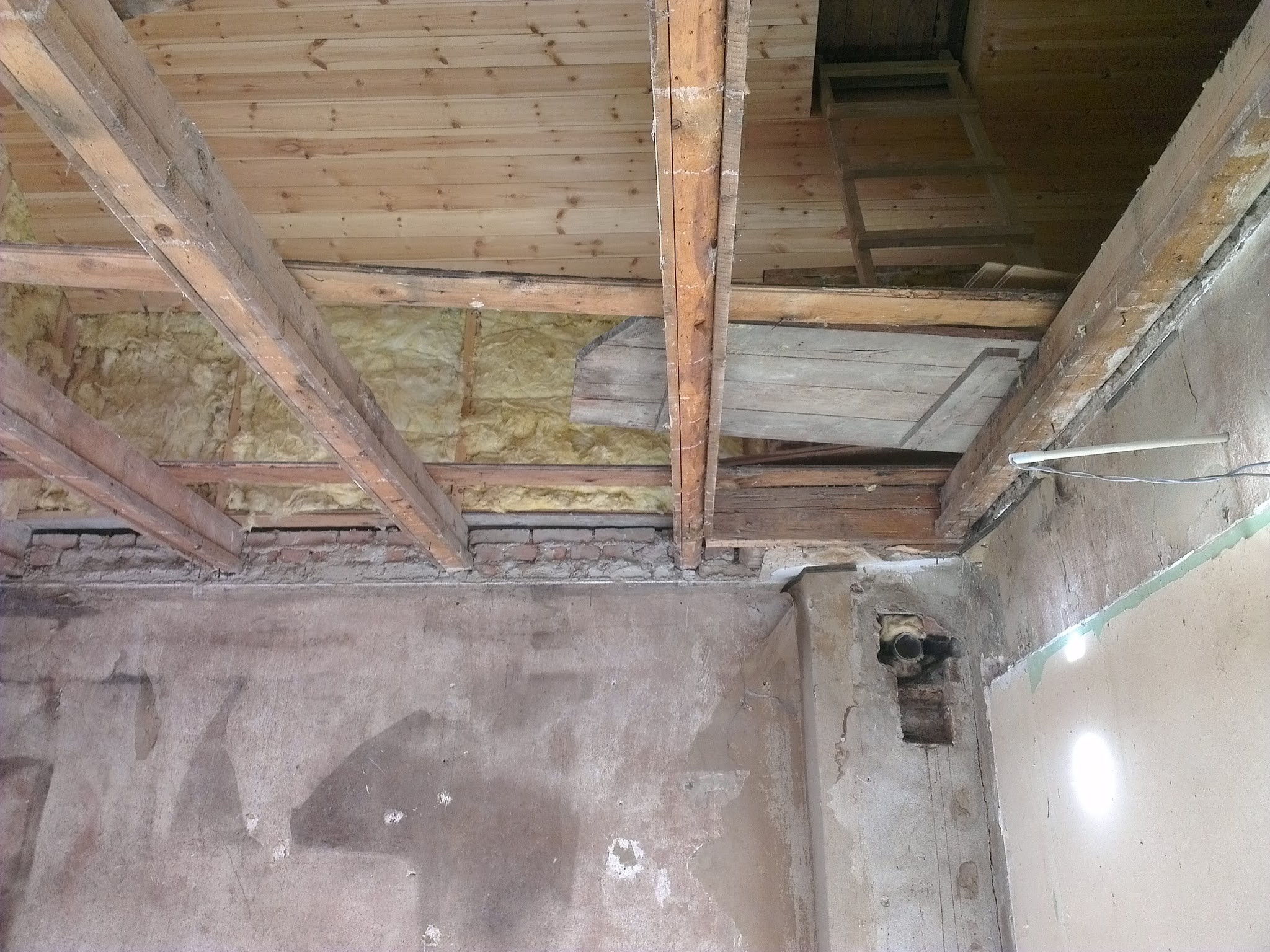
Now, I would like to lower the joist so that I get better ceiling height on the third floor (the attic). Currently, there is about 2.9 meters ceiling height on the second floor and a maximum of 1.95 meters (sloping ceiling) between the beams on the third floor. If I take 30 cm from the second floor, the third floor suddenly becomes usable.
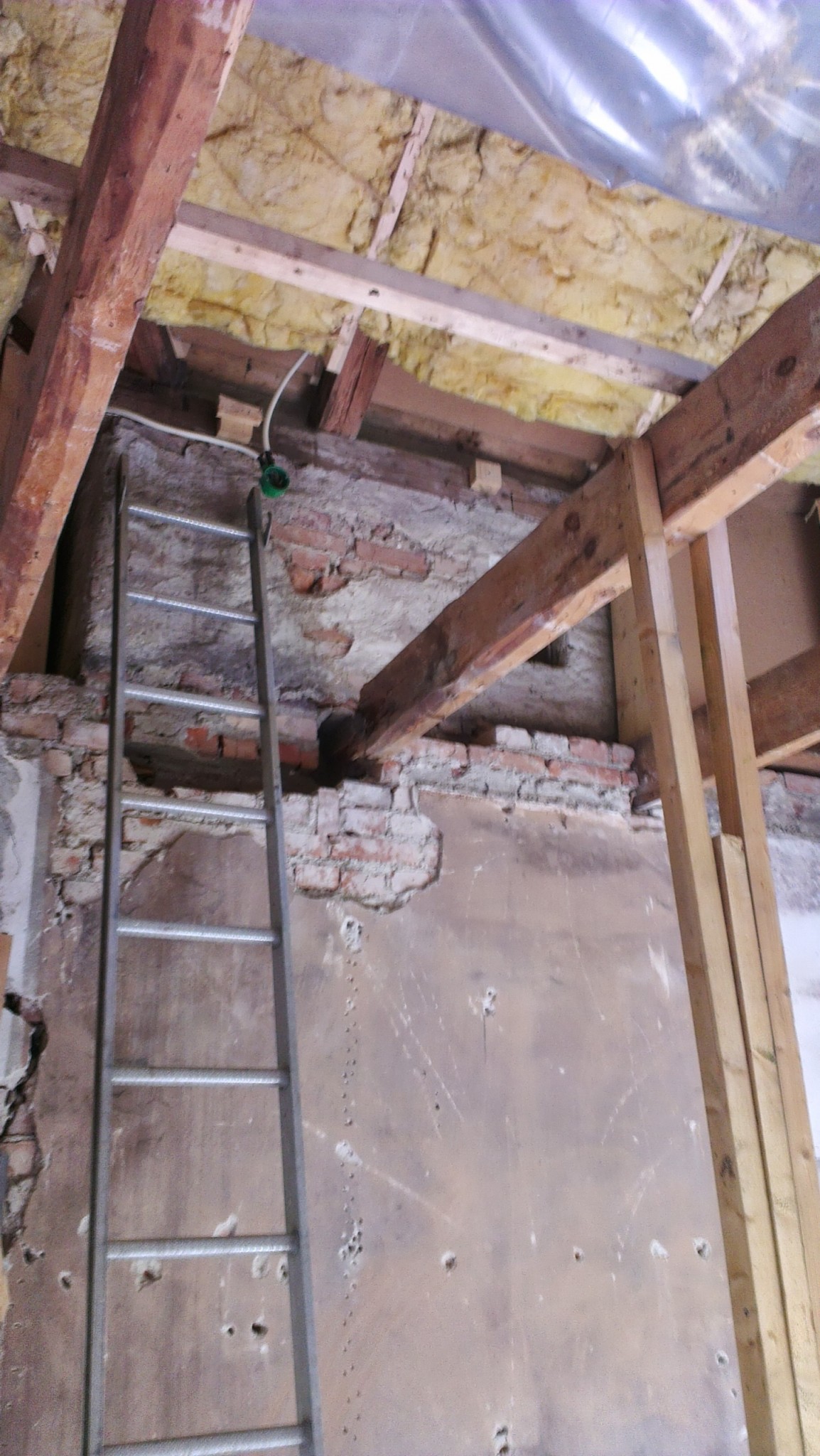
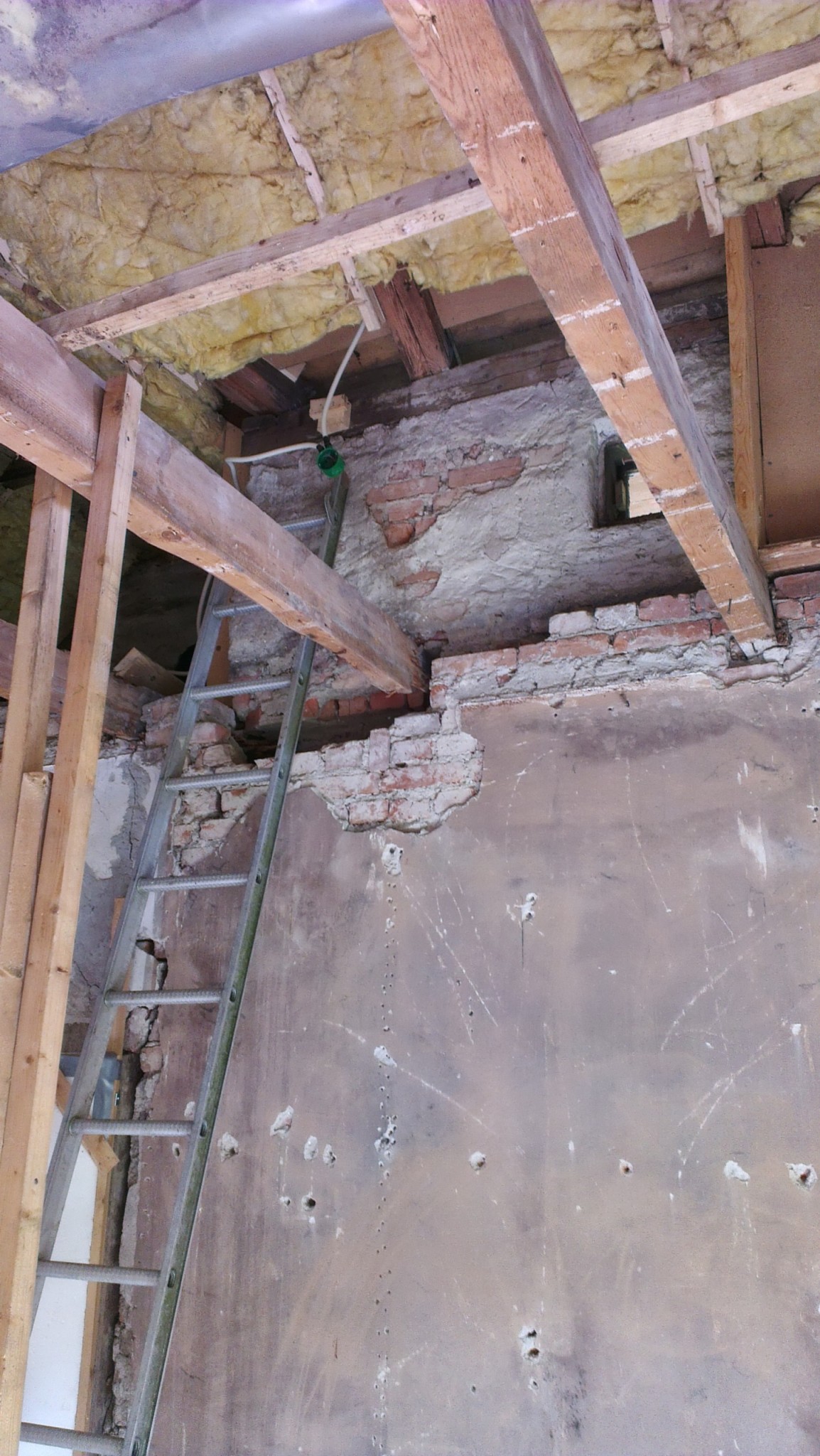
I had a carpenter visit a few days ago, and he suggested removing the tiles and inserting a beam along the wall, then attaching the beams to this with joist hangers. Personally, I had thought of just removing the bricks I need and continuing with recessed beams. If I take them one by one and rebuild the wall, it should be pretty straightforward, I think.
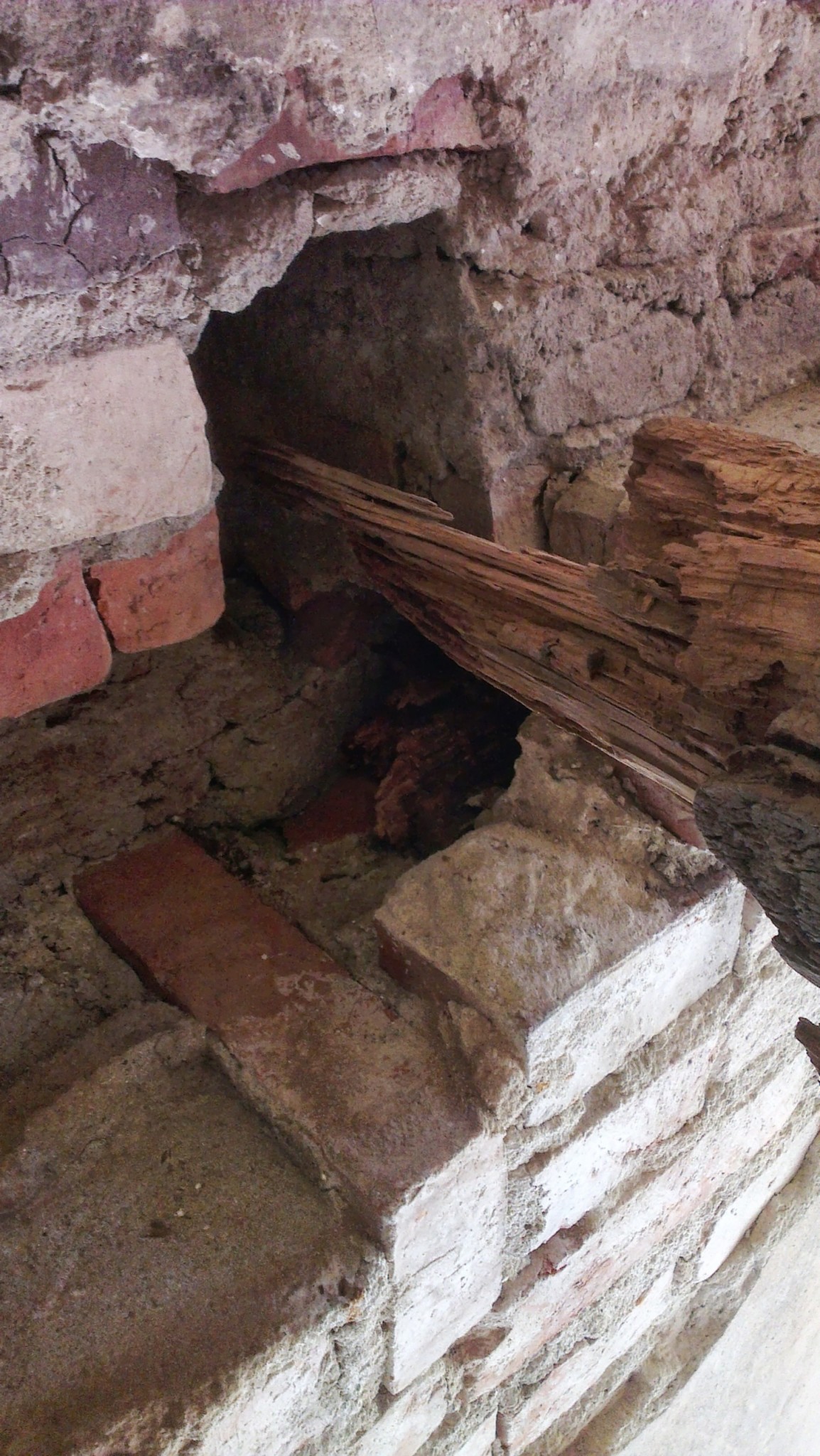
As it is now, the beams are also recessed in the second "row of bricks" (half a brick) - here I think it’s enough for the beams to rest on only one "row of bricks."
What does the forum think about this solution?
The house is brick (plastered outside) from 1874, and I hope the pictures speak for themselves.
Now, I would like to lower the joist so that I get better ceiling height on the third floor (the attic). Currently, there is about 2.9 meters ceiling height on the second floor and a maximum of 1.95 meters (sloping ceiling) between the beams on the third floor. If I take 30 cm from the second floor, the third floor suddenly becomes usable.
I had a carpenter visit a few days ago, and he suggested removing the tiles and inserting a beam along the wall, then attaching the beams to this with joist hangers. Personally, I had thought of just removing the bricks I need and continuing with recessed beams. If I take them one by one and rebuild the wall, it should be pretty straightforward, I think.
As it is now, the beams are also recessed in the second "row of bricks" (half a brick) - here I think it’s enough for the beams to rest on only one "row of bricks."
What does the forum think about this solution?
The house is brick (plastered outside) from 1874, and I hope the pictures speak for themselves.

Hello!
It's cool with such an old house
I want to raise a warning regarding your plans. If you read a bit on the forum, there are people who have done similar things.
With high probability, your beams are not just a framework for the floor but also hold the house's walls together to prevent them from being pushed out by the outward forces from the roof structure. A change in their level creates moments in the upper parts of the brick walls, and brick does not handle moment loads well. Especially not old construction.
If the carpenter you've had on site hasn't seen the risk (if it is indeed the way I describe it), then you should not hire that carpenter.
Best regards, Torpalainen
It's cool with such an old house
I want to raise a warning regarding your plans. If you read a bit on the forum, there are people who have done similar things.
With high probability, your beams are not just a framework for the floor but also hold the house's walls together to prevent them from being pushed out by the outward forces from the roof structure. A change in their level creates moments in the upper parts of the brick walls, and brick does not handle moment loads well. Especially not old construction.
If the carpenter you've had on site hasn't seen the risk (if it is indeed the way I describe it), then you should not hire that carpenter.
Best regards, Torpalainen

Contact a konstruktör before you do anything else.......
Thank you for the input!
So it sounds like I also need to get a structural engineer on board; it would be a shame to be responsible for a 139-year-old house collapsing. I thought I would draw up the house (at least this part) and share it with the forum.
Are there any other pictures you think are needed to make a better analysis? It's not that I'm going forward without talking to an engineer, but it has become clear in the conversation with the carpenter that I need to know a bit more about the construction and the intervention to be able to ask the right questions.
So it sounds like I also need to get a structural engineer on board; it would be a shame to be responsible for a 139-year-old house collapsing. I thought I would draw up the house (at least this part) and share it with the forum.
Are there any other pictures you think are needed to make a better analysis? It's not that I'm going forward without talking to an engineer, but it has become clear in the conversation with the carpenter that I need to know a bit more about the construction and the intervention to be able to ask the right questions.
A picture of the eaves from the outside would be fun to see.
Hope your project is successful.
/Torpalainen
Hope your project is successful.
/Torpalainen
Click here to reply