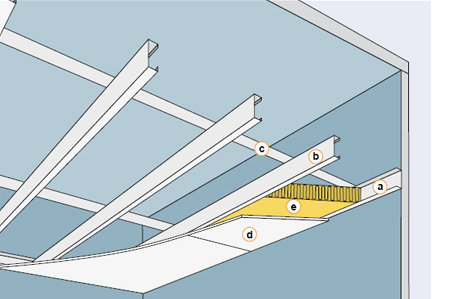
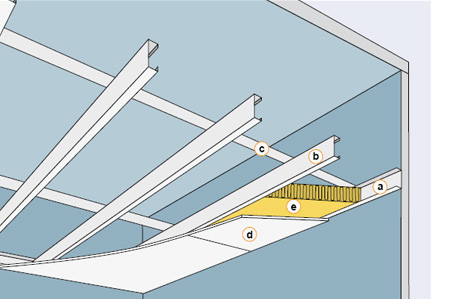
If I choose to use steel studs (I've been contemplating from wooden studs, to steel studs, to wooden studs and back to steel studs as it seems easier and more manageable as a solo builder) to lower the ceiling. How should I think when framing in wider/longer rooms (e.g., 4 x 3.80m)?
I want to lower the ceiling as little as possible and want to have spotlights. The idea is to put tracks on the wall and place studs between them. The steel track and studs are available at Byggmax in 3-meter lengths. Do I splice the studs that don't reach over to the other side where the other steel track is? Is it enough to put perforated tape on the studs (at what distance) between the tracks?
Or should one use wall tracks, primary studs, and hat profiles instead of just wall tracks and studs?
If I attach studs directly to the ceiling, the problem is that it might not be completely level if I assume the concrete ceiling isn't 100% level. Then comes the next question. Would it show if the ceiling differs by a centimeter from one side to the other?
How close together do the fastenings in the studs need to be in the ceiling?
If you still switch back to wood...
Can you frame with 28x70 against the ceiling and across these lay similar 28x70 cc 30? If so, how close should the studs be placed?
30cc is the recommendation, but I have always used 45 and 90 discs.
Keep an eye on the distance and use wedges to get it level, and it should be fine.
According to the rules, you can't use plastic plugs in the ceiling due to the fire risk that they might melt and the ceiling might fall down.
The recommendation is 30cc, but I have always used 45 and 90 discs.
Keep an eye on the distance and use wedges to make it level, and it should be fine.
According to the rules, you are not allowed to use plastic plugs in the ceiling due to the fire risk that they might melt and the ceiling could fall down.
30cc is the recommendation, but I have always gone with 45 and 90 discs.
Keep an eye on the distance and use wedges to get it level so it turns out well.
According to the rules, you are not allowed to use plastic plugs in the ceiling due to the fire risk that they melt and the ceiling falls down.
I was thinking more about the distance of the studs you attach directly to the ceiling. Not the studs that you attach the plasterboard to. That is, the studs you attach the glesen to in.
Have I understood it correctly that with this technique you don't fasten anything to the ceiling? Instead, you only use steel bands or secondary rails lying on the top edge of the wall channel? If so, it wouldn't require much drilling.
If I attach the battens directly to the ceiling, the problem is that it might not be completely level if I assume that the concrete ceiling is not 100% level. Then the next question arises. Would it show if the ceiling differs by a centimeter from one side to the other?
How close do the fastenings in the battens need to be on the ceiling?
If you think it looks straight now, you'll probably think it looks straight with a layer of battens and boards on it. But it's just a matter of checking with a level.
Click here to reply
Vi vill skicka notiser för ämnen du bevakar och händelser som berör dig.