
5,203 views ·
30 replies
5k views
30 replies
Lower the heating pipes in the crawl space.
Hi!
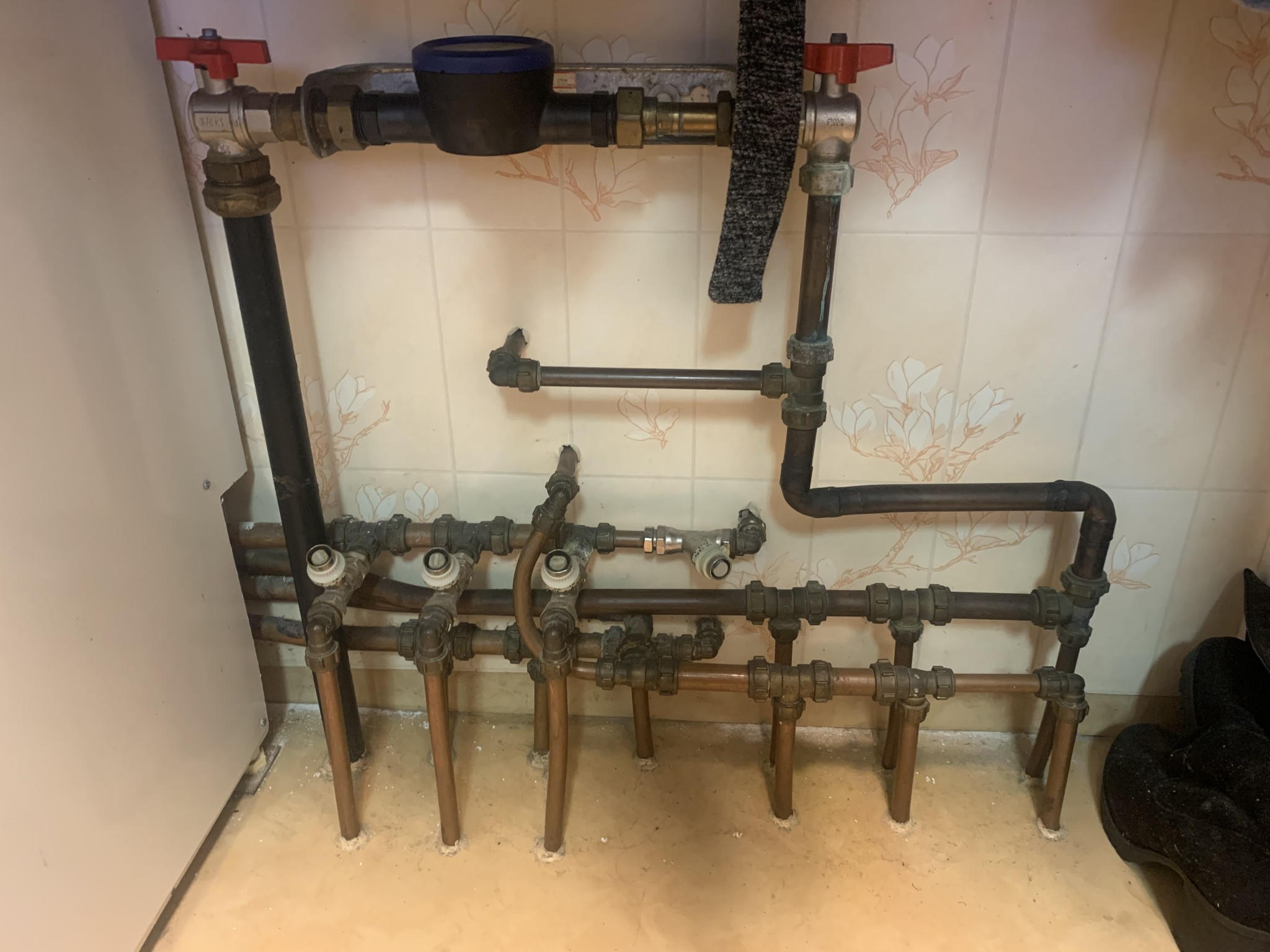
I'm working on renovating the laundry room in our house built in 1990. Back then, it was constructed with a plastic floor mat, and the distribution pipes for the radiators went up through the floor, as shown in the picture.
I've had an HVAC company here that is also handling the installation of a new heat pump, etc. But since we're going to have tiles, I am strengthening the joist structure.
I don't want all the pipes in the floor like this.
For the tap water, we have a good plan. We can recess them into the inner wall and run them exposed.
However, with the heating pipes... The space is cramped.
The HVAC technician suggested we should run them down into the crawl space and connect them together there. You can splice them in the floor, etc., but he said it's better if most of the joints are under the house. Then build a box around them with insulation.
For some reason, I'm hesitant about this... not sure why though. If it were a basement, I wouldn't hesitate.
The house is in Blekinge. And when it was at its coldest in December, we had 8 degrees Celsius in the crawl space under the area.
I have three sensors measuring temperature and humidity down there, so I am monitoring it.
Would you hesitate with this solution? And would you hesitate if you might want to sell the house in a few years?
Help me convince myself that it's a good idea
The company is a larger firm and is connected to Säker Vatten, etc. So it's not a small company either.
I'm working on renovating the laundry room in our house built in 1990. Back then, it was constructed with a plastic floor mat, and the distribution pipes for the radiators went up through the floor, as shown in the picture.
I've had an HVAC company here that is also handling the installation of a new heat pump, etc. But since we're going to have tiles, I am strengthening the joist structure.
I don't want all the pipes in the floor like this.
For the tap water, we have a good plan. We can recess them into the inner wall and run them exposed.
However, with the heating pipes... The space is cramped.
The HVAC technician suggested we should run them down into the crawl space and connect them together there. You can splice them in the floor, etc., but he said it's better if most of the joints are under the house. Then build a box around them with insulation.
For some reason, I'm hesitant about this... not sure why though. If it were a basement, I wouldn't hesitate.
The house is in Blekinge. And when it was at its coldest in December, we had 8 degrees Celsius in the crawl space under the area.
I have three sensors measuring temperature and humidity down there, so I am monitoring it.
Would you hesitate with this solution? And would you hesitate if you might want to sell the house in a few years?
Help me convince myself that it's a good idea
The company is a larger firm and is connected to Säker Vatten, etc. So it's not a small company either.

Self-builder
· Stockholm
· 8 605 posts
If you don't want to have them out of the floor, can't you build a box around them?A amoreex said:Hello!
I'm renovating the laundry room in our house built in 1990.
Back then, it was built with plastic flooring, and the distribution pipes for the radiators went up through the floor.
As shown in the picture.
I've had a plumbing company here, which is also handling the installation of a new heat pump, etc.
But we plan to have tiles, etc.
So we're about to start reinforcing the joists.
And I don't want all the pipes in the floor like this...
For the tap water, we have a good plan. We can raise them in the inner wall and run them externally.
However, the heating pipes...
It's cramped in the space.
The plumber suggested we run them down into the crawlspace and connect them there.
You can splice them in the floor, etc.
But he said it's better if most splices are under the house...
And then build a box around them with insulation...
For some reason, I hesitate about this... not sure why, though. If it were a basement, I wouldn't hesitate.
The house is in Blekinge.
And when it was the coldest in December, we had 8 plus degrees in the crawlspace under the area.
I have three sensors measuring temperature and humidity down there, so I have control.
Would you hesitate to go with a solution like this?
And would you hesitate if you might want to sell the house in a few years?
Help me convince myself it's a good idea
The company is a larger firm and is connected to Säker Vatten, etc.
So it's not a small company either.
Then that box could be properly sealed inside and have a drainpipe out.
A dilemma is lack of space..
if they stay where they are, I have to move out cabinets and machines from the wall and have a larger distance between them..
Can't you install a distribution cabinet in the wall?A amoreex said:Hi!
I'm renovating the laundry room in our house built in 1990.
Back then, it was built with vinyl flooring, and the distribution pipes for the radiators went up through the floor.
Like in the picture.
I've had a plumbing company here that is also handling the installation of a new heat pump, etc.
But I'm going to have tiles and so on.
So I'm about to start reinforcing the floor structure.
And I don't want all the pipes in the floor like this...
For the tap water, we have a good plan. We can re-route them into the interior wall and run them externally.
However, the heating pipes...
It's cramped in the space.
The plumber suggested that we should run them down into the crawl space and connect them there.
You can splice them in the floor, etc.
But he said it's better if most of the joints end up underneath the house...
And then build a box around them with insulation...
For some reason, I'm hesitant about that... not sure why though. If it had been a basement, I wouldn't have hesitated.
The house is in Blekinge.
And when it was at its coldest in December, we had 8 plus in the ground under the space.
I have three sensors measuring temperature and humidity down there, so I'm keeping track.
Would you shy away from a solution like this?
And would you shy away from it if you, after x number of years, might want to sell the house?
Help convince myself that it's a good idea
The company is a larger firm and connected to Säker Vatten, etc.
So it's not a small company either.
https://www.rinkabyror.se/artikel/lk-fordelarskap-gv-1050/

why wouldn't heating pipes in crawl spaces work? It meets safe water standards and is an established solution that is used all the time.Rickard. said:
I have both heating pipes and tap water running in the crawl space. They've been that way since 1962 and there haven't been any problems. However, I probably have a significantly less insulated floor structure than you.

Well, I know it doesn't meet safe water standards.
But as the plumber said...
If there is a leak, it affects the house less than if the joints are in the floor...
This winter, the temperature has been between 8-10 degrees Celsius down there, so in my opinion, it's frost-free.
Then a box with insulation will be built around it...
So the heating pipes will heat up the space
I'm mostly thinking about how it will be perceived by house buyers in the future...
But as the plumber said...
If there is a leak, it affects the house less than if the joints are in the floor...
This winter, the temperature has been between 8-10 degrees Celsius down there, so in my opinion, it's frost-free.
Then a box with insulation will be built around it...
So the heating pipes will heat up the space
I'm mostly thinking about how it will be perceived by house buyers in the future...