Hello. I am currently building a complementary building containing a heated storage room, a woodworking workshop, and a carport. The paneling is horizontal log paneling 22x170, which was ordered with a middle coat of acrylic paint. The facade was put up last fall with an air gap behind it. However, in January, when I started with the interior insulation, my dad suggested blocking the air intake at the bottom with a small piece of lath between each standing 45x145, to make it more difficult for mice to climb up the walls. However, I don't think it will stop them. But said and done. I didn't think more about it until the other day when I made holes in the walls for vents. It is now damp on the backside of the paneling I saw in another thread about this that a solution to the problem is to drill holes in the lowest panel board, about 2 between each nailing lath. But now to my concern. In connection with this, I began to worry about the construction in the residential house. 4.5 years ago I bought a "Keostuga". The walls in it consist of 45 mm horizontal timber planks in pine. The carpenters who were here insulated, as far as I know, directly against the timber planks without an air gap and wind barrier in between. The insulation is 90 or 120 mm (I am actually very unsure of the thickness :/ ) plus 45 mm. Closest behind the OSB board and plasterboard was the plastic foil, instead of inside the 45 mm insulation. But what neither I nor anyone else in the family thought about is that the timber planks were painted by ourselves with acrylic paint with primer underneath just after a few weeks. Now I am terrified that the walls/timber planks will be full of black mold and rot from the inside. It feels like the whole house in that case would be beyond saving since the timber planks also function as the house's frame.
Is there any expert who can say if I can be at ease or if it's really bad?
Yes, you have created an unsuitable construction by enclosing organic material between two vapor-tight layers. A consolation is that the timber was probably quite dry when it was installed, so the effects are likely not immediate. The best would have been to use a paint that is not vapor-tight. Now that you've done it, I can see three options: 1) Scrape off the paint and replace it with a more suitable variant, 2) Take down the interior of the walls and build an air gap behind the timber and put back insulation, etc., and 3) Replace the plastic foil with a vapor-open fabric. From a building technical point of view, this is the order of priority. Then there are also practical aspects.
Mice are a nuisance that complicates technically correct construction methods. Drilling large air holes and sealing them with metal mesh is an option. Plastic mesh won't do; they consider it food.
Thank you.
Okay, it seems like it will have to be scraping off the paint and replacing it with slamfärg. Tearing down the entire interior of the house, dismantling the entire kitchen, bathroom, electricity, etc. doesn't seem like an option for me at least. The problem with slamfärg is unfortunately that it has difficulty adhering to planed wood. Moreover, it feels like an incredible effort awaits to remove such a new paint from an entire house. But, better that than black mold and rot, if it hasn't already appeared.
Jjustusandersson said:
Hello and welcome to the Byggahus forum!
Yes, it is an unsuitable construction you have created by enclosing organic material between two vapor-proof layers. A consolation is that the timber was probably quite dry when it was installed, so the effects probably do not occur immediately. The best thing would have been to use a paint that is not vapor-proof. Now that you have done it, I see three alternatives: 1) Scrape off the paint and replace it with a more suitable variant, 2) Disassemble the inside of the walls and build an air gap behind the timber and reinstall insulation, etc., and 3) Replace the plastic sheet with a vapor-open fabric. From a technical perspective, this is the order of priorities. There are also work-related aspects to consider.
Mice are a nuisance that complicates a technically correct building method. Drilling large air holes that are mouse-proofed with metal mesh is an alternative. Plastic mesh is not sufficient; they consider it food.
Now I am completely ignorant when it comes to types of paint. But doesn't an oil paint have similar properties to acrylic paint, i.e., it forms a film and prevents moisture from escaping out of the wall?
Jjustusandersson said:
There are alternatives to linseed oil paint, such as some kind of oil paint. Wait to decide on the choice of paint until you have finished scraping.
No, it is diffusion-open. There are two main types of oil paint: linseed oil paint and alkyd oil paint (synthetic oil paint). In this regard, they have similar properties. Then there are oil-based glazes. It is possible to paint with slamfärg on planed wood as well, although the result may be a bit streaky. I think you should wait on that decision until you see how well the old paint came off. I believe that is quite significant for the choice of paint type.
Aha, I see. Honestly, I became unsure about what type of paint my dad and brother-in-law used to paint the house. I actually believe there might be a can left in the old carpentry workshop at my parents' place. Now I have to check it out tomorrow, and pray that it's the "right" paint for my used timber planks. Otherwise, I saw there's a lacquer sander that seems incredibly good for sanding off paint. If repainting is required, the scraping will definitely be done with one of those.
Speaking of timber planks as the final facade. I think I saw in some thread that someone thought it was strange that houses built with timber planks aren't clad with another panel on the outside, with an air gap in between. That thought has never occurred to me or anyone I know. The carpenters at Keostugan, the inspector during the construction period, didn't mention anything about that. However, I've thought about it afterward. But only because in maybe 30-40 years, one might want to freshen up the exterior appearance of the house. Would such a solution work sometime in the future, or is it also a negative thing for moisture in the wall? Of course, then with the right paint long on the timber planks behind the air gap and new 22 mm panel.
Many questions now, but you seem to have a good understanding
Jjustusandersson said:
No, it is diffusion-open. There are two main types of oil paint, linseed oil paint and alkyd oil paint (synthetic oil paint). In this regard, they have similar properties. Then there are oil-based glazes. It is possible to paint with distemper on planed wood too, but the result can be a bit mottled. I think you should wait with that decision until you see how well it went to remove the old paint. I believe that has a significant impact on the choice of paint type.
If there is no acrylic paint (or anything else that is vapor-tight) on the outside of the tin, it is naturally perfectly fine to put paneling on the outside.
Almost understood it myself too.
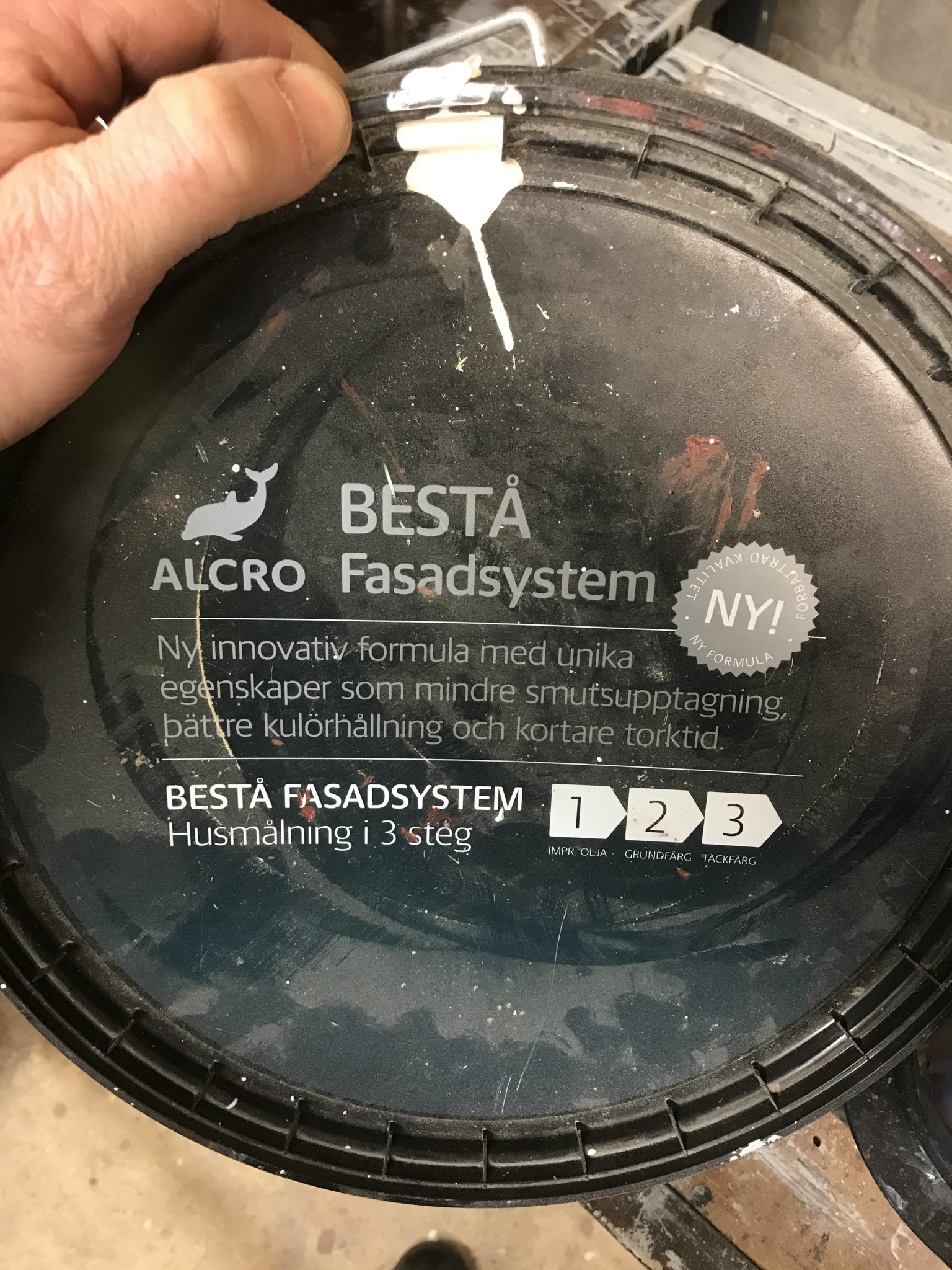
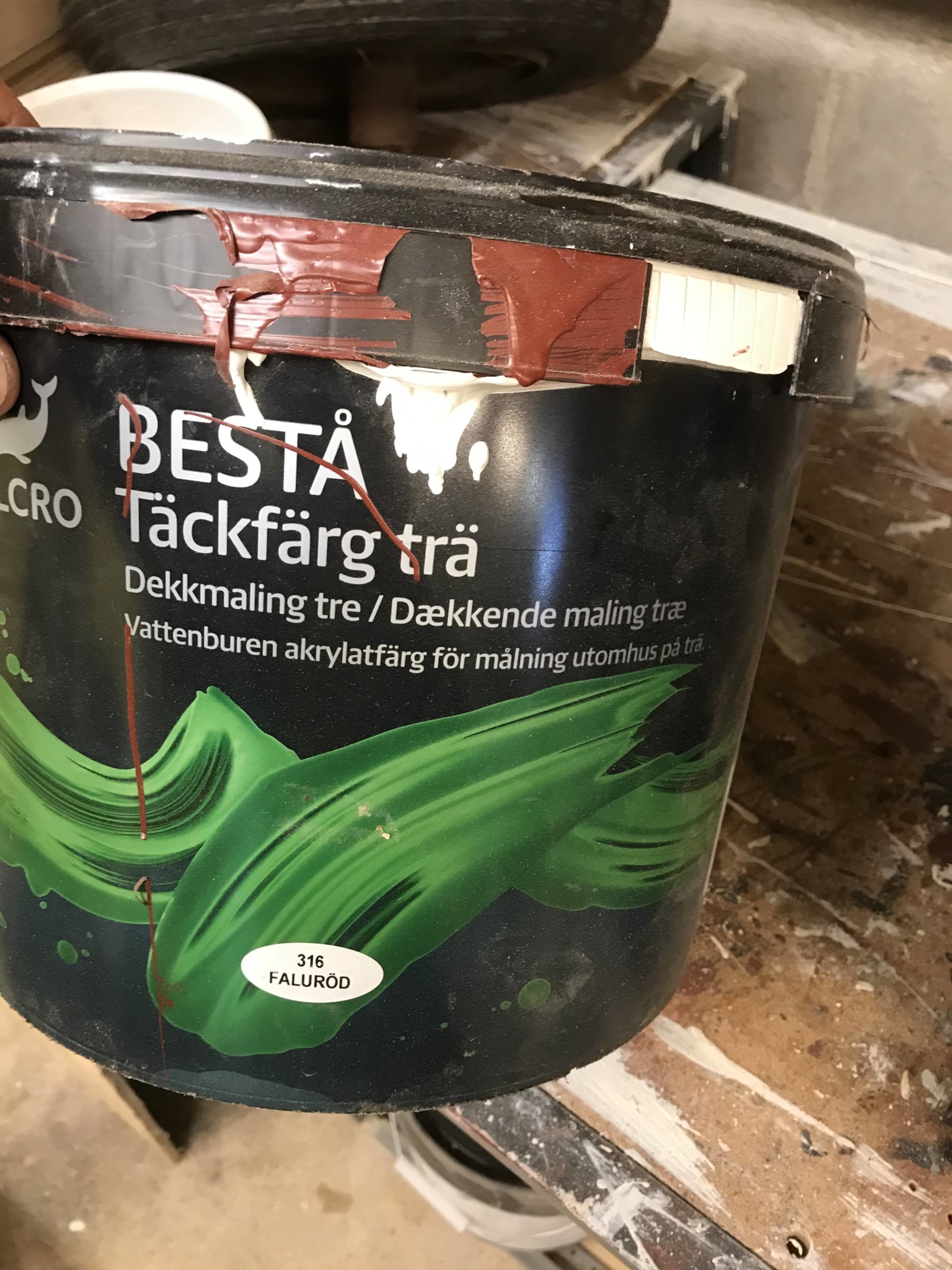
Here is the color that has been used, unfortunately!!
Jjustusandersson said:
If there isn't acrylic paint (or something else that is vapor-tight) on the outside of the tin, it is of course perfectly fine to put paneling on the outside.
The plan is to expand the house by 48 m2, starting in just over a year. The living area is currently only about 50 m2, including a loft of about 12 m2. But since I'm going to build that part with loose timber, the idea has always been to build it the right way, with 22 mm paneling and, of course, an air gap behind. Maybe there will be new paneling on the whole structure then. But paint scraping and new paint must happen in the spring when the warmth starts coming. I'm also considering using a hole saw to check how the timber plank looks on the backside in several places this weekend. I just can't stop worrying about this until I know how bad it is. However, it doesn't smell like mold inside yet.
Jjustusandersson said:
It's possible that you might need to put panels on the outside after scraping to make it look nice. Good to have some mental preparedness for that.
Well maybe a dumb question, but whatever. Is it still classified as a single-stage sealed facade even after scraping and painting with breathable paint? If so, breathable paint, battens, and new exterior paneling must change that, right?
SStefan84 said:
The idea is to expand the house by 48 m2 starting in just over a year. The living area is currently only about 50 m2, including a sleeping loft of about 12 m2. But since I'm going to build that part with loose timber, the plan has always been to build it the right way, with 22 mm paneling and, of course, space behind it. Maybe there will be new paneling on the whole structure then. But paint stripping and new paint must happen this spring when the warmth starts coming. I am also considering using a hole saw to check how the timber plank looks on the backside at different places this weekend. I can't stop worrying about this until I know how bad it is. However, at least it doesn't smell like mold inside yet.
Single-stage sealed facade is usually only mentioned in connection with plastered houses. Then you have plastered foam that sits directly on a wooden frame. I think the term lacks relevance for a wooden facade.
Aha okay. Yes, I read about these plastered facades earlier today. Mostly assumed that it's "called" the same with wooden facades built like my house.
Jjustusandersson said:
Single-step sealed facade is usually only discussed in connection with plastered houses. Then you have plastered foam that sits directly on a wooden stud frame. I think the term lacks relevance for a wooden facade.
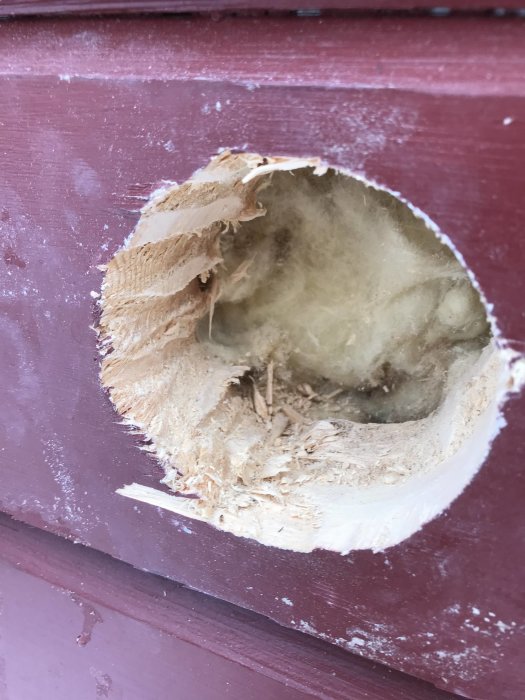
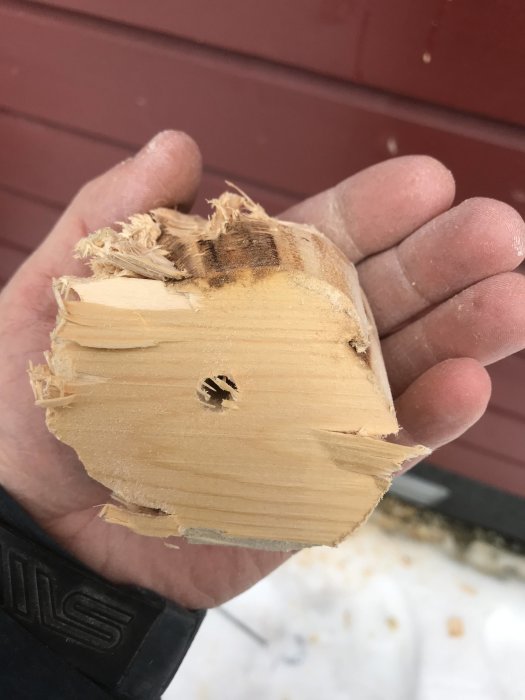
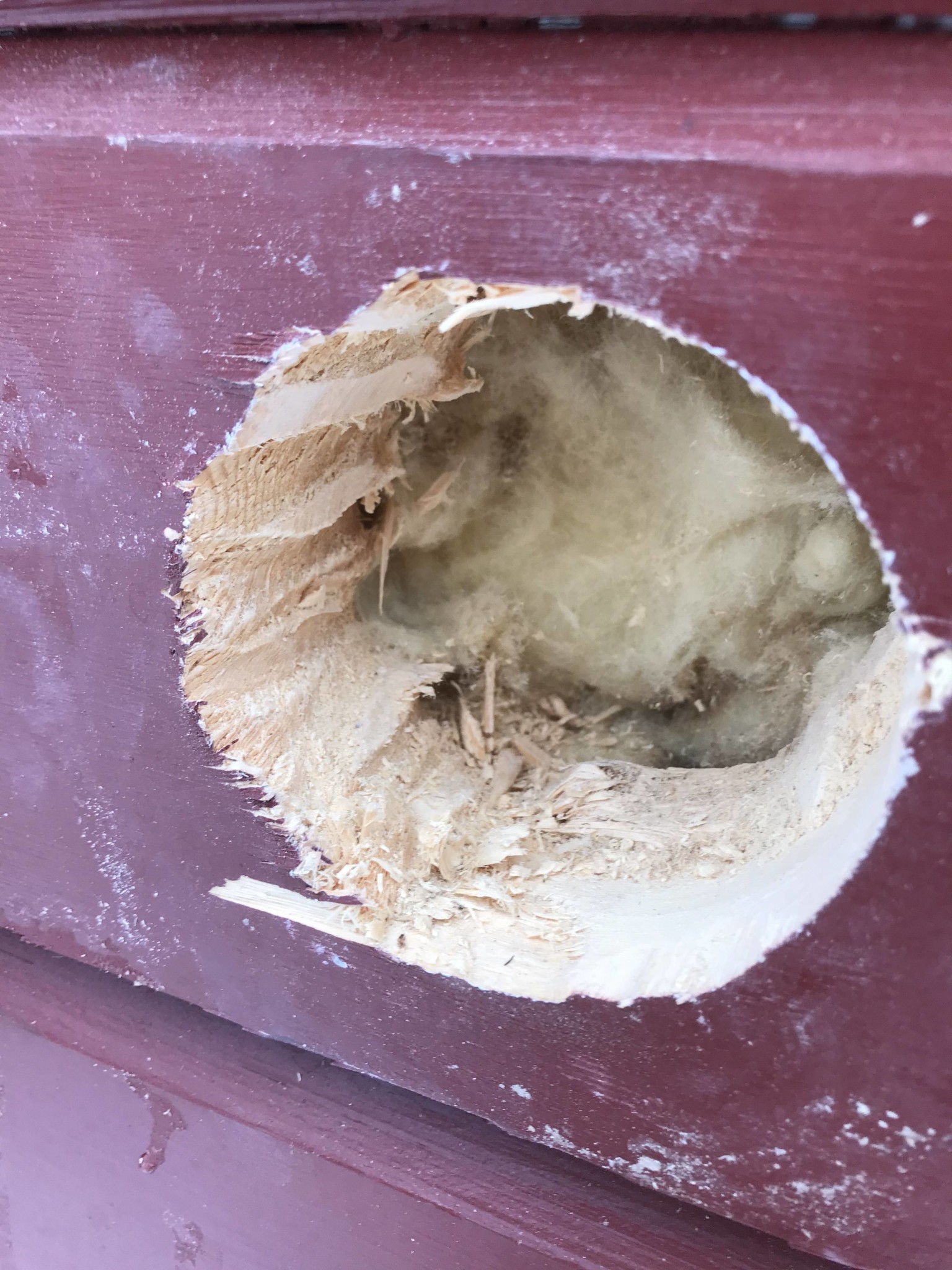
Now I have cut out a piece from the timber plank on one gable. Thankfully, it looks super good so far! However, I will check other places too, hopefully to be completely calm. But right now the only jigsaw blade broke. The hole saw unfortunately doesn't go all the way through. [ QUOTE="Stefan84, post: 3598126, member: 301818"]Ah okay. Yes, these plastered facades I have read about earlier today. I mostly assumed that it was called the same as wooden facades built like my house.[/QUOTE]
Vi vill skicka notiser för ämnen du bevakar och händelser som berör dig.

 I saw in another thread about this that a solution to the problem is to drill holes in the lowest panel board, about 2 between each nailing lath. But now to my concern. In connection with this, I began to worry about the construction in the residential house. 4.5 years ago I bought a "Keostuga". The walls in it consist of 45 mm horizontal timber planks in pine. The carpenters who were here insulated, as far as I know, directly against the timber planks without an air gap and wind barrier in between. The insulation is 90 or 120 mm (I am actually very unsure of the thickness :/ ) plus 45 mm. Closest behind the OSB board and plasterboard was the plastic foil, instead of inside the 45 mm insulation. But what neither I nor anyone else in the family thought about is that the timber planks were painted by ourselves with acrylic paint with primer underneath just after a few weeks. Now I am terrified that the walls/timber planks will be full of black mold and rot from the inside. It feels like the whole house in that case would be beyond saving since the timber planks also function as the house's frame.