Hello!
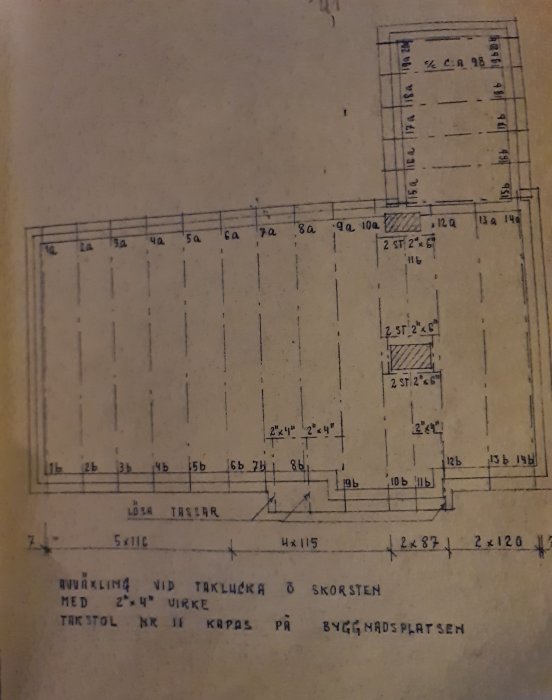
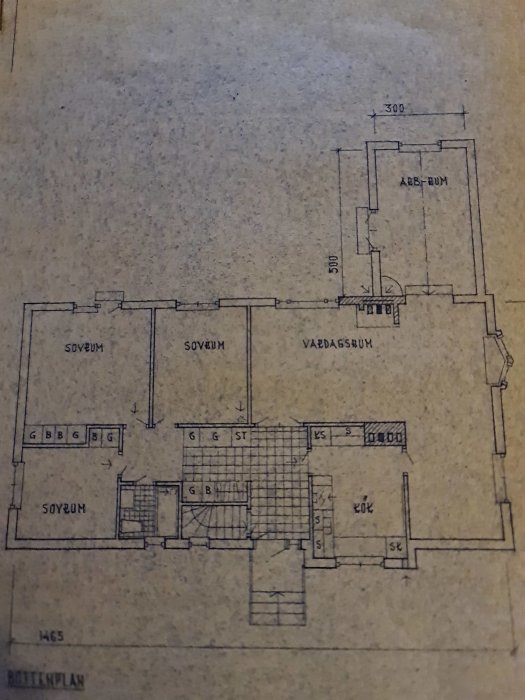
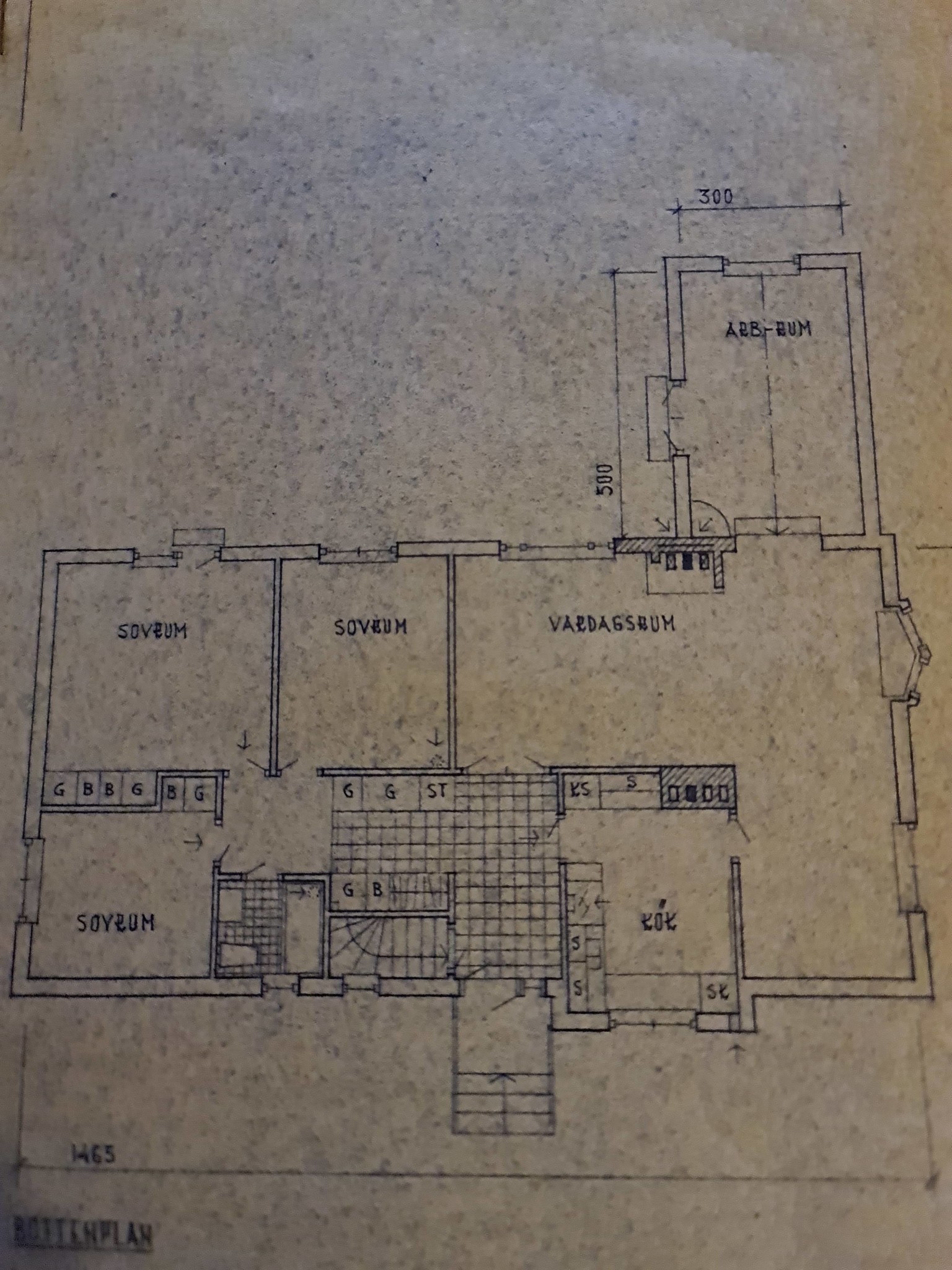
We are considering opening up a wall between the kitchen and living room and are wondering if it is load-bearing or not. We have some original drawings from the 1950s and it is 12b up to the chimney that needs to be removed.
Is there anyone who is used to interpreting drawings that knows if this is load-bearing? The wall is about 12cm thick.
There shouldn't be any problem removing that section of the wall.
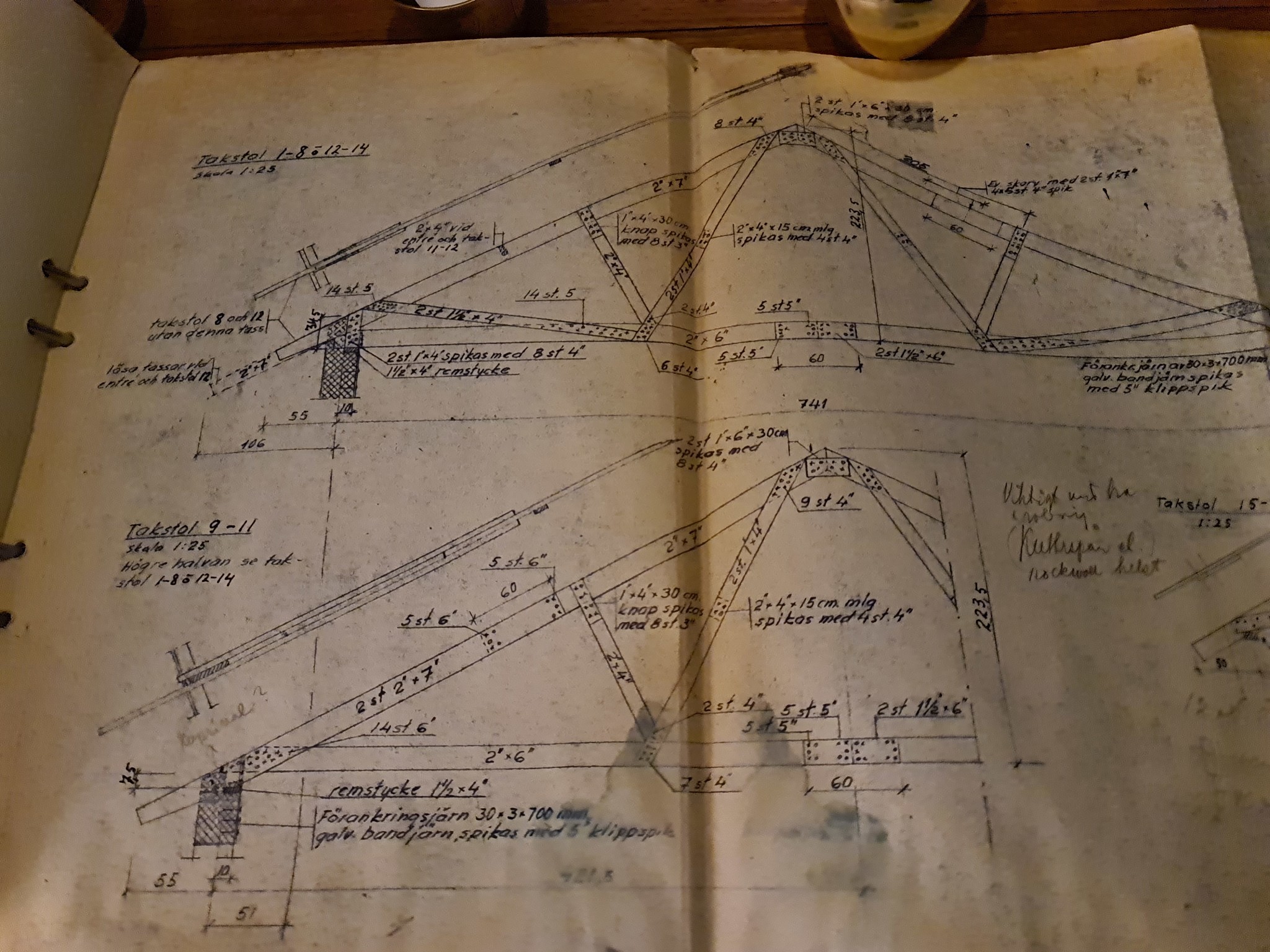
But do you have the opportunity to show how the roof trusses run and look, and the roof pitch?
Anyone available to take a look? It would be fantastic if it's just a matter of knocking down the wall
As I can read, rafter 11 is relieved for the chimney, and according to the drawing, they are attached to rafter 10 and 12. Therefore, my answer is: No, you can't just take it down. It might be that particular wall is load-bearing for the rafter where the relieving rests. Go up and crawl in the attic
Thank you very much for the response. I'll have to pop up to the attic and take a look. How should it look if the wall is load-bearing? As a novice, I thought that the 12 was supported against the chimney stack and therefore relieved there.
They have placed a roof truss on each side of the chimney and one in front. Then they have put 2 x 6" by the chimney in the living room and 2x6" on each side in the kitchen between no.10 and no.12. It's that 2x4" on the drawing that's causing problems; it only runs from no.11 to no.12 and seems to end over the kitchen wall. The beam exchanges are supposed to handle the tensile loads from no.11. You need to check exactly where the wall is positioned in relation to the roof truss and where the beam is attached.
[image]
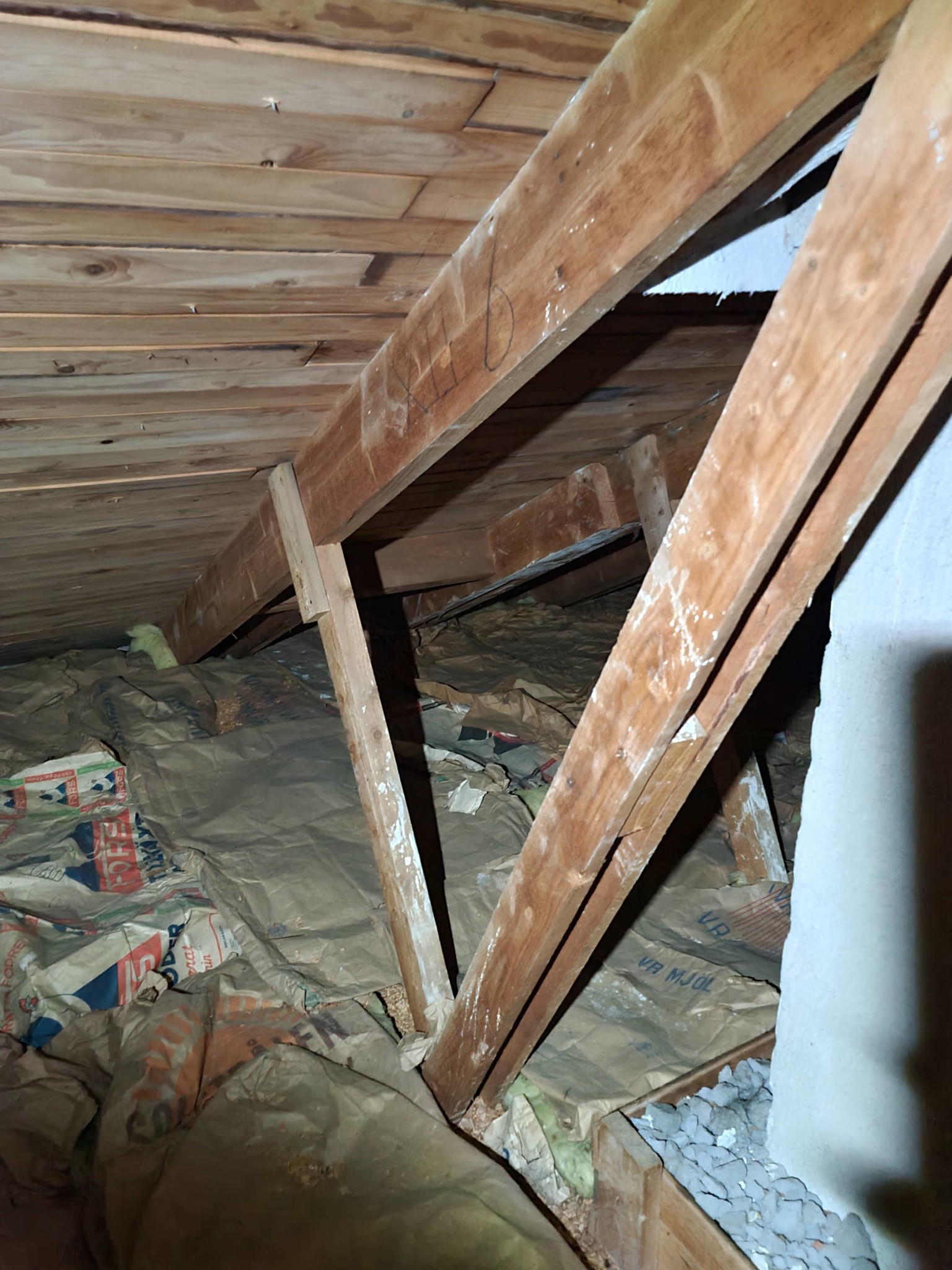
Took a picture of the roof truss where the wall is. To the right, you can see a bit of the chimney.
It seems like the 4" header is sitting directly under the roof sheathing. So it's not hanging on the wall anyway The trusses are so-called self-supporting, so they normally shouldn't need any support underneath. In the living room, number 11 has no support anyway. So it should probably not be a problem. But it's difficult without seeing it on site. In the worst case, there will be a small beam in the attic.
It seems like the 4" beam is located directly under the roof sheathing. So it's not hanging on the wall ivf The trusses are so-called self-supporting, so they usually don't need any support underneath. In vrum, nr 11 has no support ivf. So it probably shouldn't be a problem. But it's hard to say without seeing it in person. In the worst case, there will be a small beam in the attic.
Probably best to bring in a carpenter before I go at the wall. Feels safer. If anyone here lives on the north side of Sthlm and wants to earn a little cash or a case of beer, just pm me
Probably just as well to bring in a carpenter before I go loose on the wall.
You need to contact a structural engineer to get a reliable answer. Carpenters are not trained to always determine what is load-bearing or supportive in a correct way (there are some horror examples in the forum).
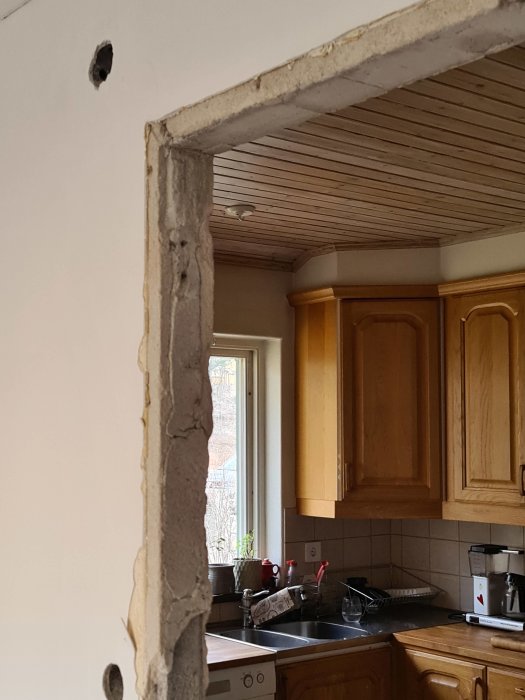
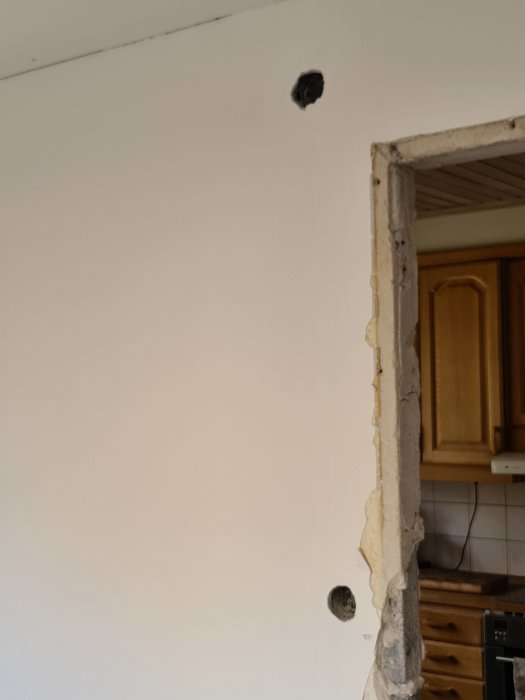
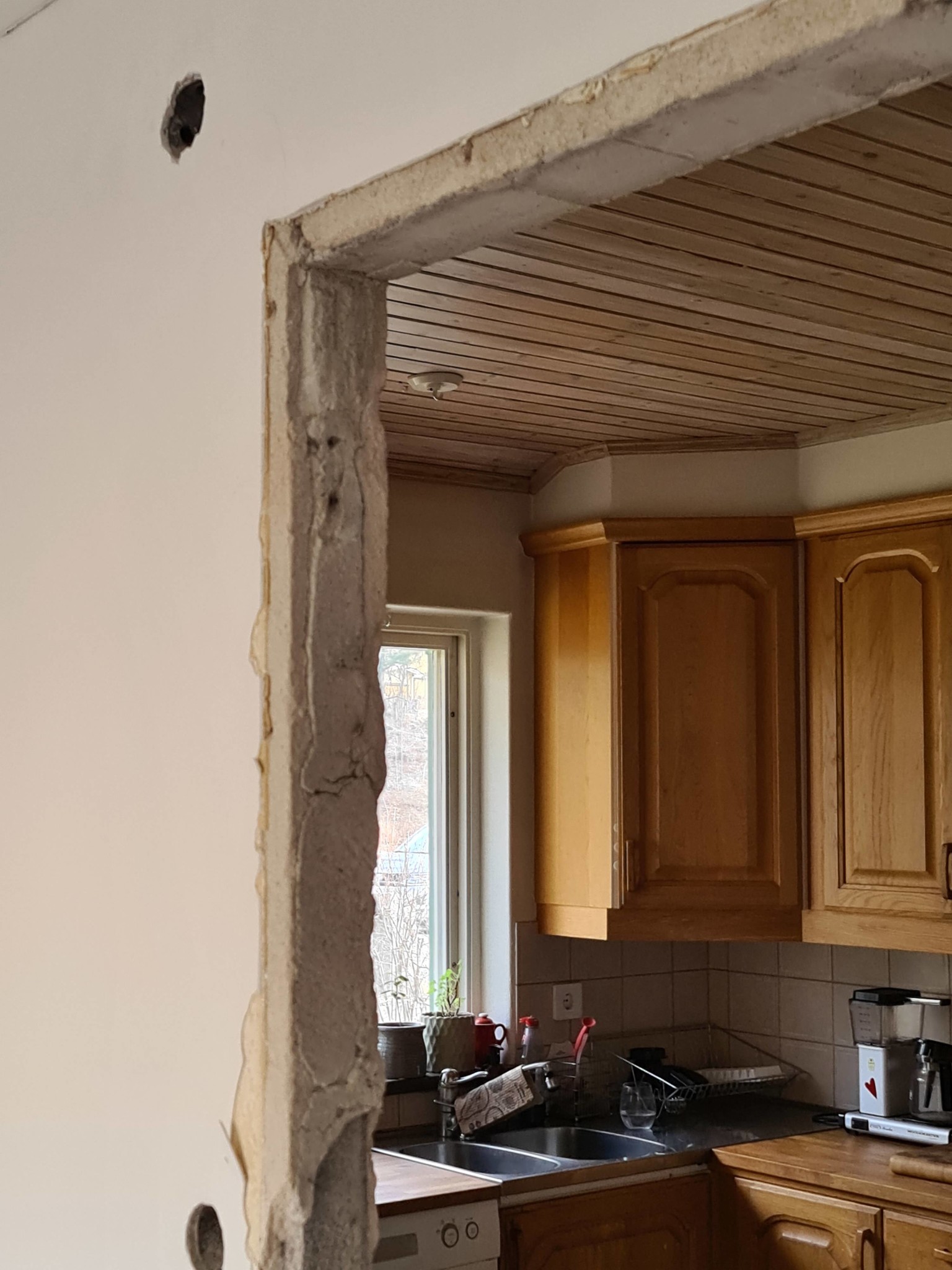
Alright, it's confirmed that the wall is not load-bearing. I have now removed the door and frame and am wondering a bit about the smoothest way to take down the wall. Plastic sheets are purchased and set up. The reciprocating saw is ready.
If anyone can give any tips, it would be greatly appreciated.