
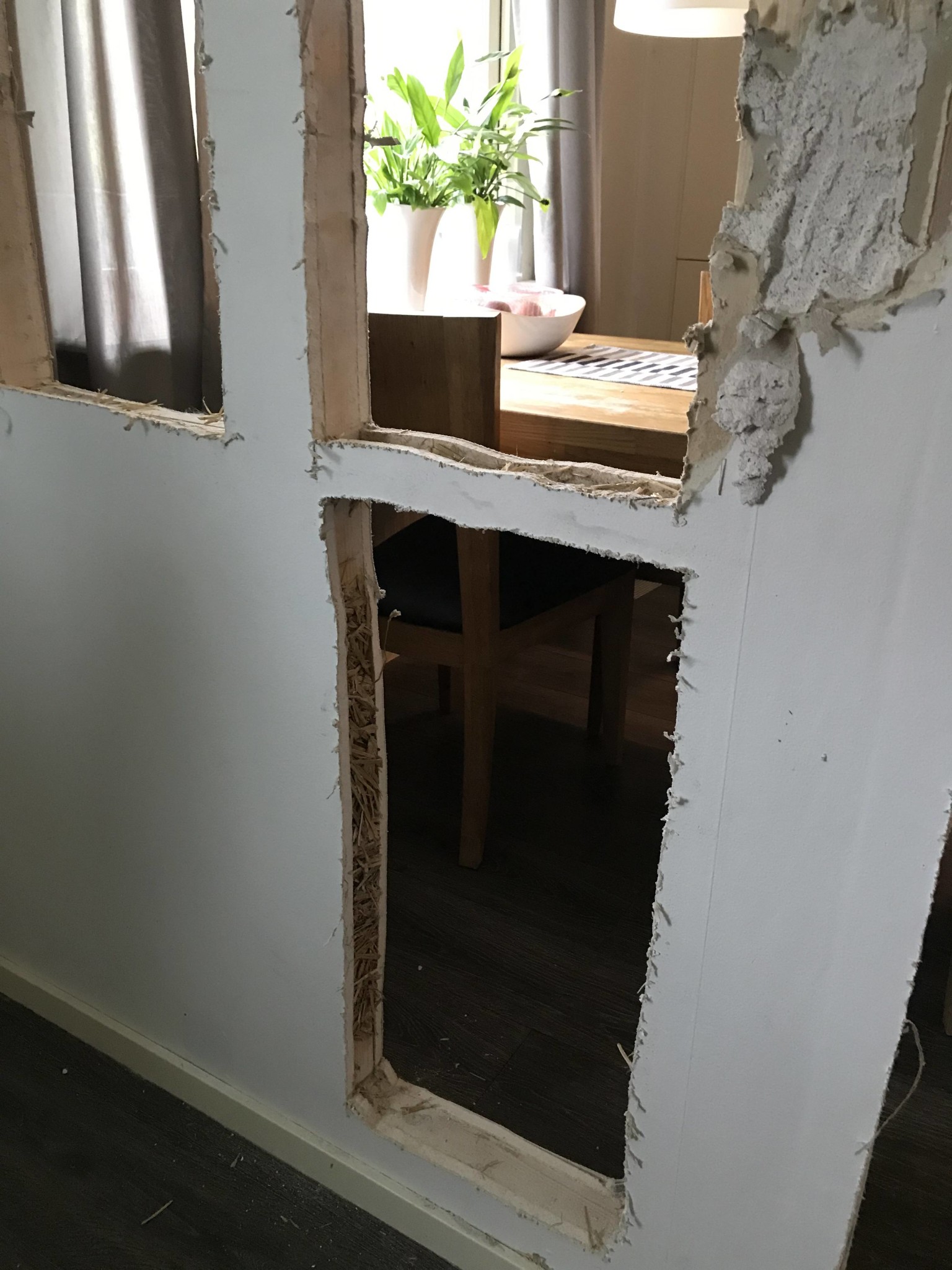

Hello and welcome to the Byggahus forum!
That wall is load-bearing. If you want to remove it, it must be replaced with a beam of some sort.
That wall is load-bearing. If you want to remove it, it must be replaced with a beam of some sort.
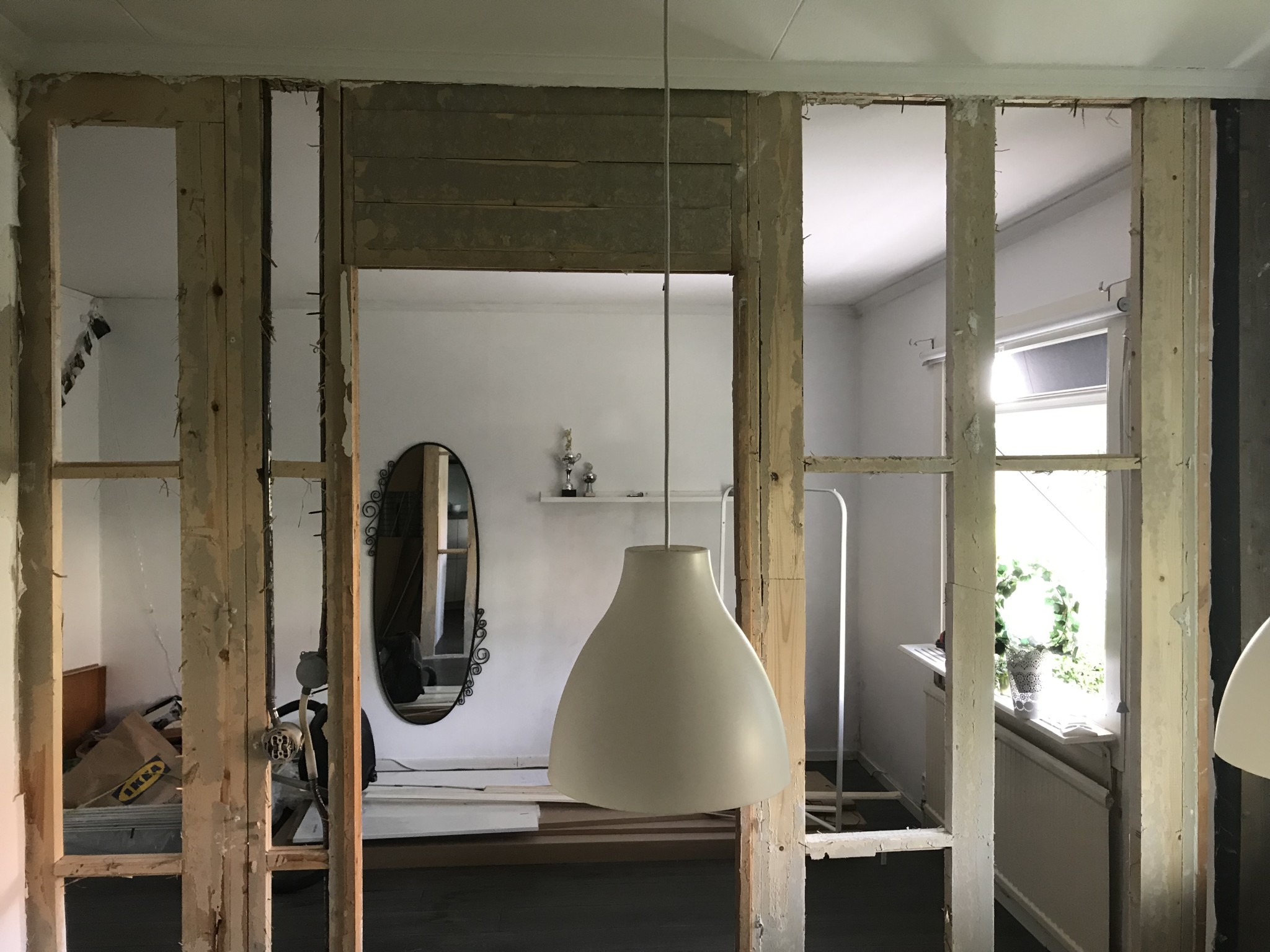
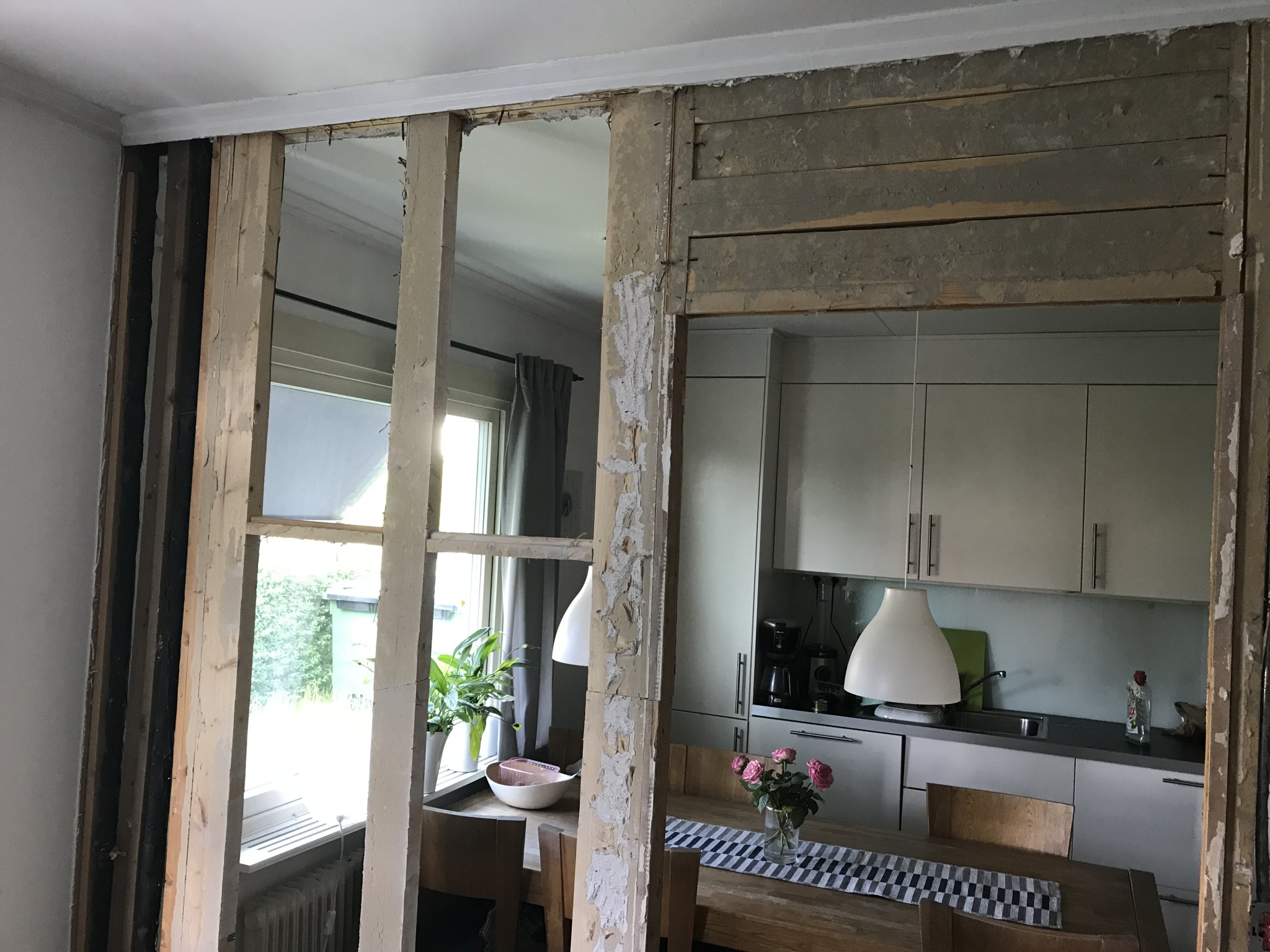
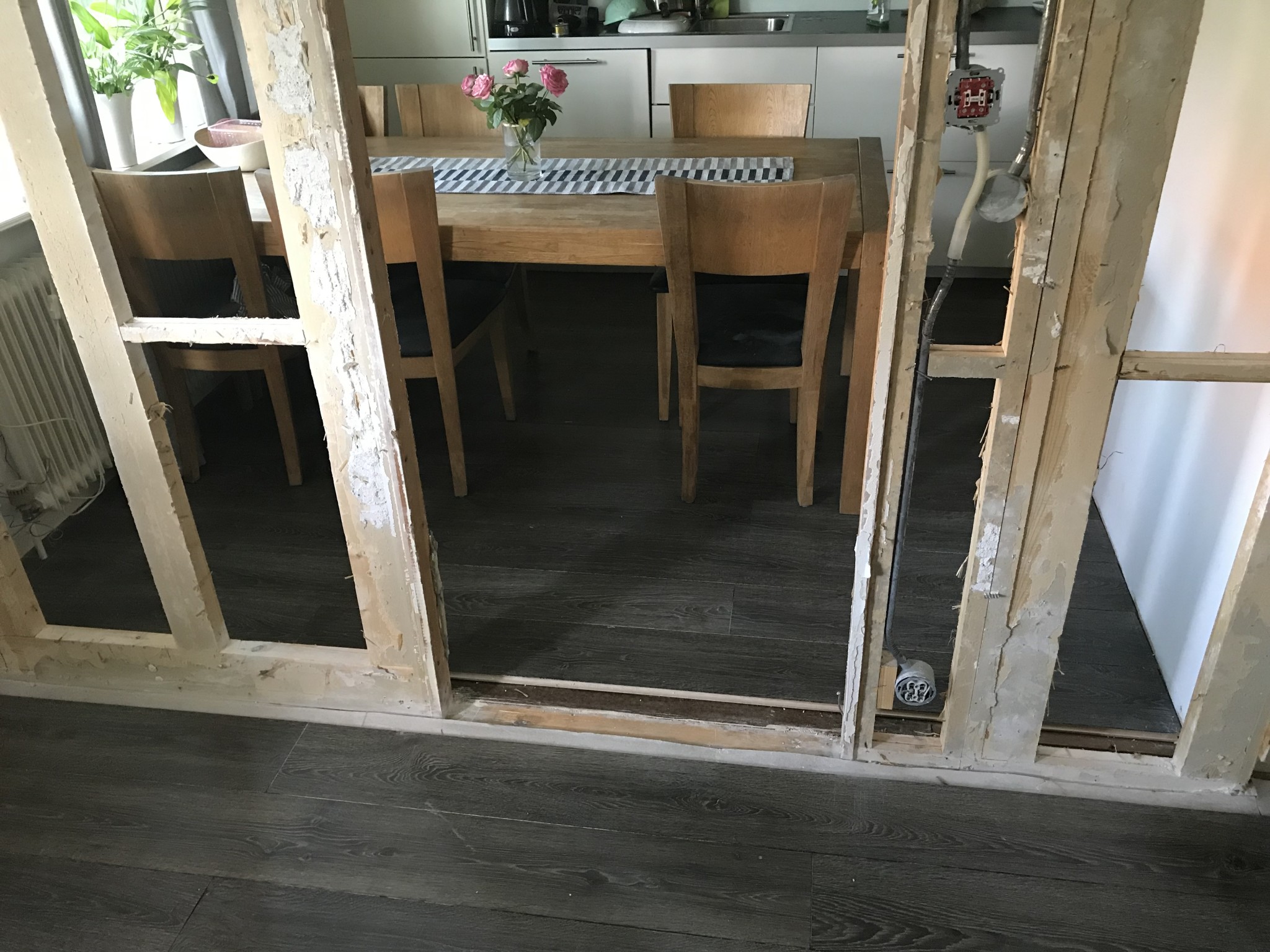
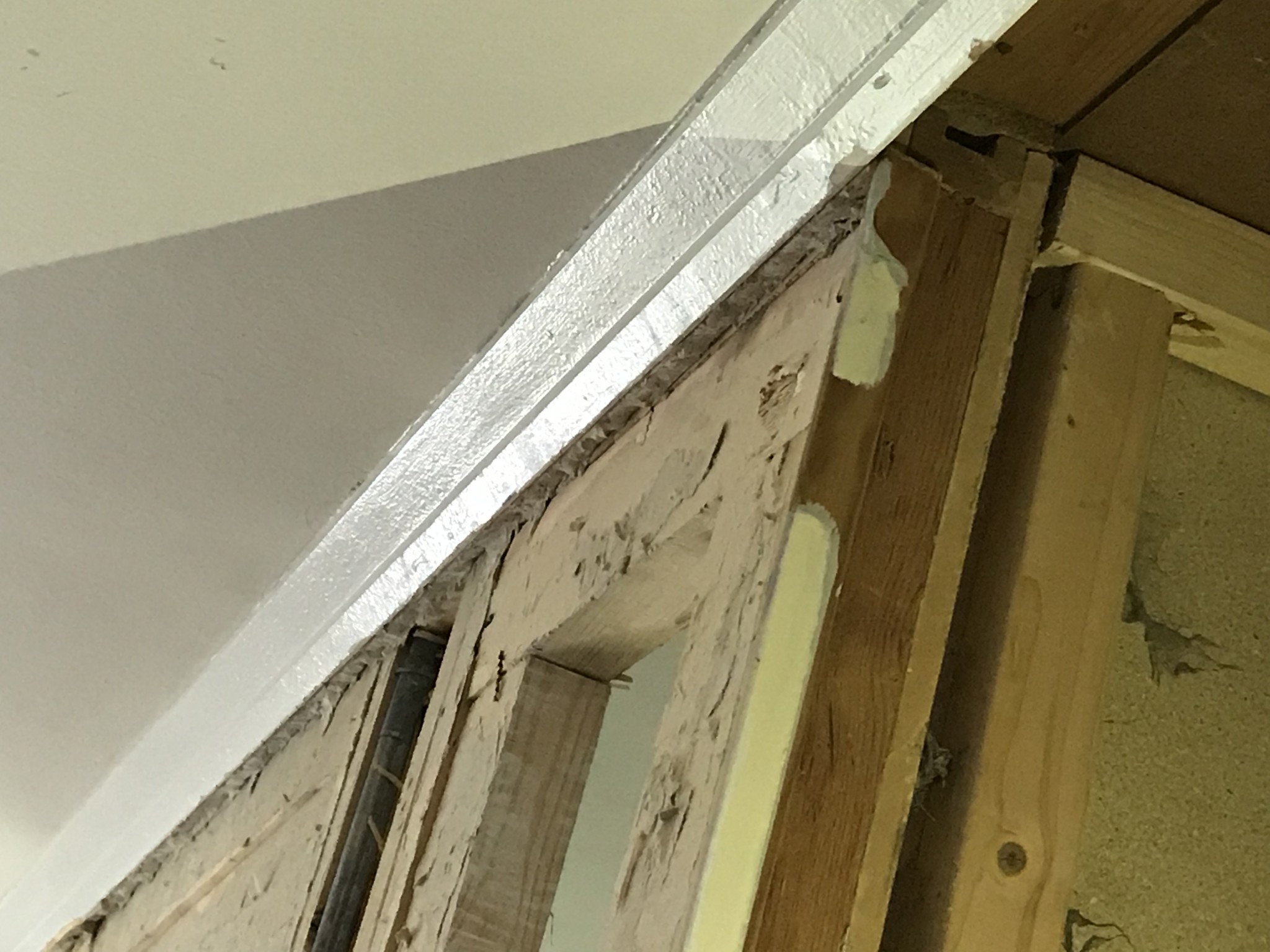
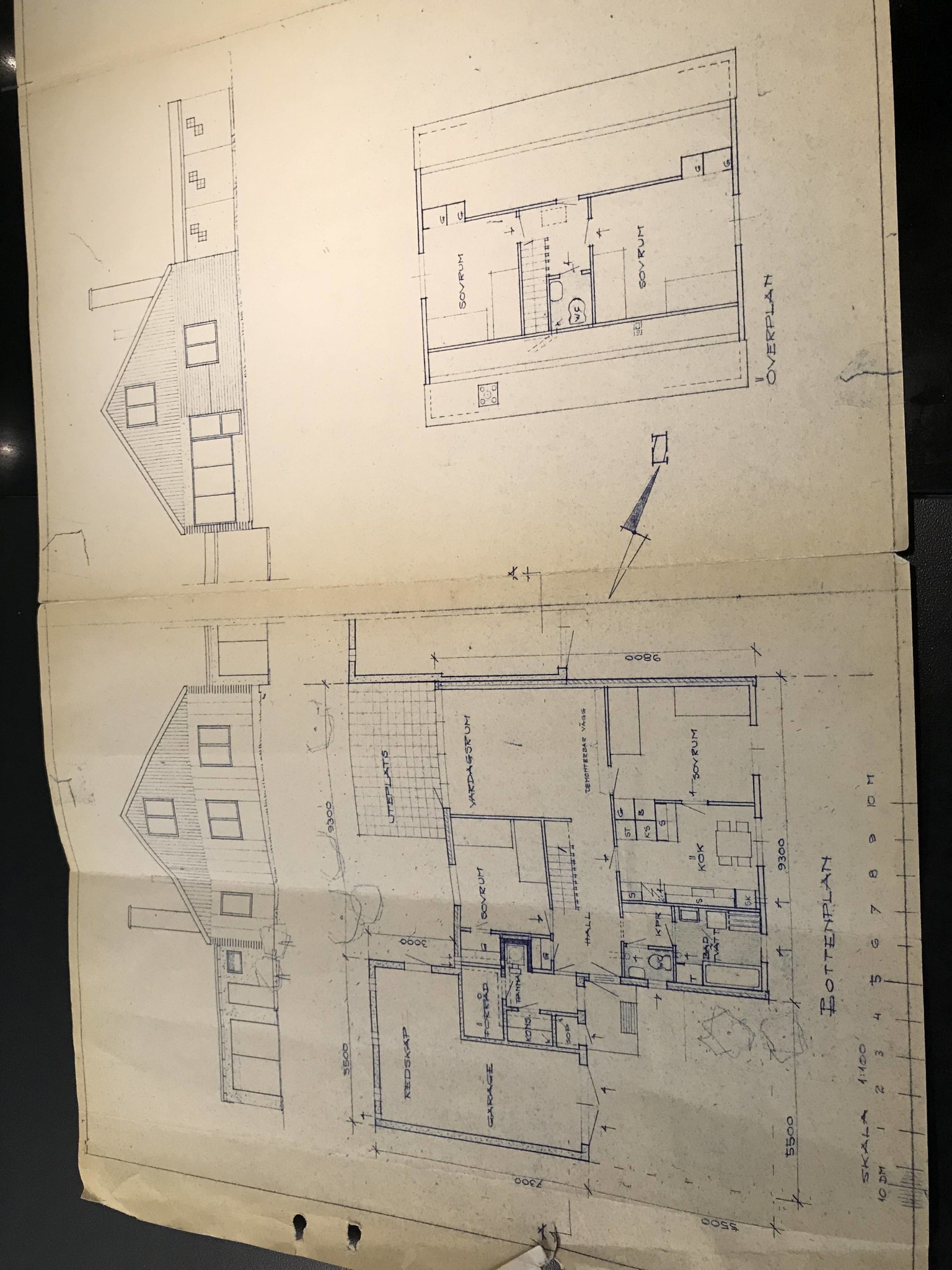
The floor plans are key to the assessment. Although the wall is peculiarly constructed, it does not justify changing the assessment. I still believe that the wall is load-bearing.
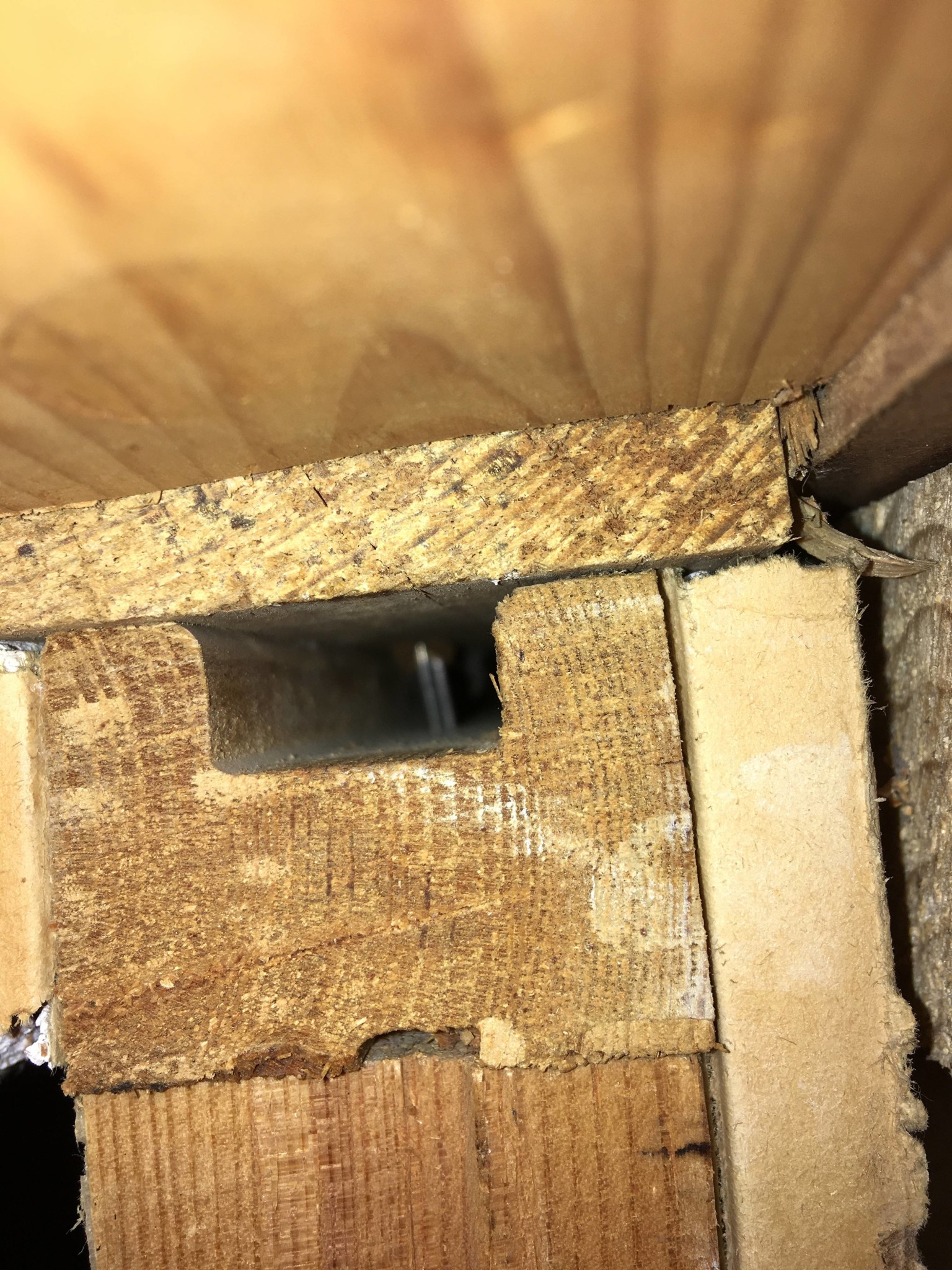
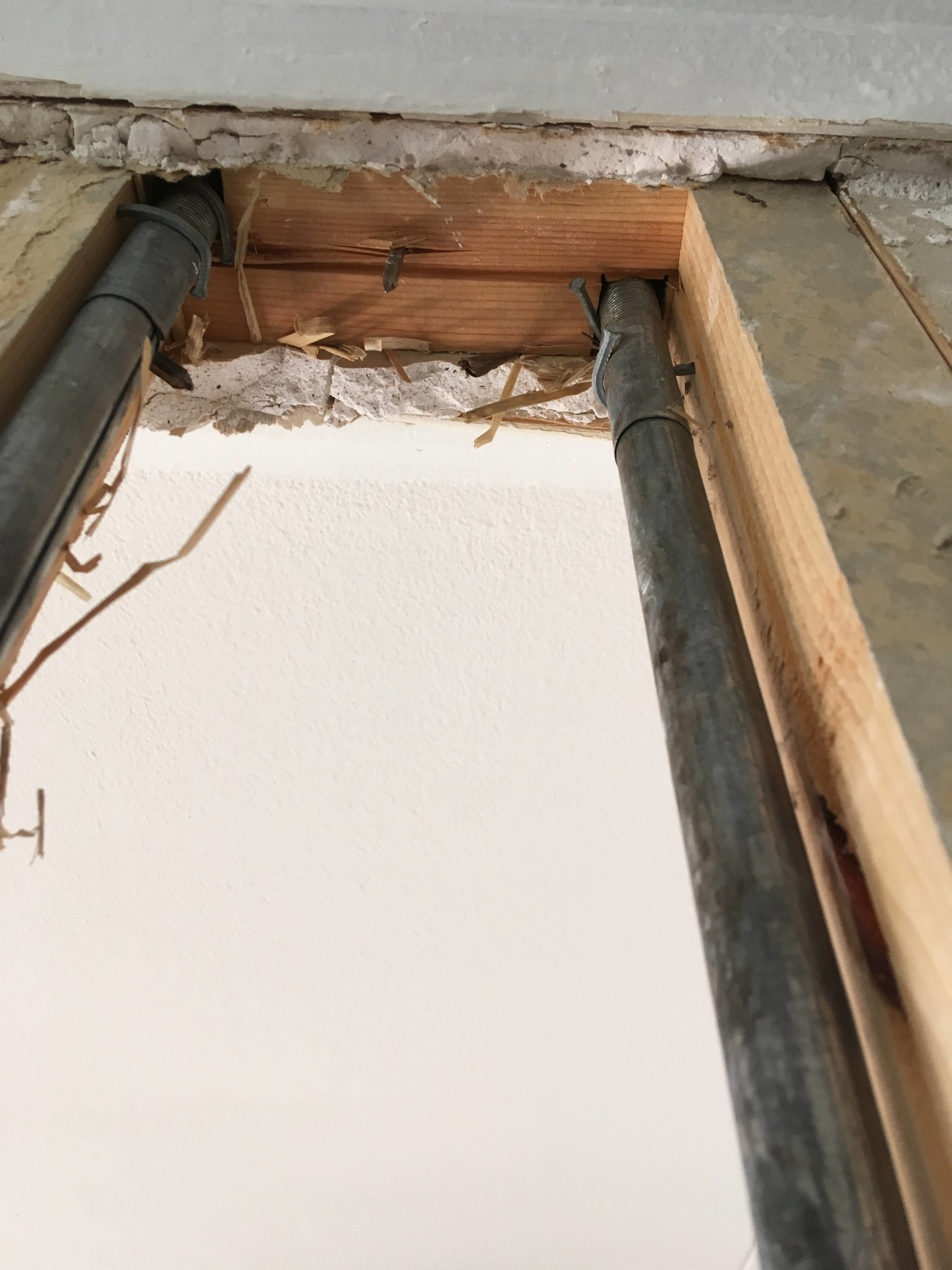
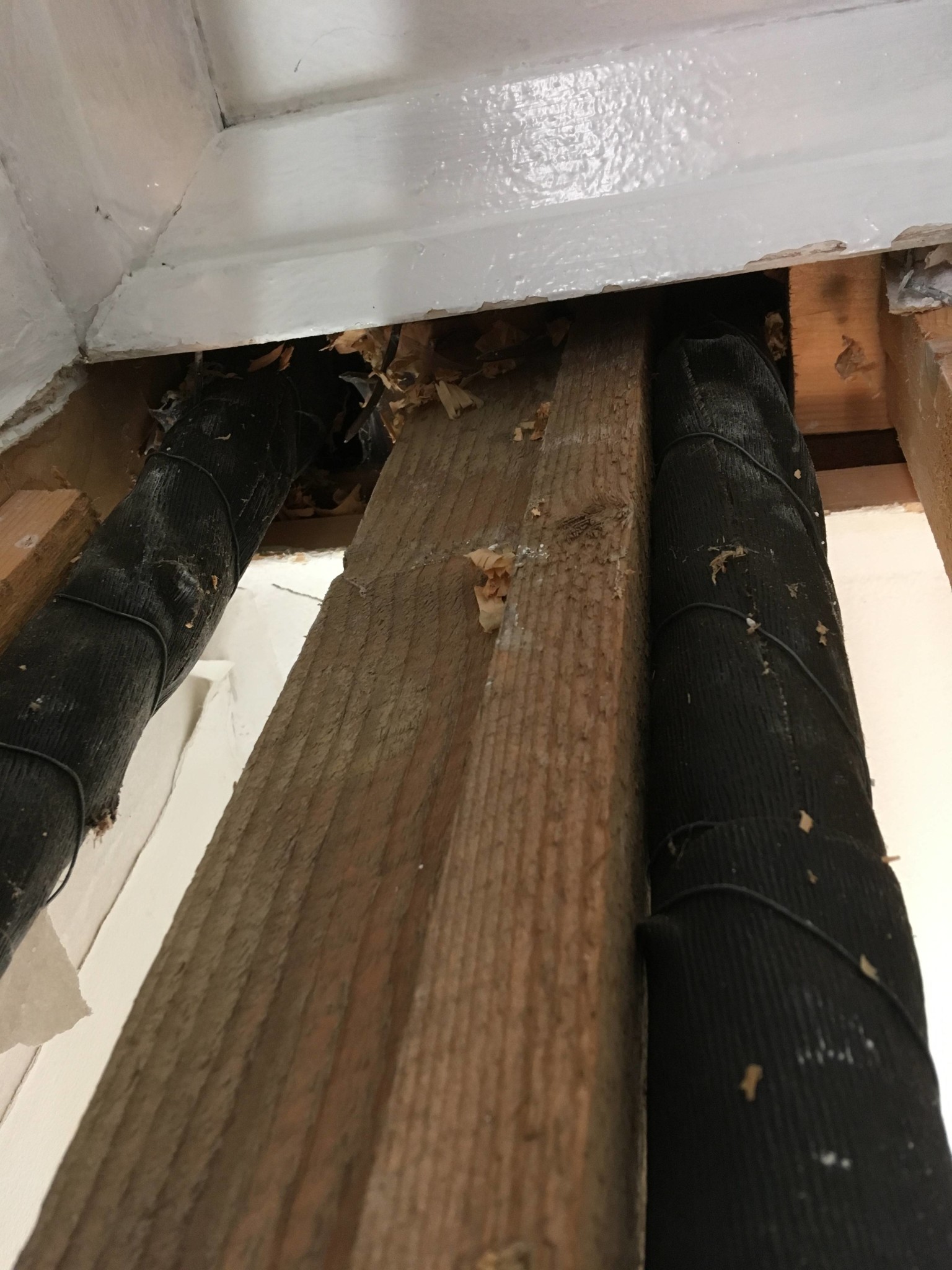

Removed a load-bearing wall when I renovated the kitchen.
The essential part was that the constructor more or less said, "you have to see how the load on the trusses looks" - If they are designed so that the weight presses down along the length of the truss, then the wall is load-bearing. However, if it is constructed so that the weight goes to the sides, it is easier to tear down, even though it might still need some reinforcement anyway. So-. This says nothing about how the wall is built; we need to see pictures of the trusses.
And if you're even slightly unsure, you should consult a constructor. Relieving the load costs 10,000 inkl drawings if you use glulam beams. Repairing a house that gets settlement damage can cost you significantly more. Do you want to take that risk?
Your pictures of the wall say nothing about how the load looks from above, and that's what counts.
Edit: Now see that you have a finished attic/upper floor. Then that wall is 99% likely to be load-bearing. So if you want to tear it down, it's a job for a constructor/carpenter to arrange for load relief.
The essential part was that the constructor more or less said, "you have to see how the load on the trusses looks" - If they are designed so that the weight presses down along the length of the truss, then the wall is load-bearing. However, if it is constructed so that the weight goes to the sides, it is easier to tear down, even though it might still need some reinforcement anyway. So-. This says nothing about how the wall is built; we need to see pictures of the trusses.
And if you're even slightly unsure, you should consult a constructor. Relieving the load costs 10,000 inkl drawings if you use glulam beams. Repairing a house that gets settlement damage can cost you significantly more. Do you want to take that risk?
Your pictures of the wall say nothing about how the load looks from above, and that's what counts.
Edit: Now see that you have a finished attic/upper floor. Then that wall is 99% likely to be load-bearing. So if you want to tear it down, it's a job for a constructor/carpenter to arrange for load relief.
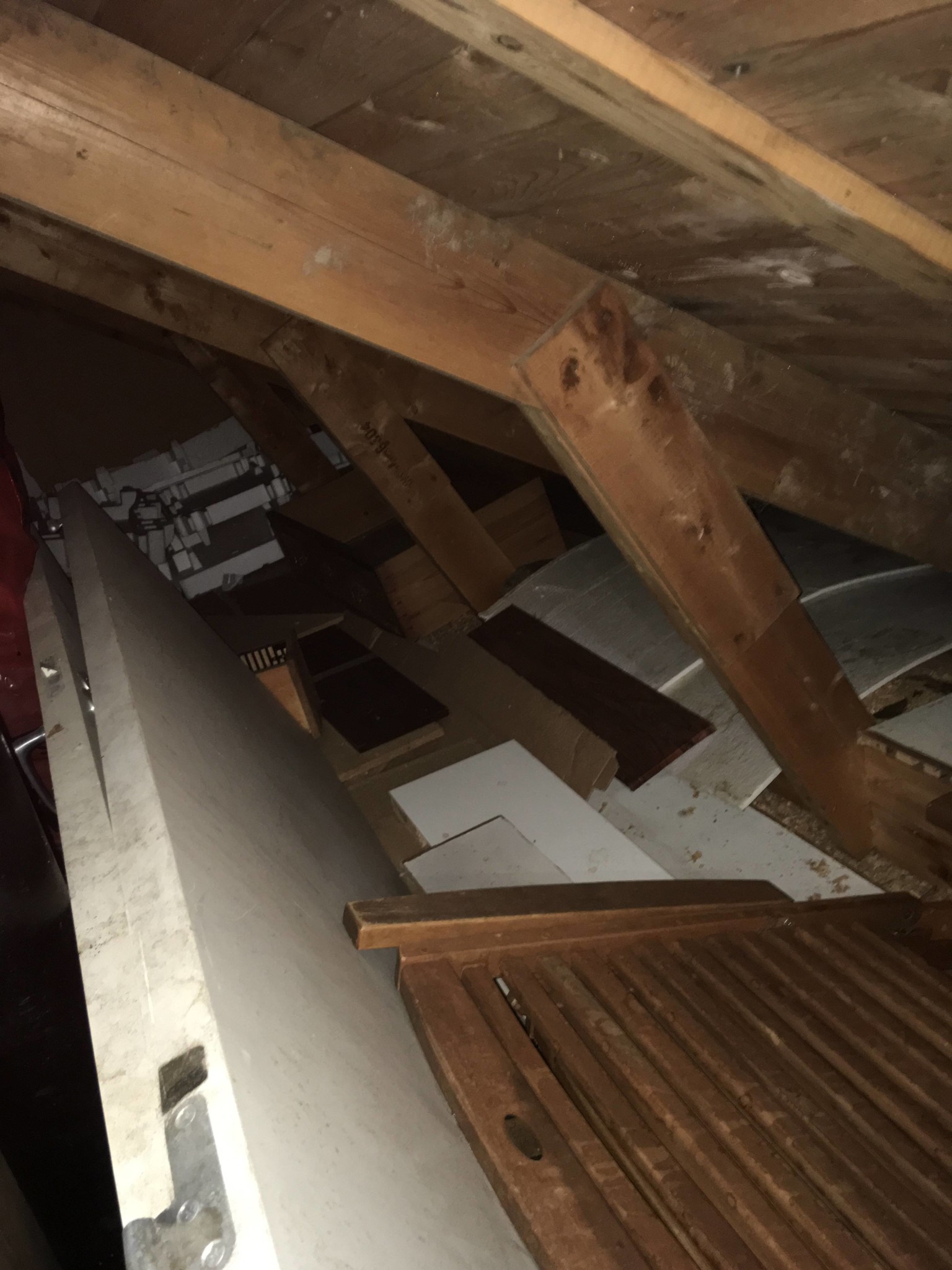
As you were previously informed in the thread, the wall is load-bearing. The bottom frame for the rafters is also the floor structure for the upper floor, and they cannot be freestanding over the length you have (9.3 m) and will need support from something underneath.
The fact that you don't feel there is any pressure on the wall/studs doesn't matter; it might be mostly like that, but then there will be pressure when it's loaded/when snow comes/etc.
The fact that you don't feel there is any pressure on the wall/studs doesn't matter; it might be mostly like that, but then there will be pressure when it's loaded/when snow comes/etc.
The trusses should appear to have a "W" that meets in the middle if they can handle hanging. Your trusses press straight down. That is, your walls are likely load-bearing to a large extent.
However, it's not a problem. But consult a structural engineer who can calculate and design reinforcements where you want to remove walls.
However, it's not a problem. But consult a structural engineer who can calculate and design reinforcements where you want to remove walls.
Turned out well, we ended up installing a beam in the ceiling to be on the safe side. The carpenter who helped me was 99% sure that the wall wasn't load-bearing. But just knowing there was a chance it was load-bearing, it's best to be on the safe side. What do you think about the partition walls in the garage? They are made of some kind of lighter concrete. Are they load-bearing or not, there's a pantry and an old garbage room as well as a former oil boiler room. Is it possible to remove the partition wall between the pantry/oil room/small hallway without installing a support structure?
The status of the walls in the basement cannot be assessed without a blueprint.
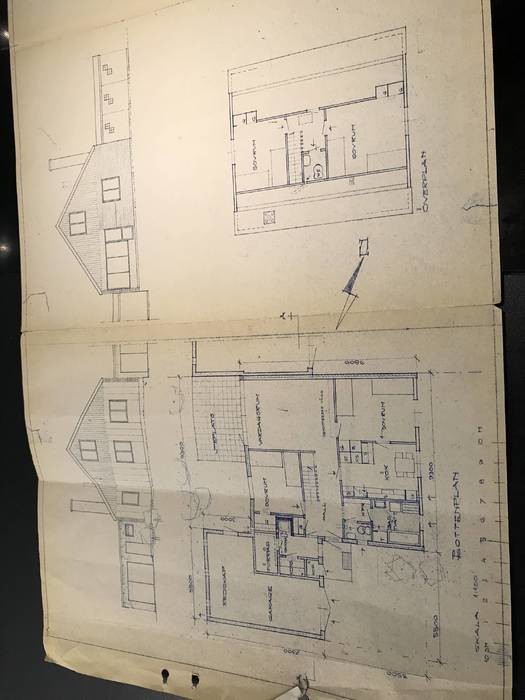
The walls of the small rooms within the garage's "volume" are likely not load-bearing, but it cannot be stated with certainty using your drawing. The resolution is too low, making it impossible to zoom in. A sectional drawing or a technical description is needed to understand how the garage is constructed.
Click here to reply
Similar threads
-
Rev en icke bärande vägg, ska nu sälja huset.
Utbyggnad och tillbyggnad -
Can you tell if the wall is load-bearing?
Building Materials and Construction Technology -
Beam for load-bearing wall?
Building Materials and Construction Technology -
Bärande vägg? W-takstolar
Planlösningar -
Load-bearing walls in 70s house
Building Materials and Construction Technology