
9,442 views ·
39 replies
9k views
39 replies
Load-bearing wall- Is it even possible?

The building year of a house says something about the construction method. It is unusual for 7 cm lightweight concrete walls to be load-bearing, but to say so with certainty requires more material. However, breaking through the lightweight concrete is exceptionally foolish. No one wants to write in threads where the OP doesn't follow any advice.
but I will do that, take a small hole and then post pictures here to see if it can be determined if it is load-bearingO olofh said:
that's why I'm writing here because I don't know and I'm following the advice...don't quite understand
you could have drilled a small hole that can be fixed instead of smashing the entire wall?X Xeato said:
you mentioned drywall... quite a big difference between drywall and aerated concrete. If you can't tell them apart, I really think you should absolutely stop now. Have a kanelbulle and wait until tomorrow so you can get the blueprints.X Xeato said:
Then we'll try to help you.
My goodness. It's like the paramedic kicking you in the face to see if you're conscious. What do you do if it turns out the wall is load-bearing?
If you're making your test holes with a sledgehammer, I'm worried about how you plan to tear down the wall. Grenade launcher?
If you're making your test holes with a sledgehammer, I'm worried about how you plan to tear down the wall. Grenade launcher?
Damn! Couldn't you have drilled a small hole that was easy to fix instead of going at it with a sledgehammer? Moreover, that's not gypsum and wooden studs.
Before you do anything else, get hold of the blueprints so you can determine if it's load-bearing or not.
Next time, you'll need to be more careful, it won't be fun to fix if it turns out to be load-bearing.
If you can't do it yourself, I strongly advise you to bring in craftsmen who can do it properly so it turns out well.
You can always try yourself, but going at a wall like that is completely the wrong way to go if you just want to see the construction, especially if it might be load-bearing.
Before you do anything else, get hold of the blueprints so you can determine if it's load-bearing or not.
Next time, you'll need to be more careful, it won't be fun to fix if it turns out to be load-bearing.
If you can't do it yourself, I strongly advise you to bring in craftsmen who can do it properly so it turns out well.
You can always try yourself, but going at a wall like that is completely the wrong way to go if you just want to see the construction, especially if it might be load-bearing.
We are all beginners at some point. If you have a sledgehammer at hand, you have one  In these contexts, "making a hole" usually involves taking a drill suitable for the material and making a discreet hole in a lower corner behind a door. If you also consider where the hole is likely to come out on the other side, you're operating at a professional level Just keep in mind that it can become quite expensive if it turns out, against all odds, that you cannot demolish the wall. Repairing the hole is certainly doable, but it becomes a bit more complicated if you have a crater to fix as opposed to a hole that is perhaps 10 mm
In these contexts, "making a hole" usually involves taking a drill suitable for the material and making a discreet hole in a lower corner behind a door. If you also consider where the hole is likely to come out on the other side, you're operating at a professional level Just keep in mind that it can become quite expensive if it turns out, against all odds, that you cannot demolish the wall. Repairing the hole is certainly doable, but it becomes a bit more complicated if you have a crater to fix as opposed to a hole that is perhaps 10 mm Eh. You can fix that with plaster and a ball of chicken wire in the middle or whatever you find at home.
(but sure, a drill would have been easier but oh well)
we're crossing our fingers that the blueprint shows the wall should come down. But then you'll need some fancier tools than a sledgehammer and possibly an angle grinder for the reinforcement.
(but sure, a drill would have been easier but oh well
)we're crossing our fingers that the blueprint shows the wall should come down. But then you'll need some fancier tools than a sledgehammer and possibly an angle grinder for the reinforcement.
Alright, let's try again today. I've got hold of some kind of old floor plan but I'm not sure if it provides the appropriate information. I'll post it here anyway and we'll see.
It's the three walls that go straight through the room between the kitchen and the living room, and have three cabinets. Those are the ones I want to remove.
Sorry if the picture is unclear.
It's the three walls that go straight through the room between the kitchen and the living room, and have three cabinets. Those are the ones I want to remove.
Sorry if the picture is unclear.
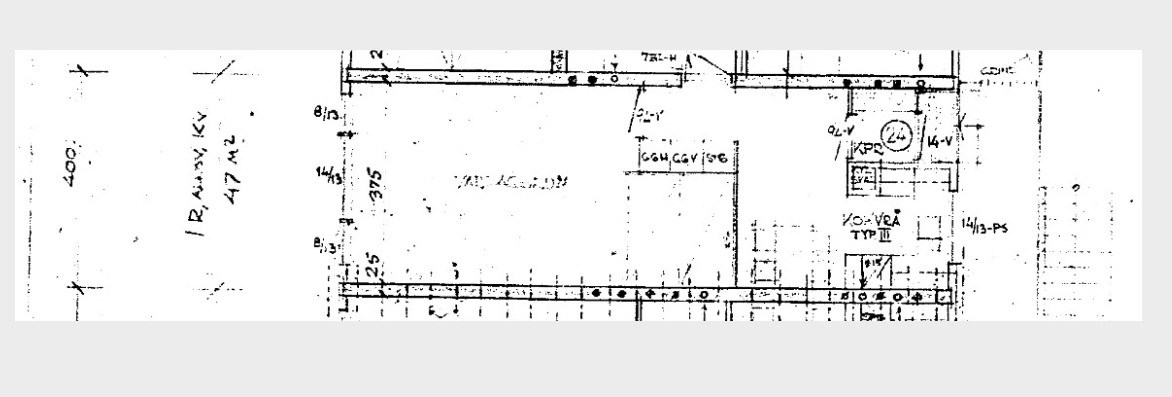
The interior walls that separate the apartment's various rooms are certainly not load-bearing. That task is handled by the apartment-separating walls. I would like to see the entire blueprint, not just the small snippet you posted.
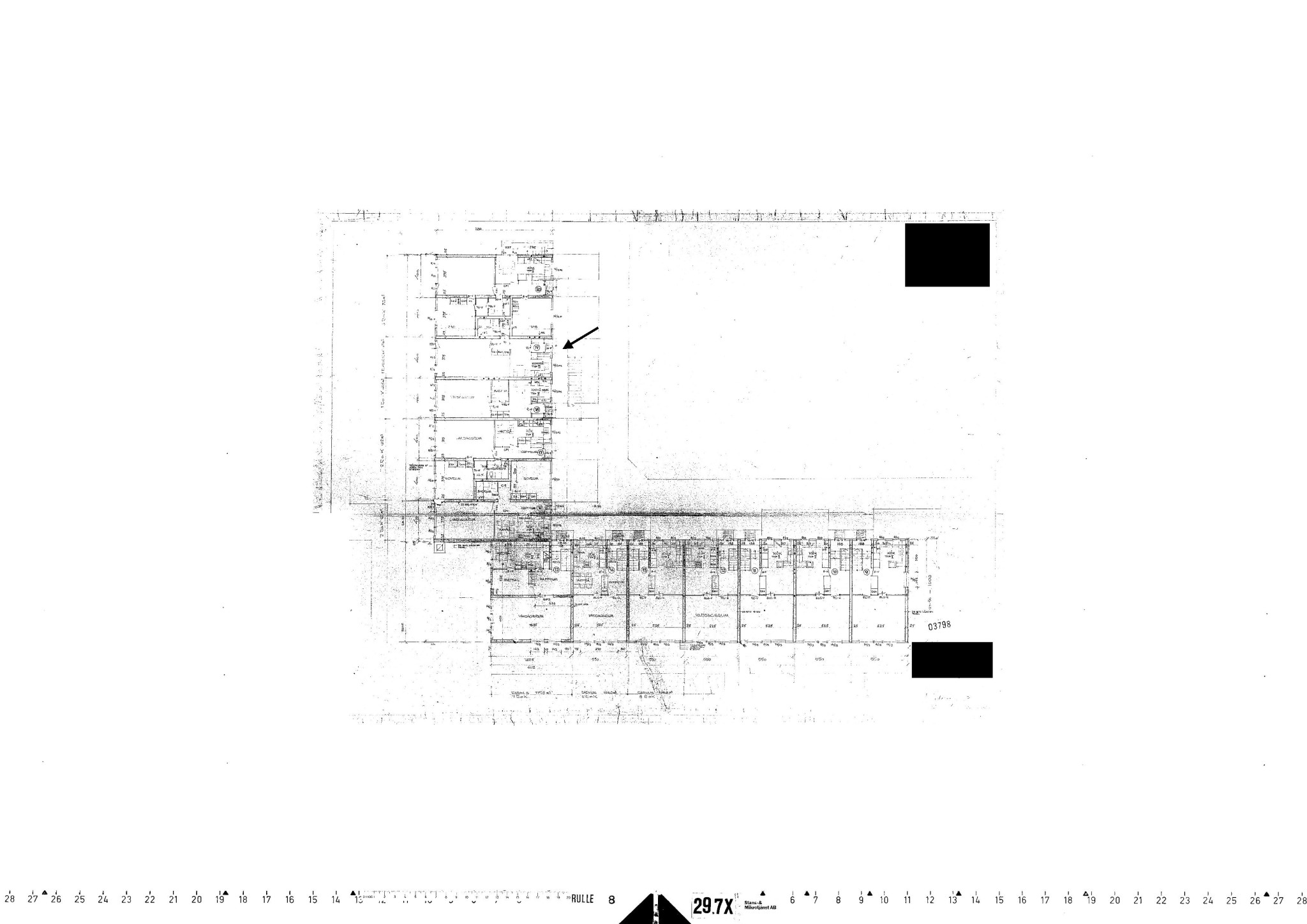
The information about the year of construction is important. The load-bearing structure consists of on-site cast apartment-separating walls of concrete. On these walls rests a concrete slab. The facade walls are light so-called non-load-bearing partition walls, just like the room-forming internal walls in the apartment. The building's structure is unusually clear.
okay, so there shouldn't be any problem taking down the three walls separating the living room from the kitchen?J justusandersson said:The information about the year of construction is important. The load-bearing structure consists of in-situ cast concrete walls separating apartments. On these walls rests a concrete slab. The facade walls are lightweight so-called infill walls, which are not load-bearing, as well as the room-forming partition walls inside the apartment. The building's structure is unusually clear.
What about the little "vestibule" next to the kitchen, I assume that one isn't load-bearing either in this case. Am I understanding you correctly?