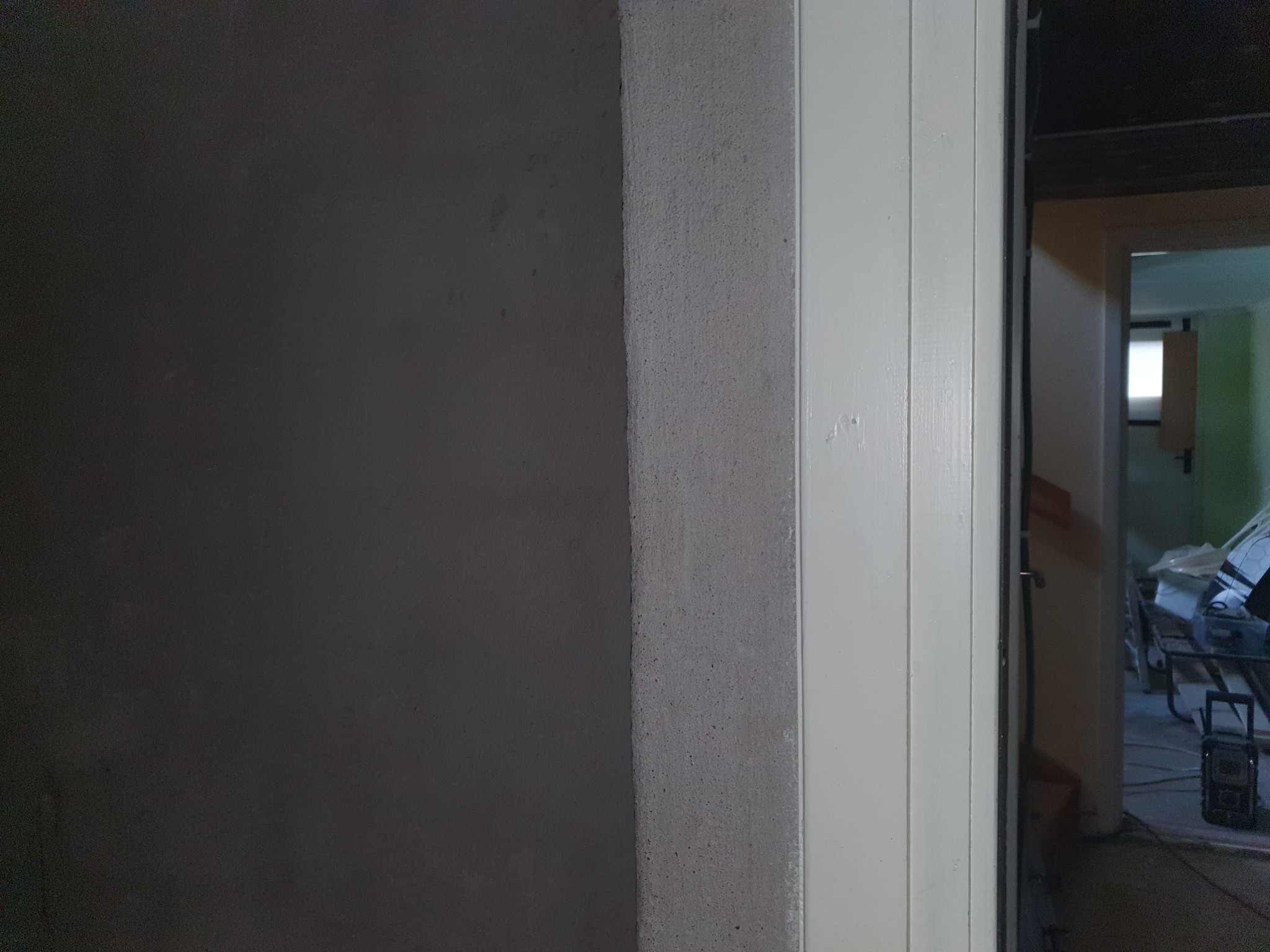
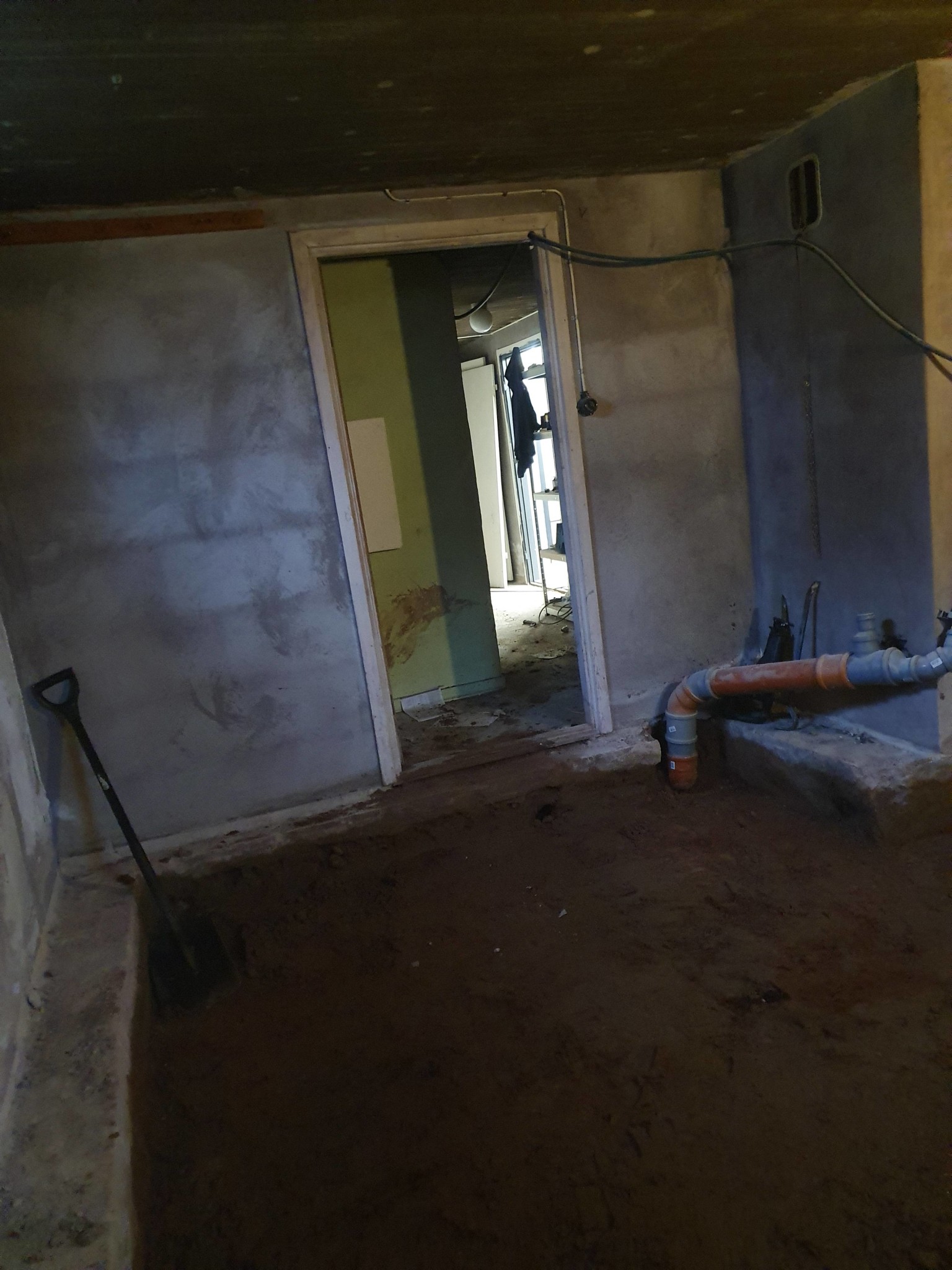
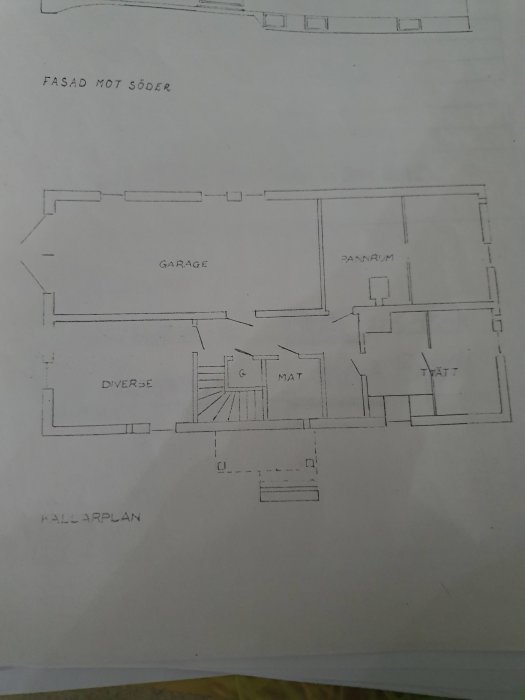
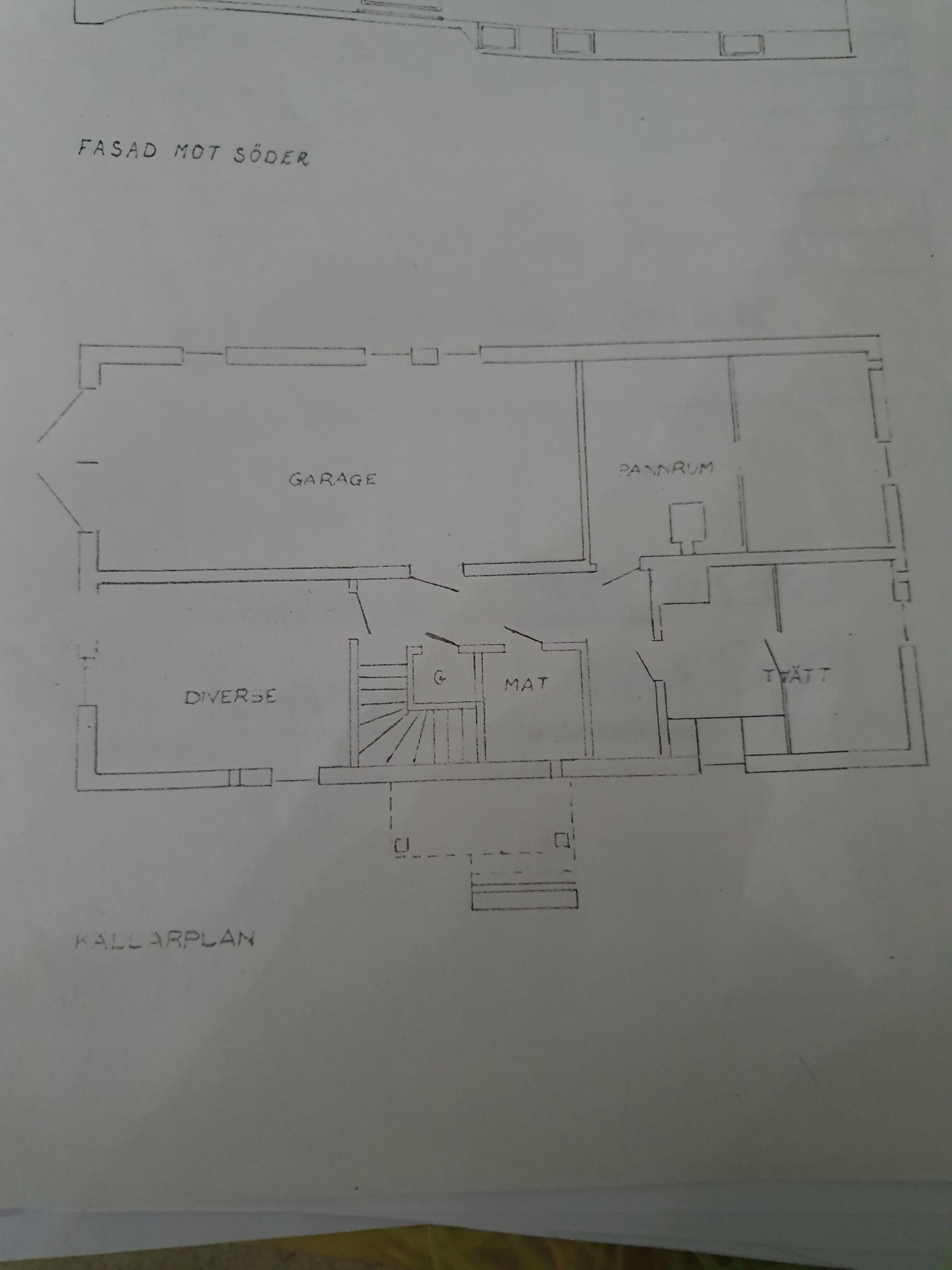
Is it possible to say from only these pictures whether the two storage rooms next to the stairs can be knocked down or if they somehow help to support the cast vault to the upper floor? The interior walls are made of blåbetong while the exterior walls and the one in the middle are hollow block if that means anything. Built in 1960 in Mora.
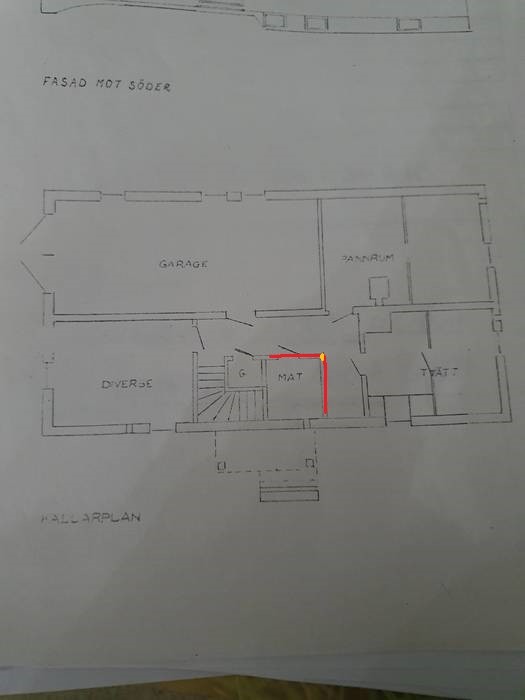
A floor plan of the upper floor would probably help a bit. But my guess is that they are not load-bearing since the beams are likely resting on the outer walls on the long sides and on the central heart wall. Possibly it may have something to do with how the opening for the stairs is constructed in that case.
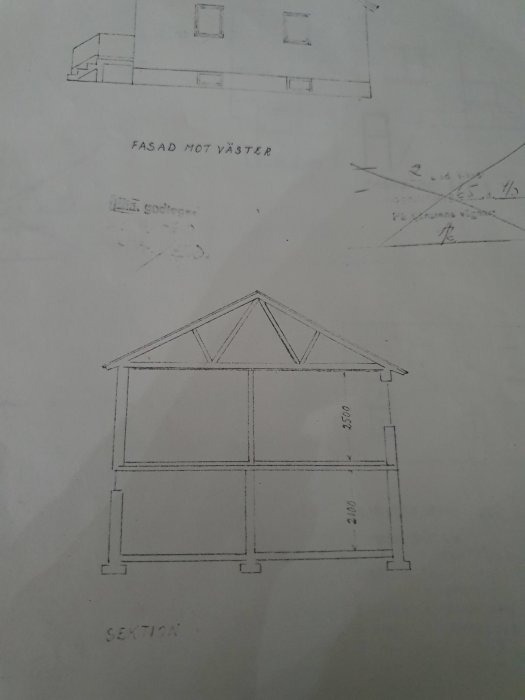
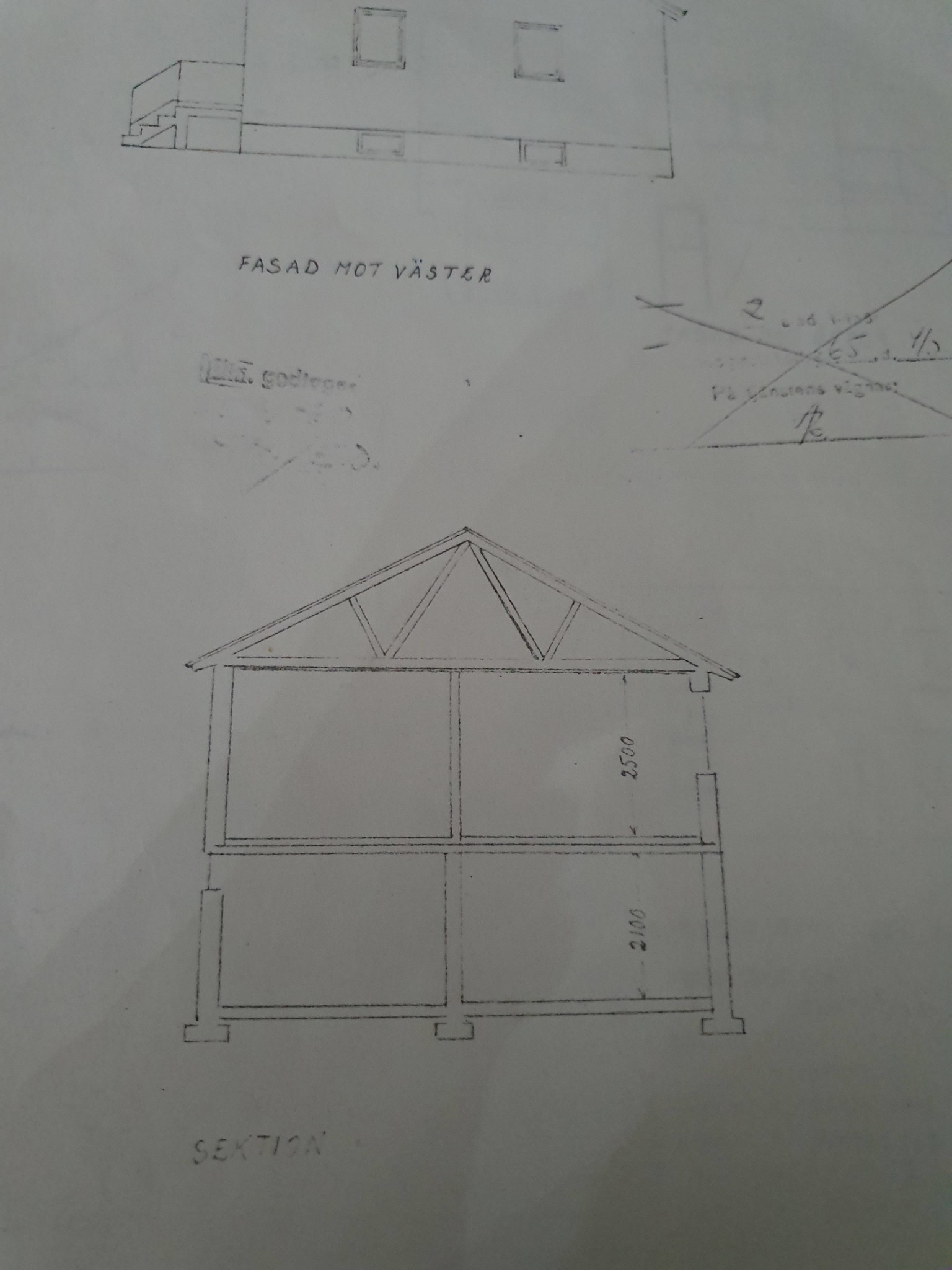
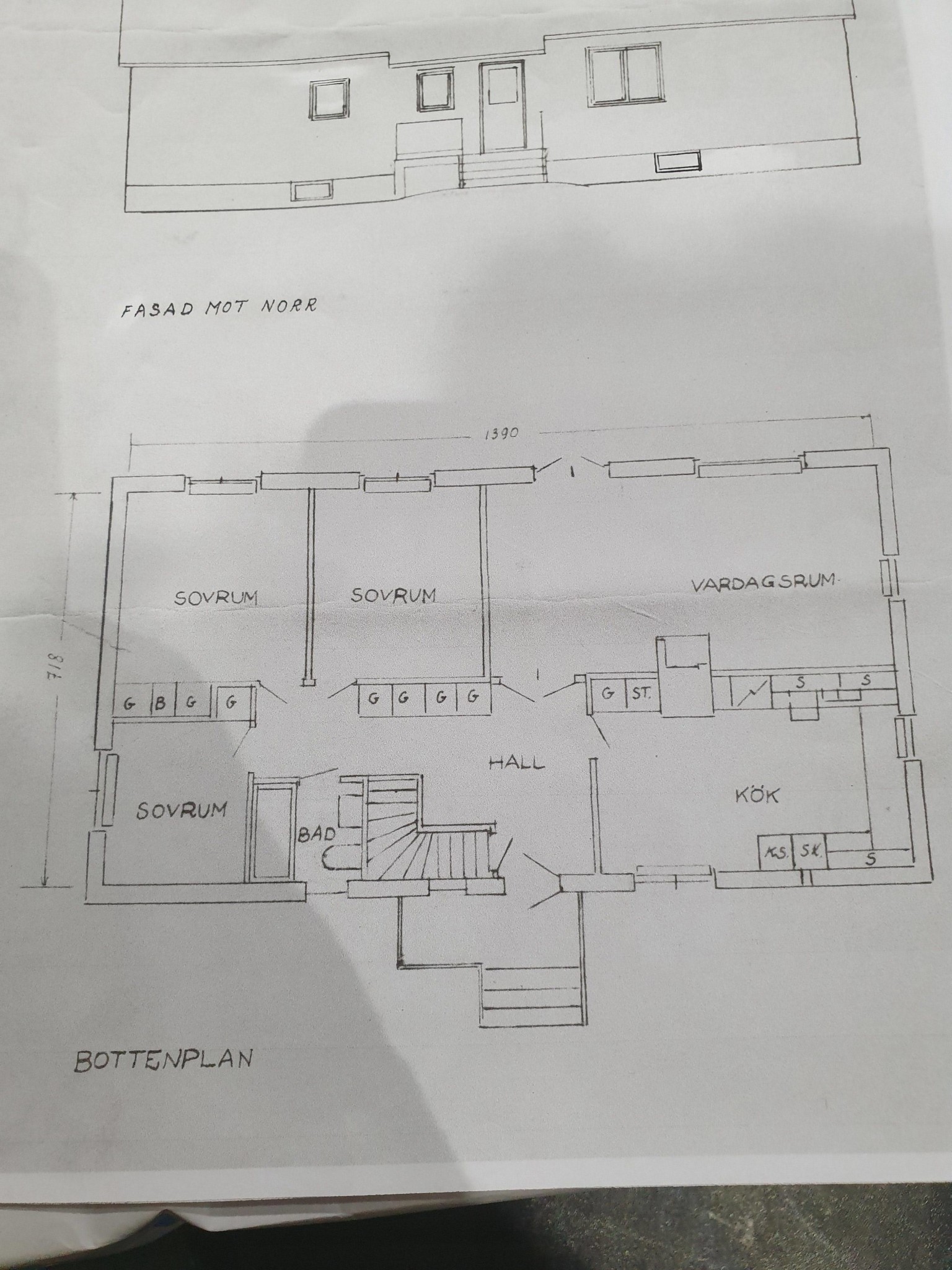
Okay, I'll get back to you in the afternoon with pictures of it. But in broad strokes, it looks the same; the heart wall runs through the entire upper floor similarly. And there's really no "bjälklag" but rather joists propped directly on the vault with wedges/blocks.
The lightweight concrete walls (blue aerated concrete) are certainly not load-bearing. They are probably not very thick either. The reinforcement drawing for the slab above always reveals which walls are load-bearing in the floor below. This was a very common building method during the 1950s and 1960s.
"Blåbetong" is usually not load-bearing. However, if you have real concrete walls somewhere, they can be assumed to be load-bearing. Very difficult to answer without being on site, but it can be a general guideline.
"Blåbetong" is usually not load-bearing. However, if you have real concrete walls somewhere, they can be assumed to be load-bearing. Very difficult to answer without being on site, but it can be a general guideline.
I have a ytong house built in '63 on a slope. Exterior/interior walls and intermediate floors in "blåbetong." Therefore, I have several load-bearing interior walls on the lower floor. For me, it's very easy to see as the load-bearing ones are 200 mm thick as opposed to the non-load-bearing ones that are 100 mm. You can also see how the floor slabs lie between the load-bearing blåbetong walls.
I'll update here as I have started thinking about this project again. The walls I'm considering do not seem to be made of blåbetong as I previously mentioned, but rather hollow bricks like the exterior walls and are about 20cm wide, which might indicate that they serve some function after all? But why would someone feel the need for a load-bearing wall there when they managed to cast the vault as self-supporting in much larger areas in the garage and the boiler room, for example?
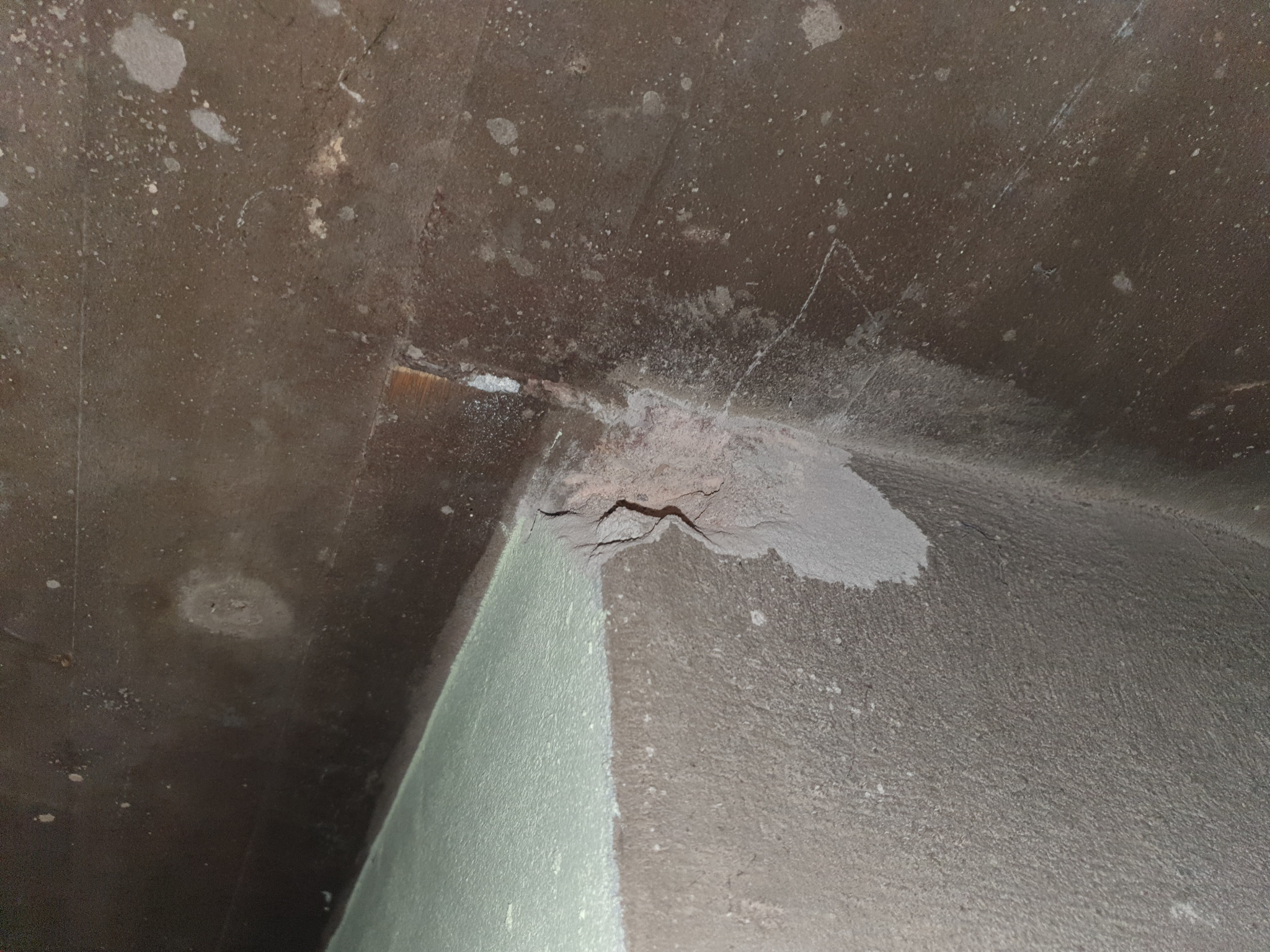
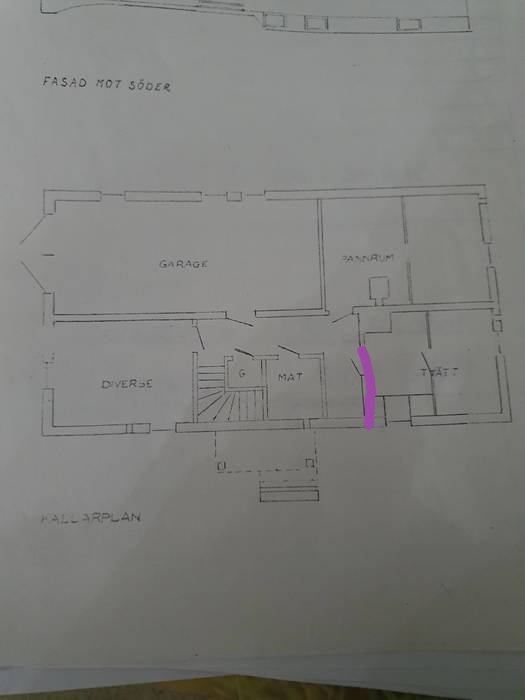
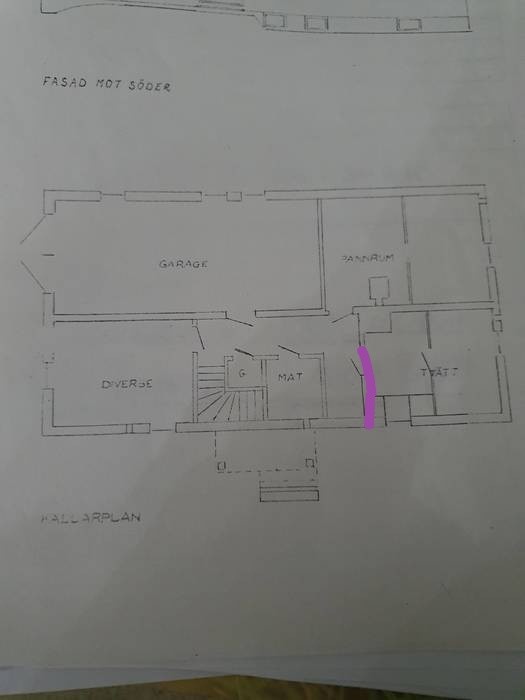
It is the wall marked in red that I would like to knock down, and the photo where I have chipped away some plaster to check is taken at the yellow point on the image.
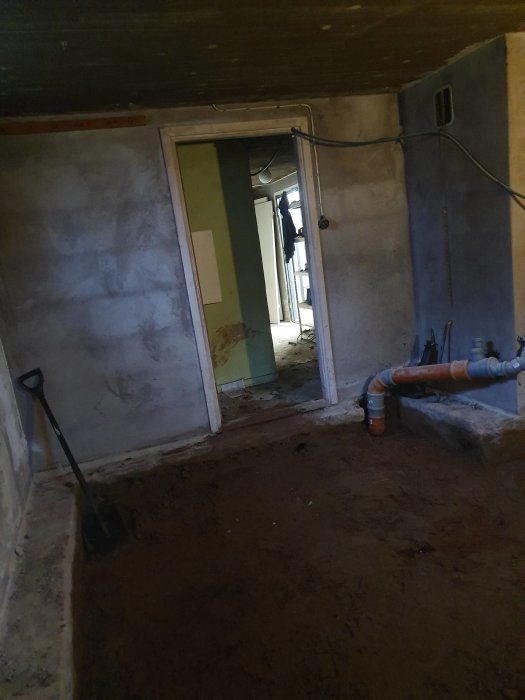
Even though the response was very low last time, I am going to try and check another thought I had today when I was digging out the intended bedroom in the basement. Tearing it down and framing a new one would greatly facilitate moving the electrical panel that is on the other side.
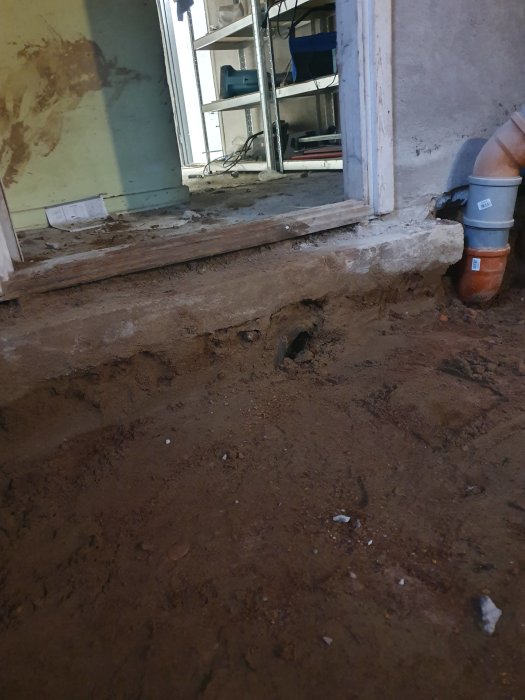
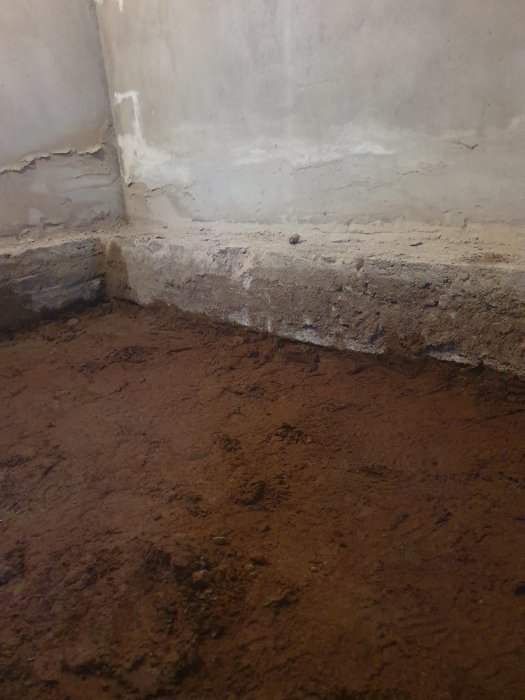
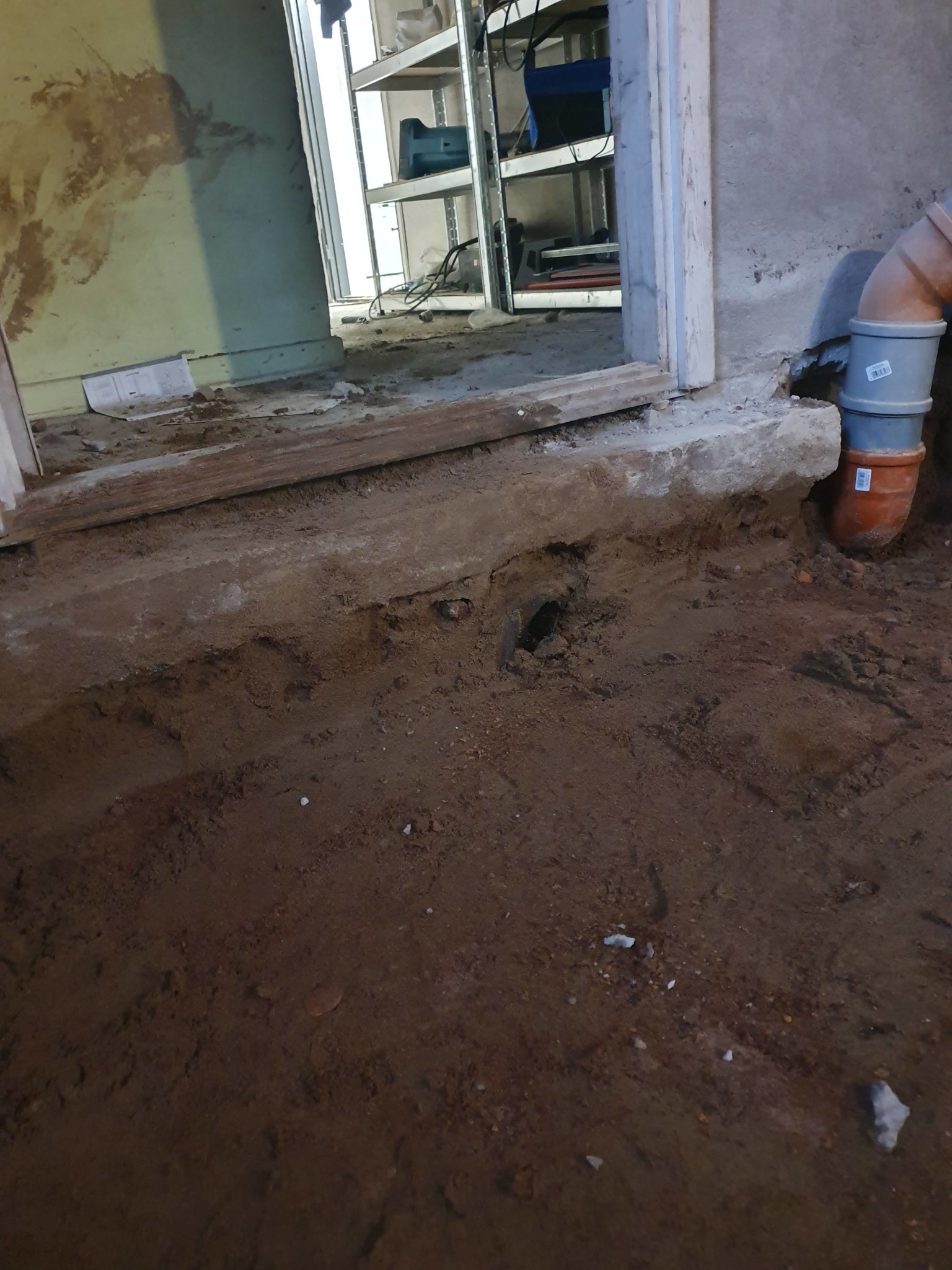
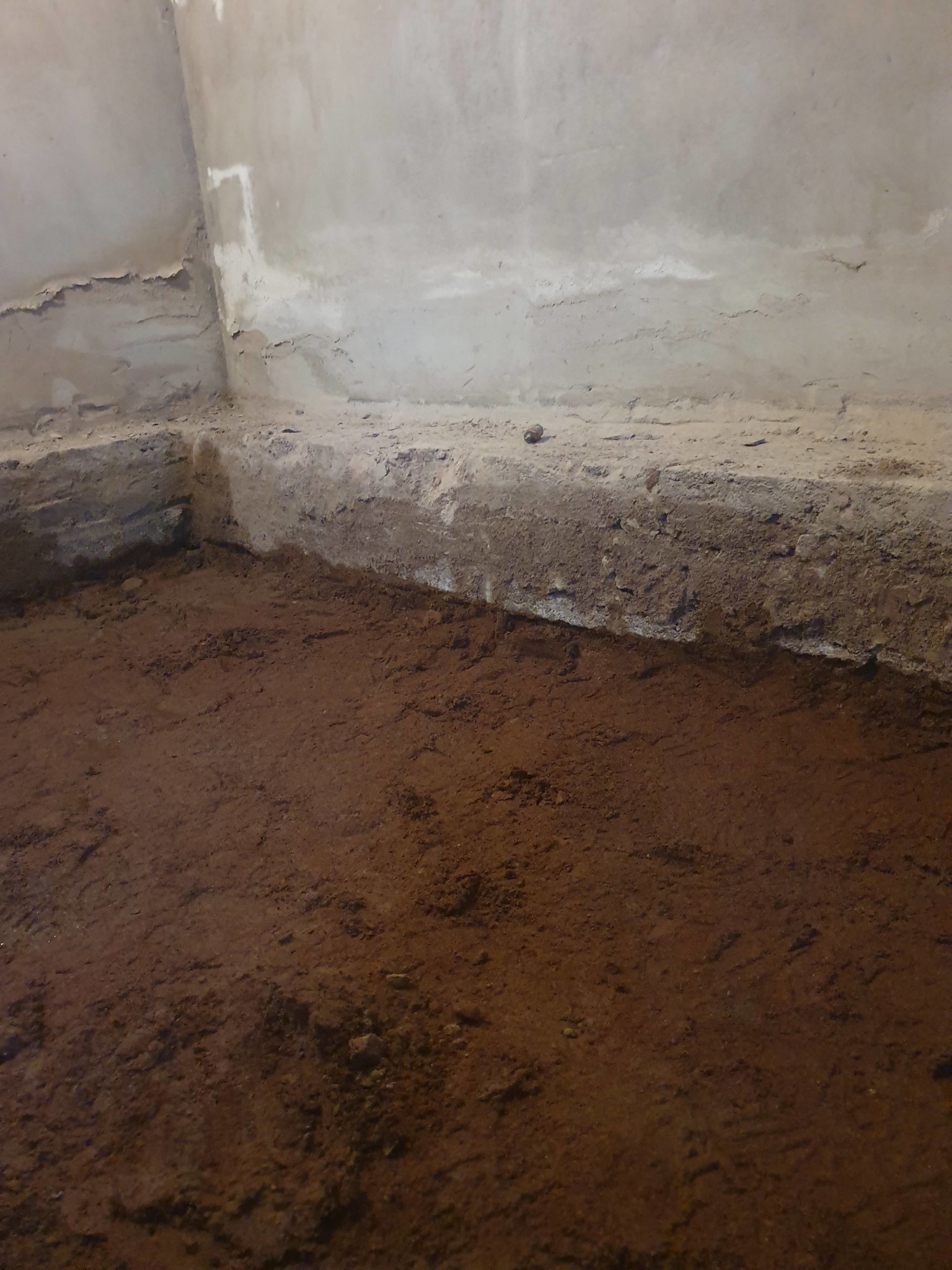
Considering how much thinner the foundation under this wall is compared to the outer walls, I can assume that the wall is not load-bearing in any way? This one is about 10-15cm thick, while the outer walls are about 30cm.
This is what the wall looks like in its entirety.
This is what the foundation looks like under the outer walls and the central wall through the property.
Most indications suggest that your color-marked walls are not load-bearing. To confirm this, you need to look at a reinforcement drawing. Then the question is how the hole in the concrete slab for the staircase is designed and reinforced. There might be some special solutions for that reason.
Most indications are that your color-marked walls are not load-bearing. To make sure of that, you need to look at a reinforcement drawing. Then the question is how the hole in the concrete slab for the stairs is designed and reinforced. There may be some special solutions for that reason.
Ok thanks, yes I have emailed the building committee here in Mora today and asked them to send any drawings they have.
Even though this was a long time ago, do you have any updates on how it went with this?
Did you get hold of the reinforcement drawing? I'm sitting with a similar house myself with the same questions.
Click here to reply
Vi vill skicka notiser för ämnen du bevakar och händelser som berör dig.


HomeboY said: