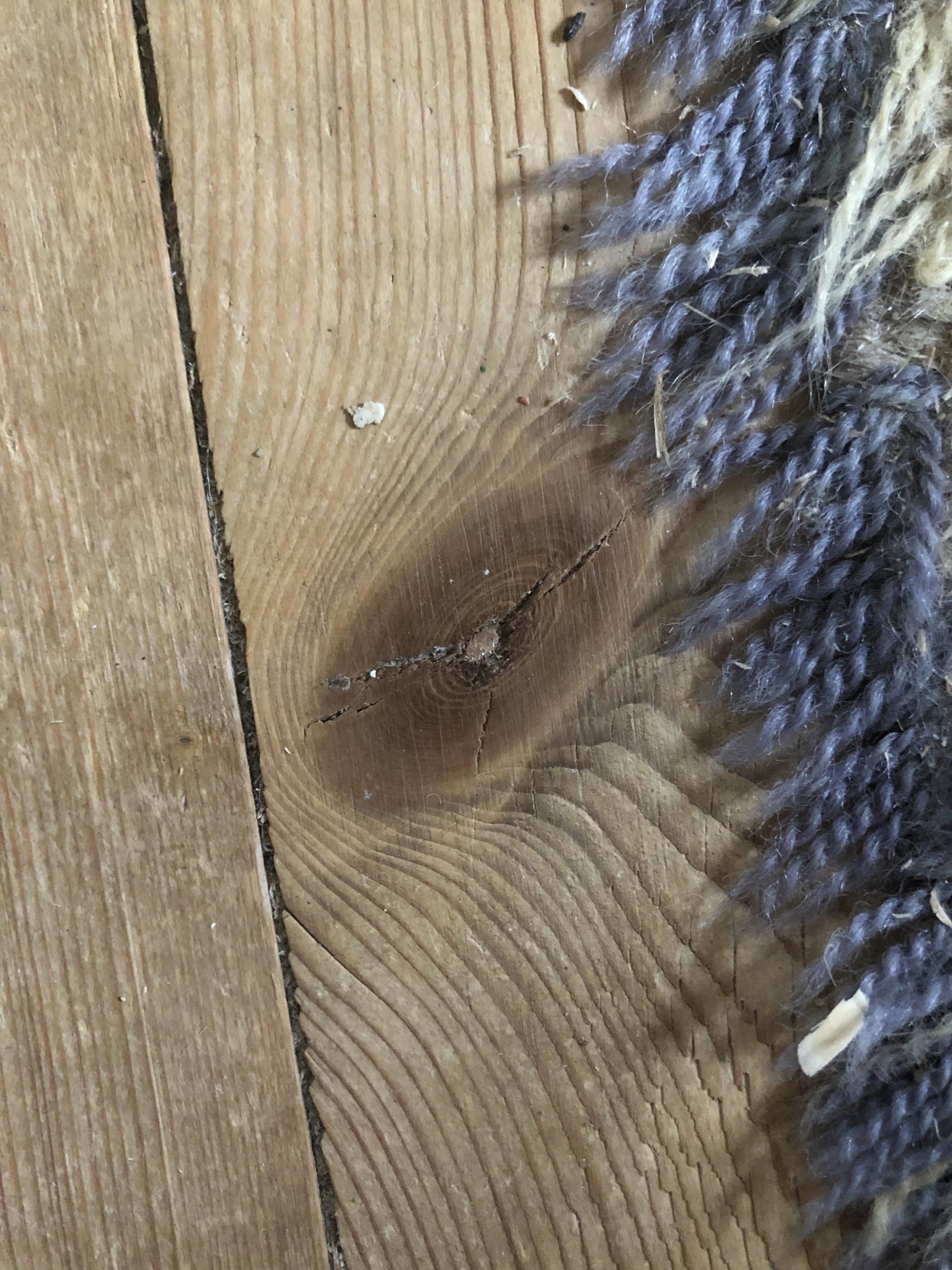
Installed a pine floor in an old timber house in the spring of 2015. Still looks great. No gaps at all between the boards during the humid summer months, minimal gaps during the driest heating months. I believe the floor was in the house for a week (in plastic) before we screwed it down.
In Vetlanda, Mollbergs Byggvaror is the place. He was hard to find; his stuff showed up during my third round of searching for the right floor. I had a whole Excel document with different brands from the major retailers' websites, and in most places, I had to pay 280-500 SEK/sqm for 25mm solid pine floor, depending on width and quality, and spruce seemed almost impossible to find.
And I happened to find this nice (but slightly confused?) Kenneth Mollberg, whose only marketing is a Blocket ad so informally written that it barely looks serious, with 28 x 220 spruce floor for 250 SEK/sqm + shipping.
Disclaimer, I haven't received the floor yet, and even though delivery is agreed for next week, he doesn't know which day yet. He's keeping the shipping price down by co-shipping with a cobblestone manufacturer, who apparently rarely has more than a day's notice? Sounds a bit so-so, but I haven't paid anything in advance, so...
Thanks!
Sounds exciting - and Småländskt. If you get your floor, please update us.
I'm also on the hunt for a floor, for a house that's not heated more than sporadically in winter, and I'd love to have a locally produced one. Vetlanda works fine for me.
Good luck!
Thanks!
Sounds exciting - and Småland-style. If you get your floor, please feel free to update.
I am also on the lookout for a floor for a house that is not heated more than sporadically in the winter and I would love to have a locally produced one. Vetlanda works fine for me.
Good luck!
Update: it arrived! A few days later than planned due to a sick driver, not that it makes a big difference in my case.
It was everything I hoped for and more! You don't realize how wide and luxurious 220mm looks until you hold a board. However, there were 72 m2 in the package, I had ordered 75 m2 (with reservation that I may have calculated slightly wrong). Out of 72 boards, one I will discard (cracked almost the entire length in the middle) and 4-5 pieces had some blemishes. Otherwise, I picked up the whole pile myself (moved from its packaging up to a glazed patio) and didn't see a single one with knot holes! The surface is incredibly smooth and sleek; many flooring manufacturers recommend sanding the floor right after laying, Kenneth seemed almost shocked when I asked if he recommended the same thing and replied with many rolling Småland R's that "No, we use this kind of roto-sander, so if you sand, you rather destroy the texture on the surface."
The biggest drawback with them is that the grooves on the back are described as milled but rather look sawed; there are three grooves collected in the center that are quite deep, but we'll see how it is experienced when I lay it in a few weeks. Some risk of them cracking along the length, as one of them apparently did during transport.
Currently, it is safely stored in a glazed patio covered in plastic and insulation.
Edit: when I read what I just wrote, I thought about it again and realized that I made a careless rounding error, it was actually 76 m2 in the package.
Update: it arrived! A few days later than expected due to a sick driver, not that it makes a big difference in my case.
It was everything I hoped for and a little more! You don't understand how wide and luxurious 220mm looks until you're holding a board. However, there were 72 m2 in the package, I had ordered 75 m2 (with the reservation that I might have miscalculated a bit). Out of 72 boards, there is one I will likely discard (cracked almost the entire length) and 4-5 have some blemishes. Otherwise, I picked the entire stack myself (moved it from its packaging to a glazed patio) and didn't see a single one with knot breakouts! The surface is incredibly smooth and soft; many floor manufacturers recommend that you sand the floor right after installation, Kenneth seemed almost shocked when I asked if he recommends the same thing, answering with many rolling Småland Rs that "No, we use this kind of roto-planer, so if you sand you rather destroy the structure of the surface."
The biggest drawback with them is that the grooves on the back are described as milled but rather look sawed, there are three grooves gathered in the middle that are quite deep, but we'll see how it feels when I lay it in a few weeks. Some risk of them cracking lengthwise, as one of them apparently did during transport.
Currently, it is safely stored in a glazed patio covered in plastic and insulation.
Editing: when I read what I just wrote I thought it over and realized that I made a careless rounding error, there were actually 76 m2 in the package.
Cool!
I’m eagerly waiting for you to install the floor.
Update: it arrived! A day later than expected due to a sick driver, not that it makes a big difference in my case.
It was everything I hoped for and more! You can't understand how wide and luxurious 220mm looks until you hold a board. However, there were 72 m2 in the package; I had ordered 75 m2 (with the reservation that I might have miscalculated a bit). Out of 72 boards, I will likely discard one (cracked almost along its entire length) and 4-5 pieces had some minor flaws. Otherwise, I picked up the whole stack myself (moved from its packaging to a glazed patio) and didn't see a single one with a knothole! The surface is incredibly smooth and silky; many floor manufacturers recommend sanding the floor immediately after laying it. Kenneth sounded almost shocked when I asked if he recommends the same, and replied with many rolling Småland R's that "No, we use this kind of roto-planer, so if you sand, you rather destroy the surface structure."
The biggest downside with them is that the grooves on the backside are described as milled but rather look sawed; there are three grooves centered that are quite deep, but we'll see how they are experienced when I lay it in a few weeks. Some risk of them cracking lengthwise, as one apparently did during transport.
Currently, it’s safely stored in a glazed patio, covered in plastic and insulation.
Edit: when I read what I just wrote myself, I thought it over again and realized I made a sloppy rounding error; it was actually 76 m2 in the package.
Haven't gotten there yet. My renovation vacation fell at the last hurdle, still working on the trossbotten and foundation insulation. I'll get back to you!
@torparavgrund Moderately stressful now, but we are also wondering if you have made progress in the project as we are also about to order from Mollbergs since we are also looking for spruce and slightly thicker.
My experience with Mollbergs 28x220 spruce flooring: Fast-growing wood with many knots that tend to move south. Additionally, varying widths in general (don't remember exactly, but varied by nearly a centimeter in width) and even dimensions from one end to the other differed (=difficult to splice), so it was quite a bit of work to lay it.
Perhaps not the most robust floor considering the often sparse growth rings, but it looked nice, and it wasn't particularly costly per square meter.
The best option might be to, if possible, pick it up yourself to thoroughly inspect it.
It was about 2.5 years ago that I ordered it.
Edit: I have laid the floor in a year-round house, so unfortunately I don't have an answer to the original question.
@hobbs Thanks for the input. Just what I needed. We were thinking of picking up this time so we'll see if we can have the opportunity to choose as well.
@torparavgrund Moderately stressful now, but we also wonder if you have progressed further in the project as we are also about to order from Mollbergs as we are also looking for spruce and a bit thicker.
Hello,
No, still not finished. It's easy to misjudge how much small stuff and extra adjustments are needed in an old house. Finally done with the crawl space and about 1/3 of the joist lining completed.
But as I wrote above, out of the 76 m2 (72 boards), there was 1 that got damaged in transport, and 4-5 pieces that had some blemishes. These 4-5 pieces I'll put in the least visible places. Otherwise, it seemed to hold very good quality; at least no knots breaking out and all tongue-and-groove was in perfect condition. So if we think in the most pessimistic estimate and I can't use the "ugly" ones at all, it will be 6/72 that won't be used, equivalent to 8.3%. I have still ordered about 15% extra according to general recommendations.
On 72 boards, there is one I expect to discard (cracked almost the entire length down the middle) and 4-5 pieces that had some blemishes. Otherwise, I picked the whole bunch myself (moved from its packaging onto a glazed porch) and didn't see a single one with knot blowouts!
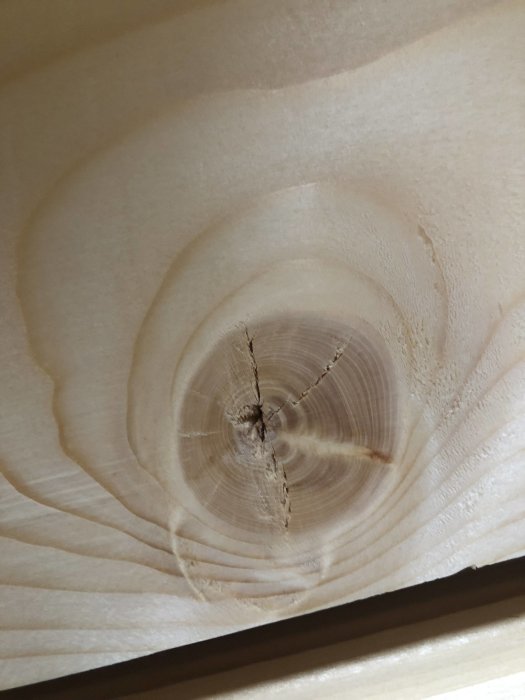
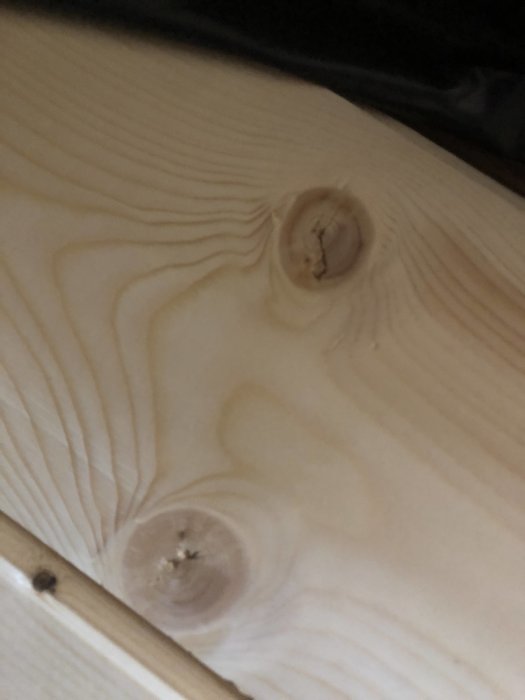
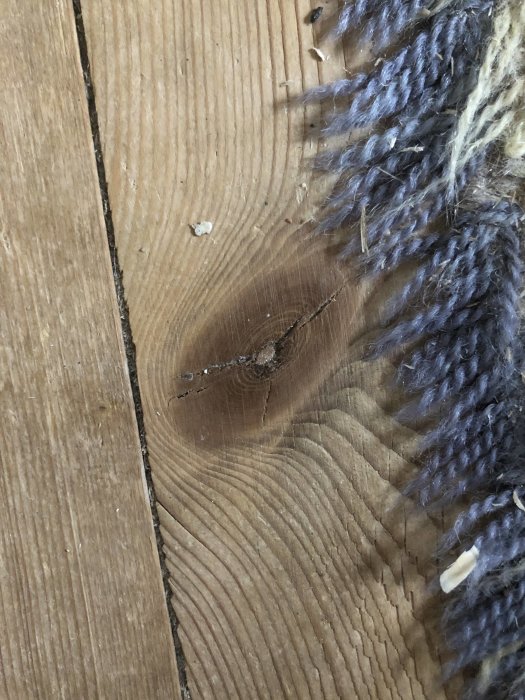
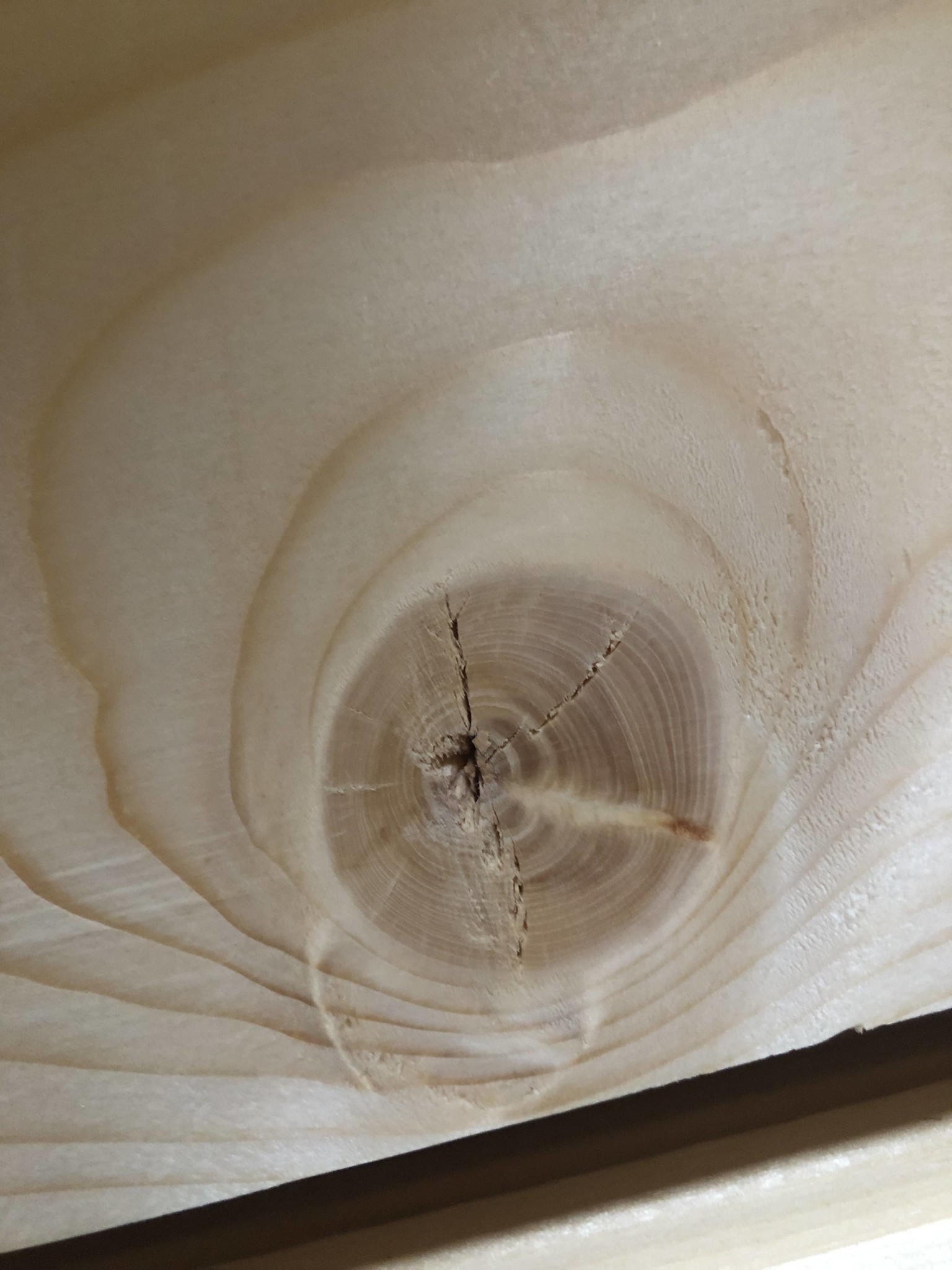
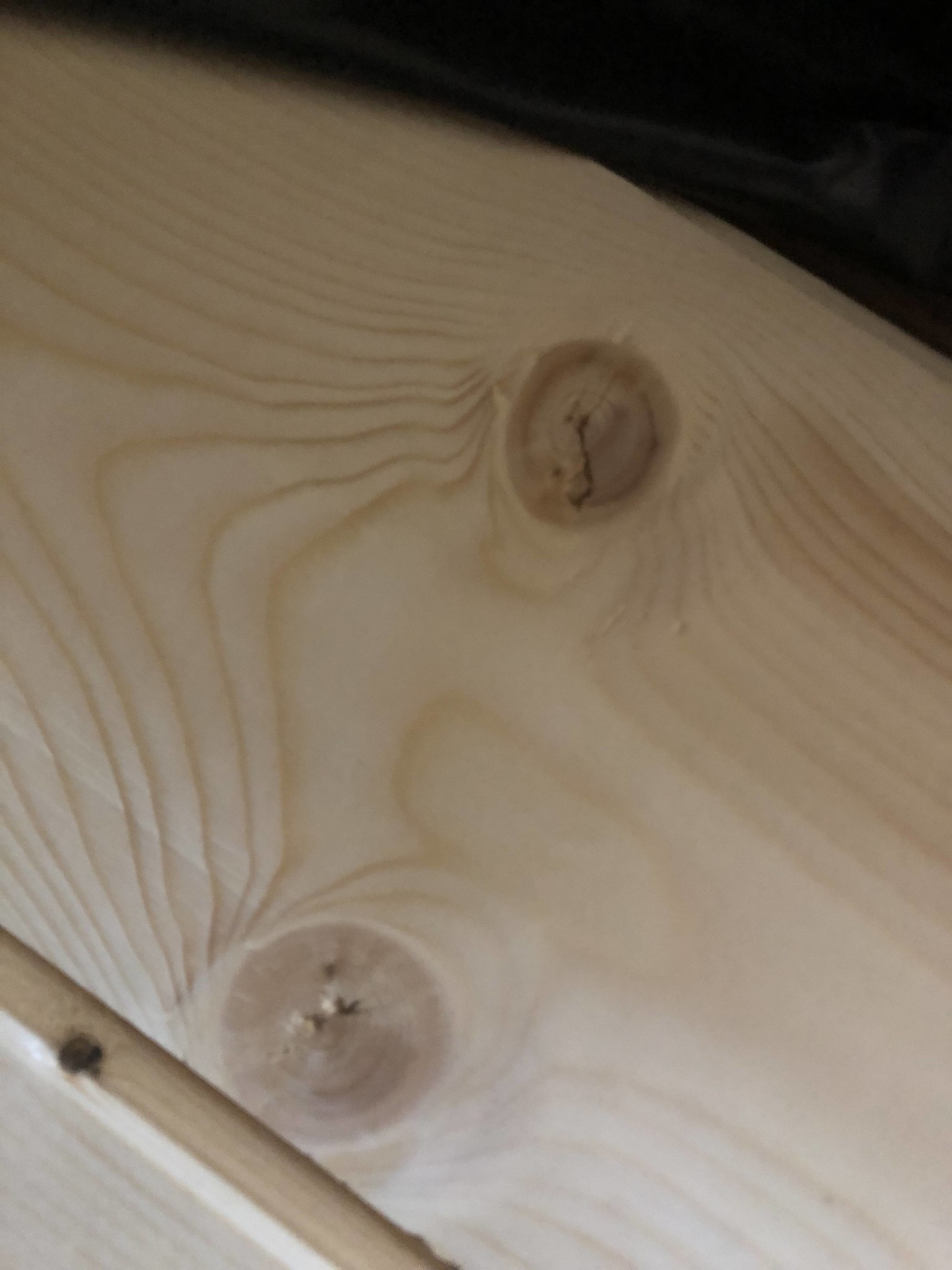
Picked up my floor too now but felt that 1/3 had knots that had cracked and slightly fallen out in the middle of the knot's core. Did you not have any like that at all? Or where did your threshold go when you said there was only one you wouldn't use? Wondering how much it should be like that and if you get different ones elsewhere. Saw a thread with moelven where there were knot holes too and the carpenter had laid the board like that. How much does one accept? I hated walking in our living room as a child if you happened to step on a knot hole where it had come loose and was a big dent.
Picked up the flooring too, but I thought that 1/3 had knots that were cracked and had come loose a bit in the center of the knot. Didn't you have any like that? Or where was the limit when you said there was just one you wouldn't use? Wondering how much it's supposed to be like that and if you can get it different somewhere else. Saw a thread with moelven where there were knot holes too, and the carpenter had installed the board like that. How much do you accept? I hated walking in our living room as a child if you happened to step on a knot hole where it had come loose and there was a big dent.
Tough question. Completely knot-free, as far as I know, isn't available for purchase, coniferous trees just don't grow that way, plain and simple. Knot-free pine occurs as furniture wood but not something as long as a floorboard. The board I immediately saw I couldn't use had cracked diagonally from corner to opposite corner during transport, and I got a discount for it. I can't recall having any loose or cracked knots, no, but the wood was newly delivered. When I finally, FINALLY finish the *%¤#*%¤ floor joist and the three holes after the chimney, I can look at it again, it will have been lying for two months, and by then, surely some knots have slightly shifted. The knots behave the way they do because the fibers gather and stretch across the tree.
Then there's quality grading, A-quality and B-quality. A-quality can have occasional knots but no blowouts (i.e., knots that have fallen out) and edge knots can only be small enough not to disturb the tongue and groove function. B-quality can be as bad as it wants. Pretty sure Mollbergs is counted as an A-floor.
So a little knotting is always to be expected. So, what can you do about it? Smaller, firm, intact knots you can ignore, they don't disrupt the function. For slightly larger knots that are firm but still cracked, there are various methods, one is to fill the crack with, for instance, colored epoxy or another filler (available in paint stores). If a knot comes loose leaving a hole (what you describe), you can use a hole saw to cut an even round hole where the knot was, and then make a round piece of the same type of wood to "plug" the hole. A bit fiddly and a bit of work, but if you take your time, the result is very solid, and you're never bothered by it again.
Thank you. Very detailed. I have a board I don't want to use but a dozen I will place under cabinets. If I had placed them in the bedroom, I might have had to forgo even more. I'm very doubtful about the quality but have never bought flooring before, so I have nothing to compare with.
Here is a picture of some "medium-quality" boards.
Looking at our hundred-year-old floor in the next room and see the same cracks on many knots there, but hard to say if they were there from the start.
Interesting about the quality. Can't find any markings but also had at least three knots on the tongue with fall-out that may not destroy it but are probably sharp to walk on and expose the tongue.
I should go somewhere and look at their floors.
Vi vill skicka notiser för ämnen du bevakar och händelser som berör dig.



torparavgrund said:
In Vetlanda, Mollbergs Byggvaror is the place. He was hard to find; his stuff showed up during my third round of searching for the right floor. I had a whole Excel document with different brands from the major retailers' websites, and in most places, I had to pay 280-500 SEK/sqm for 25mm solid pine floor, depending on width and quality, and spruce seemed almost impossible to find.Jiji said:


MmeMim said: