
2,099 views ·
15 replies
2k views
15 replies
Quality, now and then

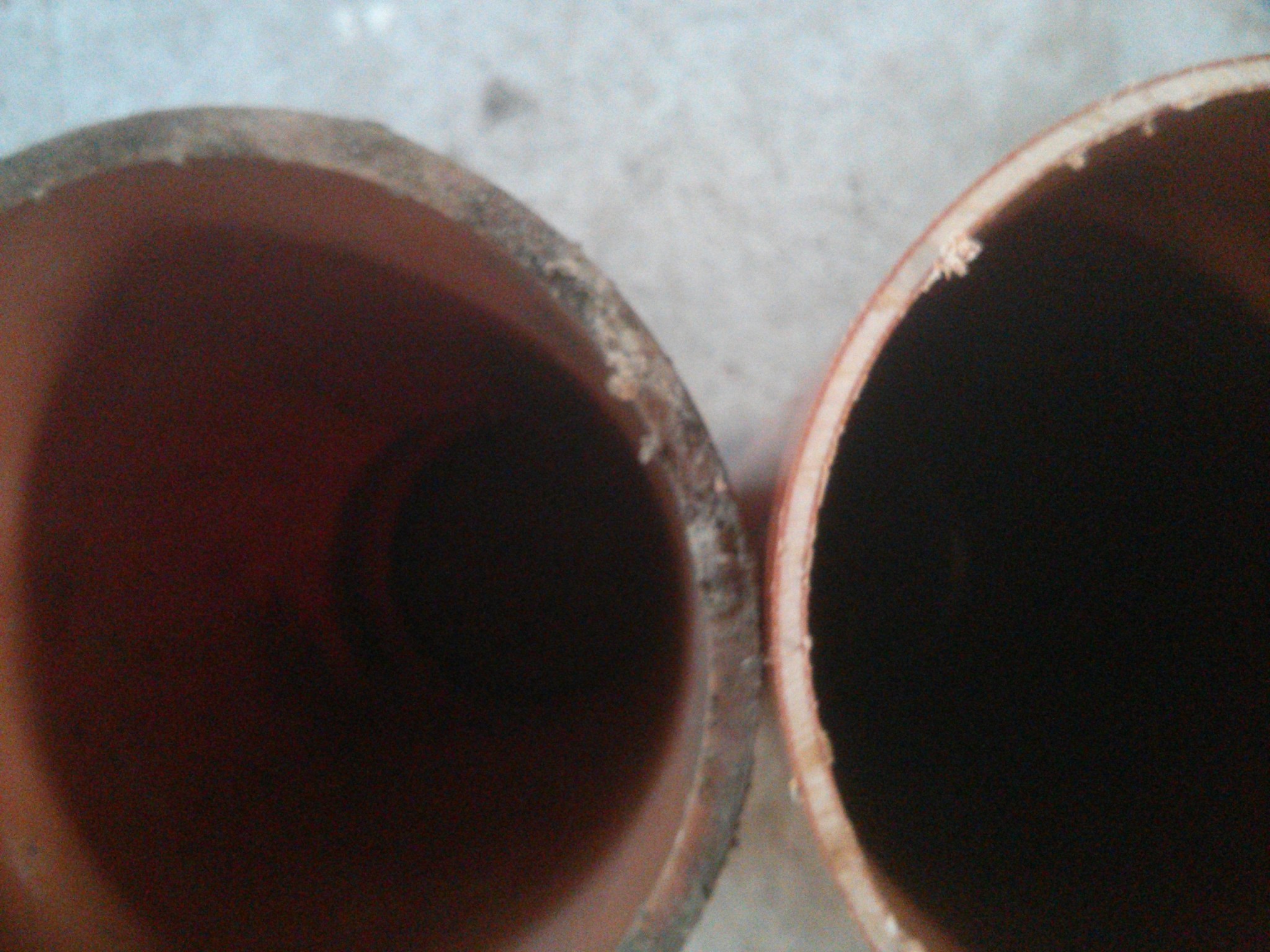
Sometimes one becomes aware of the difference between now and then. It was difficult to get the worn-out handsaw through the old one, and it went in a few seconds with the new one.
What kind of crap are we producing nowadays? Just as long as it lasts the warranty period...
You might be right, but it doesn't feel that way. On the new one, there's a white core with orange foil on both sides. I can flex it slightly oval using only hand strength.
No, I feel convinced that the older one has a significantly longer lifespan.
No, I feel convinced that the older one has a significantly longer lifespan.
In many cases, I agree with you; much of what is sold now is flimsy junk that barely holds up when unloaded from the car. But largely, it's about using the right quality instead of the highest quality.
If I make up some numbers: The left pipe might have a lifespan of 200 years, while the right one lasts 50 years. Is it really economically defensible to have a 200-year lifespan? Is it environmentally correct?
Compare with cars. An American car from the '70s can probably last 100 years, provided you don't bang too much metal or do too aggressive burnouts outside the kiosk. But who has a car for a hundred years?
If I make up some numbers: The left pipe might have a lifespan of 200 years, while the right one lasts 50 years. Is it really economically defensible to have a 200-year lifespan? Is it environmentally correct?
Compare with cars. An American car from the '70s can probably last 100 years, provided you don't bang too much metal or do too aggressive burnouts outside the kiosk. But who has a car for a hundred years?


Well, an inch indicated the thickness before planing.nimhed said:
So after planing, it became 22 mm.
The same applied to the standard sizes 45, 70 and 95 mm e.g. which correspond to 2", 3" and 4" unplaned.
What shall we call it, Morbus Byggmaxius?
À propos, went to the newly opened Byggmax "store" in Stenalyckan in Halmstad yesterday.
Bought nothing. The few studs (was looking for some treated ones) within "reach" were crooked like I don't know what.
New straight studs were lying in their bundles five meters up.
À propos, went to the newly opened Byggmax "store" in Stenalyckan in Halmstad yesterday.
Bought nothing. The few studs (was looking for some treated ones) within "reach" were crooked like I don't know what.
New straight studs were lying in their bundles five meters up.
Today, savings are made everywhere mostly for economic reasons, often justified by environmental reasons. Thinner gauge in the pipes provides easier transport and less material usage. The same goes for thinner boards; you get a bit more from the same log and can get a few more in the same transport.
22 mm boards are indeed unplaned, so the measurement couldn't possibly come from planing them, could it?
22 mm boards are indeed unplaned, so the measurement couldn't possibly come from planing them, could it?
I would rather pay extra for a pipe that lasts 200 years, it's not exactly a fun job to replace pipes after 50 or 100 years under a poured slab for the person who has to do it. If the house has already surpassed 100 years, it should probably be able to stand for another 100 years (previously joist bottom now insulated and drained slab on ground)

Regardless, just as TS suspects, much of the standard material sold today is junk that no decent builder or engineer would have touched with a ten-foot pole before.
What is considered over-engineered is open to debate.
Personally, my biggest annoyance right now is that today's metal parts are so incredibly thin that my tin snips crease instead of cut. The plastic layers are thicker than the metal. Just like cheap fish sticks where the breading is thicker than the fish scraps in the middle.
What is considered over-engineered is open to debate.
Personally, my biggest annoyance right now is that today's metal parts are so incredibly thin that my tin snips crease instead of cut. The plastic layers are thicker than the metal. Just like cheap fish sticks where the breading is thicker than the fish scraps in the middle.