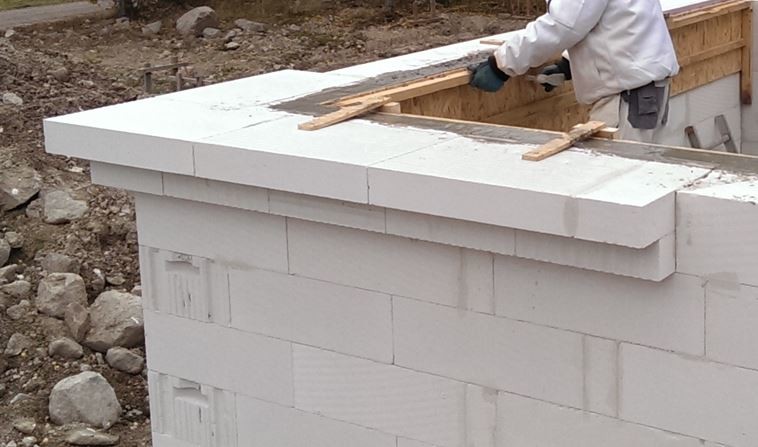
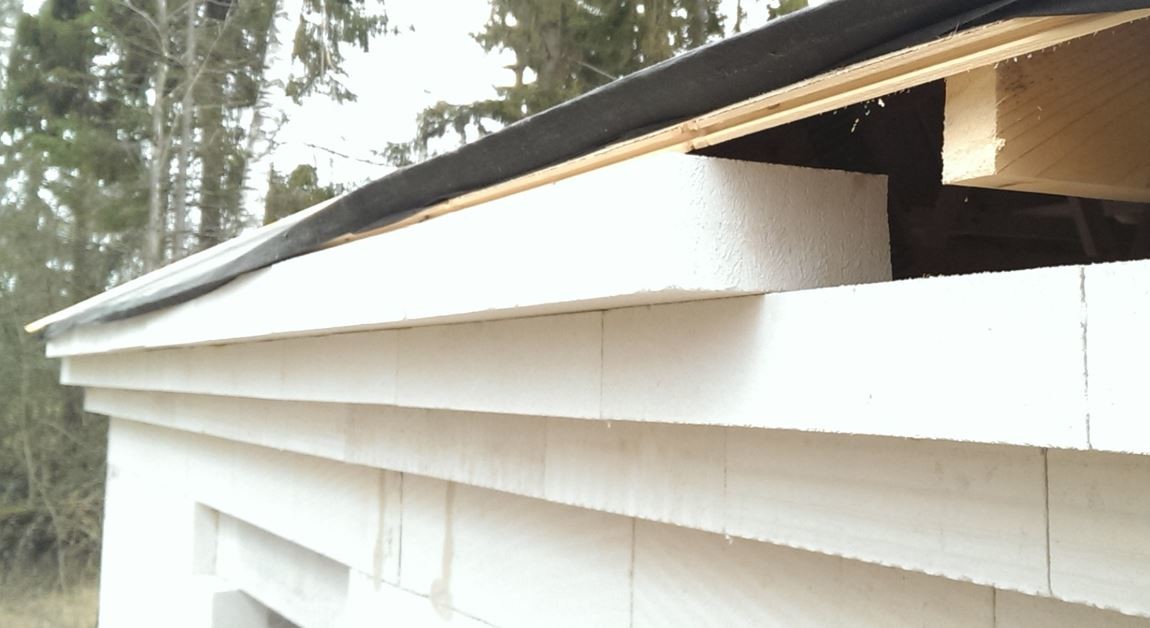
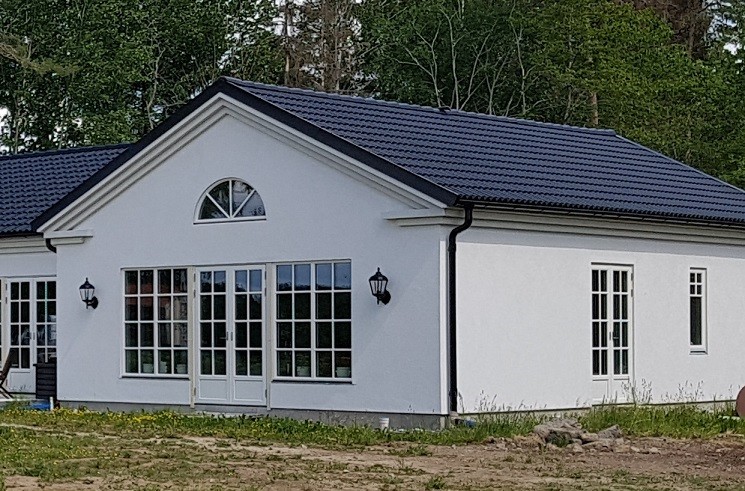
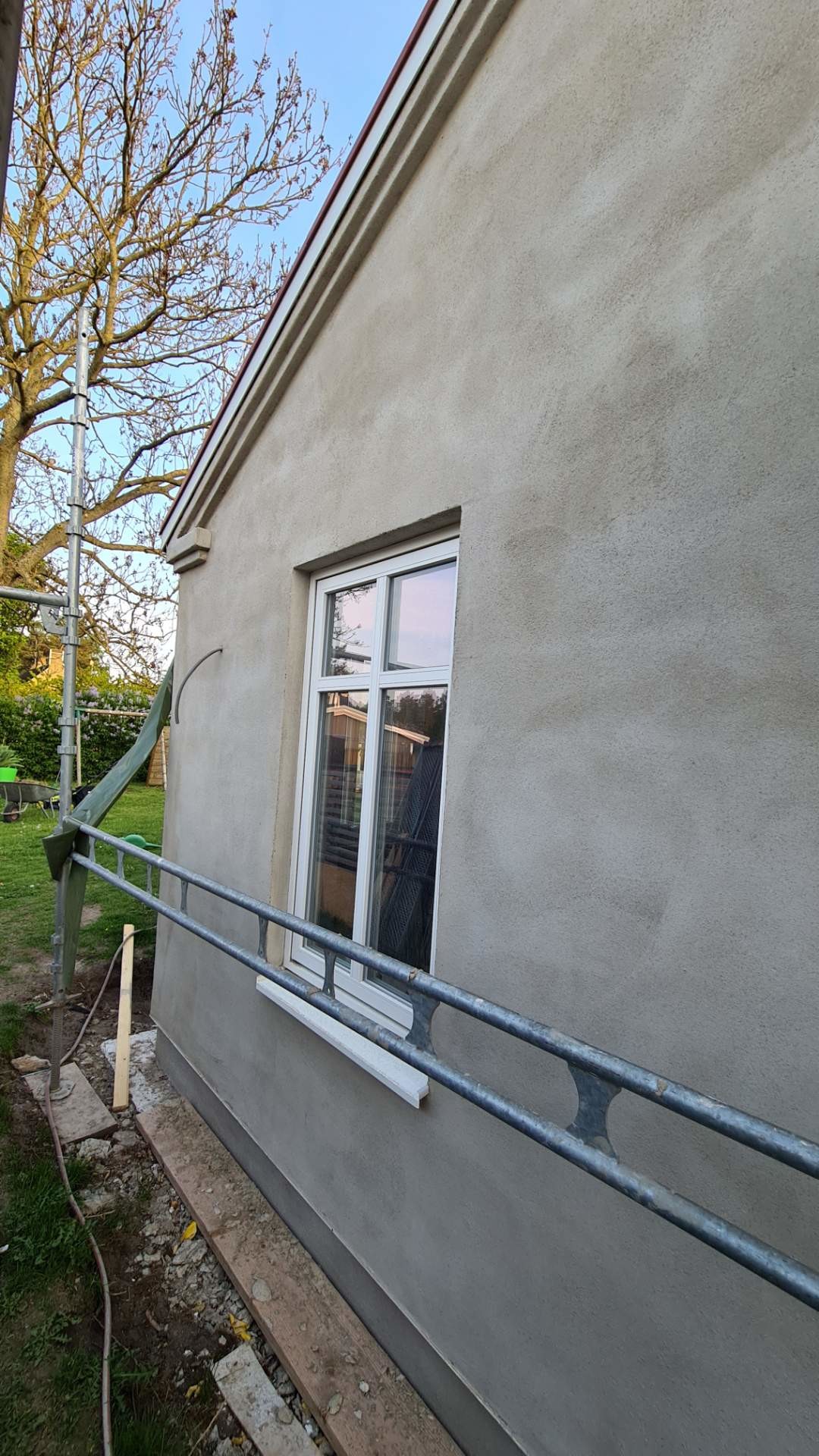
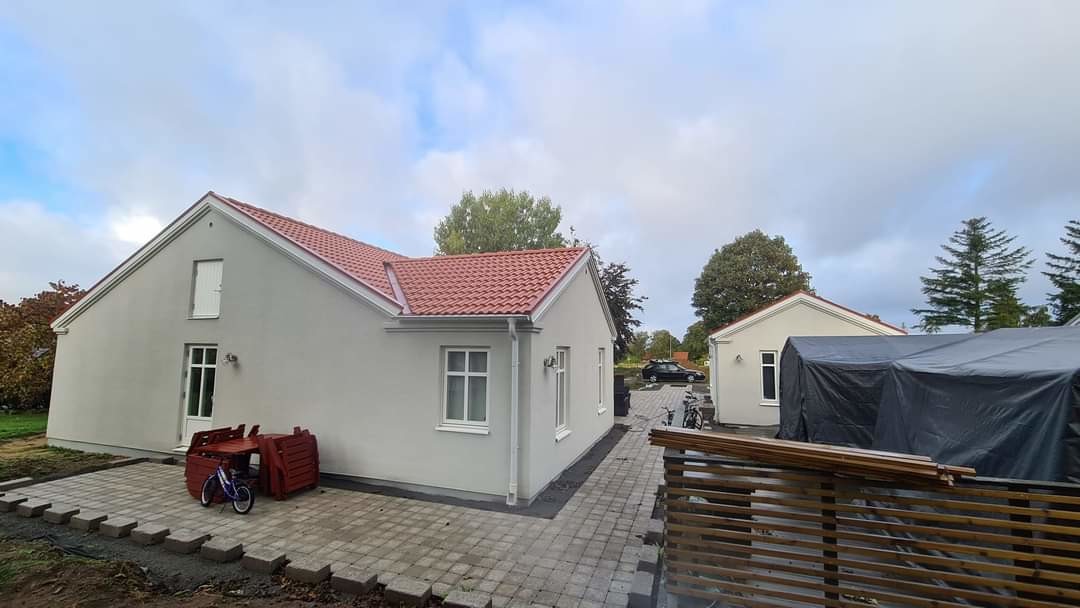
I am building a house in lightweight concrete (Ytong) and have chosen to add a cornice at the eaves (step-like decoration). The two lower ones are in lightweight concrete and mortared in place. The top one I have to construct from some type of wood. Partly because there needs to be an air gap in certain places and partly because I need to screw the gutter into it. The idea is for all three to be smoothly plastered when finished (painted white).
I am considering which material to use. Boards and battens or is it better with some sheet material (OSB, plywood, etc.)? Isn't there a risk that boards might twist over time, causing gaps and "ugliness"? If you choose sheets, do they withstand moisture over the years?
Not many responses in over five years I can report that I eventually chose to add another concrete block (slab) at the top. We skipped the air gap and instead insulated with cellulose insulation. We attached the gutter at the bottom edge of the roof (roof sheathing).
Not many replies in over five years I can report that I eventually chose to add an additional aerated concrete block (slab) on top. We skipped the air gap and instead insulated with cellulose insulation. We attached the gutter to the lower edge of the roof (roof board).
Hello,
We want to try to create a cornice similar to yours but don't really have a support in the wall for a brick or aerated concrete block to have a stable support. How did you place the last aerated concrete block, did you have support for it or did you screw/glue it in place somehow?
Hi,
We want to try to create a cornice like yours but don't really have support in the wall for a brick or lightweight concrete block to have a stable base. How did you place the last lightweight concrete block, did you have support for it or did you screw/glue it in some way?
Hi!
We placed slightly larger slabs for each "cornice" (level). The last stone/slab is much smaller, though. Partly because we ran out of stones and partly to save some money. The entire house is built with a special glue that becomes rock hard when it dries. See pictures...
Not many replies in over five years I can report that I eventually chose to add another lightweight concrete stone (slab) on top. We skipped the air gap and insulated with cellulose insulation instead. We attached the gutter at the bottom of the roof (roof sheathing).
Do you have pictures of the final result? Do you also have cornices on the gables?
Hi,
We want to try to create a cornice like yours, but we don't really have support in the wall for a brick or aerated concrete block to have stable support. How did you do it when you laid the last aerated concrete block, did you have support for it, or did you screw/glue it in place somehow?
I'm at the starting point of making a roof cornice for my house from the 40s. I will probably use illbruck's stone adhesive and supplement with some sturdy aerated concrete screws to attach the aerated concrete to the wall. Did you find any solution?
I am in the early stages of making a cornice on my 40s house. I will probably use illbruck's stone adhesive and complement it with some sturdy light concrete screws to attach the light concrete to the wall. Did you find any solution?
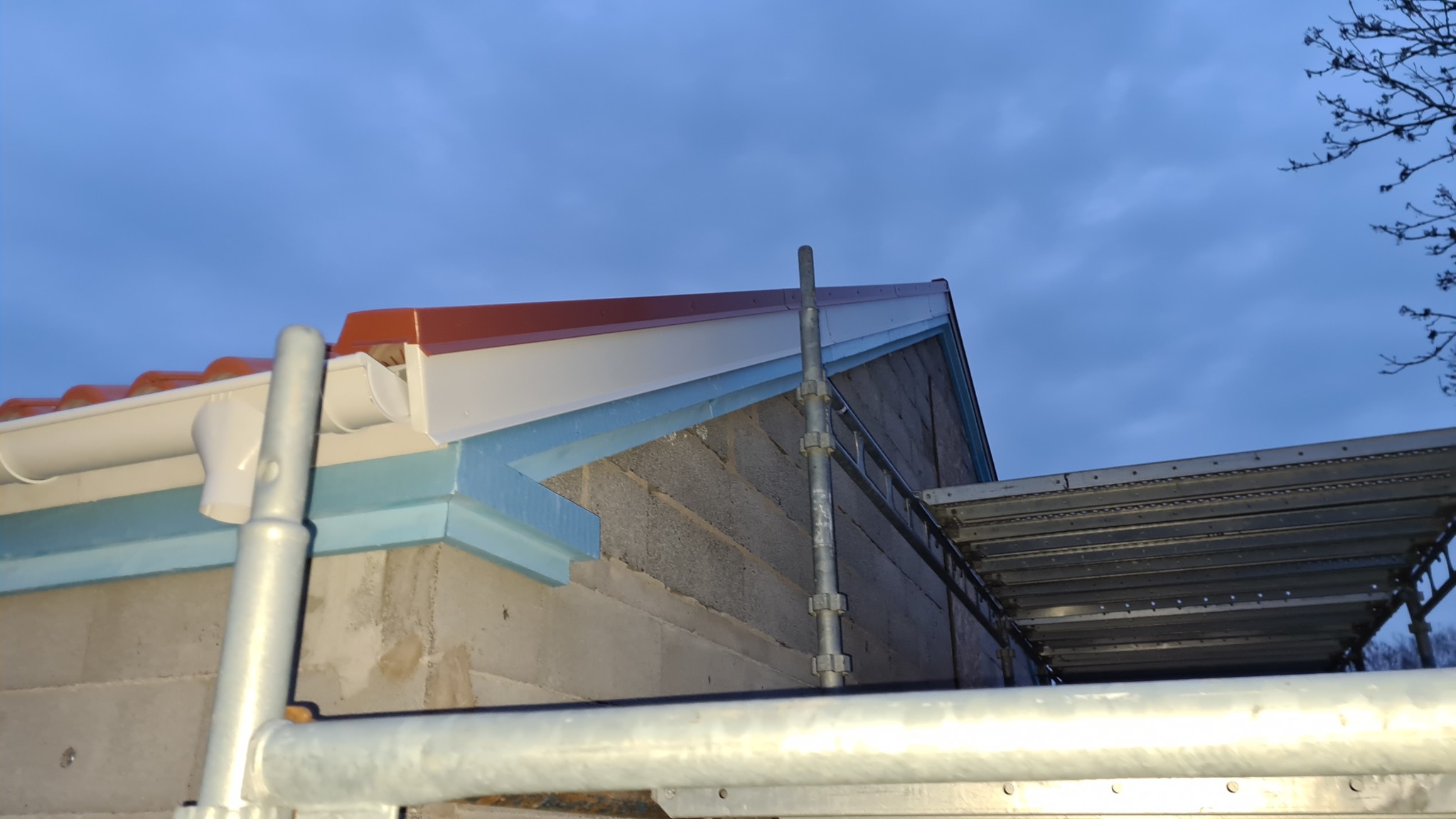
We have cut out "cornice" from super hard styrofoam and glued it with outdoor tile adhesive. It will then be meshed and plastered together with the facade.
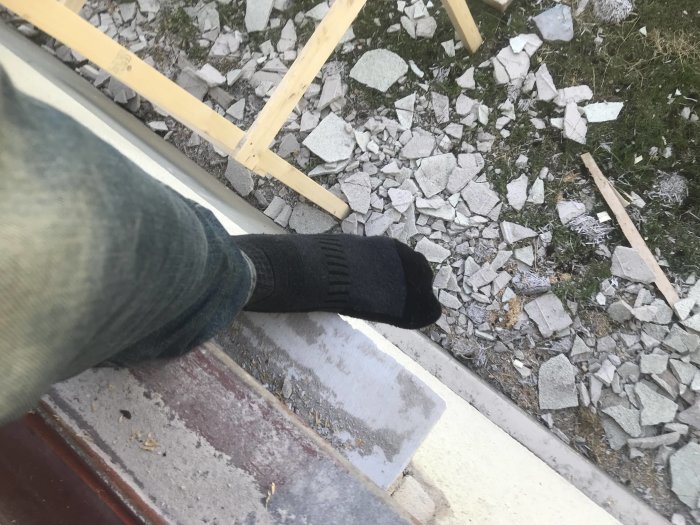
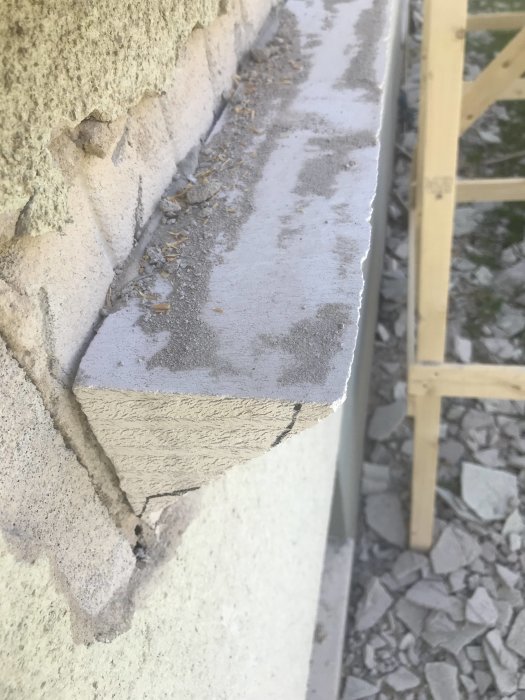
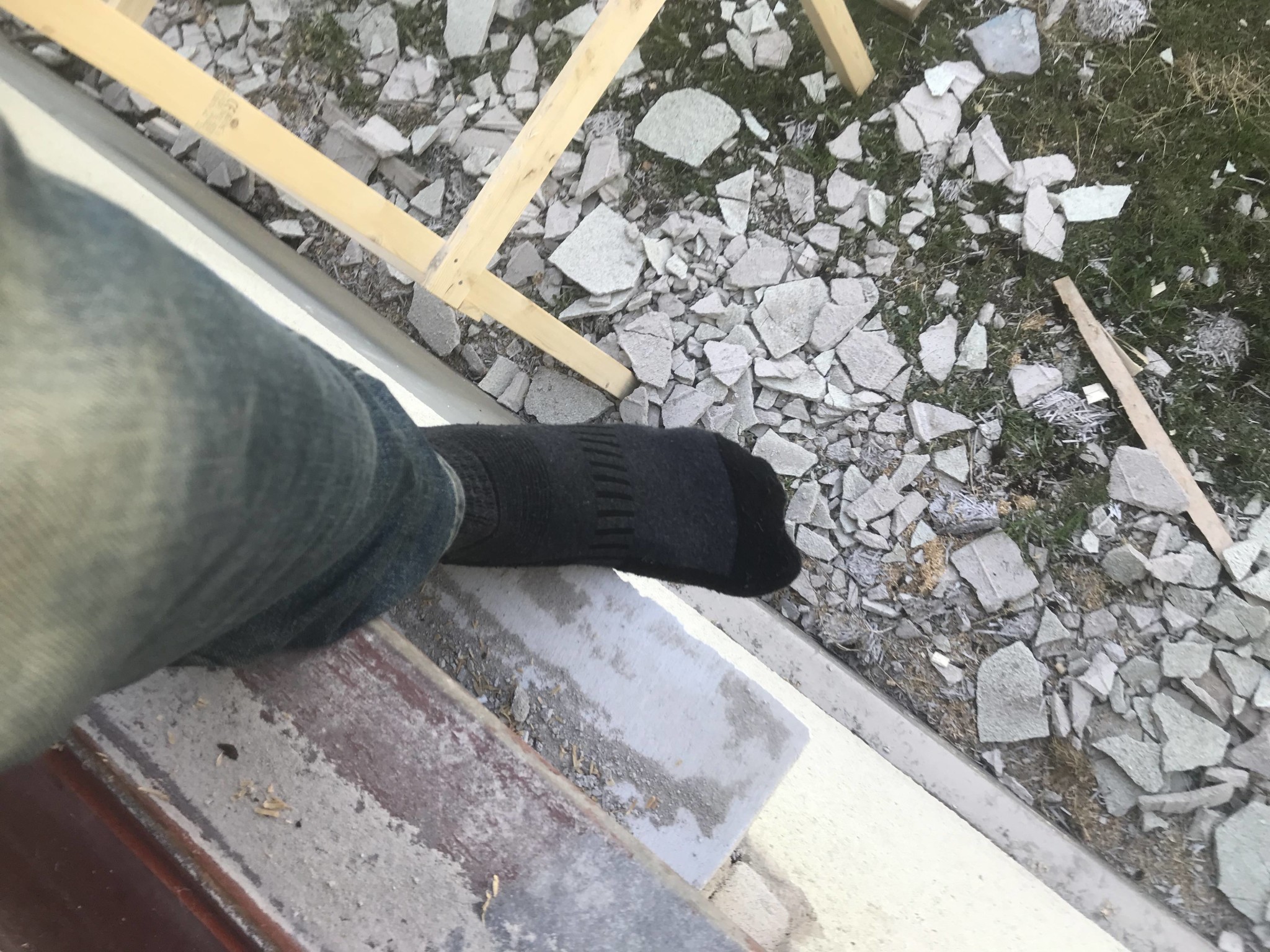
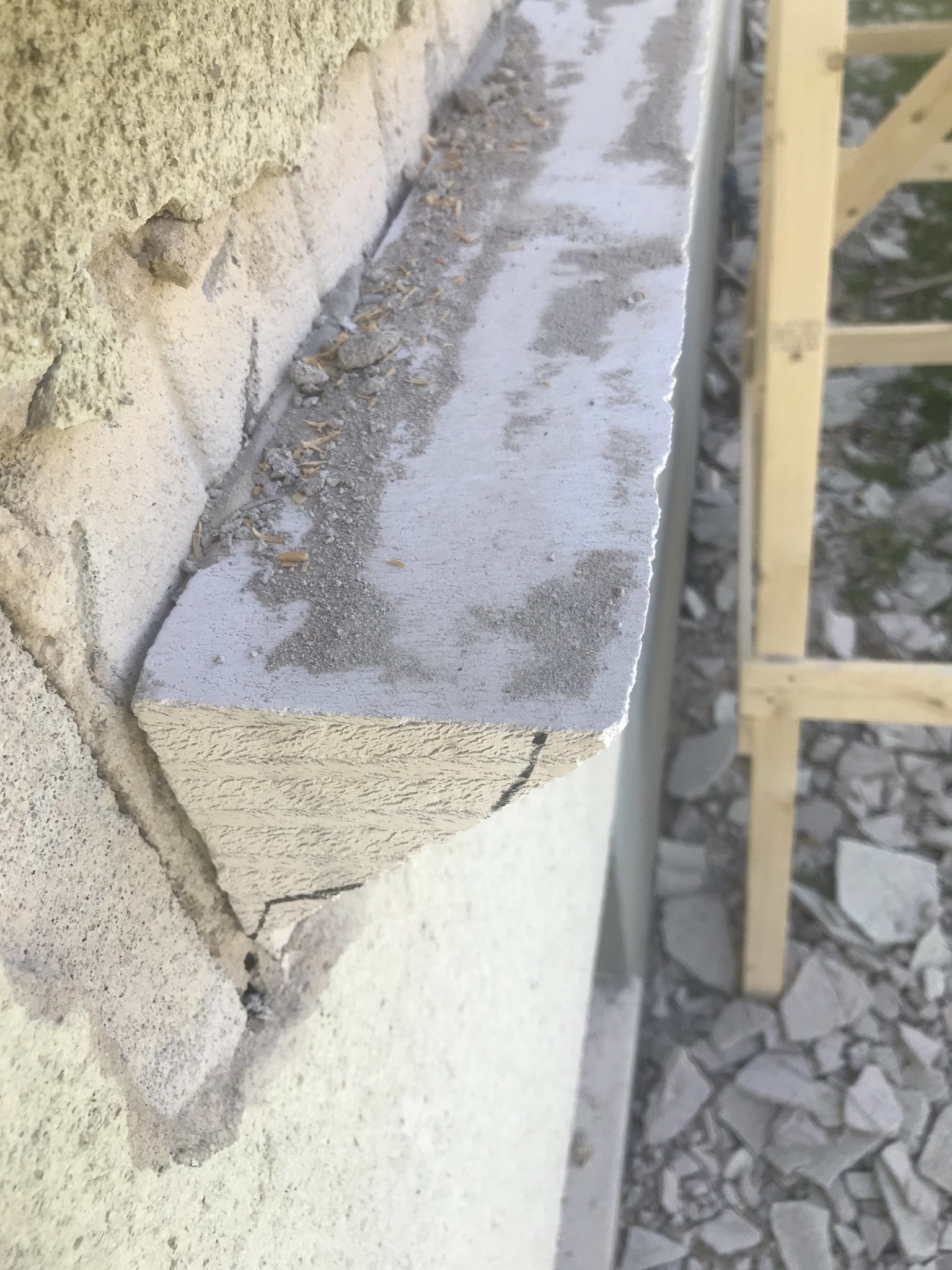
Taking over the thread a bit and giving a little update in case more people than just me have wondered: I tested over the weekend to glue a piece of lightweight concrete directly onto the facade with thin-bed mortar. I didn't have high hopes that it would grip sufficiently but I was wrong.
I spread mortar on a stone and attached it to the wall supported by two plastering hooks, let it stand for a day. Hammered a little carefully, hammered a bit harder - hit until the stone cracked. Below is a picture where I'm standing on the stone with a bit over 100 kilos. - thin-bed mortar is apparently strong.
Not many responses in over five years I can inform you that I eventually decided to add another lightweight concrete block (slab) at the top. We skipped the air gap and instead insulated with cellulose insulation. We attached the gutter to the lower edge of the roof (the sheathing).
Interesting! I wasn't aware of this about cellulose insulation. Is there a thread where one can read more about this?
We have cut out "gesims" from super hard styrofoam and glued it with outdoor tile adhesive. It will then be meshed and plastered along with the facade.
Vi vill skicka notiser för ämnen du bevakar och händelser som berör dig.

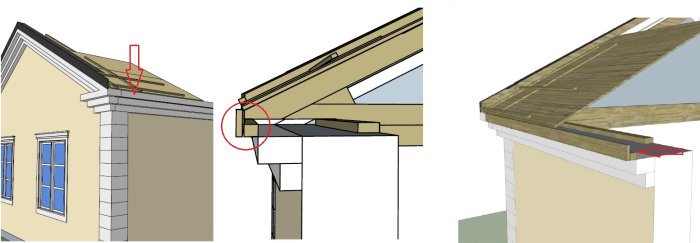
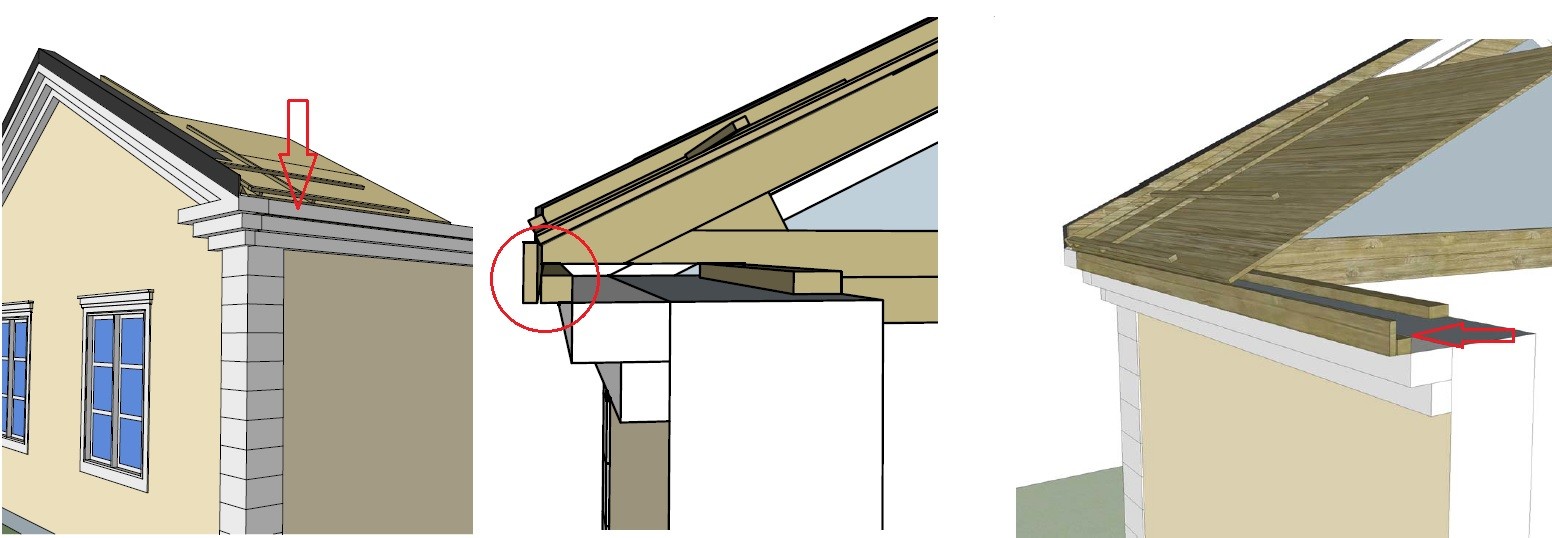
 I can report that I eventually chose to add another concrete block (slab) at the top. We skipped the air gap and instead insulated with cellulose insulation. We attached the gutter at the bottom edge of the roof (roof sheathing).