I was thinking of tearing down the walls in my bedroom leading to the attic spaces. I assumed they weren't load-bearing, but after reading various threads, I became uncertain.
Here are some pictures! I would appreciate your thoughts and opinions
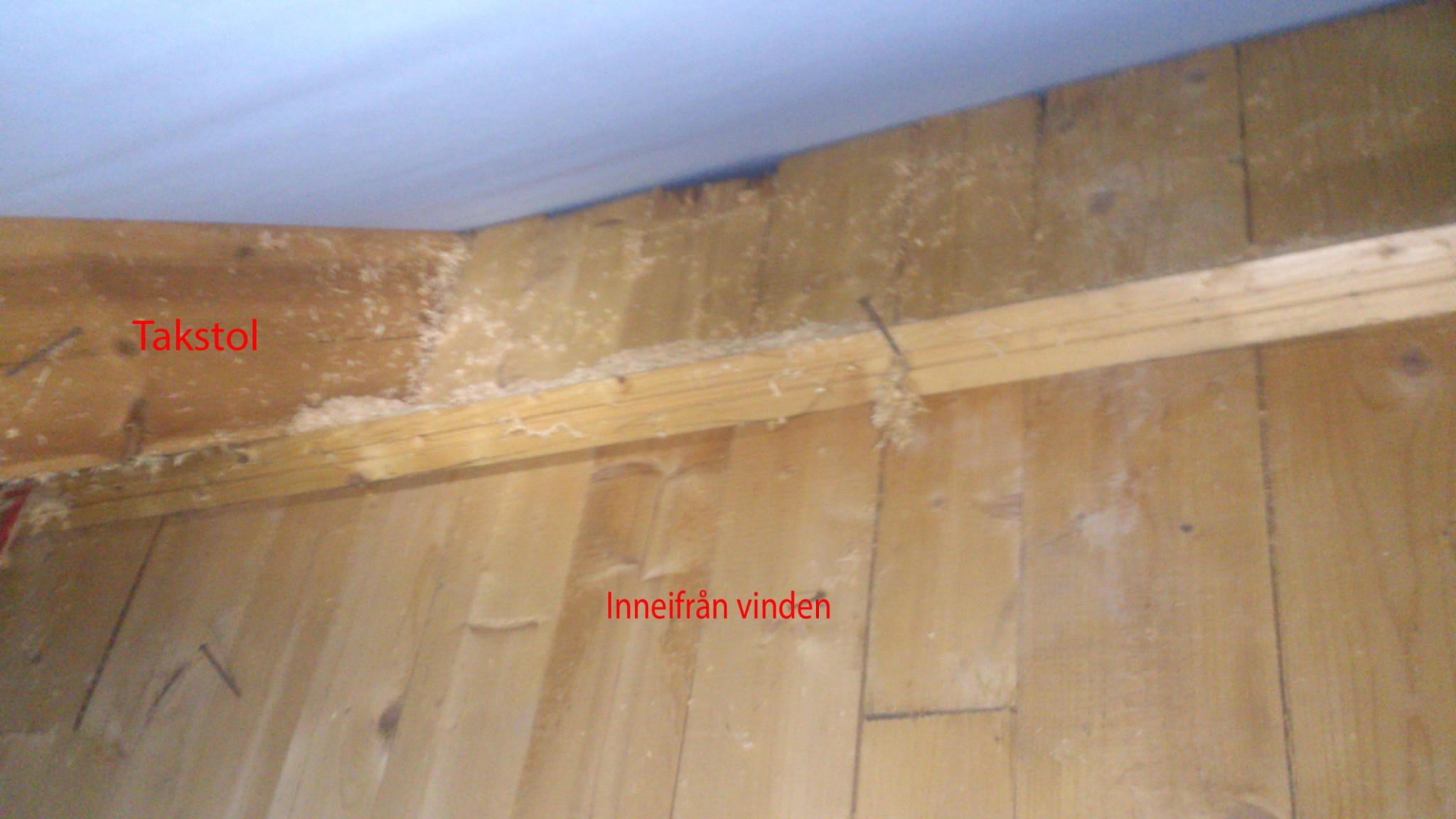
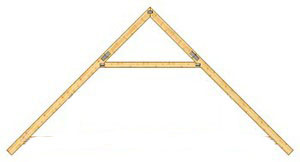
There's also a picture of what the roof truss looks like. The span is 5.3 meters and the dimensions of the trusses are 50*180 with about a 40-degree roof pitch. If it is load-bearing, I find it odd that there are only attic spaces in half the house, specifically the bedroom.
No, the wall covering itself (what you refer to as the "kattvind wall") is not load-bearing, how could it be?
However, there might be vertical studs behind the low wall to the left in the image and possibly to the left in the closet/kattvind, it's not visible in your pictures if they exist, but it's common.
It appears to be shiplap cladding on the walls. They could very well be load-bearing. The fact that you only have a crawl space in certain rooms might be because you have a dormer on the house. The load from the dormer and its roof can then be supported by partition walls running across the ridge.
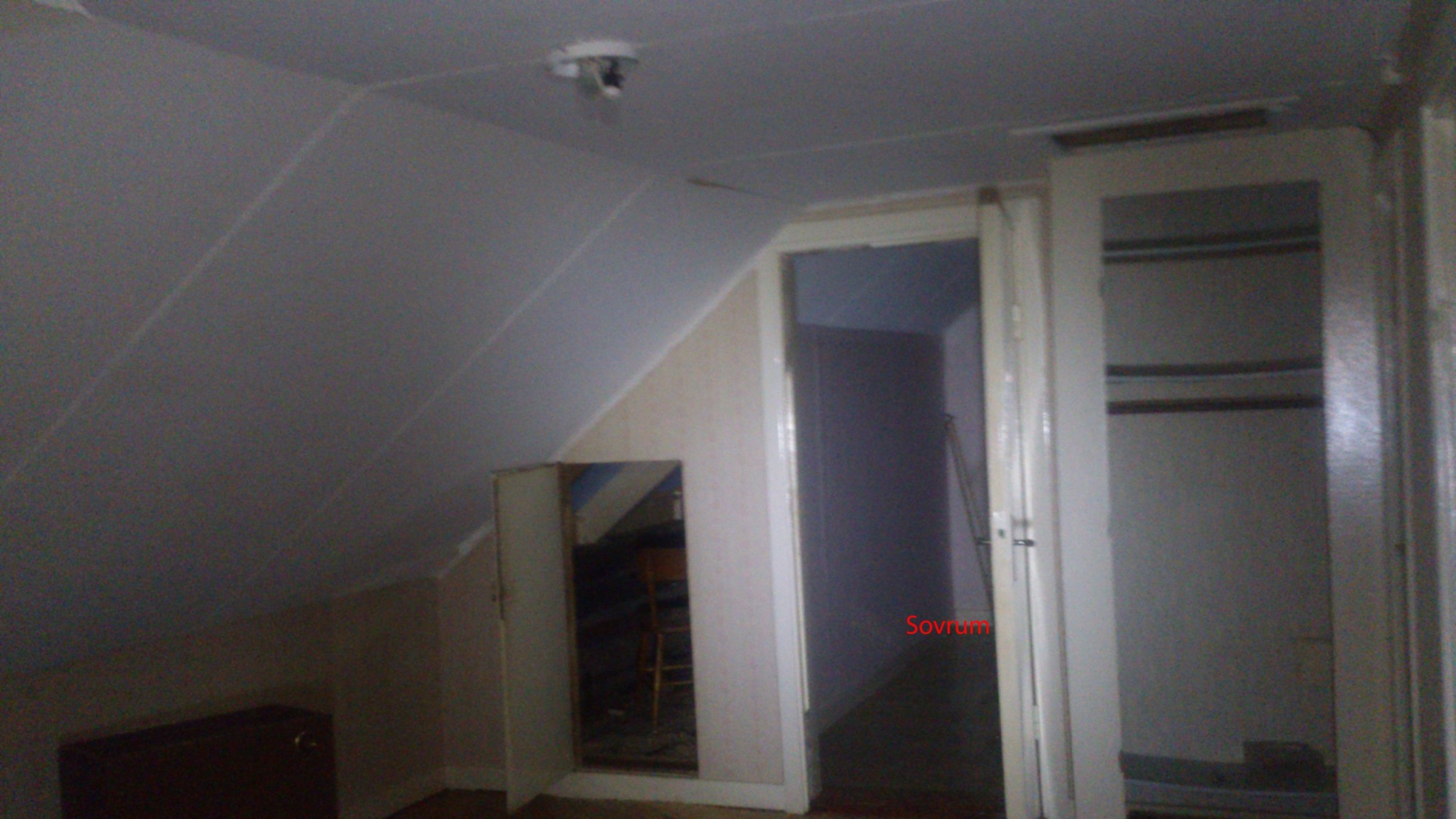
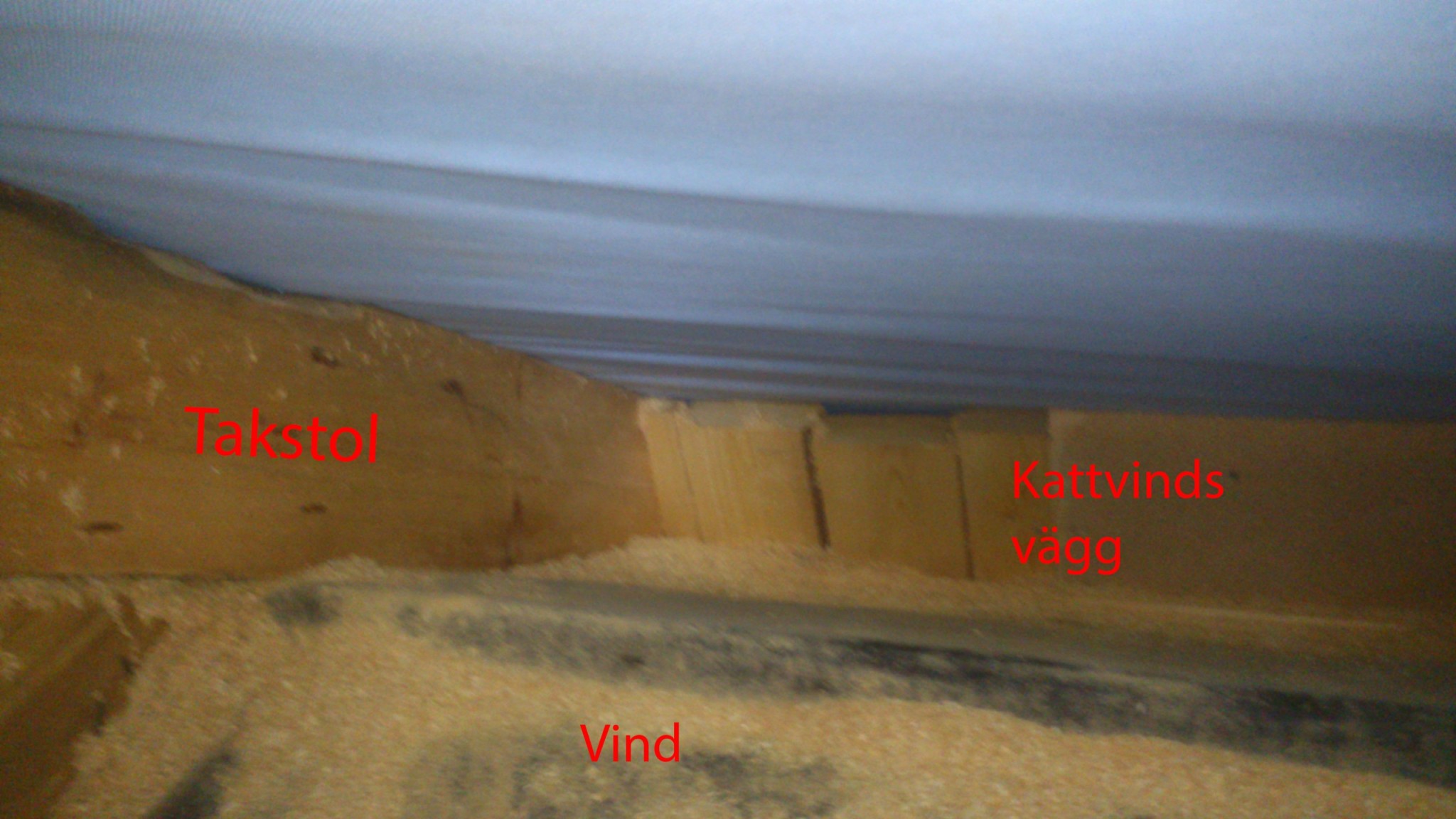
The picture might have been a bit misleading, but it's vertical tongue-and-groove planks about 45*145-170 with a Tretex board on them. My idea was to tear down both and the one in the picture I was planning to build a new one with sliding doors. But I'm not sure how to determine if it's load-bearing. As you can see in the pictures, some of the planks do meet the roof truss, while the rest are just in between. But if one were to build a non-load-bearing wall, some plank would end up under the roof truss. And they used to use thick walls for everything back then...
What do you mean by “kupa”? There’s no dormer on the roof.
I have not heard of a knee wall being load-bearing or part of the load-bearing structure of a roof. It is the function of the trusses to handle the loads from above and distribute them to the facade walls.
Presumably, there have been many intermediate variants as Locke describes, so what is load-bearing is not predetermined. And one probably doesn't build a wall in two-inch lumber without reason.
In a similar way, between the timber construction and the modern stud wall, walls were often built using three-inch standing planks.
Well, how they used to build roof structures in the past is probably not relevant to the question in the thread...?
If you look at image no. 2, you can see that the knee wall consists of standing planks, how could such a wall be load-bearing? A load-bearing wall must consist of columns, beams, and struts between them for the planks in the wall to interact in some way and take any vertical loads.
No, I think it seems strange if they were load-bearing because then everyone sitting in between wouldn't be of any use? And as mentioned, half of the house is open on the upper floor. Might need to get someone who knows to come over. I know loads of carpenters, but they would probably say different things. And you don't want to just try and see. But if I were to remove them, what would happen? I believe the truss itself holds up the roof. Because they are quite steep! But as I said, I'm just guessing...
If you have now constructed vertical studs as a knee wall, it might be beneficial to remove them before you get snow loads on the roof. Otherwise, the risk is that the vertical stud, which is now attached to the rafter, becomes loaded, making it more difficult to remove them. It's hard to say everything is fine with just three pictures... It's always easier to understand the load-bearing parts when you see them in reality.
I have not heard of an attic wall being load-bearing or part of the roof structure's support. It is the job of the trusses to handle the loads from above and distribute them to the exterior walls.
On the contrary, I would say.
A truss solution that results in an attic must have a "frame" at the outermost edge towards the exterior wall to absorb the outward lateral forces - so that they are NOT transferred to the exterior walls - when the roof load presses downward. If the trusses are instead supported on a beam in the middle, at the ridge, the vertical load is taken up there, and no lateral forces occur. Then the attic version with support legs is not needed.
However, you can certainly build an attic for other reasons without requiring a truss solution that mandates it.
What does it look like under the walls?
Are there walls directly under the kneewall walls that can transfer the loads to the foundation?
If the walls are load-bearing, they need to stand on something that can support the load.
I haven’t heard of a knee wall being load-bearing or part of the roof structure’s support. It’s the trusses’ job to handle the loads from above and distribute them to the external walls.
There are many knee walls that are load-bearing; for example, in our house, they were load-bearing. If you're unsure, consult a structural engineer. If you have a raised wall plate, which is common in many old houses, there’s a risk the walls will move outwards, and the roof will start to sag.
So saying a knee wall could never be load-bearing is wrong; there are several threads here that address this issue.
There are many attics that are load-bearing, in our house for example, they were load-bearing. If uncertain, consult a structural engineer. If you have a knee wall, which many old houses do, there is a risk that the walls may push outward and the roof may begin to sag.
So saying that an attic can never be load-bearing is incorrect, there are several threads here that discuss this.
Yes, there can be load-bearing elements in an attic covered by the attic wall/boards, I said that the attic wall itself is not part of the load-bearing structure. Instead of nitpicking at me, look into how the roof truss in this thread is constructed; there are many types of truss solutions out there, but if the attic is missing in some of the trusses, it feels logical that, in this case, they are not load-bearing.
There are no walls underneath except one running in the opposite direction right where the bedroom ends approximately. Yes, I might almost need to check with a consultant. Unfortunately, I don't know anyone! As I said, I assumed they really weren't load-bearing when I was looking around in the attic and the crawl space. But as I said, I became uncertain when I saw similar walls here in the forum that people thought were load-bearing. I understand it's difficult for you to tell from the pictures whether they are load-bearing or not. But is there something specific to look for? And I don't have an elevated wall life, the wall stops right at the floor joist on the upper floor.
Vi vill skicka notiser för ämnen du bevakar och händelser som berör dig.