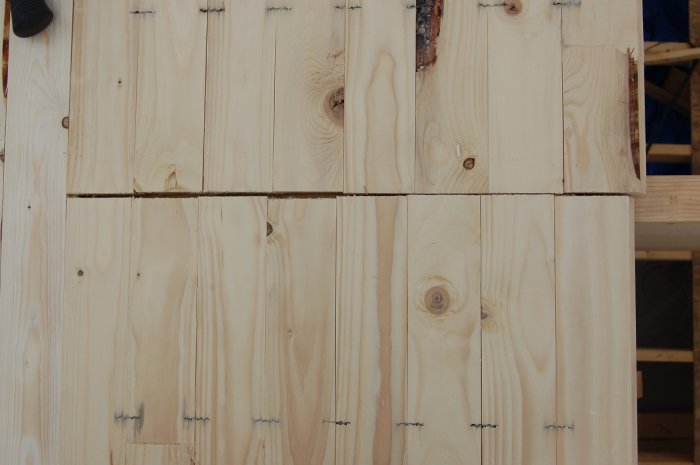
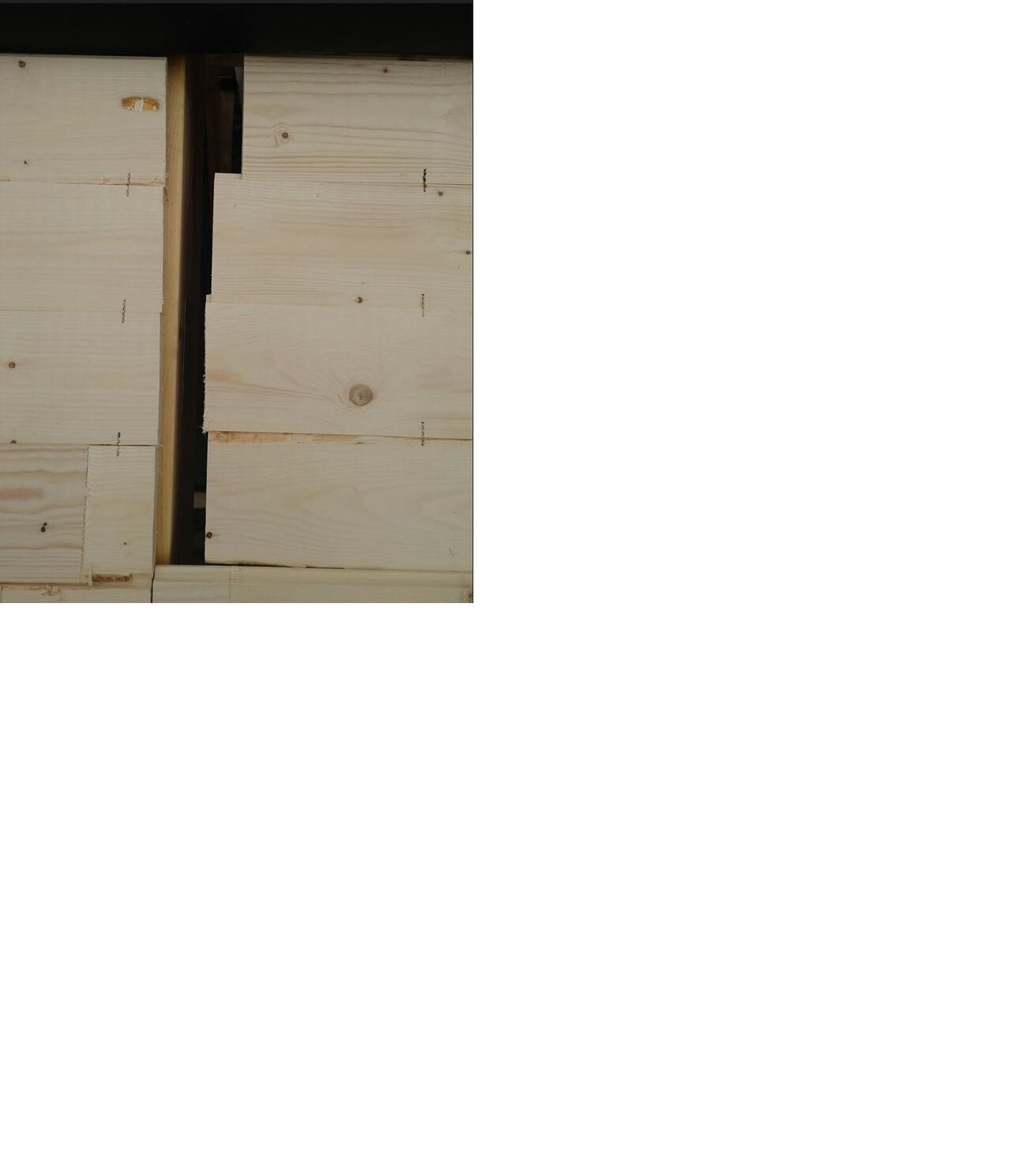
I have bought about 200 raw tongue-and-groove boards in a couple of different lengths to be able to offset the joints. However, it turns out now during installation that the specified width (540 mm) varies up to 20 mm between the ends of the same board.
The packages have been outside for two weeks, well packaged, but of course moisture may have gotten in. They do look dry though. The question is mostly whether tongue-and-groove can swell so much from a little moisture or if manufacturing defects can be claimed in some way.
Installing a roof with these boards is a nightmare, to put it bluntly, but buying new ones at your own expense doesn't seem very appealing either.
Impossible to say yes, but if it is due to moisture that has entered the workplace, then it is not the manufacturer's fault. The question is whether they can swell that much? They have been sheltered (covered with tarp)
Tongue-and-groove panels are installed with a general joint. They vary in width from most manufacturers. Regarding the length, the different boards in the panels can move, hence the uneven ends.
You lay råspontsluckor with a general joint. They differ in width from most manufacturers. Regarding the length, the different boards in the panels can move, resulting in uneven ends.
I have now measured with a moisture meter, and it showed 20-25% moisture content in the wider end (the one that swelled) and about 15% in the other end. I find it remarkable that this difference can cause such significant swelling, but apparently, it does.
It remains to prove where/when the moisture got there, but I'm likely to lose that argument. Just have to bite the bullet (the raw boards) and get started or buy new ones.
I've only participated in 2 different houses with shutters, but both times it looked roughly like in the picture....doesn't really feel like precision material directly....on my own, I've used råspont by the meter....
Remains to be proven where/when the moisture came there, but I will probably lose that negotiation. Just have to bite the bullet (råsponten) then and get started or buy new ones.
I would have complained. With a bit of luck, you get new doors, or maybe they can let you buy new ones at cost price or something similar. It doesn't hurt to try. It's also not certain it's your fault - if the supplier packaged the goods, they should be able to stay outside.
My builder's merchant has doors of three different qualities. Economy, standard, and soffit quality. Economy is pretty poor quality, whereas standard is quite okay. The soffit door is intended for exactly what its name suggests.