
8,141 views ·
34 replies
8k views
34 replies
Efflorescence facade (concrete)
Hello!
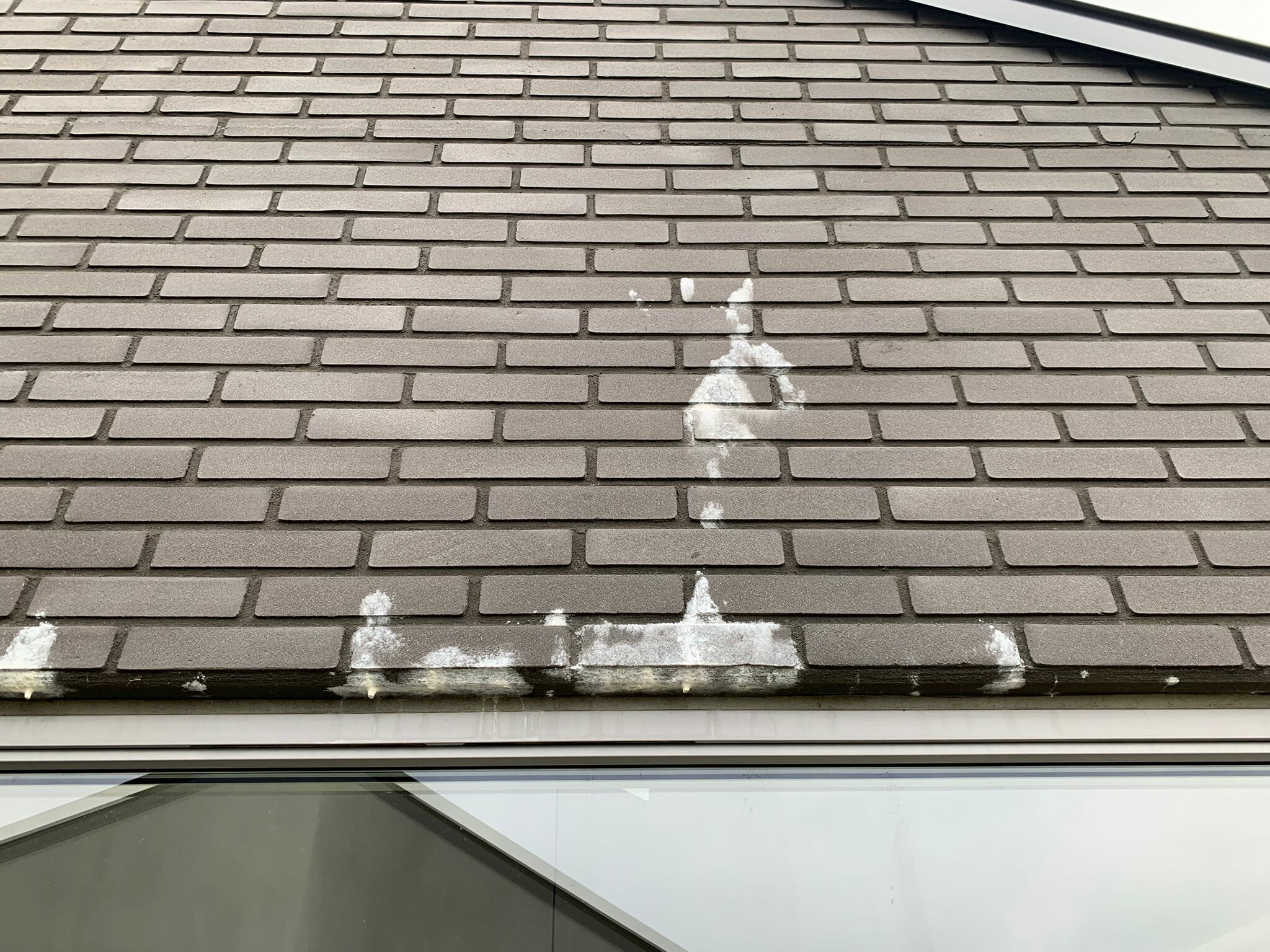
The houses in our area have these nice efflorescence stains, see images. A few questions:
1. I understand that they can be washed off with diluted hydrochloric acid. Does this also remove the paint from the painted plaster?
2. Do efflorescence stains usually disappear completely over time? The houses were built in 2019 and are made with prefab concrete elements. Just a thought on whether to address it now or wait, it has been about 5 years now.
Thanks in advance.
The houses in our area have these nice efflorescence stains, see images. A few questions:
1. I understand that they can be washed off with diluted hydrochloric acid. Does this also remove the paint from the painted plaster?
2. Do efflorescence stains usually disappear completely over time? The houses were built in 2019 and are made with prefab concrete elements. Just a thought on whether to address it now or wait, it has been about 5 years now.
Thanks in advance.


No idea, at least for now. It's concrete that is either plastered and painted, or concrete and decorative brick (forgot to mention that). Neither the plaster nor the decorative tiles are coming off anyway.P PatrikBL said:
Be careful with hydrochloric acid; if it splashes into your eyes while diluting, you can go blind.
Hydrochloric acid erodes everything with lime, so yes.
It removes color that is lime-based.
But I think it looks like salt deposits.
I actually don't think acid removes salt at all.
I usually use a hammer or sharp paint scraper when I remove salt deposits.
These particular deposits are probably quite rare; it feels like some kind of construction/material error.
But my experience is that deposits do not disappear over time.
I could be wrong, but I have never seen such lime deposits.
Hydrochloric acid erodes everything with lime, so yes.
It removes color that is lime-based.
But I think it looks like salt deposits.
I actually don't think acid removes salt at all.
I usually use a hammer or sharp paint scraper when I remove salt deposits.
These particular deposits are probably quite rare; it feels like some kind of construction/material error.
But my experience is that deposits do not disappear over time.
I could be wrong, but I have never seen such lime deposits.
Regardless of what kind of deposits they are, moisture must be involved for them to develop.V Vinterkatten said:
Most likely, lime deposits, I think it looks like the plaster has cracked, allowing moisture to enter the cracks and cause lime deposits.
You should get an expert to look at it on site.
Don't waste time trying to remove the deposits but make sure the cause disappears and they will go away, otherwise they will continue.
If it has dripped onto other things, you can use Gel Hammer, but be careful and read the instructions carefully so you don't apply it to surfaces that can be etched.
Salt is less likely.
It's quite common actually when the plaster cracks, mortar and plaster mortar contain a lot of lime to lubricate the mortar and make it more workable.N neo11 said:Be careful with hydrochloric acid, if it splashes into your eyes when diluting, you can go blind.
The hydrochloric acid corrodes everything with lime, so yes.
It removes paint that is based on lime.
But I think it looks like salt deposits.
I actually don't think acid removes salt at all.
I usually use a hammer or sharp paint scraper when I remove salt deposits.
These particular deposits are probably quite unusual, feels like some form of construction/material error.
But my experiences are that deposits don't disappear over time.
Could be wrong, but I have never seen such lime deposits.
If moisture gets into the plaster, there will be significant deposits.
If you look at the 3 "drops" under the tile, it looks like salt. I haven't seen lime stop like that. TS can feel them, if they are hard it is salt. If they are porous, it is lime.
If it is lime, it can be washed away with weak hydrochloric acid on the brick wall anyway. Or use a dry root brush/scrub brush. https://www.clasohlson.com/se/Skurb...It5RnpxEtmaw_rGYQmik8buK4oy3G9ncaAqNhEALw_wcB Probably works on salt as well.
If it is lime, it can be washed away with weak hydrochloric acid on the brick wall anyway. Or use a dry root brush/scrub brush. https://www.clasohlson.com/se/Skurb...It5RnpxEtmaw_rGYQmik8buK4oy3G9ncaAqNhEALw_wcB Probably works on salt as well.
Last edited:
The facade is from 2019, completely new.P PatrikBL said:
It shouldn't crack if it was done correctly,
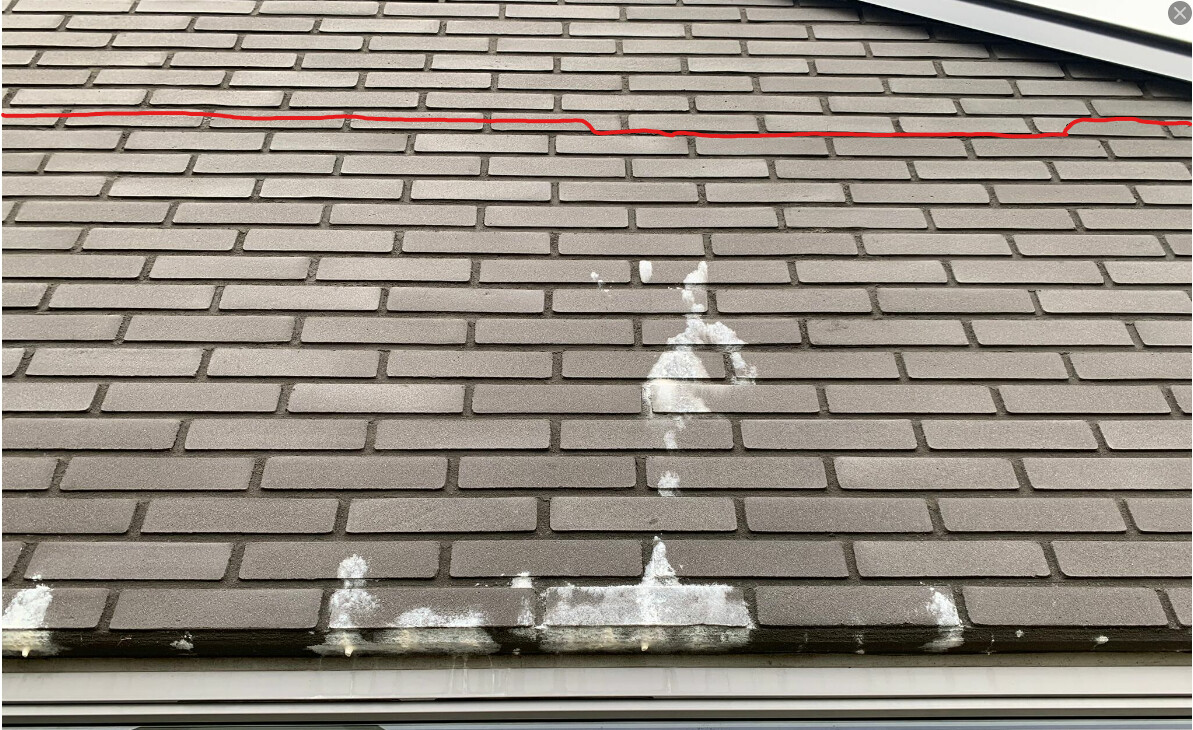
and it looks like shrinkage cracks in the picture.
Yes, it rains on all facades.
How do you mean that moisture gets in?
Definitely shrinkage cracks, probably because they missed moisture curing and maybe lack mesh, or have mesh of the wrong dimension when it was plastered, but for the sake of others we don't need to go into such details when the question was about getting rid of lime efflorescence.N neo11 said:
Otherwise, we could start reciting Hooke's law and calculate what mesh should be in the plaster to resist shrinkage cracks.
These cracks continue upward on the facade as far as we can see in the picture taken.
It's enough with driving rain on the facade for water to be transported through the cracks, dew point might also be enough.
The brick facade is more problematic, considering the amount of lime that has precipitated, water is getting in behind it, which can definitely happen with a brick facade, the moisture is finding its way out in the wrong place though, you typically lay waterproofing to guide the water to drainage holes at the bottom, which does not seem to function here as it appears above a window.
The drops look like lime, salts are much more porous than lime.
Regardless, the brick facade is improperly executed, if it's from 2019 he has until 2029 to address construction defects with the contractor, however, the burden of proof lies on him, hence he should get an expert to write a report as a basis when he claims construction defects.
You mean it would be chlorides, where do you think they would come from?
It's been many years since salt stopped being used as an accelerator.
And if it were salt, it would dissolve with plain water.
I would recommend not using hydrochloric acid, Gel Hammer is a much better alternative since it is user-friendly and won't harm other parts of the house if it drips or splashes.
You apply it and after 45 minutes you wash it off. The brick may need to be moistened beforehand so it doesn't absorb all the liquid too quickly.
Last edited:

Long post, don't agree with everything.P PatrikBL said:Yes, definitely shrinkage cracks, probably because they missed the moisture curing and maybe there's a lack of mesh, or it's the wrong dimension when it was plastered, but for others' sake, we don't need to go into such details when the question was about getting rid of efflorescence.
Otherwise, we might start reciting Hooke's Law and calculating which mesh should be in the plaster to resist shrinkage cracks.
These cracks continue upwards on the facade as far as we can see in the picture that was taken.
It's enough with driving rain on the facade for water to be transported through the cracks, it can also be enough with the dew point.
The brick facade is more problematic; considering the amount of lime that has precipitated, water is getting in behind it. This can definitely happen on a brick facade; the moisture finds its way out at the wrong place though. One usually applies a waterproofing layer to direct the water to drainage holes at the bottom; it doesn't seem to be functioning here because it comes out above a window.
The drops look like lime, salt is much more porous than lime.
In any case, the brick facade is incorrectly executed, if it's from 2019, he has until 2029 to raise construction errors with the contractor, but the burden of proof lies on him, hence he should bring in an expert who can write a report for the basis when he is going to claim construction defects.
You mean it would be chlorides, where do you think they would come from?
It was many years ago since they stopped using salt as an accelerator.
And if it were salt, it would dissolve with clean water.
I would recommend not using hydrochloric acid, Gel Hammer is a much better option since it's user-friendly and doesn't damage other parts of the house if it drips or splashes.
You apply it and after 45 minutes you wash it off. The brick might need to be dampened first so it doesn't absorb all the liquid too quickly.
But there is really only one mesh for plaster.
But salt and lime are pretty close to each other, this might be useful for cleaning.
https://www.se.weber/byggkemi/byggkemiprodukter/weber-murtvatt-kalksalt
You're of course free to disagree, but don't give advice based on guessing.N neo11 said:
It's not salt efflorescence at least, you don't need to scrape off salt.
There are several different nets for plaster, but we don't know if it's thin or thick plaster or if there's insulation behind, what we know is that the plaster is on a concrete facade.
Weber's product is similar but Gel Hammer is better, but I prefer Gel Hammer, find it gentler on other materials and more effective against lime.
https://www.wurth.se/produkter/kemi/rengoring/betongborttagning-gel-hammer/#/
But as mentioned, TS should address the cause, which is the damage, it should be covered by warranty unless renovations have affected the facade or caused the house to settle.
https://www.se.weber/fasad-puts-och-murbruk/armering/weber-323-natP PatrikBL said:You're obviously free to disagree, but don't give advice based on guesses.
It's certainly not salt deposits, you don't need to scrape off salt.
There are several different meshes for plastering, but we don't know if this is thin or thick plaster or if there's insulation behind it, what we've been told is that the plaster is on a concrete facade.
Weber's product is similar but Gel Hammer is better; I prefer Gel Hammer, I think it's gentler on other materials and more effective on lime.
[link]
But as I said, TS should address the root cause, which is the damage, it should be covered by the warranty unless he has done renovations that affected the facade or caused the house to settle.
Is the only mesh used for thick plastering.
And this mesh is the only one used for thin plastering.
https://www.se.weber/fasad-puts-och-murbruk/armerng/webertherm-397-ef-nat
And even if there is insulation behind, the same mesh as thick plaster is used, weber 323.
Your gel hammer seems mainly for removing concrete and cement, but it also works on lime.
But that retailer doesn't seem to be knowledgeable about plaster. So I would never have used it in this case.
Have you ever held a trowel in your hand? Or just read online?
Last edited by a moderator:
Seems like you had quite a bit to drink yesterday, good for you, but for everyone's sake, avoid writing on forums when you drink.N neo11 said:[link]
Is the only mesh used for thick plaster rendering.
And this mesh is the only one used for thin plaster rendering.
[link]
And even if there is insulation behind it, the same mesh as thick plaster is used, weber 323.
Your gel hammer seems primarily for removing concrete and cement, but it also works on lime.
But that retailer doesn’t seem to be based on knowledge of plaster. So I would never have used it in this case.
Have you ever held a trowel in your hand? Or just read online?
You must be the biggest fool I've heard in a long time here.
You can use your hydrochloric acid and weber's remover at your place but don’t give others incorrect advice.