

Hi,
I'm planning to try building a loft bed, the idea is to cover the whole setup with drywall, putty, and paint. Now to my question, what kind of studs should I use? I can attach one long side and the short side to a concrete wall, and the smaller part should be a little nook for the kids where they can sit and watch movies, etc. I also thought I would frame the bases so I can lay 12mm plywood as the "floor" for the bed and possibly some sort of desk on the smaller part.
I can get 50x75 studs at a good price, is this something that can be used? It will be two adults sleeping on the bed part, so to speak.
I'm planning to try building a loft bed, the idea is to cover the whole setup with drywall, putty, and paint. Now to my question, what kind of studs should I use? I can attach one long side and the short side to a concrete wall, and the smaller part should be a little nook for the kids where they can sit and watch movies, etc. I also thought I would frame the bases so I can lay 12mm plywood as the "floor" for the bed and possibly some sort of desk on the smaller part.
I can get 50x75 studs at a good price, is this something that can be used? It will be two adults sleeping on the bed part, so to speak.
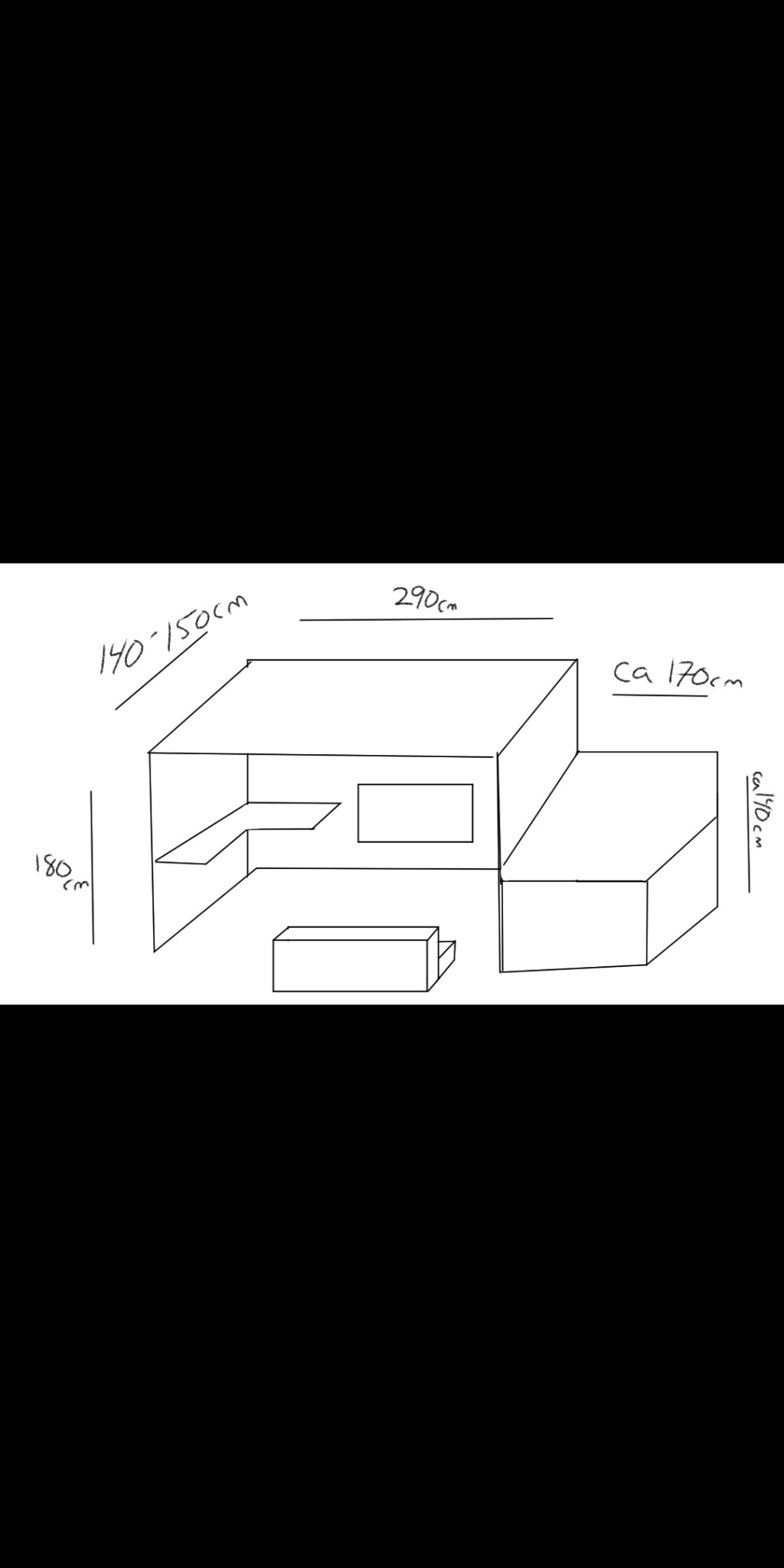
What do you mean by the smaller part? The lower part?
I built many loft beds during my student days. But 45x75 feels too flimsy. They surely hold the weight but would need to be screwed to the wall quite often.
If you want a post on the part that isn't attached to walls, that post should be securely fastened to the floor.
I built many loft beds during my student days. But 45x75 feels too flimsy. They surely hold the weight but would need to be screwed to the wall quite often.
If you want a post on the part that isn't attached to walls, that post should be securely fastened to the floor.
Maybe it became a bit unclear, with the smaller part I mean the "cube thing" to the right in the picture that I have so nicely drawn. The idea is not to build everything with 50x75, but if anyone has a thought on where I could use these beams.
Since 2 adults will be sleeping on the loft, I suspect that sturdier beams are needed for the frame on which the bed will stand?
I've thought that I would attach one short side and the long side to the wall and then have a 70x70 (if that's enough?) post in the corner that goes down to the floor. However, I have parquet flooring and would prefer not to attach it with screws or the like.
Since 2 adults will be sleeping on the loft, I suspect that sturdier beams are needed for the frame on which the bed will stand?
I've thought that I would attach one short side and the long side to the wall and then have a 70x70 (if that's enough?) post in the corner that goes down to the floor. However, I have parquet flooring and would prefer not to attach it with screws or the like.
Last edited:
Keep in mind that when plastering and filling, you need to think a step further than just making it hold to avoid getting cracks. Will there be a covering wall on any of the sides or just a railing?
The short side that is not attached to the wall, I plan to put up plasterboards on and create some form of entrance into the children's nook, and the "cube" that the children will have as a nook should also have plasterboard walls. So I suppose I have to build those parts as interior walls so that I can attach the plasterboards? Or?
The front crossbeam should be at least 125 x 45 to cover a span of 290 cm. It will still feel a bit wobbly. If you don't anchor the freestanding leg to the floor, there's a risk that it could be knocked over, causing the whole thing to collapse.
The crossbars in the bed base should be 95 x 45 with 60 c/c.
The crossbars in the bed base should be 95 x 45 with 60 c/c.
Can you really knock over a 70x70 if it is anchored to the ceiling and other structures? I also think it's worth considering that a bed base is normally self-supporting.
But what if I build the short side as an interior wall instead of freestanding legs? So a frame with studs? Will it stand stable then?
You need to find or create a drawing so you can discuss more specifically, but it is definitely possible to build without support legs. It's also no problem to use the beams you have/get cheaply. But discussing individual details does not ensure that the overall result will be good.
You mean like the one I attached in my first post but more detailed?Z z_bumbi said:
If you have plenty of 50x70 that are slightly odd sizes, then just go with it? Build the wall as you've planned. I would have placed at least three 50x70 on the height with screws and glue, probably some extra because you probably want to cover the entire bed base. I would have framed the actual floor of the loft at cc 400 and glued plus screwed plywood on both sides with insulation. The bed base itself is self-supporting.
What is the insulation good for? A continuous plywood sheet sets the stage for mold under the mattress. There should be some palm-sized holes in the sheet, and no bottom sheet. Or a slatted base.
TS should make a proposal for the design of the bed base (wood dimensions, number, spacing). Keep in mind that the wood should be of high quality and not just any scrap lumber.
TS should make a proposal for the design of the bed base (wood dimensions, number, spacing). Keep in mind that the wood should be of high quality and not just any scrap lumber.
So you're saying that you'll get mold if the bed lies on regular joists?T Thomas_Blekinge said:What is the insulation good for? A solid plywood board sets the stage for mold under the mattress. There should be some palm-sized holes in the board, and no bottom board. Or slatted base.
The original poster should propose a design for the bed base (wood dimension, quantity, spacing). Remember that the wood should be of high quality and not just any scrap lumber.