
2,653 views ·
7 replies
3k views
7 replies
Is this wall load-bearing? - what do you think?
Hi,
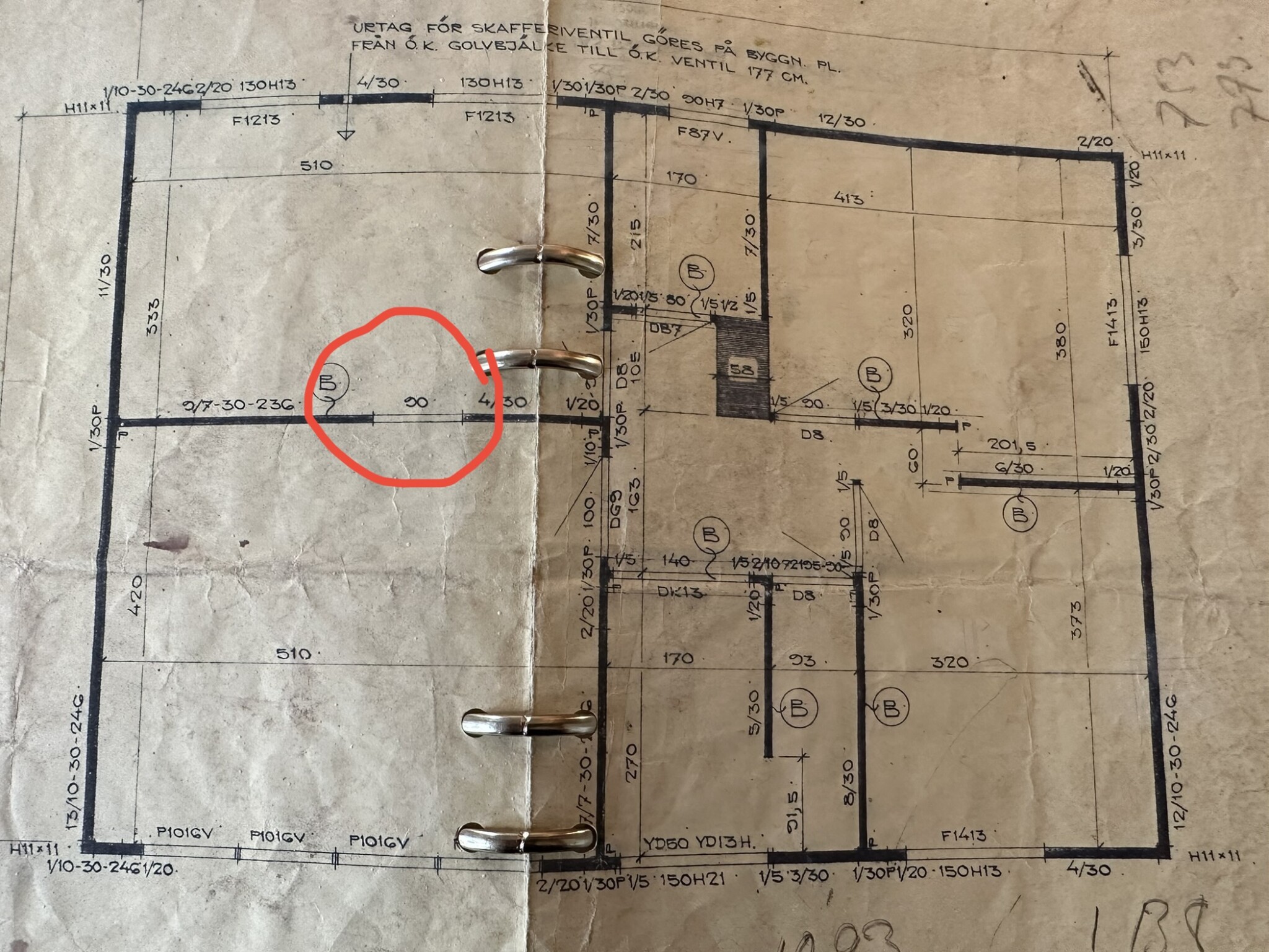
I have just moved into a house from '63, and I would like to widen a doorway between the kitchen and living room. On the drawing, the wall is marked with a "B," which in the basement plan stands for load-bearing wall (even though there is no legend provided on the drawing sheet for the current floor).
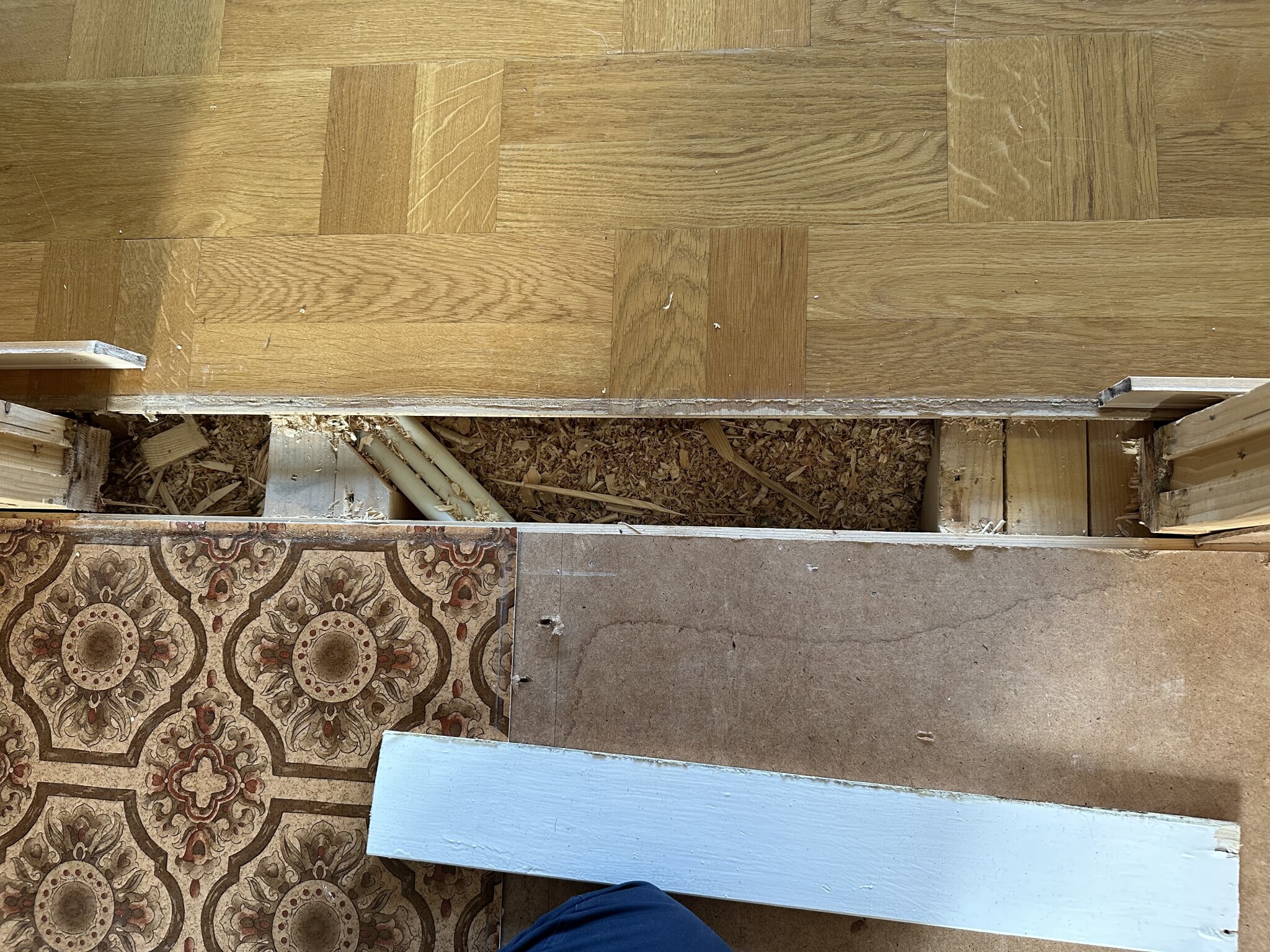
I think it looks quite flimsy to be load-bearing, and it sways quite a bit if you hit it. Between the studs, there seems to be some kind of three-layer fiberboard.
My plan is to widen the opening by one "section," move the stud on the left edge of the opening, and extend the stud above the opening.
What are your thoughts?
I have just moved into a house from '63, and I would like to widen a doorway between the kitchen and living room. On the drawing, the wall is marked with a "B," which in the basement plan stands for load-bearing wall (even though there is no legend provided on the drawing sheet for the current floor).
I think it looks quite flimsy to be load-bearing, and it sways quite a bit if you hit it. Between the studs, there seems to be some kind of three-layer fiberboard.
My plan is to widen the opening by one "section," move the stud on the left edge of the opening, and extend the stud above the opening.
What are your thoughts?

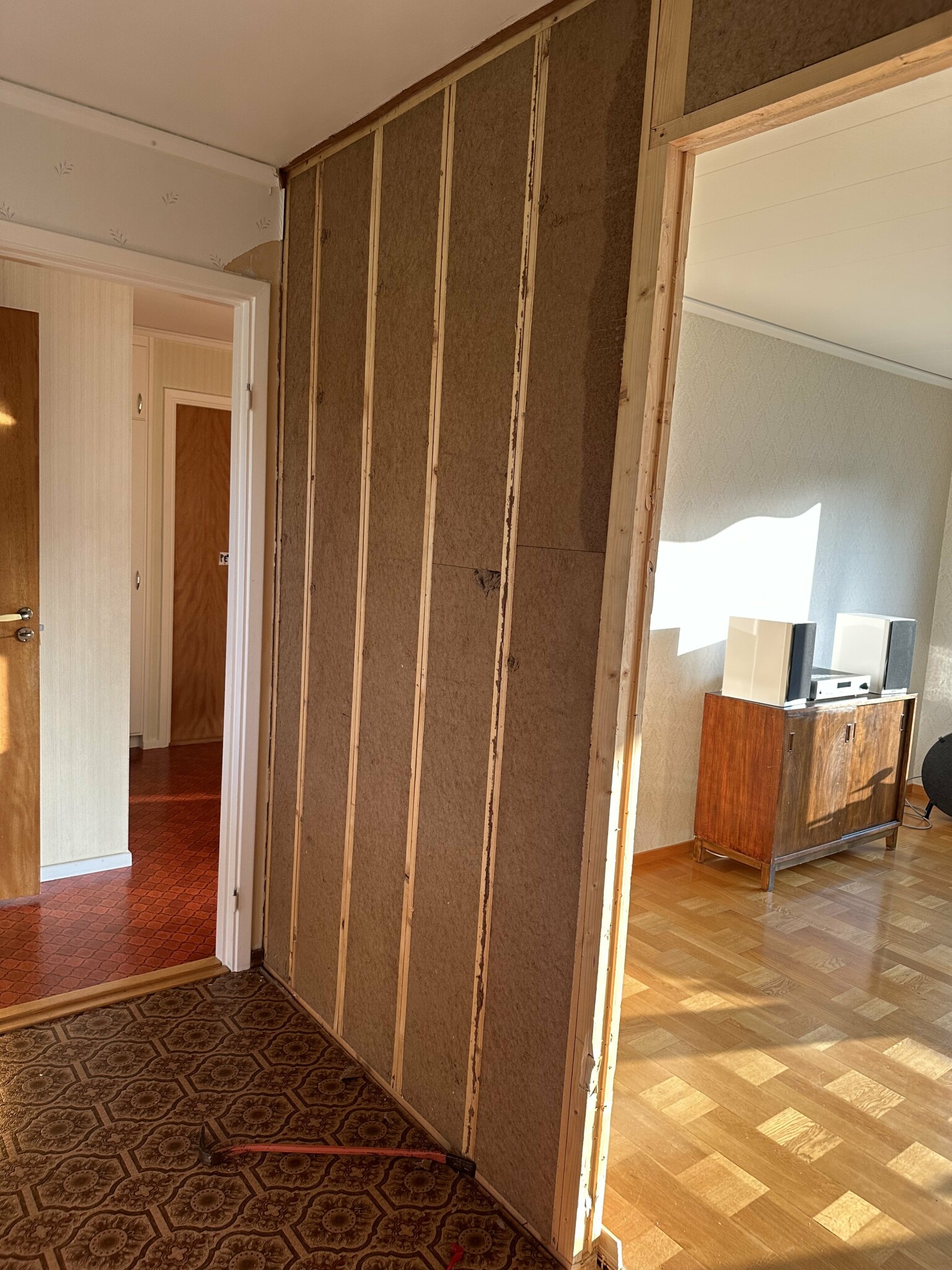
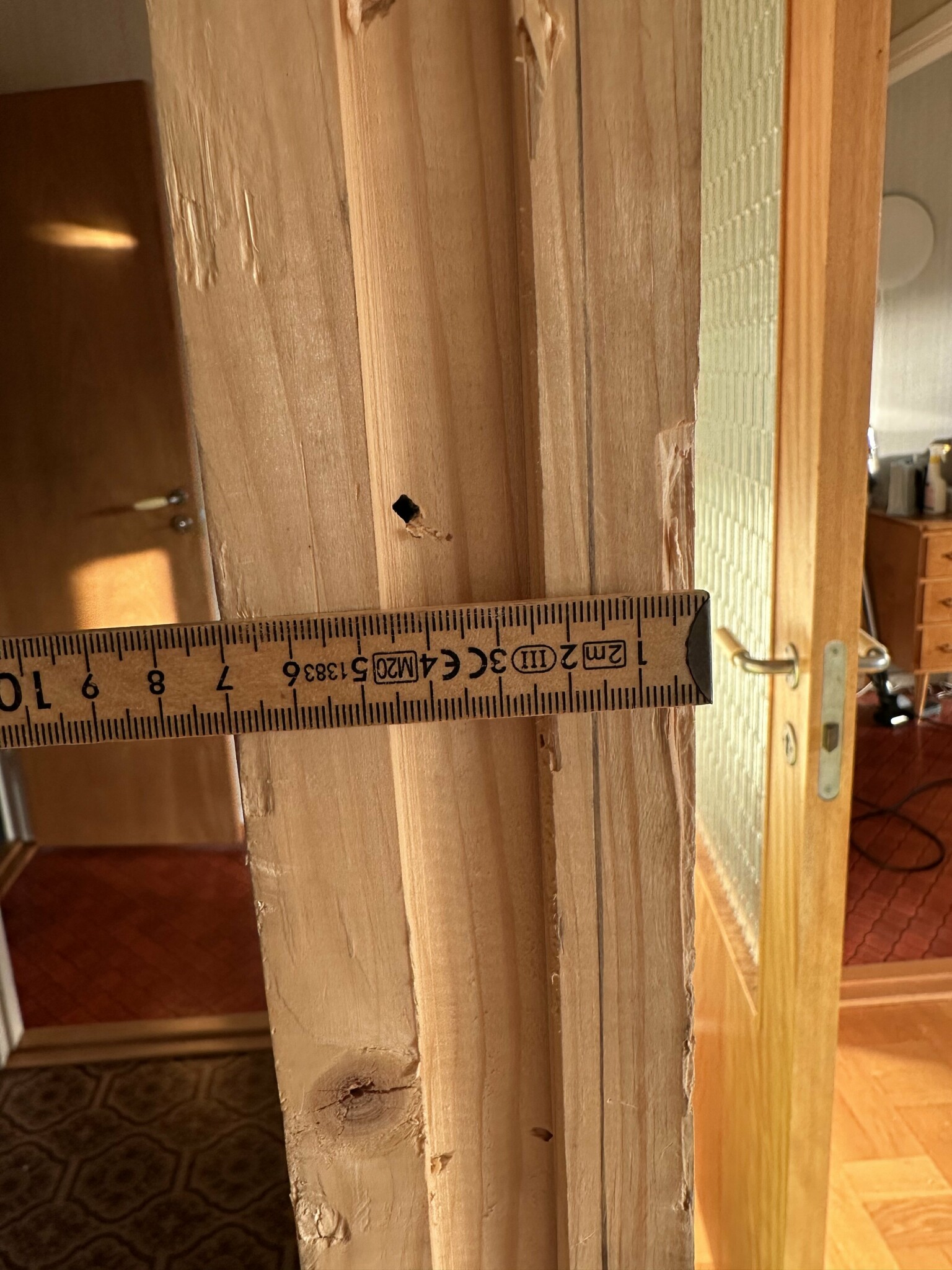
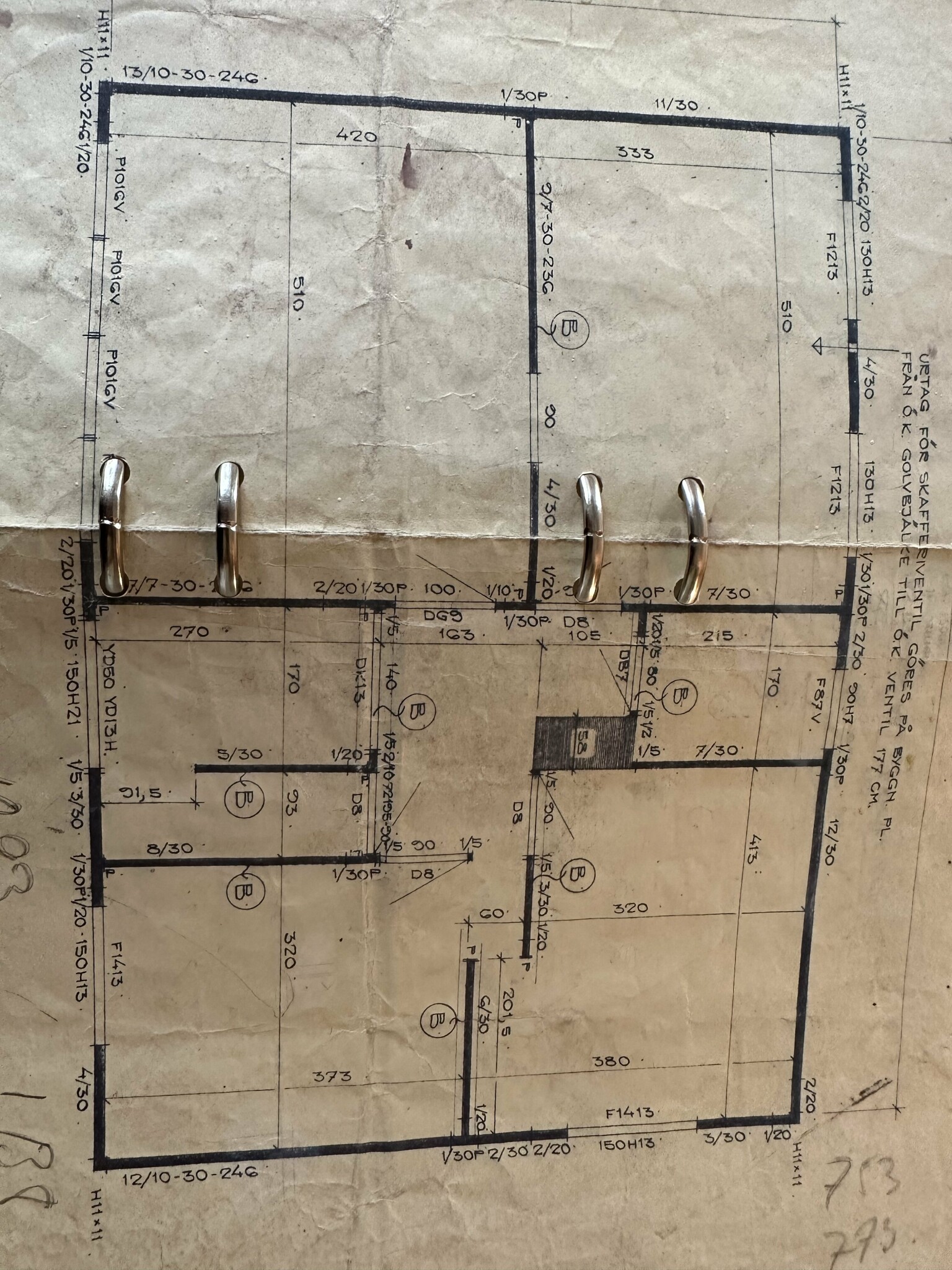
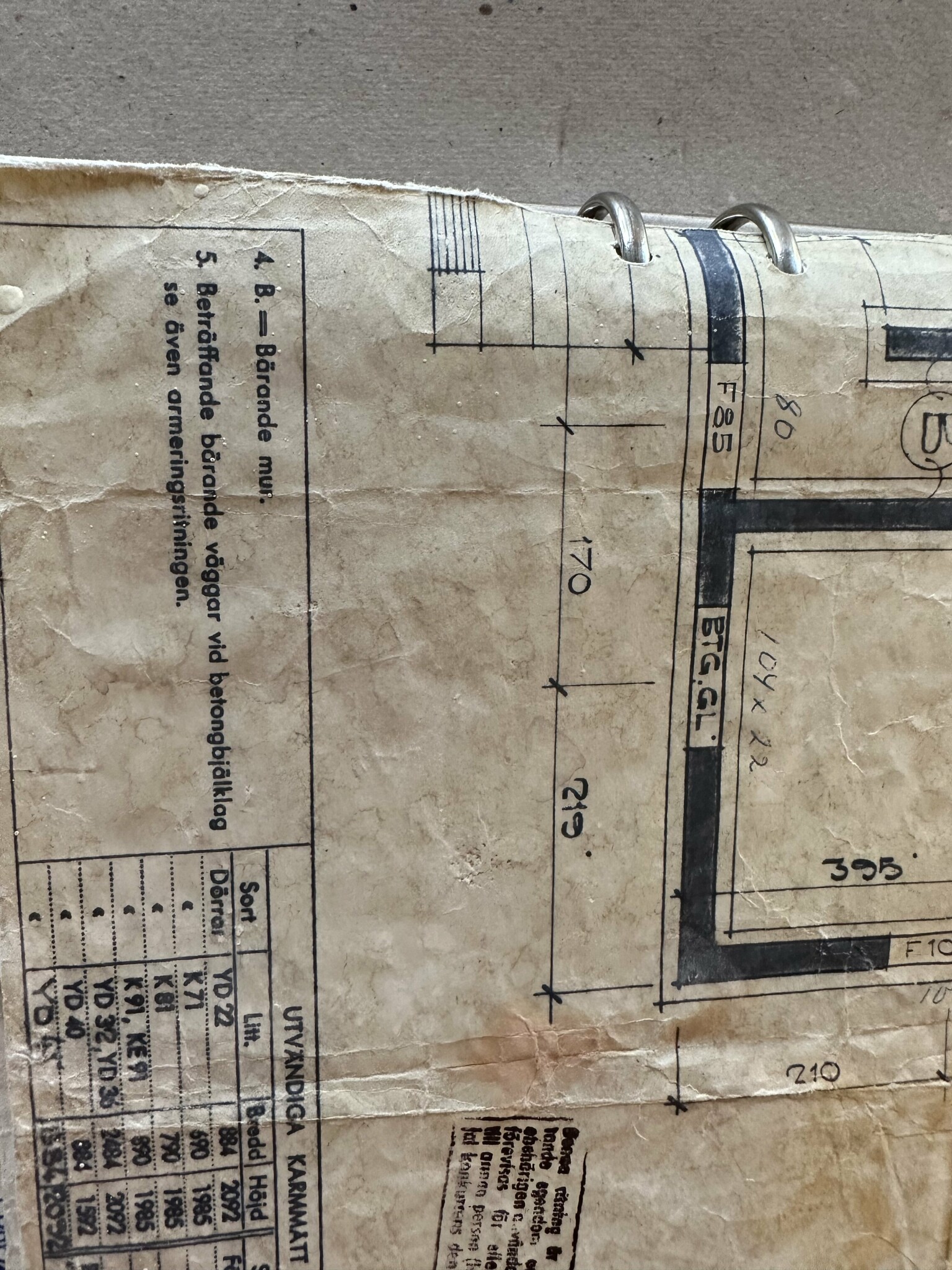

Is it some kind of modular/prefab house?
Are there other walls that are thicker?
Is there a floor above this one?
If not: What kind of roof trusses are there?
A floor plan for this floor would be good (with the wall marked) and the section drawing shows a lot too.
Are there other walls that are thicker?
Is there a floor above this one?
If not: What kind of roof trusses are there?
A floor plan for this floor would be good (with the wall marked) and the section drawing shows a lot too.
The fact that all longitudinal walls, i.e., those that run across the trusses, are marked with a B suggests that they are load-bearing in some way. The comment about the reinforcement drawings in the second photo is interesting. Do you also have the reinforcement drawings?
I'm a bit unsure whether it's a modular house or not, but there is half a floor above. Here are pictures of the floor plan with the wall marked, as well as the upper floor and a roof truss drawing.BirgitS said:
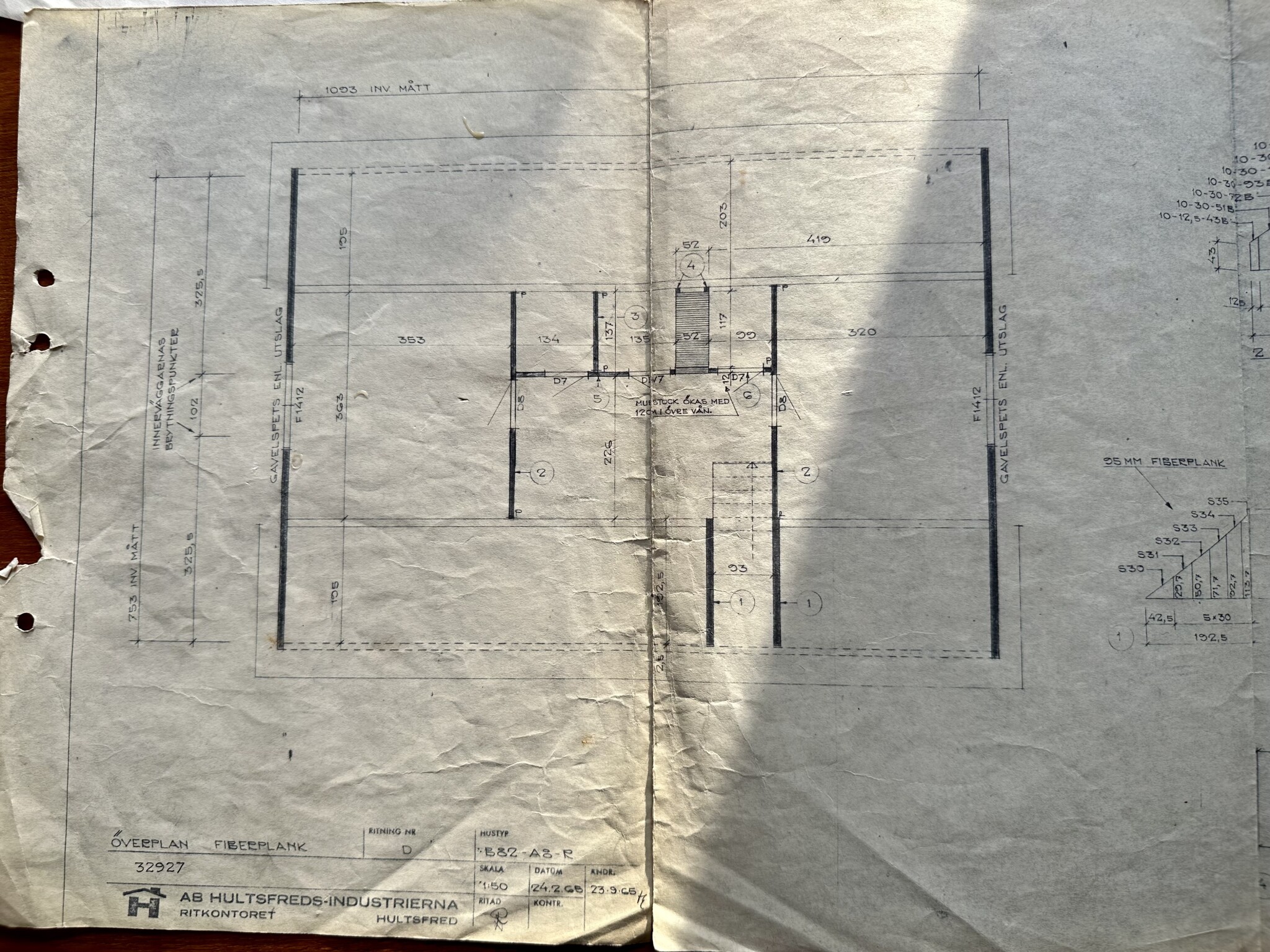
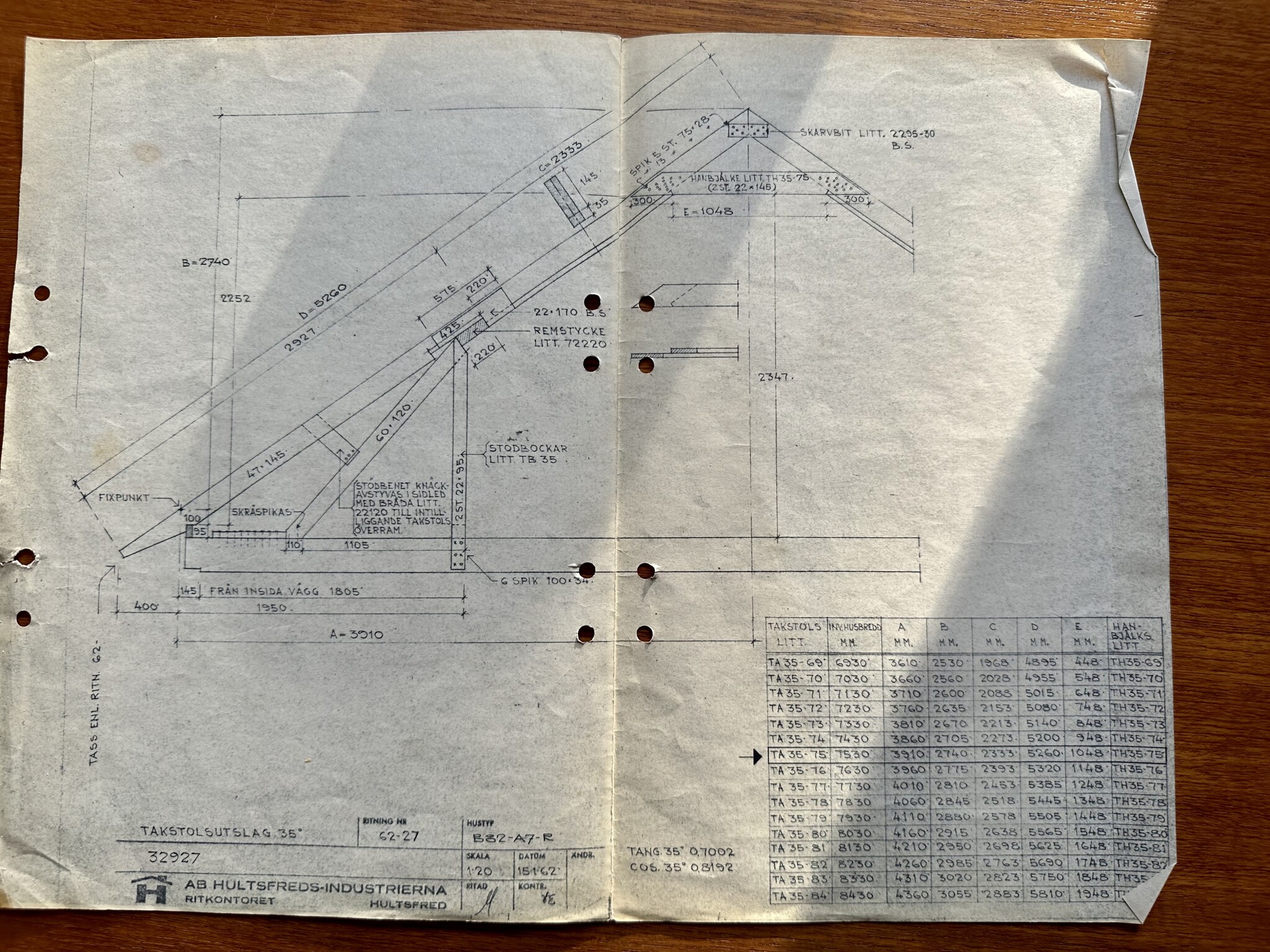
Yes, that's why I'm wondering a bit even though the wall feels so thinly dimensioned.Henningelvis said:
I haven't found any drawing labeled reinforcement, but I have one called "system drawing" where the constructions of the building's different parts are specified. I'll also upload the entire basement floor plan.

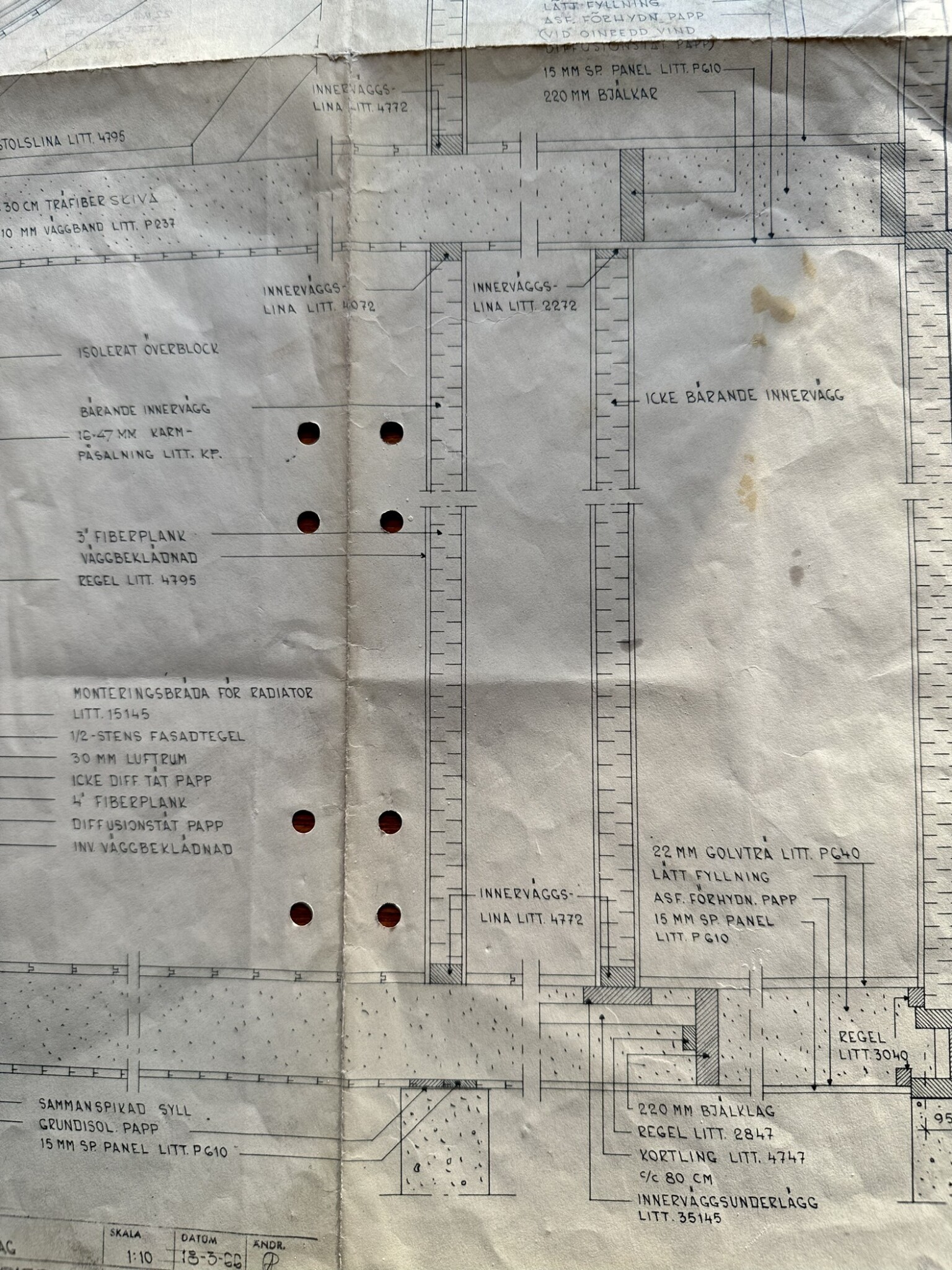
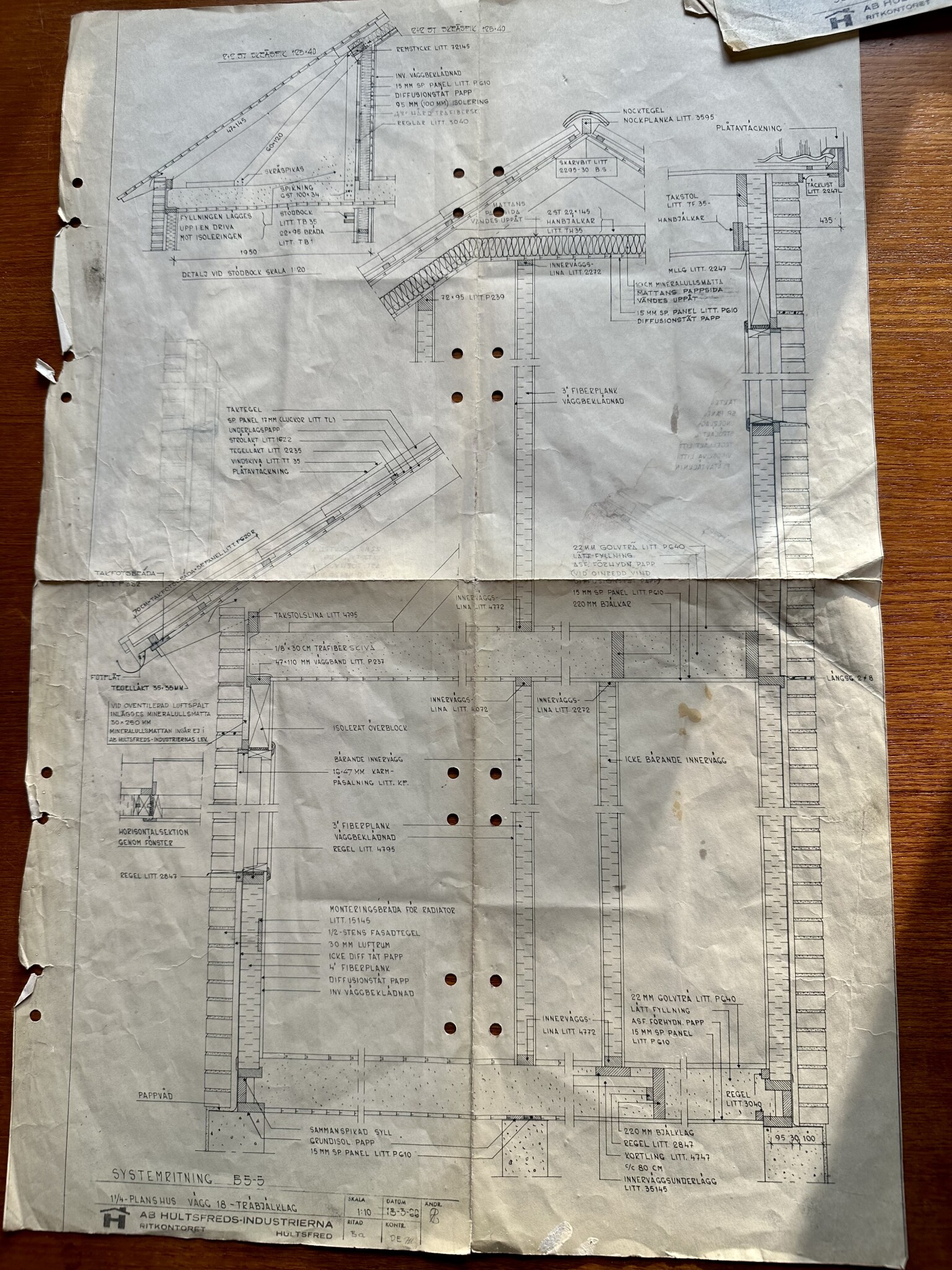
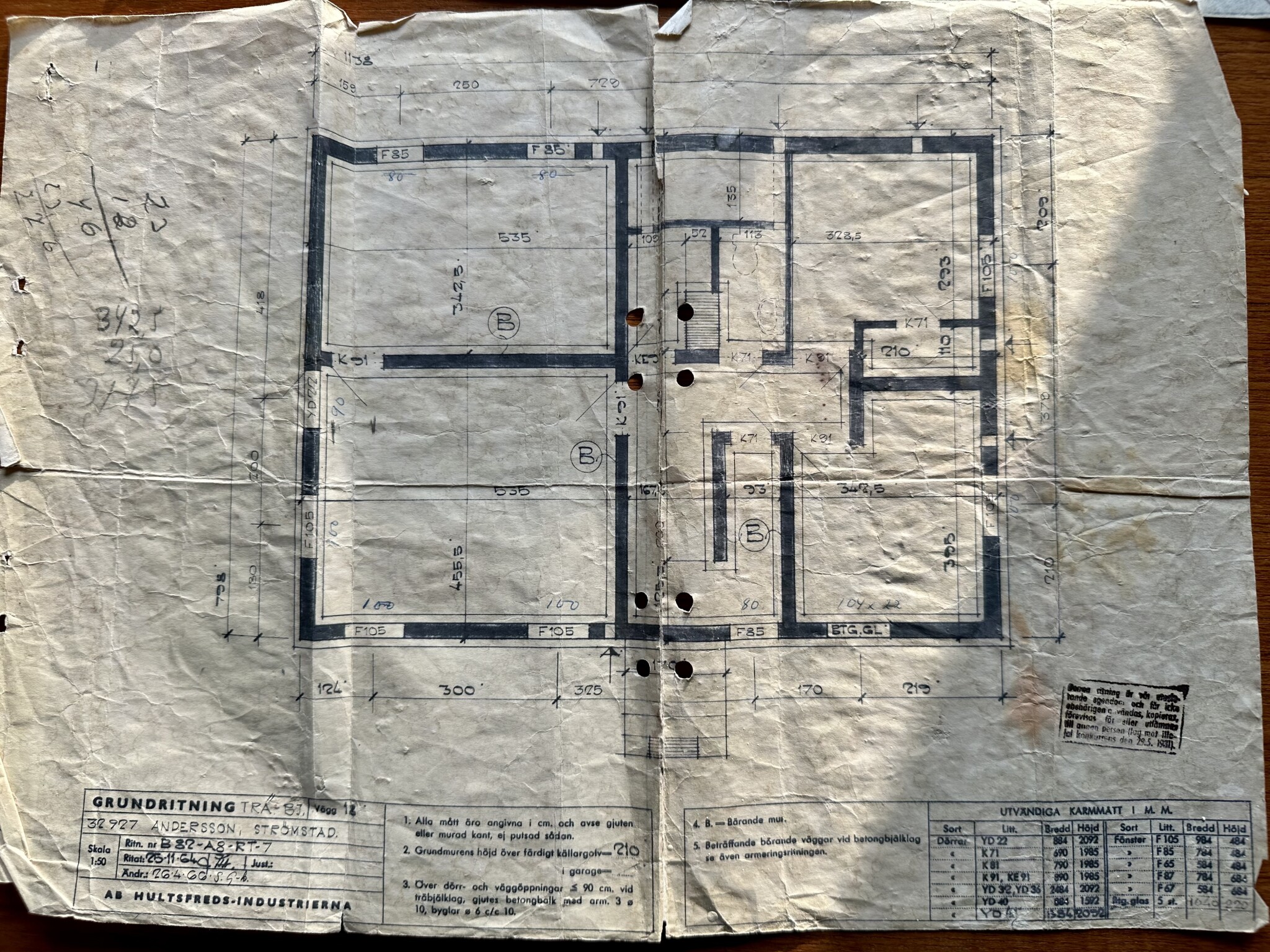


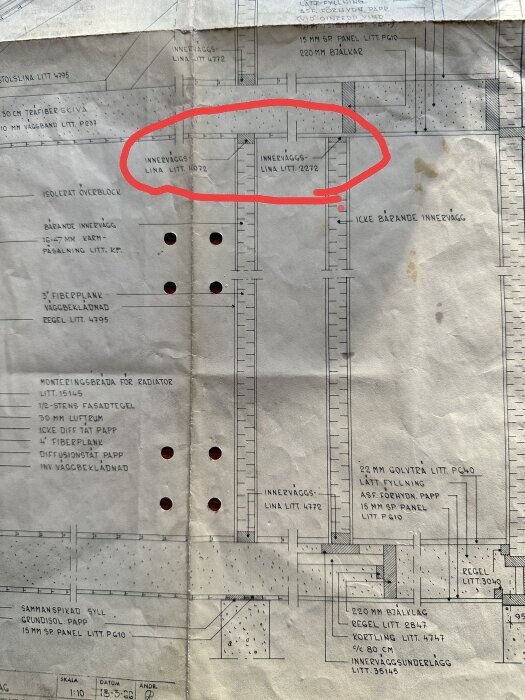
Seems to be a difference in thickness. So check that!
I live in a Hultsfredshus myself (a few years newer though) and some load-bearing walls are quite weak, especially when you remove the surface layer that might have been particle board? I.e., they lose torsional rigidity quite quickly.
But if you're "just" going to open a section, there's no problem leveling the opening and placing a larger beam on one edge?
Then put plywood and drywall, and you've certainly made it more stable.
With a floor above, that wall should be load-bearing. You should hire a structural engineer who can calculate the necessary dimensions for a beam above the opening and the thickness of the columns that the beam needs to rest on. You also need an approved building notification before starting the work.P peterlarsen said:
Click here to reply
Similar threads
-
Hur bör jag bearbeta denna garagevägg inför målning?
Färg, Måla & Tapetsera -
Är denna vägg bärande? Ska riva vägg
Planlösningar -
Vad är denna innervägg från 1930-talet gjord av?
Byggnadsvård -
Is this wall load-bearing? (lightweight concrete)
Building Materials and Construction Technology -
Hur åtgärdar jag denna vägg?
Tvättstuga