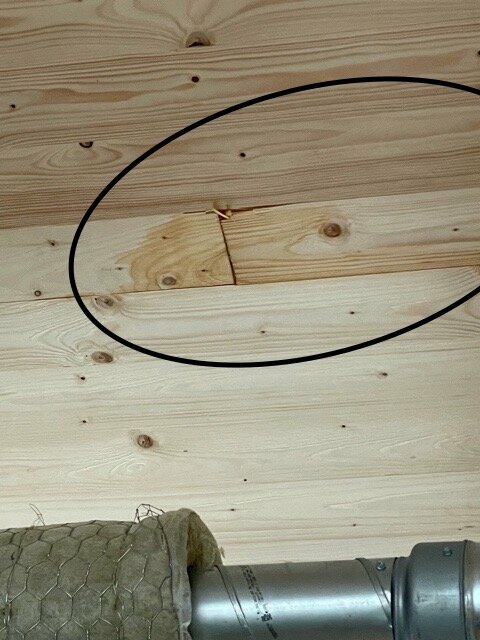
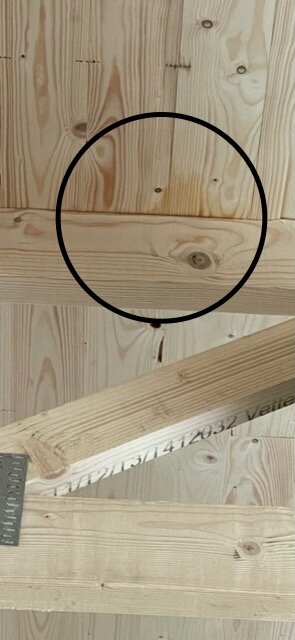
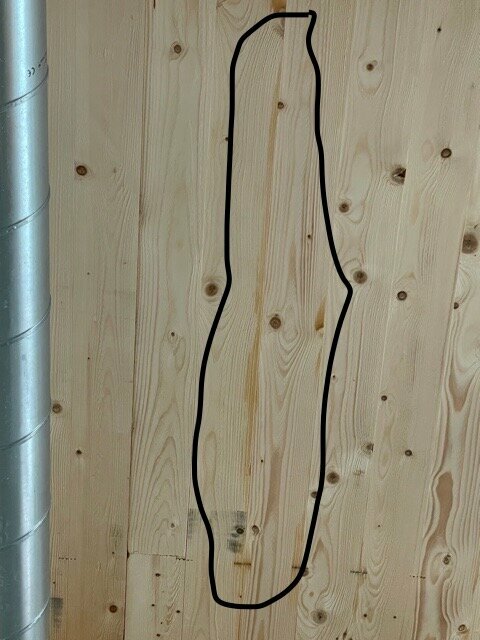
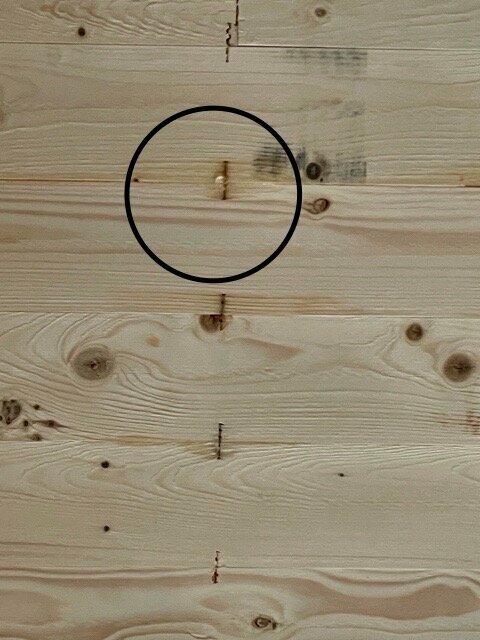
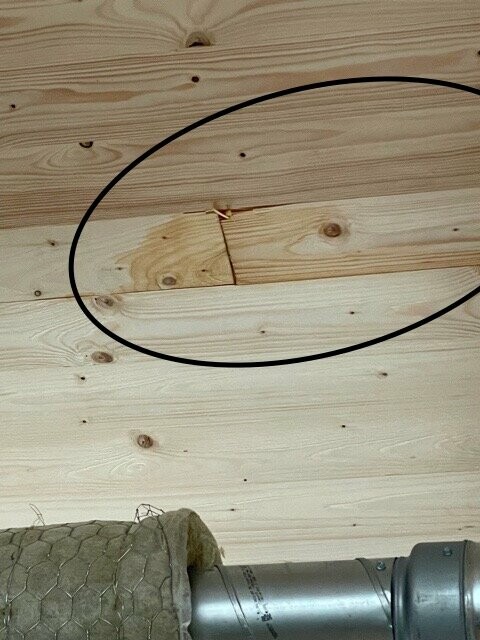
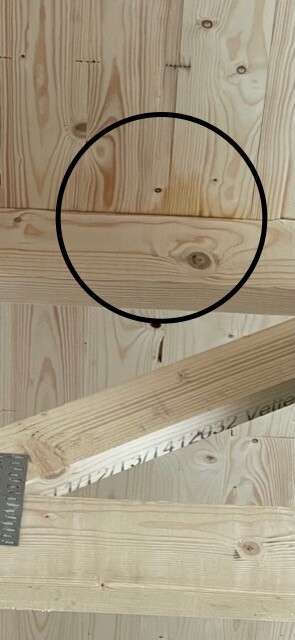
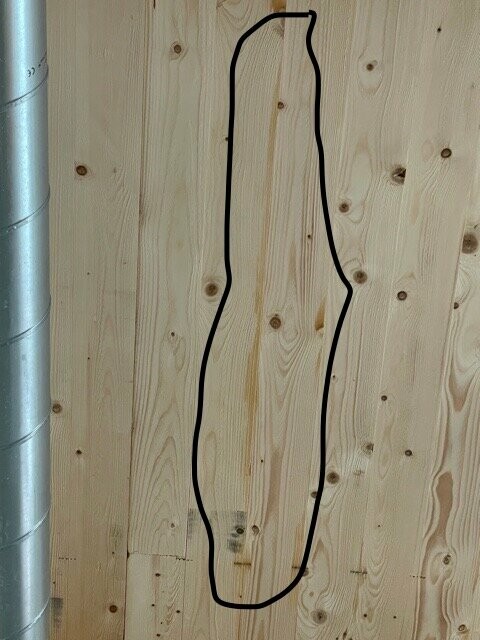
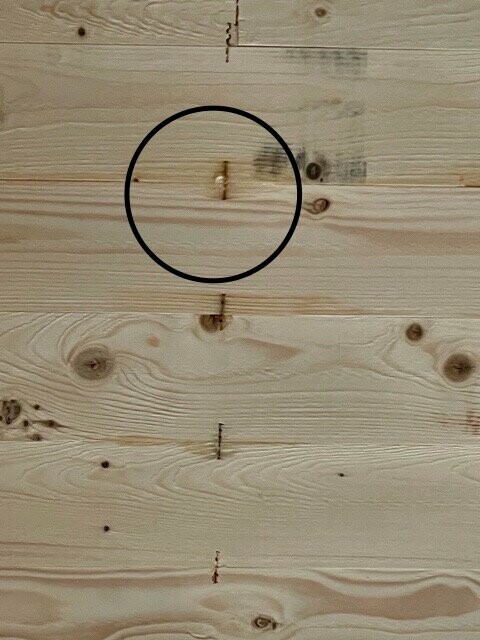
Ongoing house construction with a shed roof. The roof has underlay felt on the raw boards (nailed and sealed according to the builder) and then all the snow came. Now it's leaking in some places on the roof, the raw boards are damp where they meet at the edges and at one of the rafters. It's also dripping from two places. According to the builder, this is nothing to worry about due to condensation since they have a (very small) heater running. Additionally, when the top felt is later applied, all potential cracks will be sealed. They also see no risk of mold if we were to insulate the ceiling in its current state. I'm worried that the underlay felt is not sufficiently sealed and wonder what will happen when it starts to thaw. Water/moisture in the structure is never a good thing in a house construction, right? Is there anyone who has experience with this and can offer guidance?
Thank you for your response. I don’t know when the ytpapp and sheet metal work will be done, there's a lot of snow so the underpappen is wet. The plan is to do it as soon as possible, knowing that it can't wait until spring. Do you think it's possible to start insulating inside even though it looks like this now without the risk of mold?
Thanks for the response. I don't know when the roof felt and sheet metal work will be done, there's a lot of snow so the underfelt is wet. The plan is to do it as soon as possible, knowing it can't wait until spring. Do you think it's possible to start insulating inside even though it looks like it does now without the risk of mold?
No, I don't think so. I think they should shovel off the roof and cover it with a (lightweight) tarp, which they SHOULD have done from the start. You should always do that when snow is a serious risk before the roof felt can be done....
I don't think it's leaking in. It's probably condensation from warmer humid indoor air that condenses on the outer roof and then drips down in certain spots where it comes through. Proper insulation and a vapor barrier will help. Install an exhaust fan during the construction period, and that will also disappear.
My personal stance is that timber and raw boards should not become damp at all, neither during production nor in operation. If a warm roof is being built, moisture should be avoided in the construction as much as possible because you end up with a tight layer on the top and bottom side of the roof.
It could certainly be condensation, but I think it's more likely to be leakage. Make sure it dries out properly before insulation and PE foil are installed in the roof.
And as already mentioned, make sure the snow is removed and that they cover it with tarpaulin or get the surface felt on.
Thanks for the great input from everyone. Shoveling, tarpaulin, and fan over the Christmas and New Year's holidays, and I hope it will be resolved. Should one look for where it leaks in, i.e., if the underlay is damaged/not sealed, or will it be resolved with the surface layer?
Thanks for the great input from everyone. Shoveling, tarpaulin, and fan over Christmas and New Year's and I hope it resolves itself. Should I look for where it leaks, i.e., if the underlayer is damaged/not sealed or will it resolve with the surface layer?
Pushing in a lot of heat is not particularly wise, that should wait until the insulation and vapor barrier are in place.
Looking for leaks in the underlay is a waste of time.
Normally it should just dry out, air dry to the outside air. If you have a construction that doesn't allow that, then it should have been considered and resolved already, handling "construction moisture" is not new.
Do not use any heating at this stage you are in now. All the moisture in the frame and in the slab will evaporate and go right up into the råspont. Wait with heating until the roof is wrapped in plastic.
Vi vill skicka notiser för ämnen du bevakar och händelser som berör dig.