I have received some quotes for a foundation wall, on which I will later place a new wooden-framed wall (planning to use sill plate and maybe even treated wood in the sill).
One proposal is that the entire foundation wall is cast in one piece of concrete.
Another is half cast in concrete and then a layer of leca on top.
Are there any disadvantages with the concrete option, does concrete absorb more moisture?
It depends on the concrete you choose, a high wct-value (water-cement ratio) means it is more susceptible to water (more pores in the concrete), so below 0.5 is usually good. If the wall is to be used for a house, avoid implementing it in the sill.
Yes, concrete is absorbent, but you should have a capillary-breaking layer under the beam so that the choice of material in the beam does not matter.
Impregnated sill is not ideal if it's a building you are going to place there, as an unpleasant odor can develop from them. It's better with good sill paper and "dry concrete."
Mycket intressant med att man inte ska ha impregnerat trä, tusen tackar för den kunskapen.
Med "balken" antar jag du menar grundmuren? Kruxet här är att denna ska gjutas direkt på berg.
Med kapilärbrytande menar du väl någon form av grus och isolering? I detta fall går inte det att få in under på många ställen.
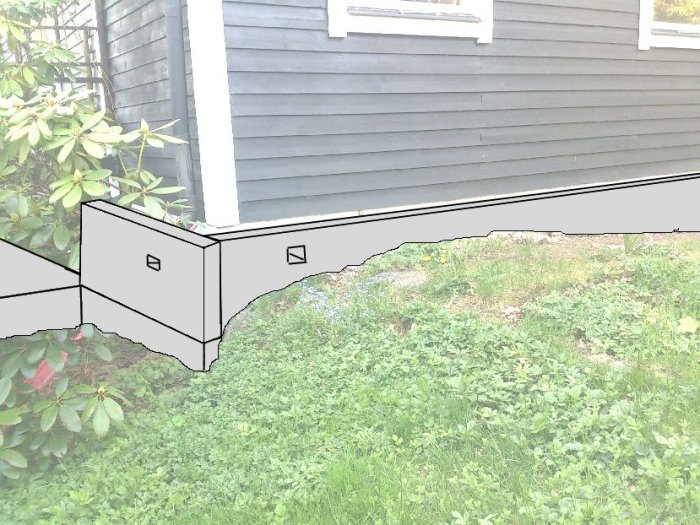
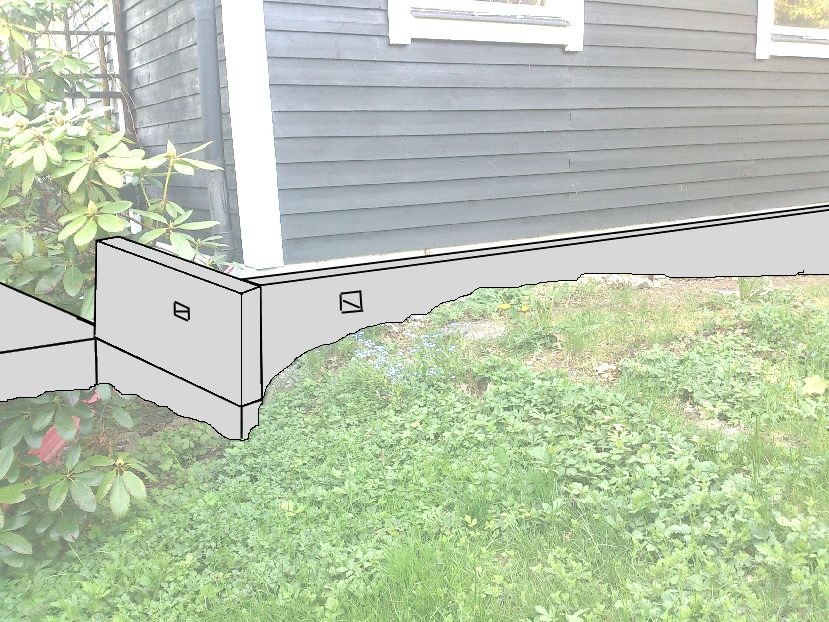
Anledningen till detta projekt är att det ska bli till grund för en ny tilläggsisolerande vägg samt även en lösning för att stoppa siprande vatten som idag rinner in under en fusk-grundmur.Jag har tänkt mig att det ska bli så här nedan. Under mossan/gräset där det är som lägst till fasaden är det berghäll som vätter lite mot huset varpå det rinner:
.
The wall that is supposed to be "stopping" against running is primed with leakmaster or and hydrotite if I understood it correctly according to the contractor.
Where does the water that collects at the foundation go? If you seal it tightly, it could cause problems in the future, so you should try to arrange drainage there.
Thank you for the response!
Hopefully, the water will be forced to the sides when the wall becomes as dense as possible.
I may also need to "saw" a channel in the rock.
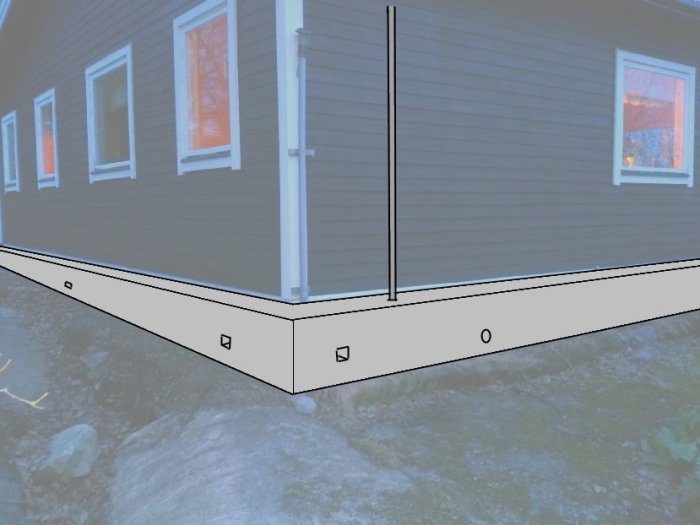
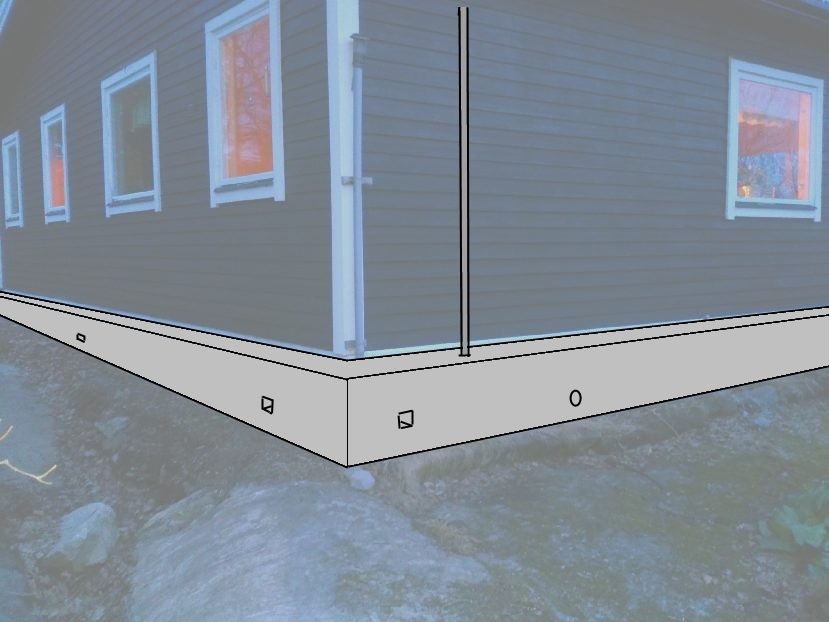
In the next picture, you can see a bit more of this side, and you can see (if you look closely since I've unfortunately grayed out the picture) that the rock surface slopes down into a groove where water can be directed. Gravel will also be added here for drainage.
Click here to reply
Vi vill skicka notiser för ämnen du bevakar och händelser som berör dig.