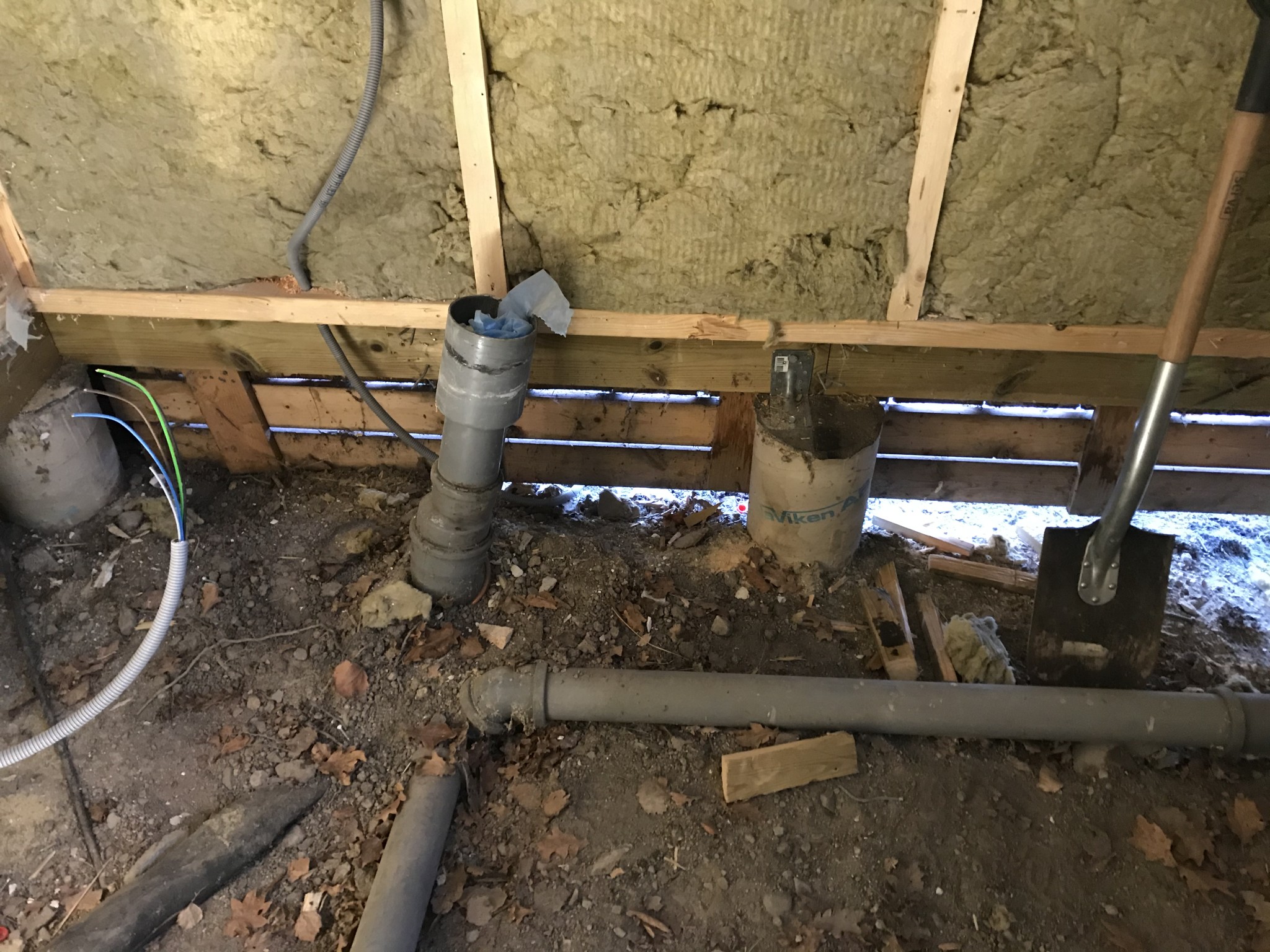
51,888 views ·
36 replies
52k views
36 replies
Insulate crawl space with foam plastic

Cold floors, or rather the experience of the floors being cold, can also be due to the floor material (the one you walk on). Materials with high thermal conductivity such as concrete and various stone materials almost always feel cold this time of year regardless of temperature.
Isn't it risky to insulate the wall from the inside, with the risk of greater frost depth, for example? What happens with the humidity if the vents are covered?
Cold floors are probably best remedied with more insulation in the trossbotten, as previously pointed out.
Cold floors are probably best remedied with more insulation in the trossbotten, as previously pointed out.



Know-It-All
· Västra Götaland
· 12 516 posts
If you live in a place where the frost penetrates so deep, it might be a good idea
Read the following on the energy agency:
https://energimyndigheten.a-w2m.se/FolderContents.mvc/Download?ResourceId=2829
Insulating houses – facts, advantages, and pitfalls
A warmer, drier foundation
To achieve a warmer and drier foundation, there are other measures besides insulating the floor structure because it can worsen the problems. The measures may vary between houses of different designs but are essentially as follows:
1. Remove all organic material from the ground.
2. If there are standing water pools, they should preferably be drained away or filled with sand.
3. Cover the ground with plastic or construction foil.
In most cases, these measures are not enough, and you also need to:
4. Insulate the foundation walls from the inside and preferably also the ground with, for example, 100 mm cell plastic sheets.
If these measures are not sufficient, either heat must be added to the crawl space or a dehumidifier must be installed. Heat can be added by installing an exhaust air duct in the foundation wall that creates negative pressure in the space and draws down warm air, through leaks or special openings in the joist, from the living space. Other ventilation openings are sealed. The system requires that the foundation is equipped with a vapor barrier on the inside of the insulated foundation wall. A system of this kind can also solve problems with ground radon.
https://energimyndigheten.a-w2m.se/FolderContents.mvc/Download?ResourceId=2829
Insulating houses – facts, advantages, and pitfalls
A warmer, drier foundation
To achieve a warmer and drier foundation, there are other measures besides insulating the floor structure because it can worsen the problems. The measures may vary between houses of different designs but are essentially as follows:
1. Remove all organic material from the ground.
2. If there are standing water pools, they should preferably be drained away or filled with sand.
3. Cover the ground with plastic or construction foil.
In most cases, these measures are not enough, and you also need to:
4. Insulate the foundation walls from the inside and preferably also the ground with, for example, 100 mm cell plastic sheets.
If these measures are not sufficient, either heat must be added to the crawl space or a dehumidifier must be installed. Heat can be added by installing an exhaust air duct in the foundation wall that creates negative pressure in the space and draws down warm air, through leaks or special openings in the joist, from the living space. Other ventilation openings are sealed. The system requires that the foundation is equipped with a vapor barrier on the inside of the insulated foundation wall. A system of this kind can also solve problems with ground radon.
Interesting! From what I have read (primarily from https://www.lfs-web.se/), one should be cautious with sand in the crawl space since it can to some extent store moisture. It might be better with gravel. Mechanical ventilation/dehumidification seems to be a good thing when there are problems, but on the other hand, one might adhere to the principle of not fixing what isn't broken. (Even if preventive measures sometimes serve a purpose)I ivan82 said:Read the following on the energy agency:
[link]
Additional insulation for houses – facts, advantages, and pitfalls
A warmer, drier foundation
To achieve a warmer and drier foundation, there are measures other than insulating the ground floor joists since it might worsen the problems. Measures may vary between houses of different designs but generally are as follows:
1. Remove all organic material from the ground.
2. If there are standing water accumulations, they should preferably be drained away or filled with sand.
3. Cover the ground with plastic or construction film.
In most cases, these measures are not sufficient, and you also need to:
4. Insulate the foundation walls from the inside and
preferably also the ground with, for example, 100 mm foam boards.
If these measures are not sufficient, either heat must be added to the crawl space or a dehumidifier must be installed. Heat can be added by installing an exhaust fan in the foundation wall that creates underpressure in the space and pulls in warm air through leaks or special openings in the floor joists from the living area. Other ventilation openings are sealed. The system requires the foundation to be equipped with a vapor barrier on the inside of the insulated foundation wall. A system of this kind can also solve problems with ground radon.
Offhand, I don't think transporting the house's relatively humid and warm air to a crawl space that is colder is a good idea without having full control over moisture barriers, etc. Unless you use a dehumidifier, that is. Then you also need to consider the house's ventilation overall. If there is an exhaust air heat pump or heat recovery, it can be counterproductive to have an extra fan in the crawl space.
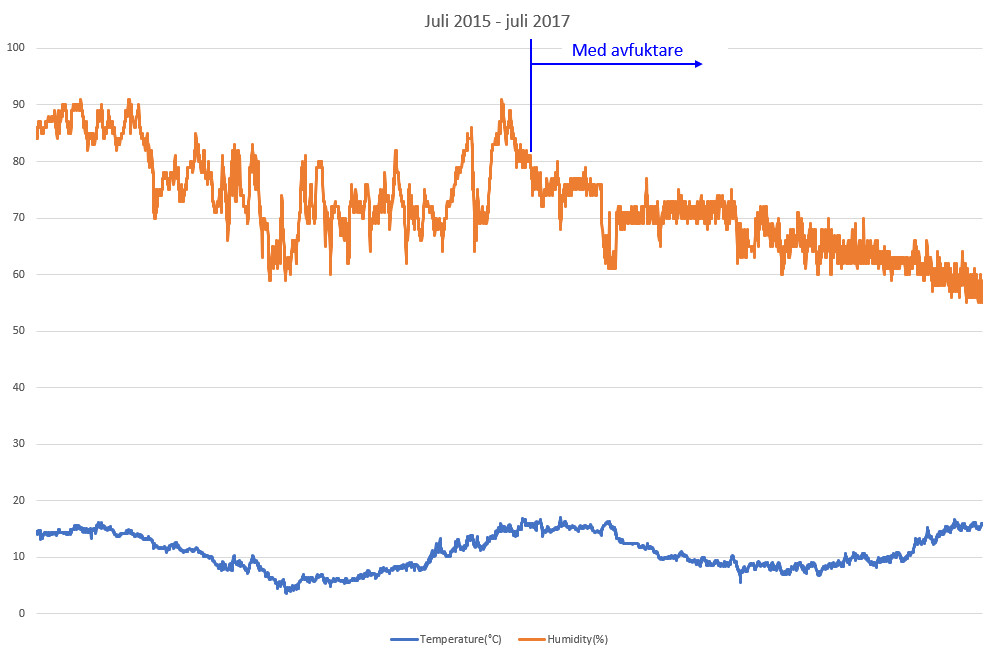
I read somewhere that 40% of all crawl spaces have moisture problems. Moisture issues in crawl spaces are due to the cold under the house and warm air entering through vents, causing condensation on the cold surfaces. This mainly occurs in the summer because the warm summer air contains a lot of moisture. If you insulate the joists, it becomes even colder under the house, and moisture problems may worsen. I believe the best solution is to lay plastic sheeting on the ground and insulate it as well as the foundation wall. Close the vents and install a humidity-controlled dehumidifier. It emits some heat and will warm up the crawl space. A warmer crawl space results in warmer floors. Additionally, you'll have a moisture-safe foundation. Whether it's necessary to frost insulate outside the house, I dare not say.
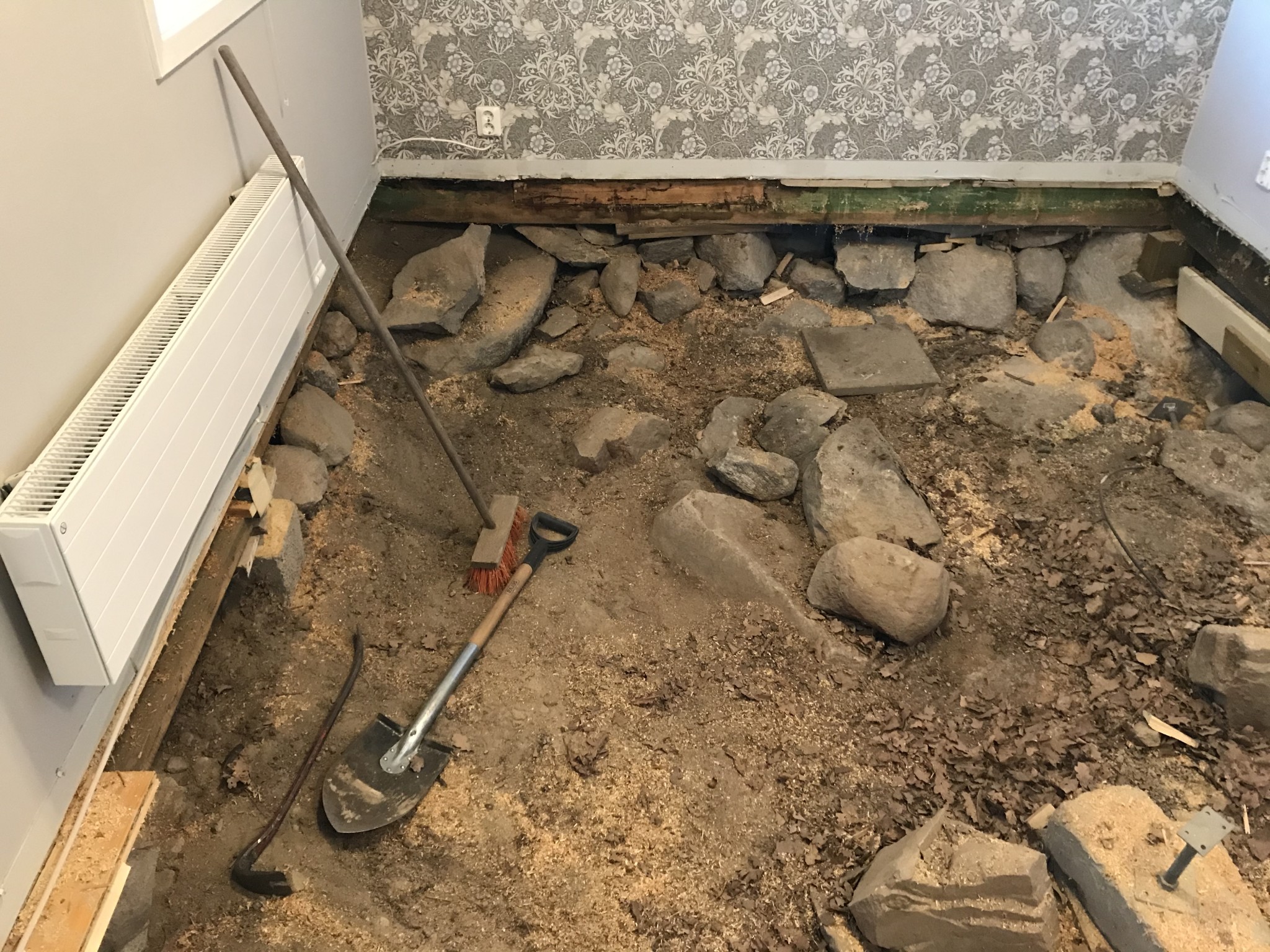
Made that journey last summer, wow what a lot of work it is. That dusty sawdust is really phenomenal at getting everywhere.S saltet said:
I think I see sill of pressure-treated wood, and from that striking color, I'd guess it's the old type full of chlorophenol. Bad news, especially since it was once replaced with such because the old one rotted away - meaning poor moisture conditions. Had such a one under the front door, really smelled awful. Do your future self a favor and replace that green sill while you're at it; you do NOT want to be done with the new framework, install a nice floor - and THEN start smelling that sour pungent odor.
Surely you'll make lots of improvements like laying plastic in the crawlspace and insulating BUT this also means changed moisture conditions, and it's not always easy to know what that will bring.
Know-It-All
· Västra Götaland
· 12 516 posts
Not really, but if moisture gets in, the humidity levels need to be kept down somehow. It's probably enough with a meter or a dehumidifier that has a humidity level monitor so it doesn't run unnecessarily.useless said:
Have found a lot of treated wood which is now being replaced. We have one more room where we are doing the same thing. So far, we haven't had any odor problems during the years we've owned the house.torparavgrund said:
Did that trip this summer, oh my, how much work it is. That dusty sawdust is really phenomenal at getting everywhere.
I think I see sill of treated wood, and from the pea-colored hue, I would guess it's the old kind full of chlorophenol. Bad news, especially since at one time, one replaced it with just such a one because the old one rotted away - i.e., poor moisture conditions. Had one under the front door, smelled really awful. Do your future self a favor and replace that green sill while you're at it; you do NOT want to be done with the new floor joists, have put in some nice flooring - and THEN start to smell that sour smell.
Surely you will make lots of improvements like putting plastic in the crawl space and insulating BUT this also means changed moisture conditions, and it's not always easy to know what that brings with it.