
4,852 views ·
25 replies
5k views
25 replies
Identify wood species exterior door
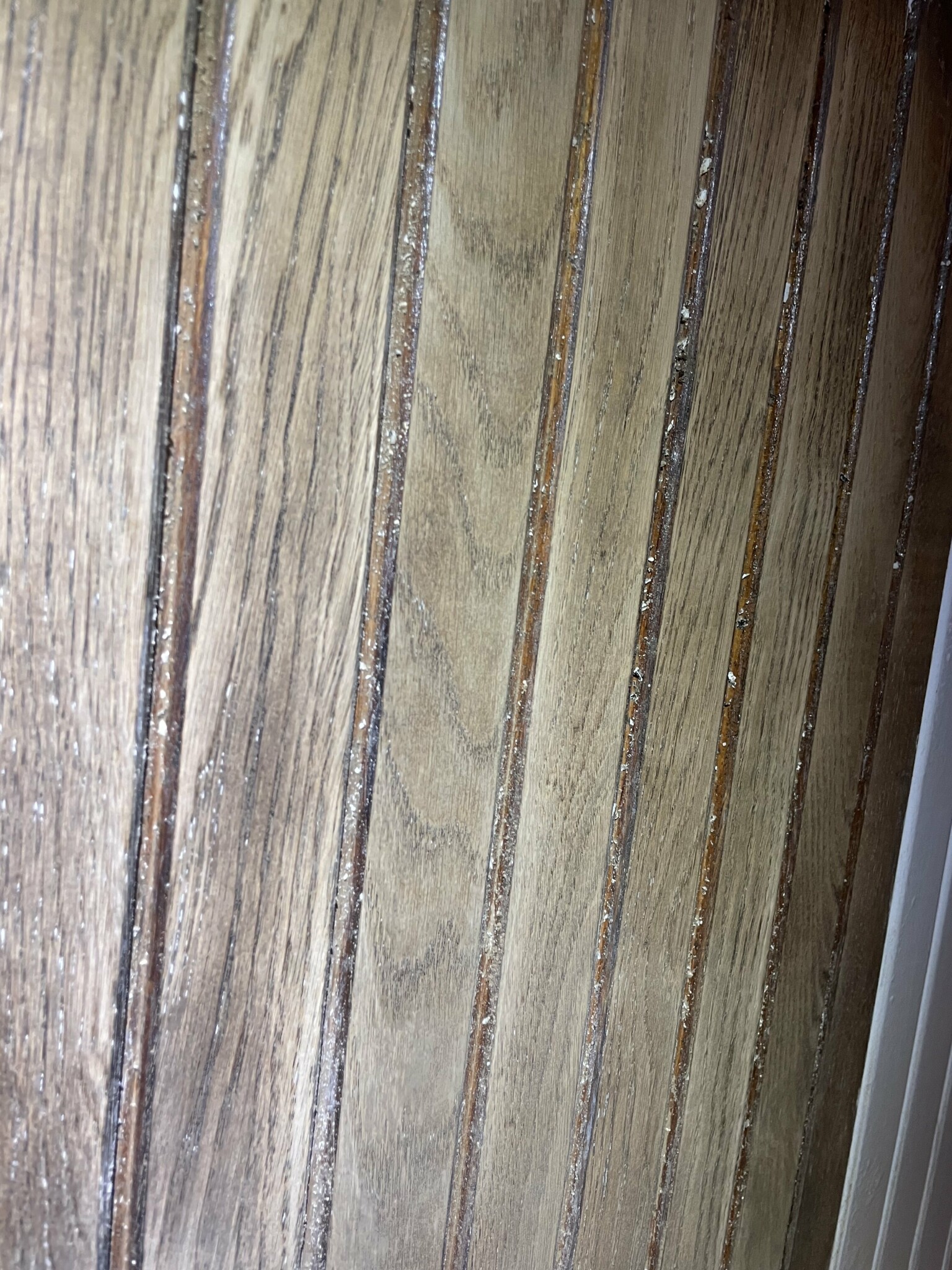
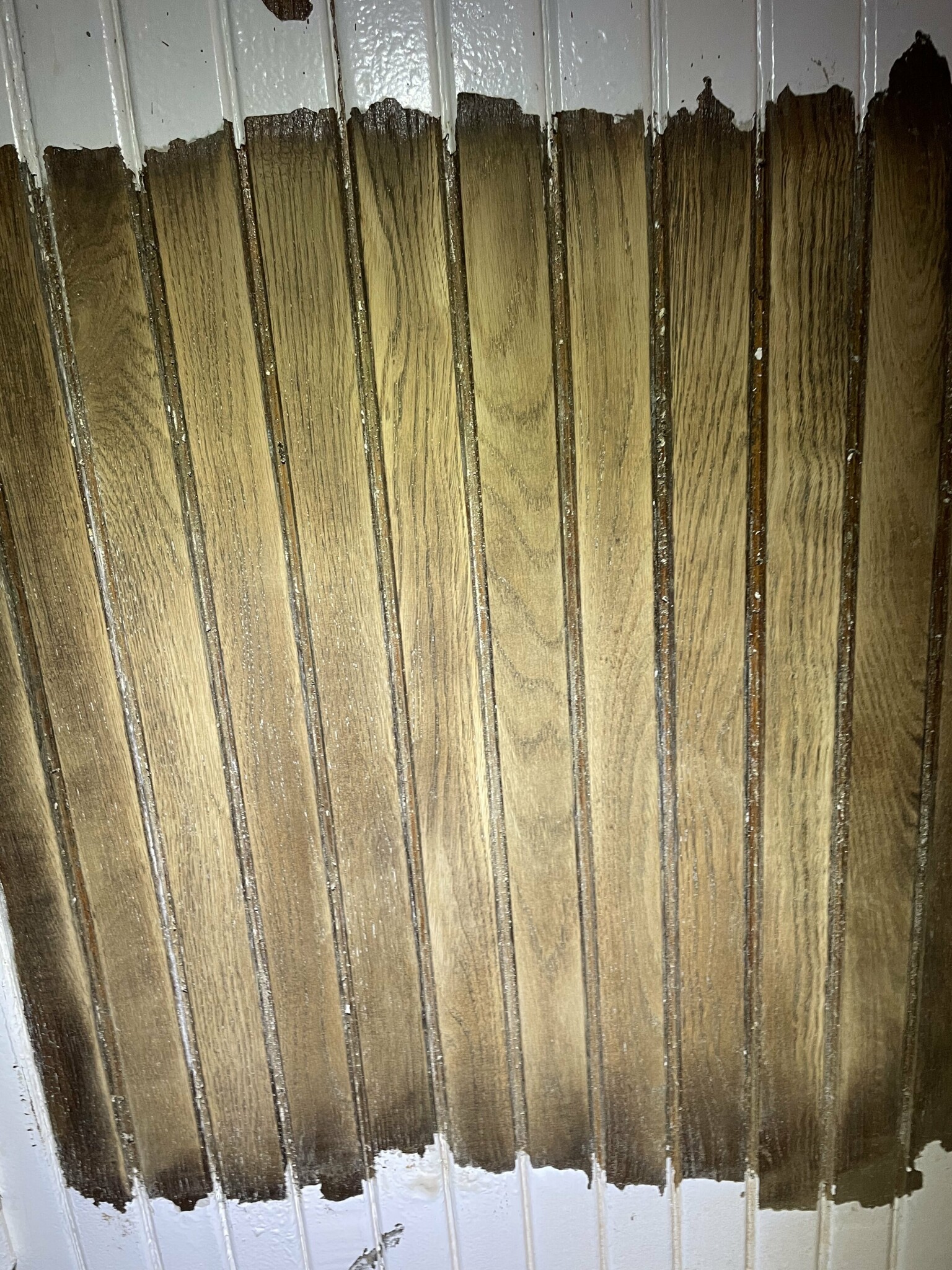
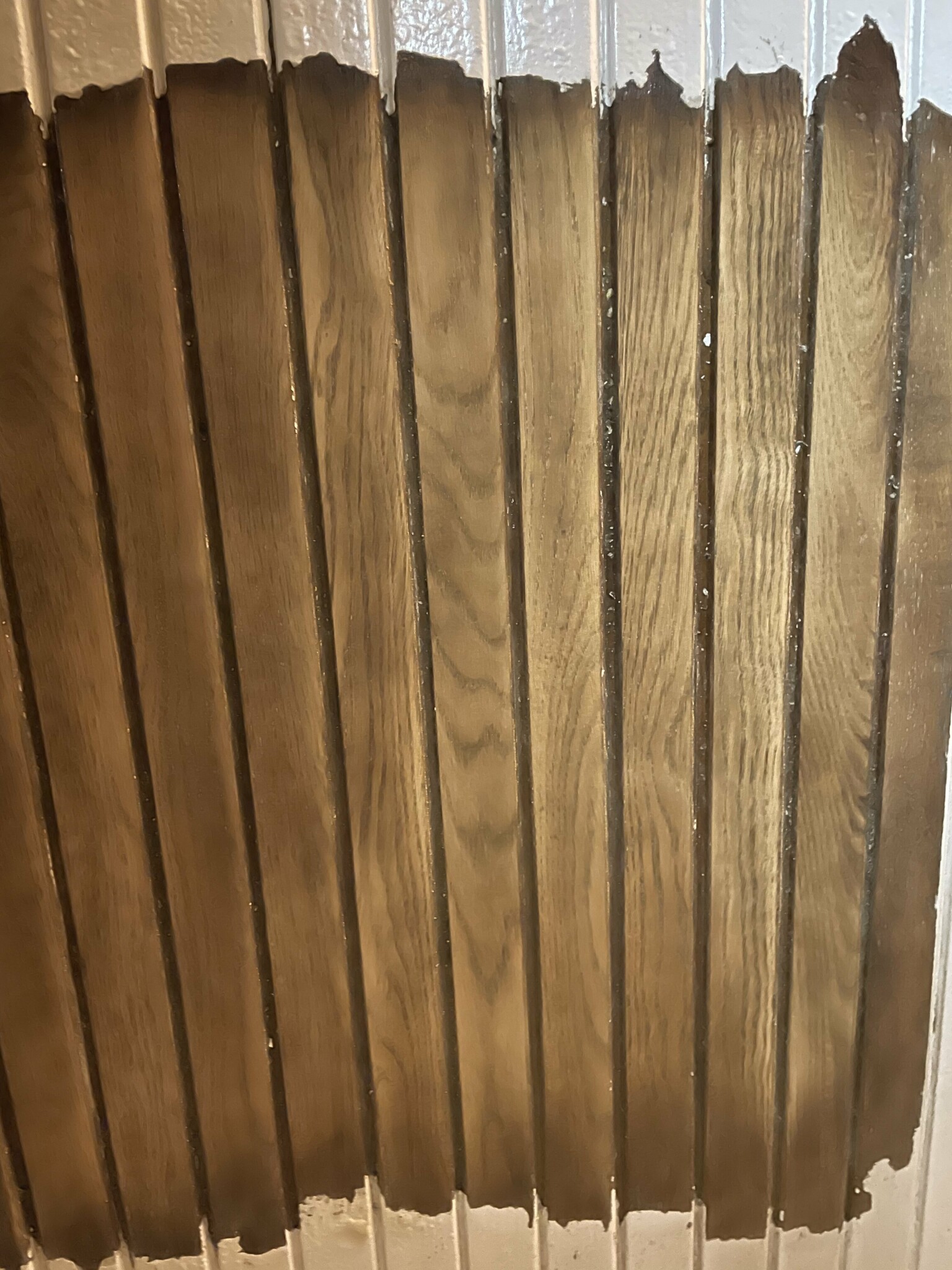
I didn't think it smelled that much actually. I used 80 grit paper and it turned out like this, even though I've used a speed heater and scraper probably 4-5 rounds to remove the varnish.M myrstack said:



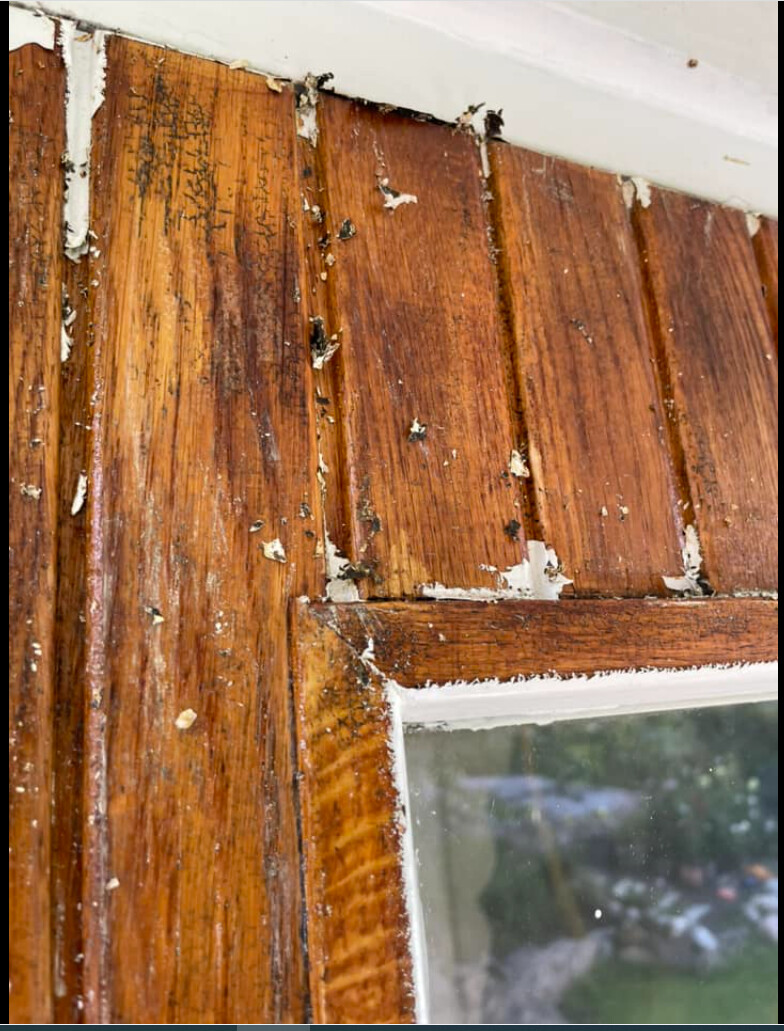
With lacquer remaining
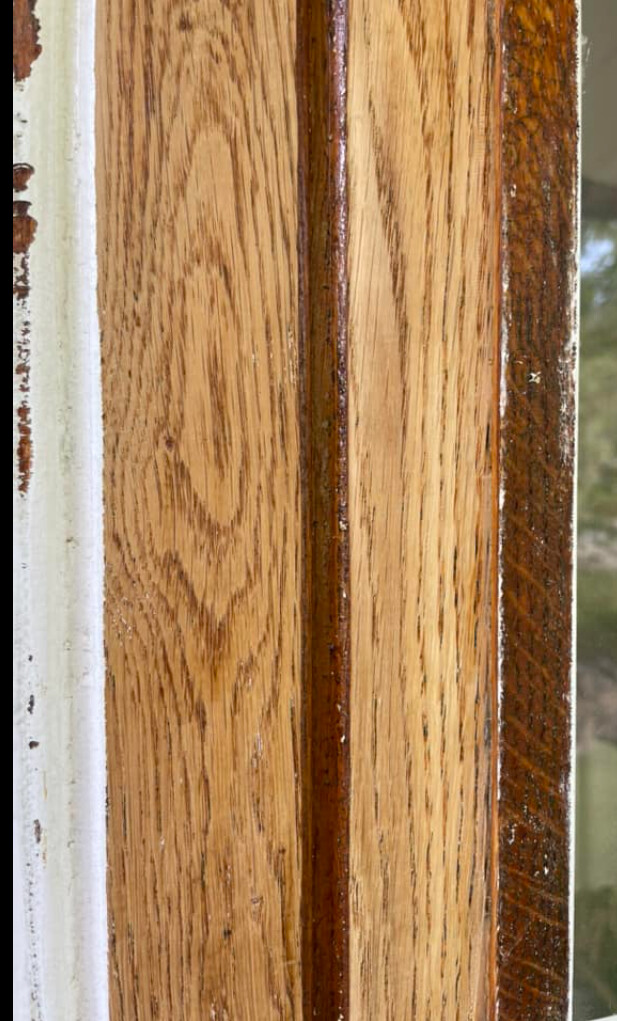
Stripped lacquer

Sanded with 80 grit paper (not in between)
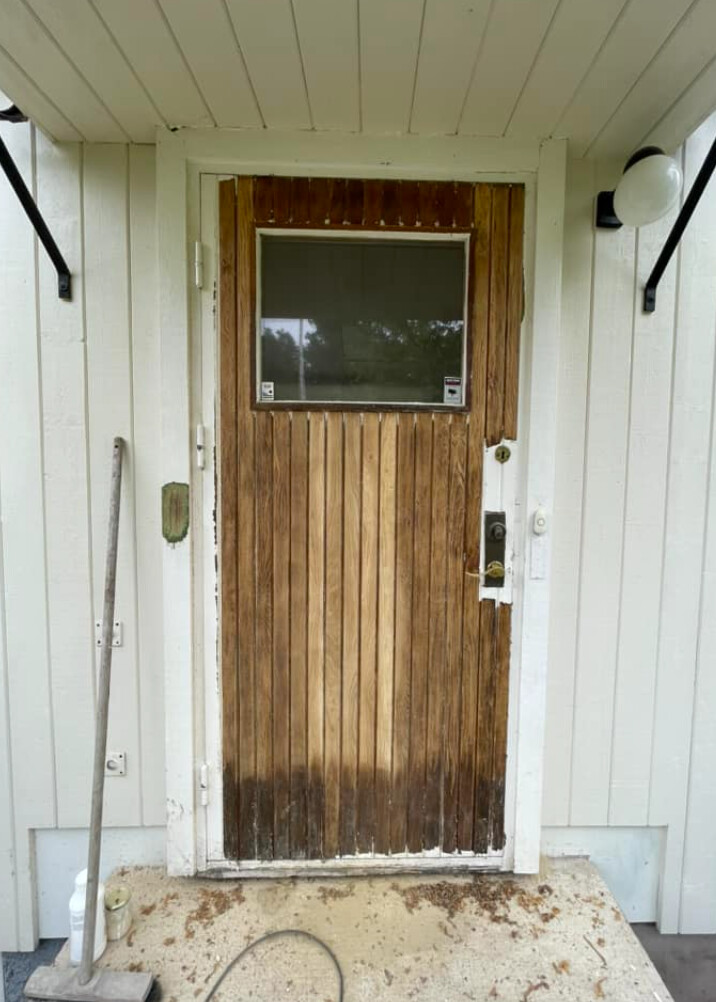
The door in its entirety.
I think it feels like oak; anyone disagree?
What is the best method for treatment? I'm very inclined towards some type of oil.
There is some information about the colors of facades, windows, and doors during different time periods, for example, here: https://www.gysinge.com/article/1084/färger-för-trähus3
S
sinuslinus
Träskalle
· Östergötlands län
· 6 098 posts
sinuslinus
Träskalle
- Östergötlands län
- 6,098 posts
The door appears to be well-protected. That's good.
It looks like it's linoljefernissad under the paint.
Le tonkinois is a varnish that resembles linoljefernissa a bit.
Otherwise, you can oil it, but then you'll need to maintain it every other year. For example, Benar.
It looks like it's linoljefernissad under the paint.
Le tonkinois is a varnish that resembles linoljefernissa a bit.
Otherwise, you can oil it, but then you'll need to maintain it every other year. For example, Benar.
I have been considering linoljfernissa or Le Tonkinois. What "scares" me a bit is:S sinuslinus said:
1: They recommend 6-7 treatments with at least 24h in between
2: Sometimes it says that each layer makes it darker, which makes it difficult to predict how dark it will become.
For example, gysinge. Paintable after 2 days and at least 5-6 layers if the wood is new (one would assume mine is when I sand down to bare wood).
Le Tonkinois, 4 layers with 24h in between.
I also wonder how long it lasts. Is it 5 years? 10 years? Can you maintain the varnish, or does "everything have to come off again" next time you want to make it look nice? An advantage of oil is that it's relatively easy to make it look good again.
Even Svensk byggnadsvård recommends oil, which feels strange...
S
sinuslinus
Träskalle
· Östergötlands län
· 6 098 posts
sinuslinus
Träskalle
- Östergötlands län
- 6,098 posts
The reason why modern paints became popular after the Second World War was the drying times. 😉Viktor.J said:
I've been considering linoljfernissa or Le Tonkinois. What "scares" me a bit is
1: They recommend 6-7 treatments with at least 24h between each
2: Sometimes it says that each layer makes it darker, which makes it hard to predict how dark it will become.
For example, gysinge. Over-paintable after 2 days and at least 5-6 layers if the wood is new (one may assume mine is when I sand it down to bare wood).
Le tonkinois 4 layers with 24h between each.
I'm also wondering how long it lasts. Is it 5 years? 10 years? Can the varnish be maintained, or does "everything have to go" next time you want to make it nice? An advantage of oil is that it's relatively easy to make it nice again.
Even Svensk byggnadsvård recommends oil, which feels strange...
Varnish is sanded and re-applied on top. If you have to scrape it clean, you have neglected the maintenance.
Oil is easier to maintain, as you write, but it requires more frequent maintenance intervals. However, it's probably not a problem in your case with the large roof over the door.
How do you maintain the linseed oil varnish? It seems like the guys with boats are constantly removing/adding new layers 😂S sinuslinus said:The reason why modern paints became popular after World War II was the drying times. 😉
Paint is sanded and reapplied on top. If scraping is necessary, maintenance has been neglected.
Oil is easier to maintain as you wrote, but requires more frequent maintenance intervals. Now, it's probably not a problem in your case with the large roof over the door.
S
sinuslinus
Träskalle
· Östergötlands län
· 6 098 posts
sinuslinus
Träskalle
- Östergötlands län
- 6,098 posts
Okay, I'm leaning more towards oil anyway. Partly because the door is fairly protected and also because the door manufacturers who make quality doors now (Bovalls and Ekstrand, for example) recommend it.S sinuslinus said:
Bovalls suggests in their video Jotun Clipper 1 and then Jupex 45. Clipper seems to be an alkyd oil and Jupex a heavy oil. But on their website they recommend Osmo UV protection oil instead. Likewise, Ekstrands recommends Osmo UV protection oil.
Even the Swedish building conservation recommends oil. So it really feels like going against "all currents" to look at types of lacquer/varnish.
The question is just which oil or combination of oil to use. I can easily get Jotun Benar but it doesn't seem to be a heavy oil. Osmo doesn't describe what their oil is... Jupex I've heard good things about and assume another quality heavy oil would do just as well.
So to generalize, it seems like the recommendations are
1: Alkyd oil for rot protection
2: Heavy oil
Any recommendations?