
1,936 views ·
18 replies
2k views
18 replies
How to saw - cut horizontal boards the easiest way?
Hello
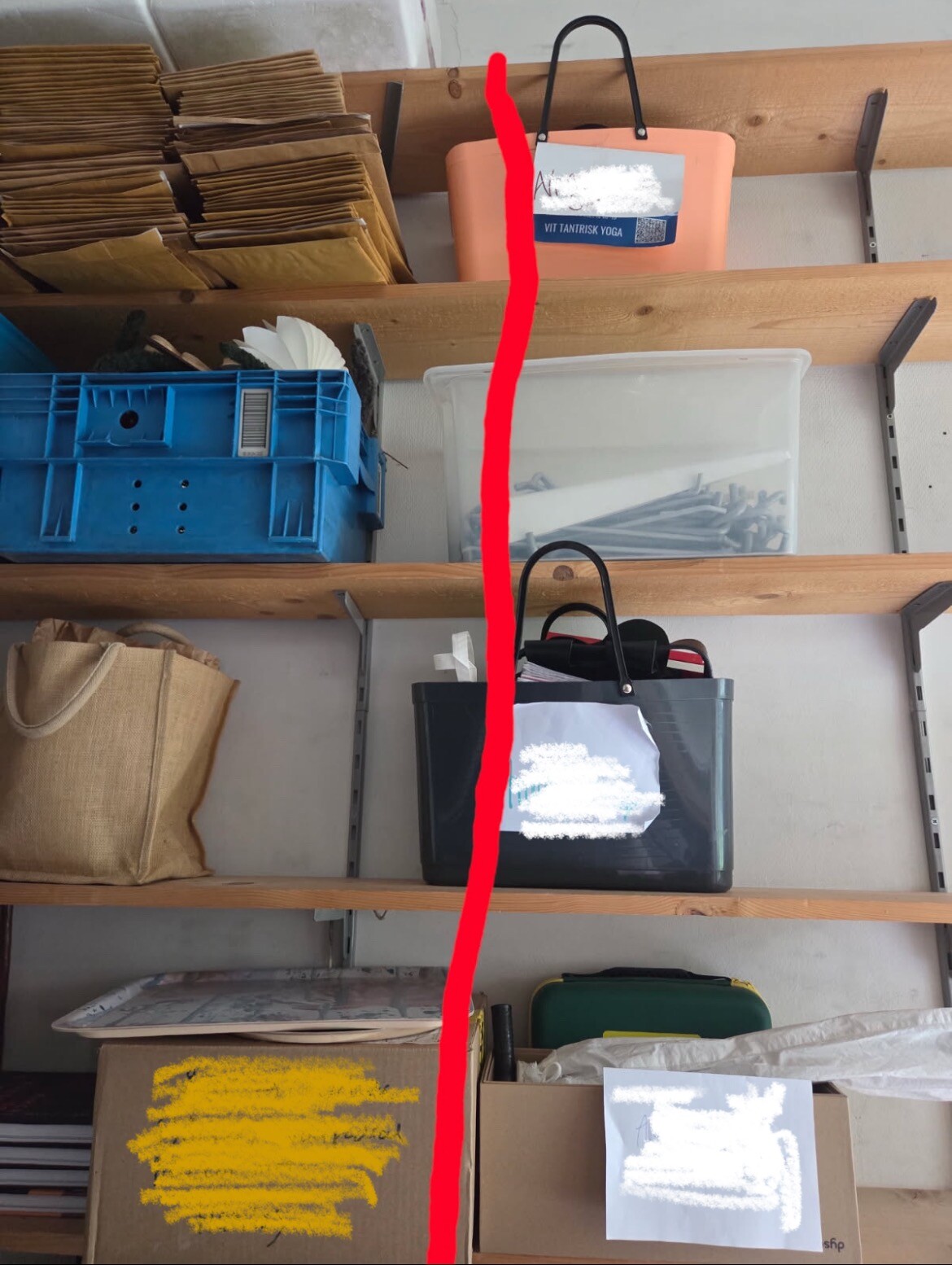
IMAGE 1
How to saw - cut horizontal boards the easiest way?
What type of saw is preferred to avoid taking down the shelves.
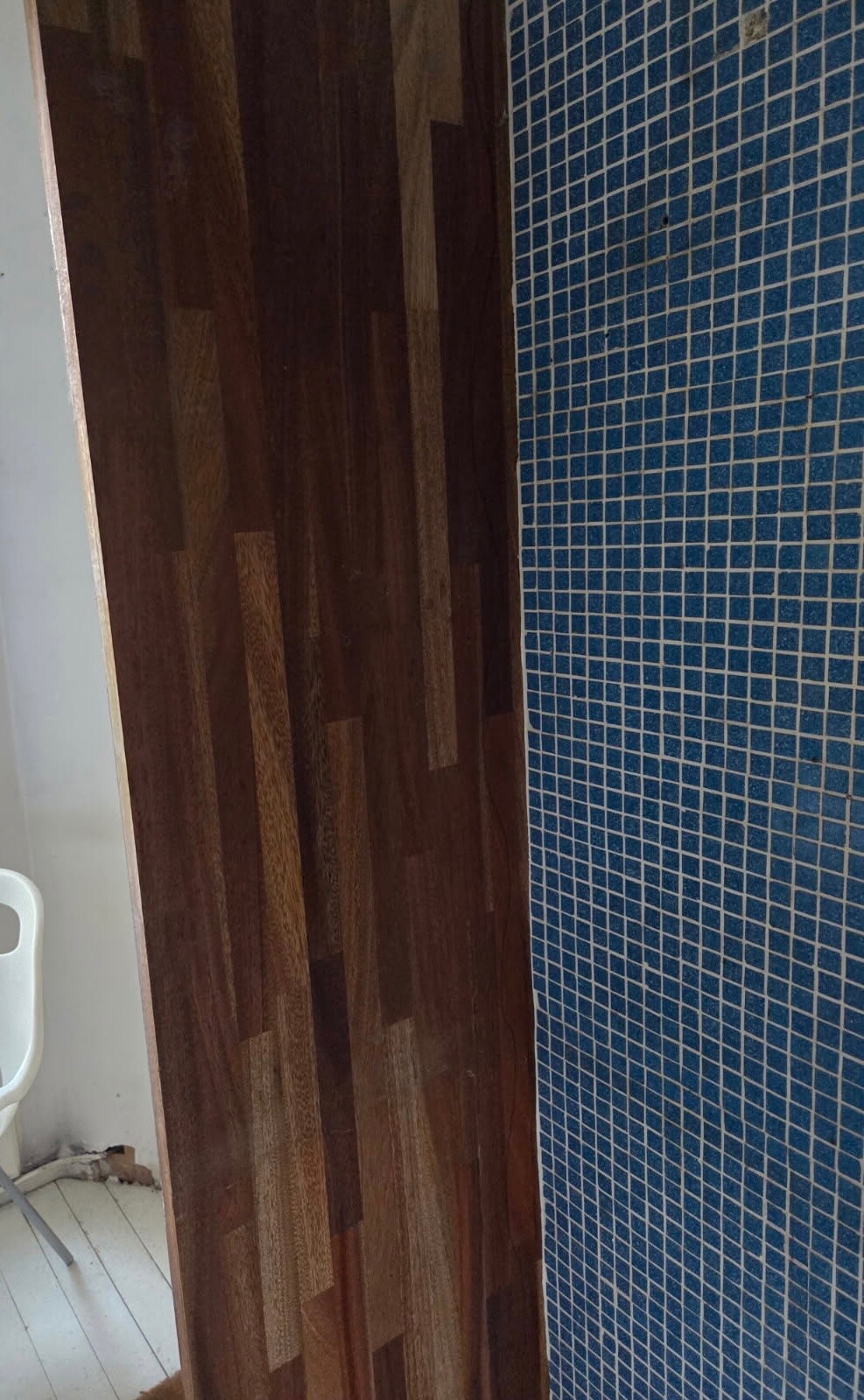
IMAGE 2
Glued board. Should be cut straight down next to the blue.
Grateful for tips.
Best regards, Annelie
IMAGE 1
How to saw - cut horizontal boards the easiest way?
What type of saw is preferred to avoid taking down the shelves.
IMAGE 2
Glued board. Should be cut straight down next to the blue.
Grateful for tips.
Best regards, Annelie
Last edited:
Do you have any saw or do you have the possibility to borrow a saw? I would rather take down the shelves and cut them with a handsaw, miter saw, or circular saw, but many other saws can surely work well too.



It will be really difficult to get a straight and even edge with a jigsaw. I advise against it.Pjosk75 said:
Taking it down and sawing is the best.
I assume you're asking and have neither machines nor experience using them. Do this:AvsAnnelie said:
Buy a mini circular saw. These cost 5-600 SEK, or thereabouts. It’s been a long time since I bought mine, so prices might have changed.
Buy two clamps and a straight strip with the measurements approximately 22 x 70 x 1000 mm. The strip will be used to guide the saw straight for fine cuts. The clamps will hold the strip with the shelf.
Measure the length you want to cut.
Take down the shelves. Cutting installed shelves and getting a nice result is almost impossible, regardless of which machine you use.
Lay the shelf on the floor inside, or if possible, outside. The shelves should lie on an elevation, for example, stone blocks, boards, or something else that raises them slightly from the ground so you can fix the strip with the clamps. You can lay the shelves on a bench if you have one, no need to work on the ground. Remember that the cut-off end must also be supported, otherwise, it may damage the piece you want to keep.
Mark a line and do some practice cuts so you learn to use the saw. After a few cuts, and if you’re satisfied, you can do it for real.
This can give the best result if you don’t have more "serious" machines, like a table saw for example.
Don't buy a multi-tool, miter saw, or anything else for this job. Multi-tools are completely wrong for this, and very few miter saws can cut through a shelf crosswise in one stroke. In addition, they are much more expensive. Jigsaws are useless junk when it comes to cutting straight and fine cuts. A circular saw is best for the purpose. Of course, you don't have to buy a mini variant, you can buy one with a larger blade as well. The larger the blade, the better, but even a mini saw does an excellent job here.
Forget shortcuts. If you want a nice result, you have to take down the shelves.
It all depends on your requirements. If I could only afford one tool, the multitool would be far down on my list and never purchased for this job. A regular handsaw gives better results.H hydrolift said:

As I said - A regular handsaw like a standard saw. Why complicate things with various power tools that are both more expensive and take longer? Sawing a whole bunch of shelf boards with a multicutter is likely to take an entire day and end up crooked if you're inexperienced?
...as I said. It depends on the result you want. A handsaw is fine if you can manage it (you have no idea about her physical capacity) because it requires a good deal of physical strength and stamina, while a circular saw requires almost no strength at all. A good handsaw isn't much cheaper than a cheap circular saw, and a cheap circular saw gives better results than an expensive handsaw. Additionally, it's more challenging to cut decently straight lines with a handsaw, even if you're capable and skilled. With any tools other than a circular saw, you also risk having a straight cut on the topside but crooked and uneven on the underside.useless said:
But I agree that a multi-cutter is the worst suggestion. Following that are all cheap battery-powered tools. If possible, use corded power tools. They provide more power with less weight and a higher and more stable speed, not only under no-load, which improves the work result.
I think that's a bit of an unusual assessment criterion. I claim that a battery-powered circular saw works just as well. Of course, regardless of the motor type, the saw should have a good blade and otherwise sufficient quality, but that corded tools per se would be preferable, I don't think that's true.A A_Camera said: