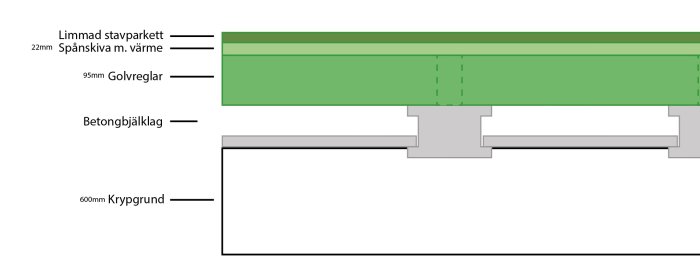
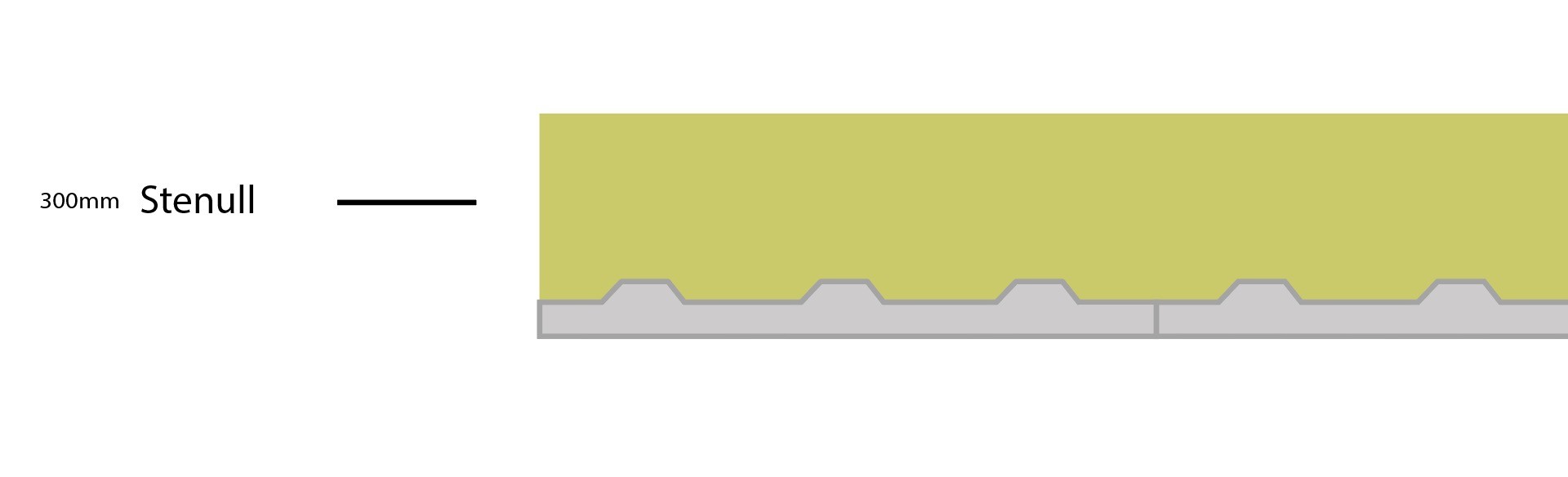
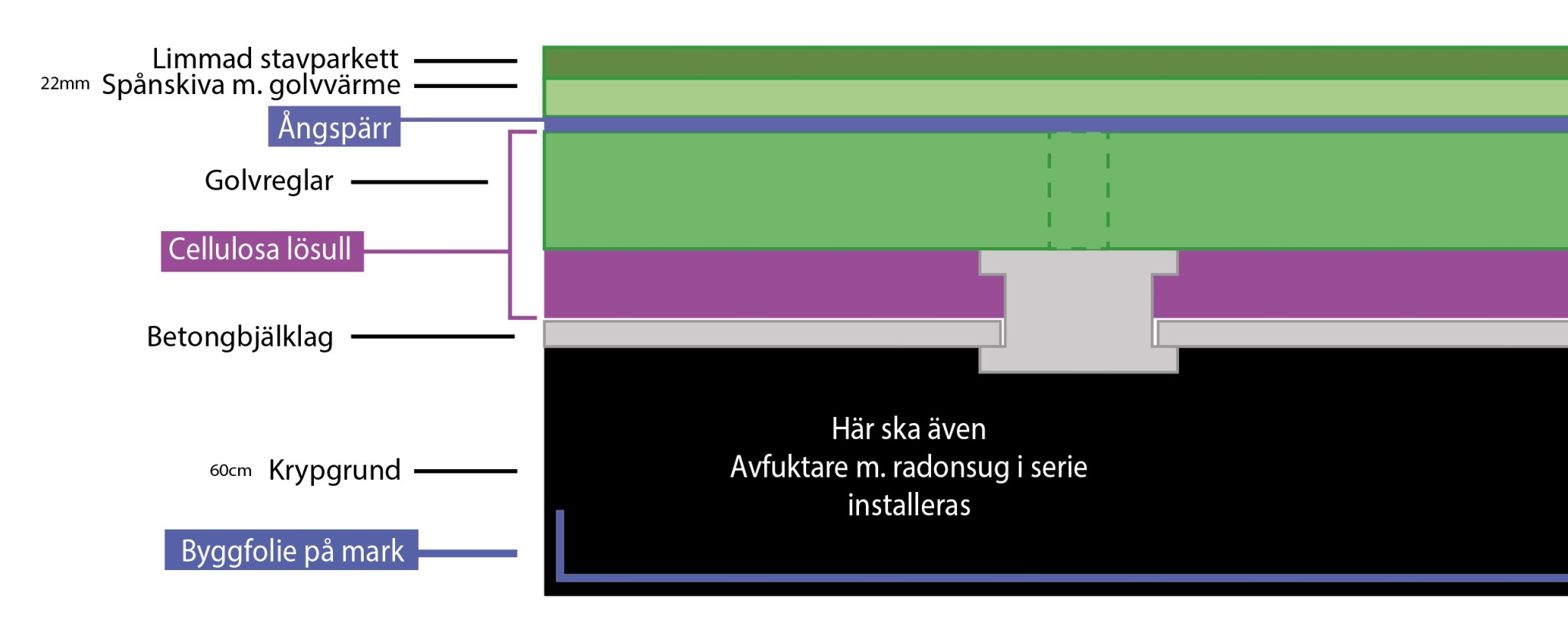
We are working on building the solution shown in the picture below in our townhouse from 1964, which is on both a concrete slab and a crawl space, but are wondering how it will work to lay mineral wool on the concrete flooring.
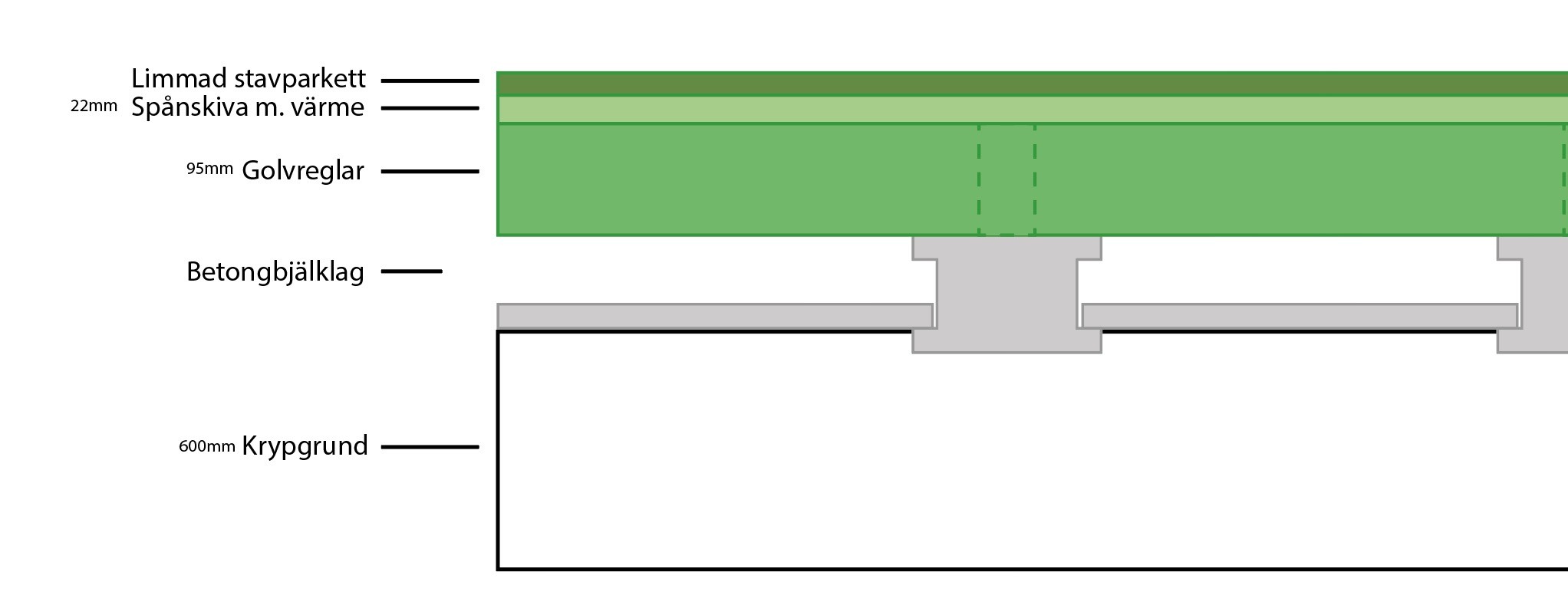
This is how it's planned to be, in cross-section (and the crawl space will be covered with plastic along the ground and 10-20cm up on the wall):
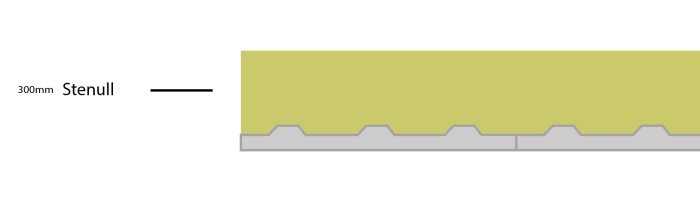
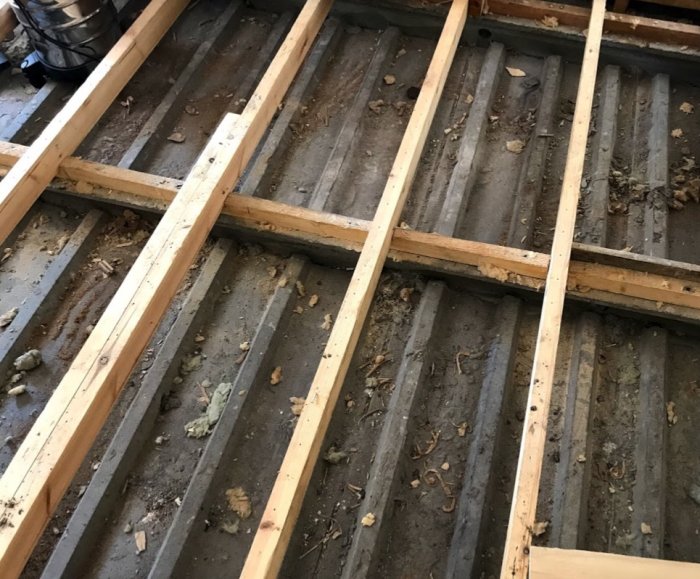
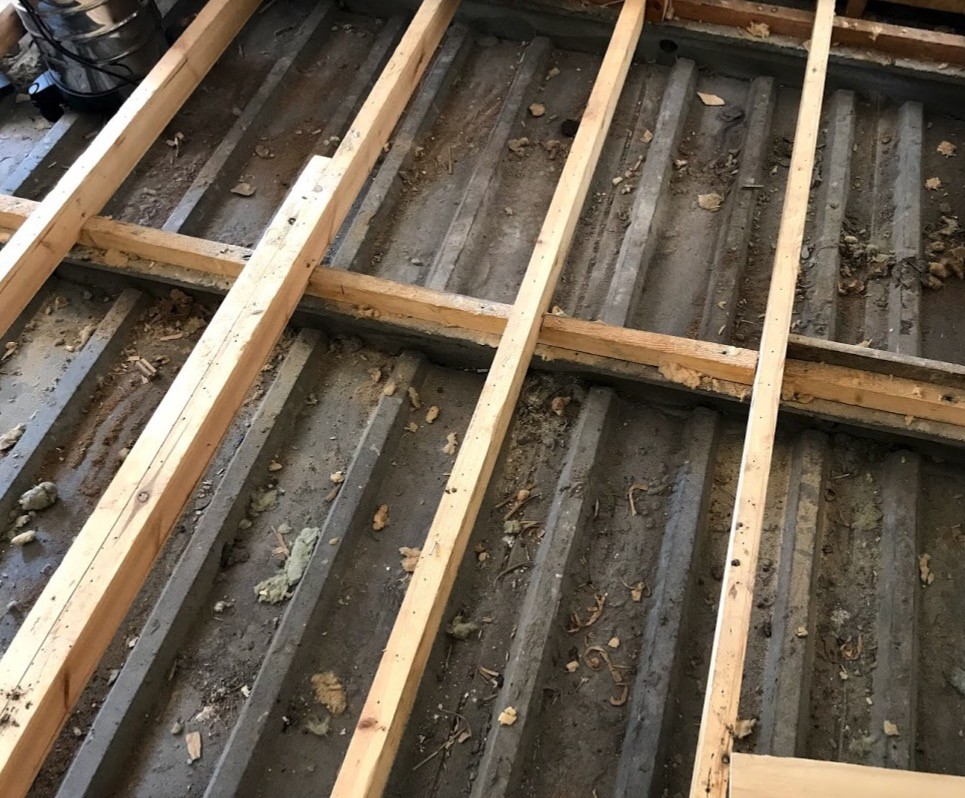
The concrete cassettes in the floor are grooved and I'm considering buying 45mm mineral wool boards and just pressing them into the "grooves" and then laying two layers of 145mm boards on top to achieve about 26-30cm total thickness of the insulation. My question is how well you think it will work to "press into the grooves." I guess I want to avoid air gaps as much as possible.
And a picture from reality:
Okay! Thanks for the tip. Called a company right away and they had good prices. Cheaper than Bauhaus despite all the work for the craftsman
Does it feel right to lay loose-fill insulation directly on the concrete slab over the crawl space?
Hi..
If I were you, I'd make sure there was a vapor barrier (possibly also a moisture barrier directly against the sheet...) then loose-fill insulation works great... I don't know if you like cellulose loose-fill or mineral, but one can absorb moisture and release it again.. The other requires a total moisture barrier. If you don't have that, mold will appear pretty soon...
If the crawl space is not a warm foundation, the sheet metal will act as a moisture barrier on the cold side...
Has there been insulation and a framed wooden floor structure there before?
If everything was dry and fine when you broke it up, it might still be okay. However, I assume you are significantly increasing the insulation? Which could cause problems.
Plastic under the upper or subfloor could be a solution, if it weren't for the fact that having two vapor barriers is also undesirable...
Internal insulation is never a good idea. It's a risky construction.
It doesn't matter what type of insulation is used.
Insulation on the inside of the vapor barrier is what is at risk for clarification.
Is there metal sheeting in the floor structure or just concrete?
If it's only concrete, loose fill insulation and a plastic sheet under the inner floor are perfect.
It is clear that it is not sealed at the end of the sheet, so I would absolutely not put a vapor barrier above the insulation... This means that moisture creeps up and the insulation molds.
With a vapor retarder, moisture can be transported upwards and allow the insulation to breathe... (Applies to cellulose insulation). In any case... Do not trap moisture, it is not good... If you are going to use a vapor barrier, it should be from both sides; otherwise, you are fooling yourself...
The edges down to the crawl space are tight. I found some gaps that were not sealed, but I have used sealant on them.
The idea is to place the vapor barrier on the ground in the crawl space, along with a dehumidifier. So not in the wooden joists. And we're also going to have underfloor heating, as mentioned.
You will get moisture from the indoor air penetrating into the insulation. Therefore, vapor barrier above and barrier against the ground in the crawl space.
You will get moisture from the indoor air that penetrates down into the insulation. Therefore, vapor brake on top and barrier against the ground in the crawl space.
Hm... Okay. I've already placed loose-fill (cellulose). If I were to install the moisture barrier you're talking about... Can I put it over the insulation?
Hm... Okej. Har redan lagt lösull (cellulosa). Om jag skulle lägga fuktspärren som du pratar om... Kan jag lägga den över isoleringen?
Ok. If you have added cellulose, use nothing other than "ångbroms" above... The insulation can breathe and absorb moisture but also release it again... If you place a barrier above it, you must be 100% sure that no moisture can reach the insulation. Use ångbroms.. That is, reverse side up when you're talking about the upper side of the joists!.. The one that is "shiny" upwards so the moisture can transport upwards and then out with your ventilation...