If only I can get hold of a good piece of land, I will build myself a house.
But...
-Exactly how should I build?
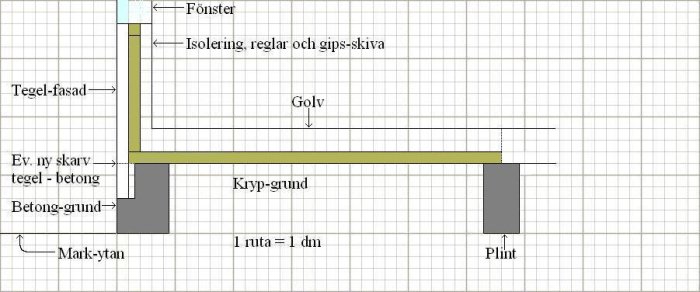
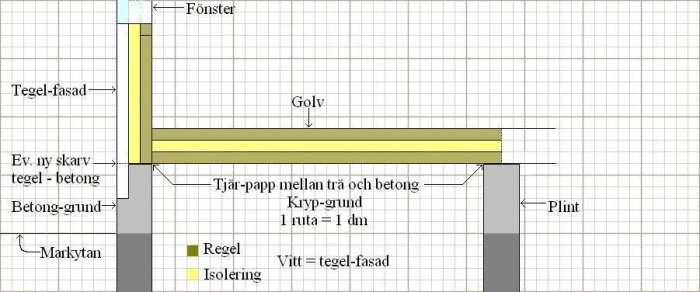
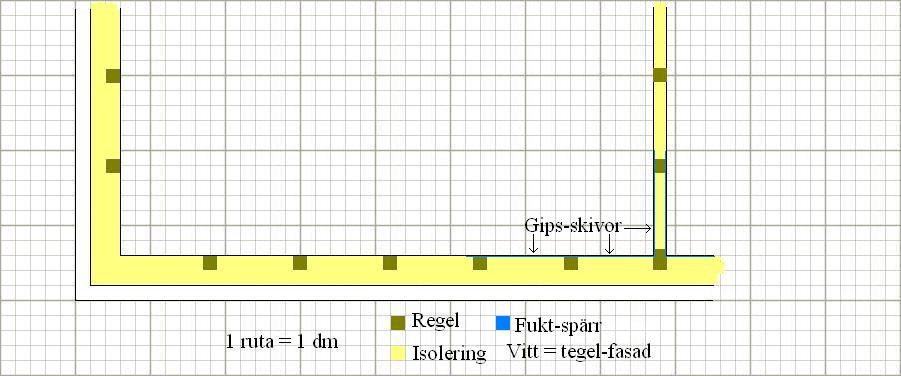
I've drawn a picture:
...which is supposed to represent the wall in cross-section.
The brown is supposed to represent studs.
The gray is concrete.
-Can I place the long studs on the foundation (left gray) and the plinth (right gray) as the picture shows?
It's a little over 3 meters in length we're talking about.
-They must be attached to the foundation and plinths, right?
-Exactly how should it all look when completed?
-Is there a picture somewhere that shows this?
-www....?
...otherwise, can someone who knows, draw on my picture and upload it!
I'm thinking about insulation, moisture barrier in the floor, most importantly: how do you build a floor?
...with insulation, studs, etc.?
Grateful for answers!
In case anyone wonders:
I don't have two left thumbs, but I have limited experience in construction, must build myself, -limited finances are the reason.
Please forgive me if I ask any dumb questions!
I think your questions are a bit too general. "-Exactly how should it all look when completed?" This question might be a bit difficult to answer, hence no answers.
As for insulation, it should not be ventilated, quite the opposite. Take a good while and read through construction examples at www.traguiden.se. There's a lot of valuable information there!
- Shouldn't insulation be ventilated???
- Won't it cause moisture problems then?
Maybe I'm asking too general questions...
It's difficult for an amateur like me to know.
If the economy had been better, I could have paid someone to solve my construction problems.
But life just isn't that good sometimes.
Are there any examples on the web of what it should look like when finished?
I've searched, but can't find anything good, just a few somewhat decent pictures.
Also, only wood facade houses are shown, I'm planning to build with stone.
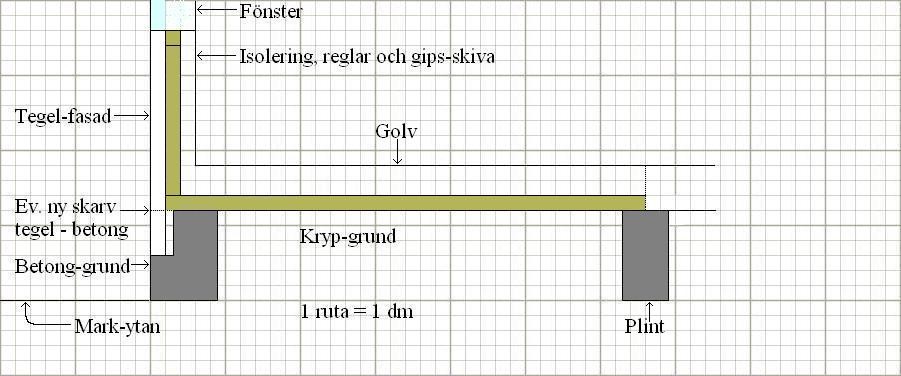
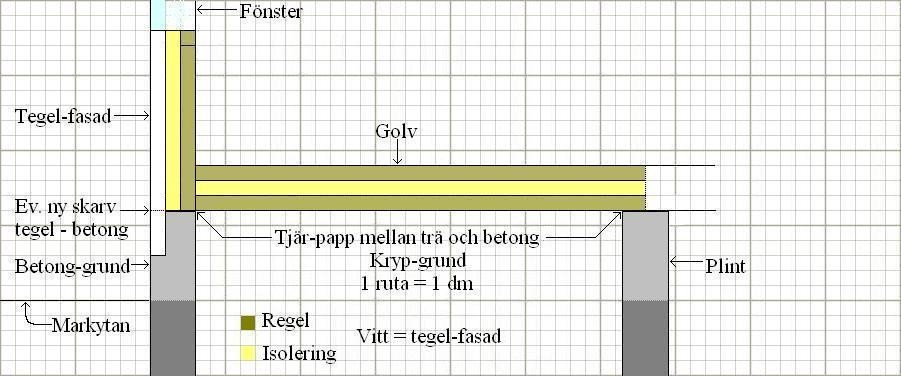
I have worked with the image in the first post:
I was thinking of placing the beams on concrete pillars and the "shelf" in the outer foundation,
- am I making a mistake if I do so?
- how should I do it instead?
By the way, brick houses are often wooden frames where the exterior panel has just been replaced with a brick veneer.
A piece of advice in all friendliness for your continued "construction work":
Try to stick to established construction solutions.
There are often good reasons why they are the way they are.
For example, it is inappropriate to extend floor joists under the wall.
The wall's framework is "always" placed on a sill because it's best/easiest that way.
It's not surprising that Träguiden only has descriptions of wooden constructions
I recall that, for example, Finja has a lot of information about stone houses, try on
[link]
Furthermore, brick houses are often wooden frames where just the outer panel has been replaced by a brick veneer.
A piece of friendly advice in your continued "construction work":
Try to stick to established construction solutions.
There are often good reasons why they are the way they are.
For example, it's inappropriate to extend the floor joists under the wall.
The wall's framework is "always" placed on a sill because that's the best/simplest way.
I lack both an education in house building and the money to pay someone who is educated to do the job for me.
Please excuse and correct me if I come up with silly ideas and think incorrectly.
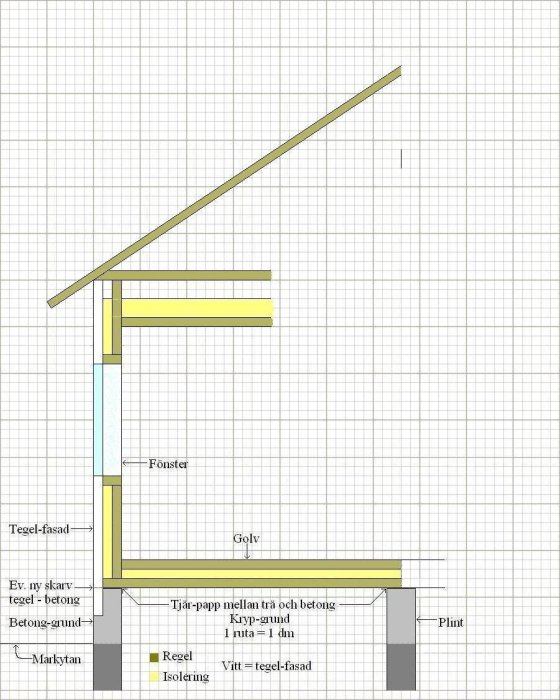
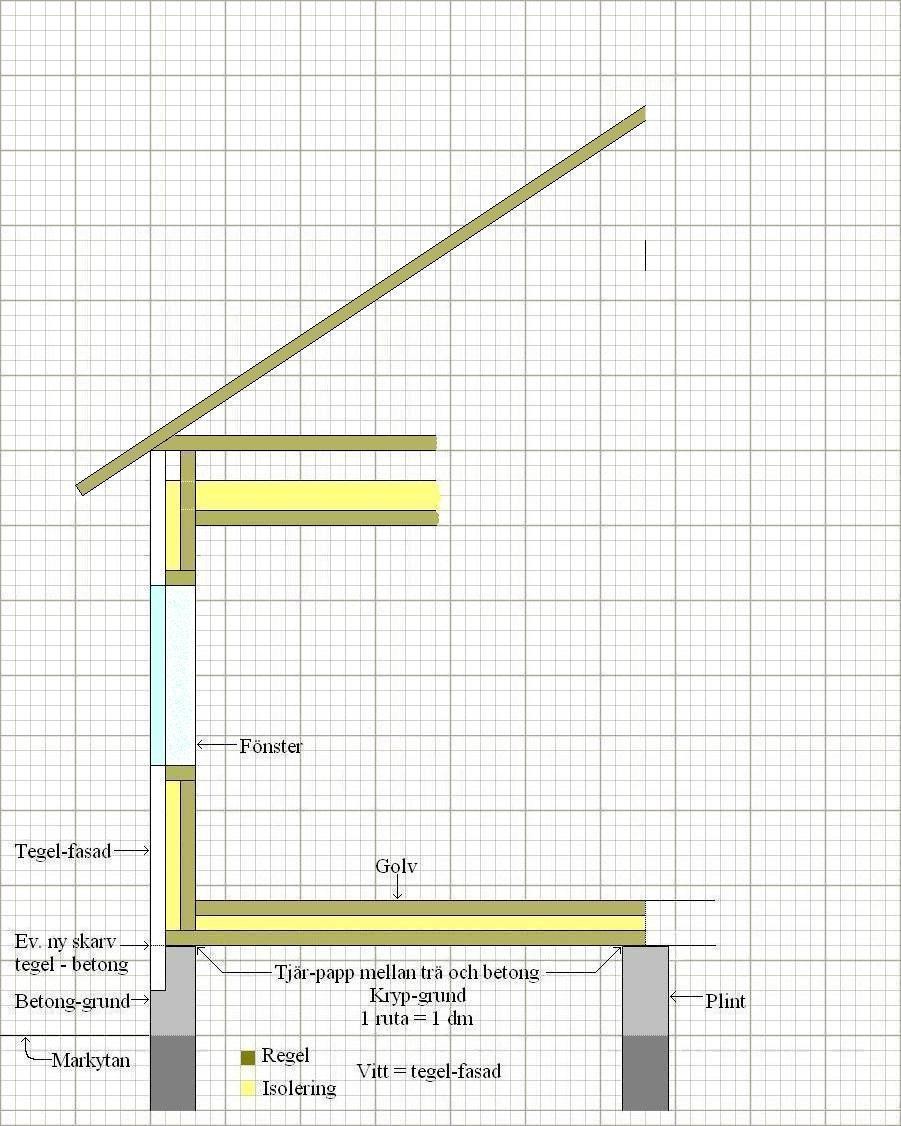
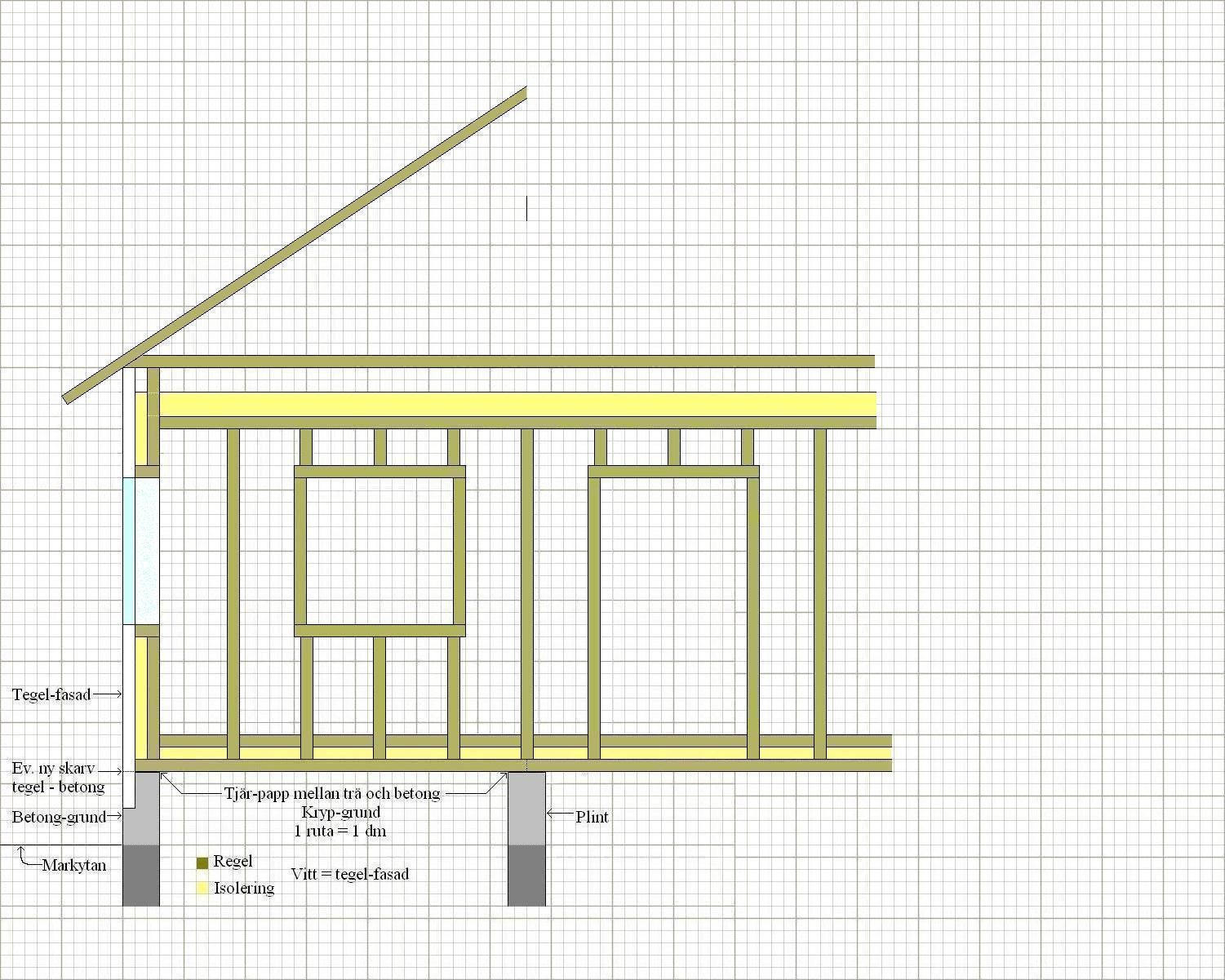
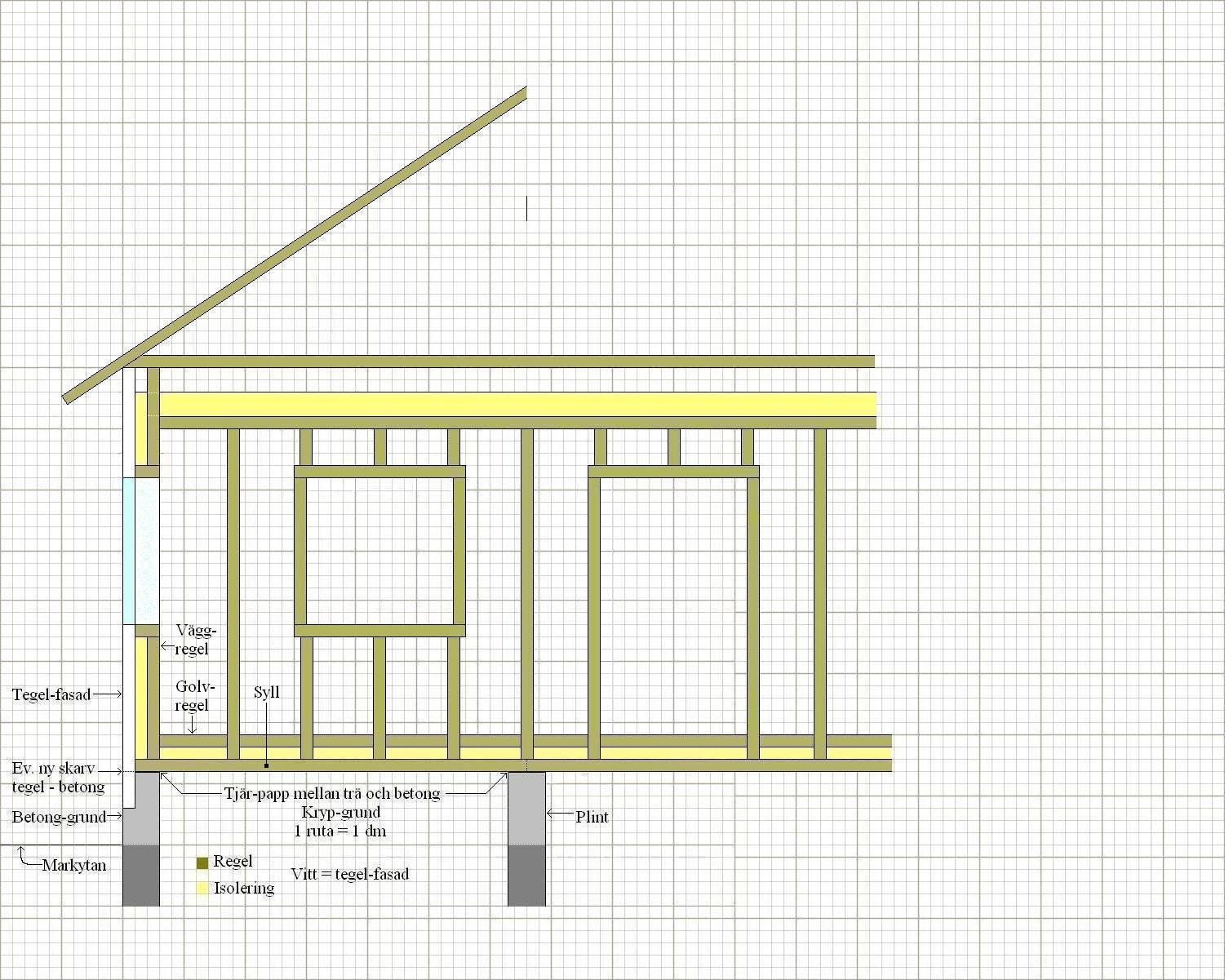
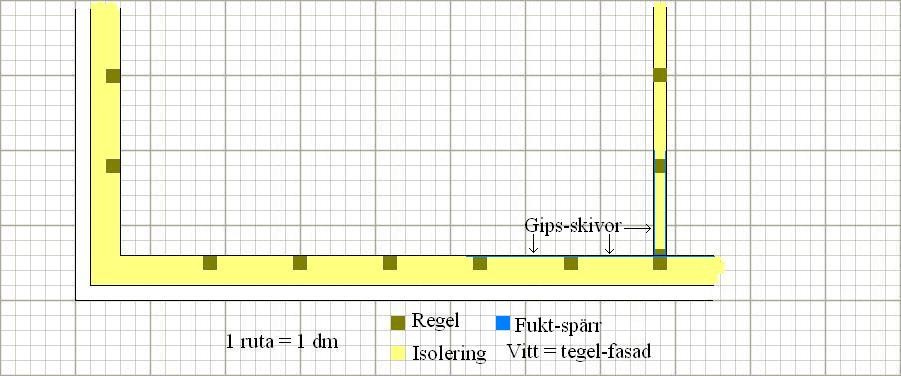
I've been working further on the picture of the studs:
What do you think of that construction?
-good / bad?
-anything that needs improvement? -what?
-anything wrong? -what? -how should it actually look?
How should the interior walls be made?
-can you place a stud / half-stud on the inside of the outer wall and build the interior wall on it?
-how do you handle the moisture barrier?
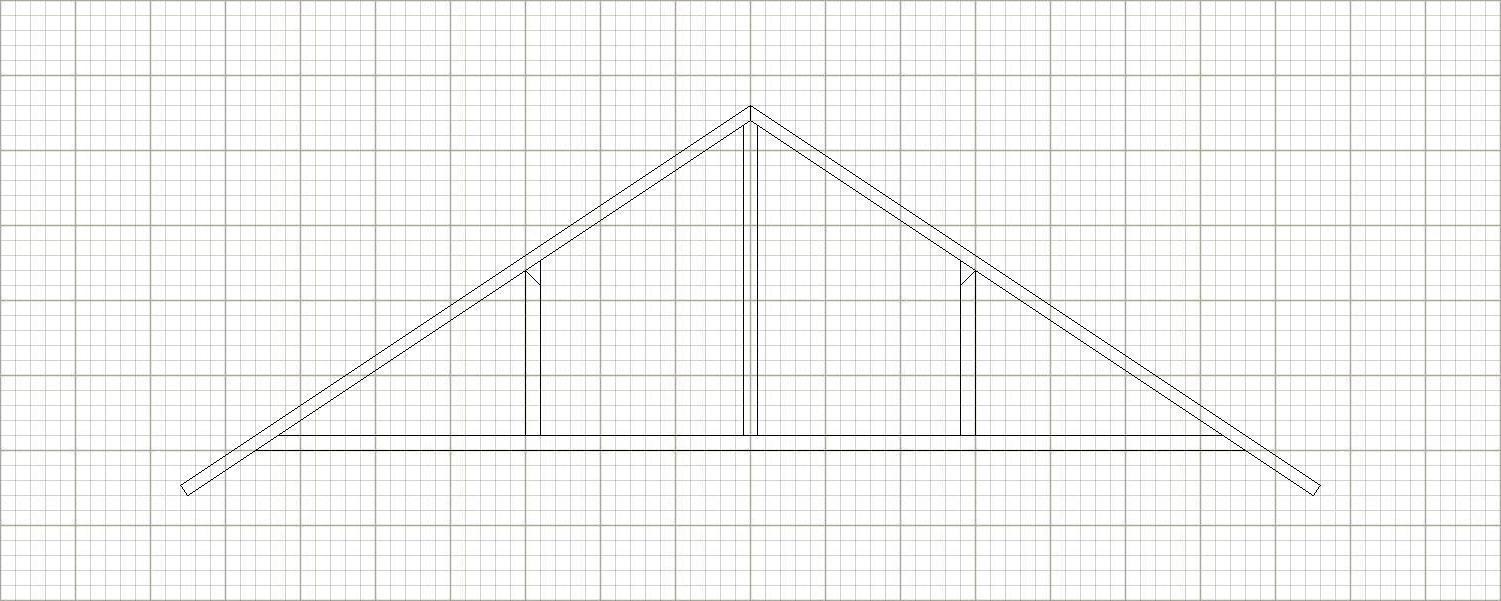
Proposal 1:
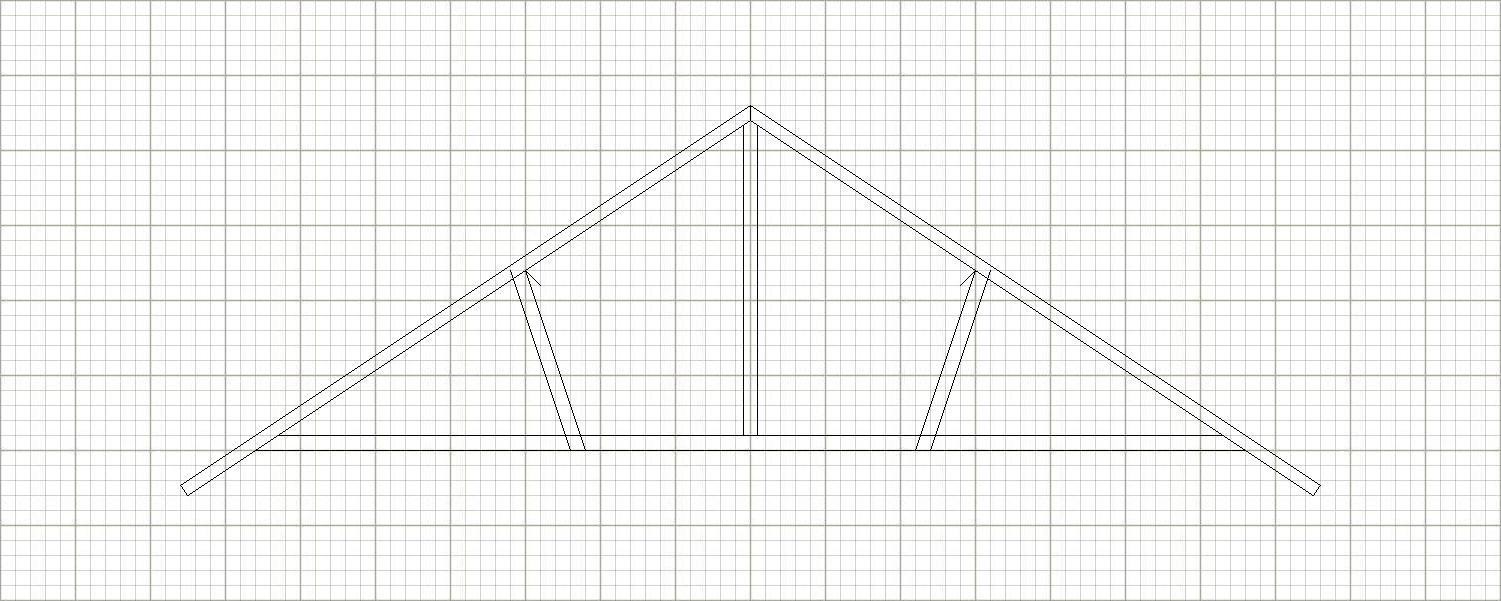
Proposal 2:
-Which is better?
Any suggestions for improvement / doing it correctly?
Edit:
I see that the pictures turned out poorly, it's hardly visible what I'm thinking.
I hope I can do better.
Trying.
A tip, which might also be perceived as mean but is well-intended:
See if there's a study association that offers a course in construction/carpentry/design or something similar.
Starting your first project as a complete novice with the intention of building a house can't end in anything but disaster.
There are about eighty million seven hundred twenty-eight thousand three hundred fourteen things you need to know/consider if you're going to build a house. Start with something smaller, maybe a doghouse, so you learn something along the way and if (when) it goes to hell, the financial loss is significantly less.
Yes, now you're being a bit mean, a little at least...
Nothing wrong with the wood guide and Finja, but the more options to choose from / study / learn from - the better!
I know there is a lot to consider when building a house, trying to find out as much as possible, find solutions, know what is wrong and what is right, in what ways, etc.
I can mention that I have some experience in craftsmanship, measuring, sawing, nailing, painting + things related to summer cabins and villas.
This is a common phenomenon...
You try to gather facts before a project - to do everything right - learn from others' mistakes, but mostly get "funny" answers...
Not that I lack humor / am the kind that takes it personally, but at least...
"course in construction/carpentry/engineering"
-could be something!
-cost?
Nothing wrong with the wood guide and Finja, but the more options to choose from / study / learn from - the better!
I know there is a lot to think about during house construction, trying to find out as much as possible, find solutions, learn what is wrong and what is right, in which ways, etc.
I can mention that I have some experience in craftswork, measuring, sawing, nailing, painting + things related to summer cabins and villas.
This is a common phenomenon...
You try to gather facts for a project - to do everything right -learn from others' mistakes, but mostly get "funny" answers...
Not that I lack humor / am the one who gets offended, but at least...
"course in construction/carpentry/engineering"
-could be something!
-cost?
Are you for real?
The construction examples that, for instance, the wood guide provides are based on experience of what works.
If that's not enough for you and you want to start "reinventing the wheel," then you should be glad you're only getting a few ""funny" answers".
Take your construction drawings to the building committee and to your responsible inspector, and you'll see "funny answers"!