
385 views ·
1 replies
385 views
1 replies
How to stabilize a stud wall in the best way?

Stabilization of the Frame Structure
Hi Construction Experts!
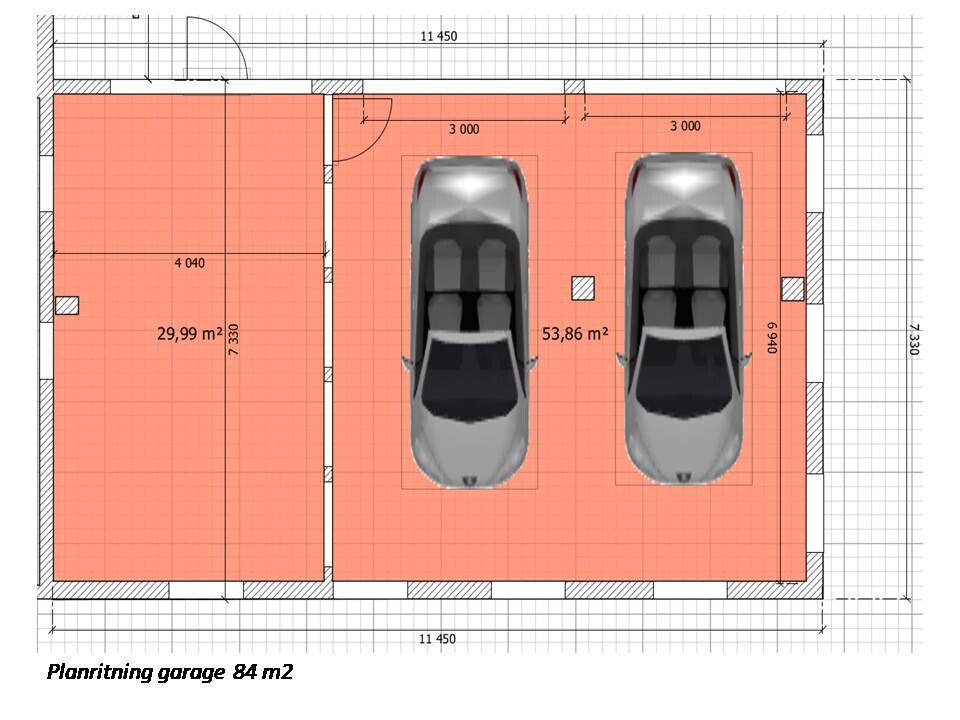
I am planning a garage construction as an extension on one side of my house gable (corner house), which is why I plan to frame only three walls (two long sides and one gable wall). The exterior measure will be 11.45 x 7.33 m.
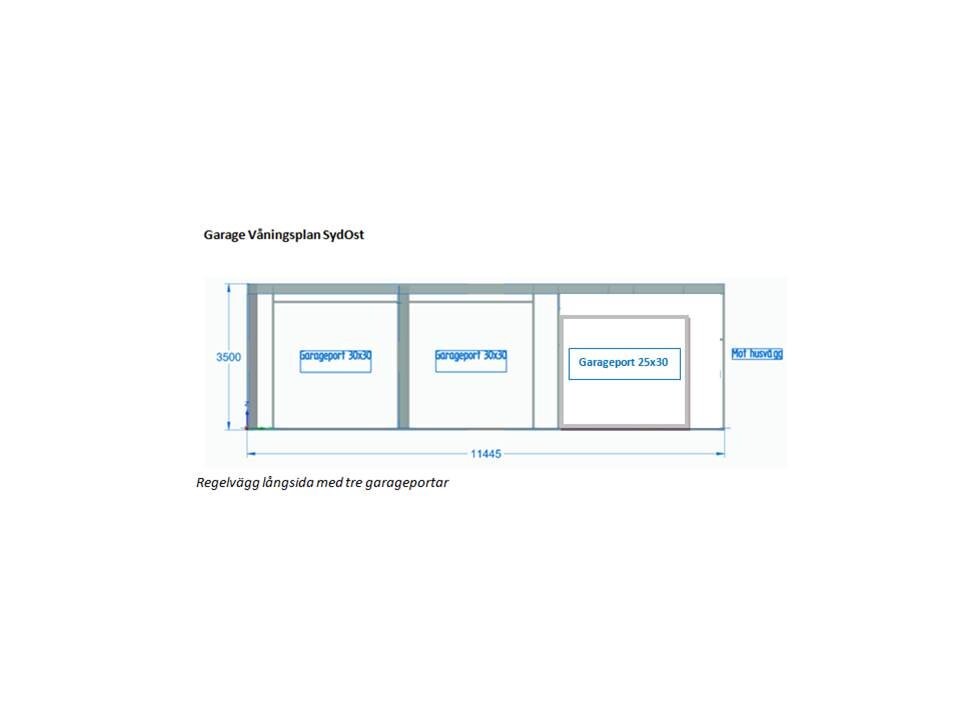
The garage will be divided into a workshop area of 30 m2 (Attefall extension according to the new building permit rules) with an overhead door (H=2500 mm B=3000 mm) and a garage part of 54 m2 with two folding doors (3000x3000 mm).
A cast slab (200 mm thick in the garage section due to car lifts, workshop section 100 mm) with insulation underneath 200/300 mm. One row of wall blocks (250x190x590 mm) forms the lower part of the wall, on which the sill is then attached. Less risk of moisture damage.
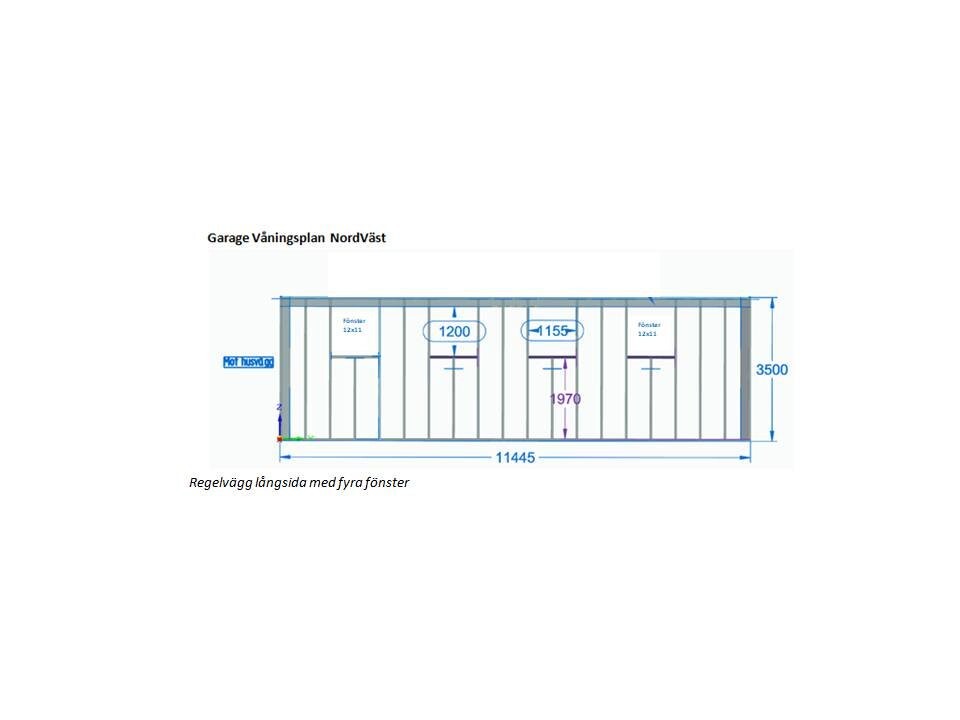
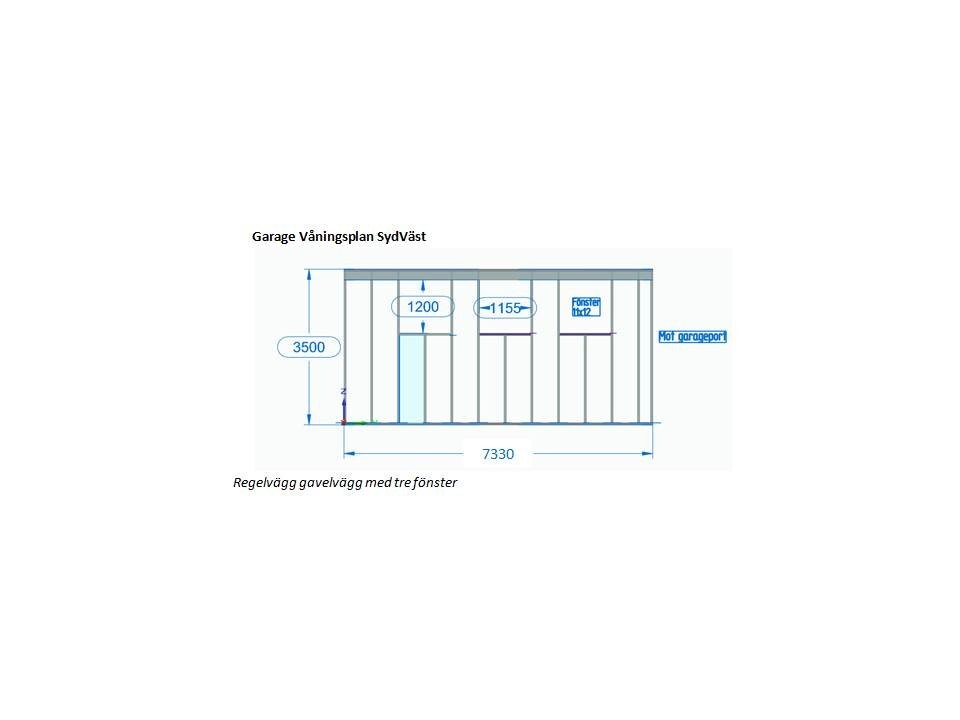
The idea is to buy a pre-cut frame (so-called Pre-Cut). The wall height will be 3.5 - 4.0 m including the wall blocks, depending on groundworks and the height of the stormwater line. I probably need to cast the garage floor at the height of the stormwater line which will align with the house wall. The stormwater line will be accessible from above. Wall studs c/c 600 mm, preferably 195x45 mm, which allows for more insulation inside the walls. The frame wall will thus consist of wall blocks, sill, wall stud, load-bearing center beam (recessed), and top plate.
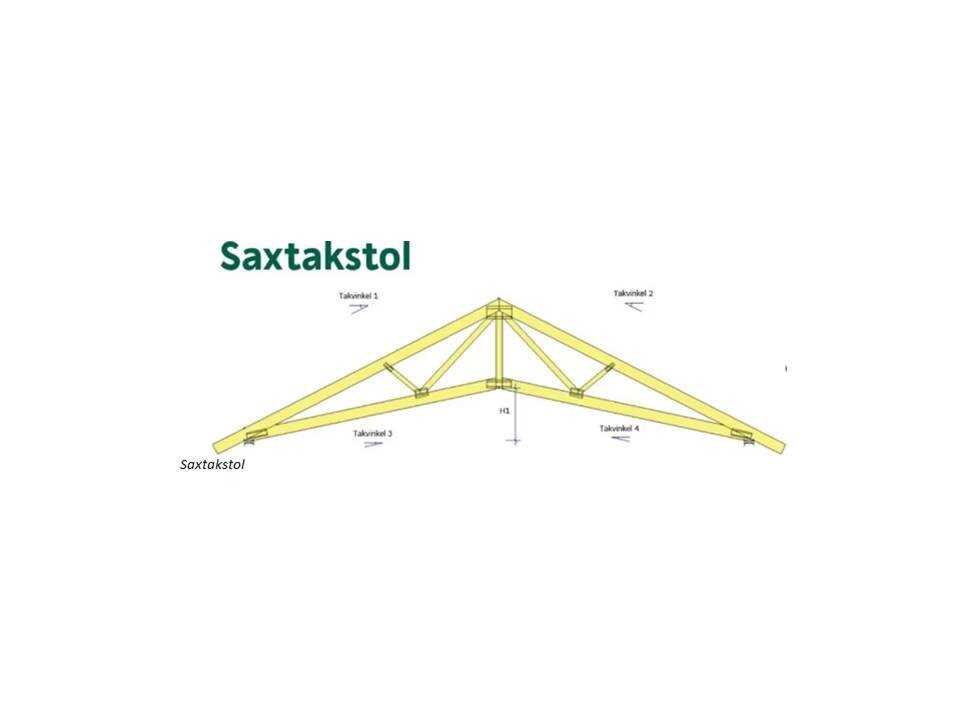
The trusses will be scissors trusses (maximum ceiling height for the car lift – I have a van) with an eave length of 0.45 m. Something similar to the attached image (exact execution will be determined by the truss supplier).
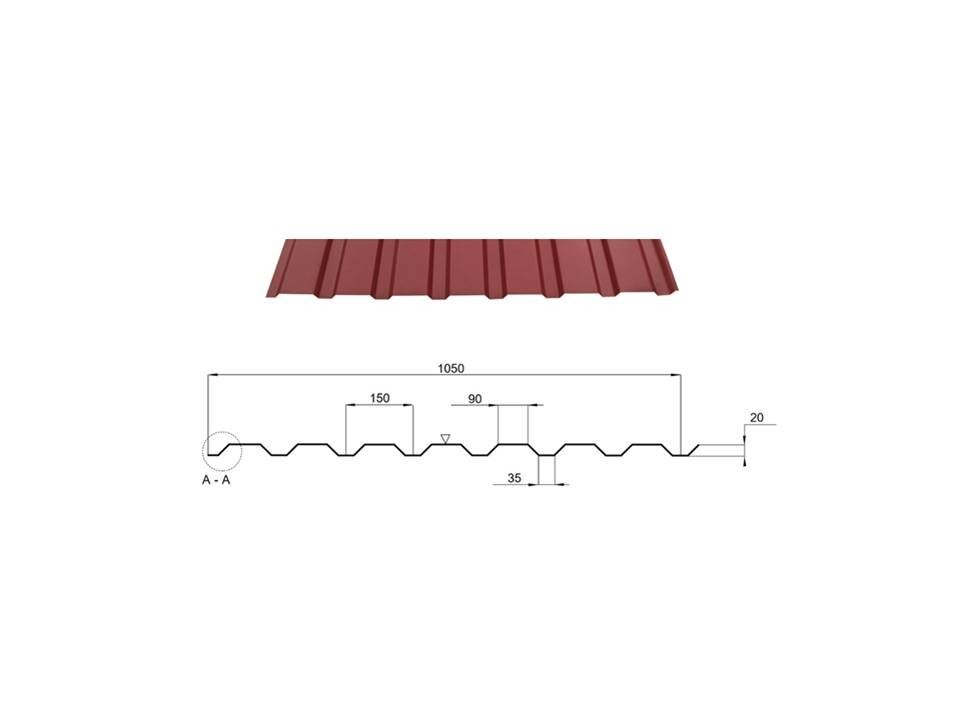
I have planned to use corrugated sheet wall VP20, white, for the outer and inner walls. I prefer to avoid wall paneling on the outer wall (not maintenance-free, needs painting) and drywall on the inner walls (moisture, fragile, painting, maintenance).
Now to my question!
I assume I need to stabilize the frame wall structure, as metal sheet does not noticeably stabilize the frame structure.
Which form of stabilization method for the frame structure do you recommend?
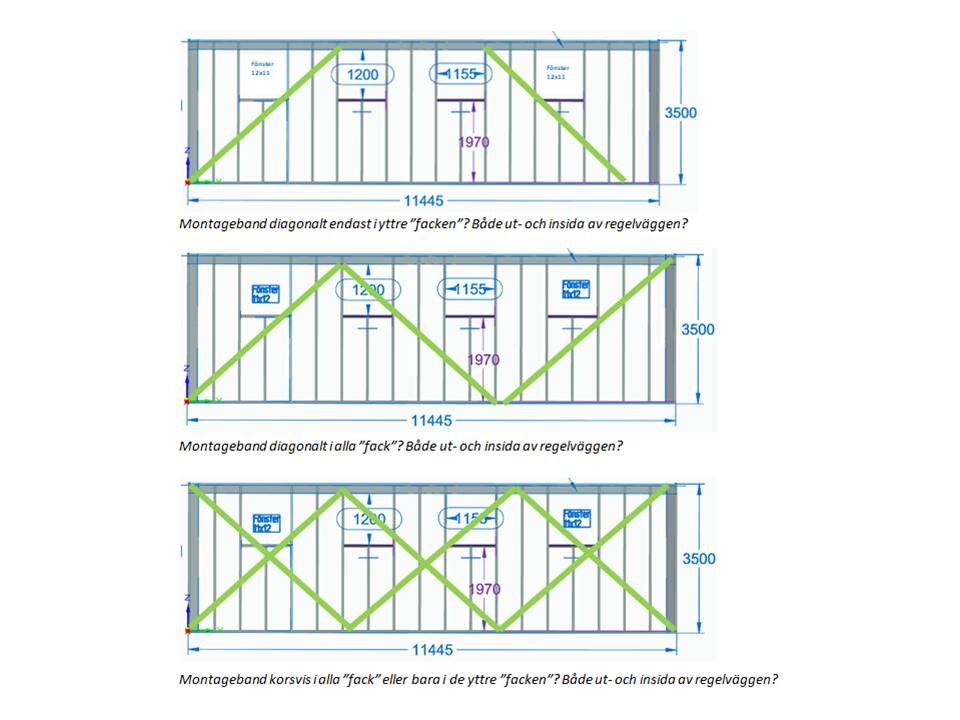
1) Embed a horizontal stud (45 degrees) in the studs? Do I need to install a stabilization stud in each “compartment” formed by the 45-degree angle of the stud or is it enough to have a stabilization stud in the outer "compartments" (see attached images of mounting bands)? Is it enough if this stabilization is performed on the outside of the outer wall? Problem at windows, do I skip the stud in the window opening and continue on the other side of the window opening? Window openings can be moved slightly if needed.
Can I place the stud on the outside (without notching the studs) and screw into each vertical stud and compensate the thickness with screw battens (45 mm instead of 34 mm batten) for the wall sheet? This way the insulation space is not reduced (only the floor area).
2) Install mounting tape/perforated tape diagonally (45 degrees on the frame wall). Is it enough with mounting tape on the outside of the frame wall or should I also have mounting tape on the inside of the frame wall? Is one diagonal mounting tape enough or should it be mounted as a diagonal cross? Mounting tape in each “compartment” or only in the ends. Windows can be moved slightly if needed.
3) Install plywood sheets on the inside of the wall. I have a number of used plywood sheets that have been used once for casting. Without major damages, but the sheets are of varying thickness (probably 18 and 21 mm). I can probably buy more sheets. Can complement with OSB boards if the plywood sheets are not enough.
4) Other suggestions for wall stabilization?? Prefer to avoid drywall (moisture, fragile, painting, maintenance).
Stabilization of the walls can probably only be performed on one long side wall and the gable wall, as well as trusses if needed. The wall with garage doors is probably difficult to stabilize due to the absence of frame walls. Suggestions for stabilizing this wall? Extra load-bearing center beam?
Do you think I should have some form of framing (horizontal) between the outer walls on the other gable wall, i.e., towards the house wall or can I leave this wall open?
Should I stabilize the scissor trusses with mounting tape? Sheathing will be screwed to the trusses and roof sheet installed on battens as a surface layer. Horizontal screw battens (c/c 1.0m) for wall sheet will be installed on the underside (the underside of the roof is also made of sheet).
Your good advice for a more stable wall construction is gratefully received.
Best regards,
Kari Käyhkö
Hi Construction Experts!
I am planning a garage construction as an extension on one side of my house gable (corner house), which is why I plan to frame only three walls (two long sides and one gable wall). The exterior measure will be 11.45 x 7.33 m.
The garage will be divided into a workshop area of 30 m2 (Attefall extension according to the new building permit rules) with an overhead door (H=2500 mm B=3000 mm) and a garage part of 54 m2 with two folding doors (3000x3000 mm).
A cast slab (200 mm thick in the garage section due to car lifts, workshop section 100 mm) with insulation underneath 200/300 mm. One row of wall blocks (250x190x590 mm) forms the lower part of the wall, on which the sill is then attached. Less risk of moisture damage.
The idea is to buy a pre-cut frame (so-called Pre-Cut). The wall height will be 3.5 - 4.0 m including the wall blocks, depending on groundworks and the height of the stormwater line. I probably need to cast the garage floor at the height of the stormwater line which will align with the house wall. The stormwater line will be accessible from above. Wall studs c/c 600 mm, preferably 195x45 mm, which allows for more insulation inside the walls. The frame wall will thus consist of wall blocks, sill, wall stud, load-bearing center beam (recessed), and top plate.
The trusses will be scissors trusses (maximum ceiling height for the car lift – I have a van) with an eave length of 0.45 m. Something similar to the attached image (exact execution will be determined by the truss supplier).
I have planned to use corrugated sheet wall VP20, white, for the outer and inner walls. I prefer to avoid wall paneling on the outer wall (not maintenance-free, needs painting) and drywall on the inner walls (moisture, fragile, painting, maintenance).
Now to my question!
I assume I need to stabilize the frame wall structure, as metal sheet does not noticeably stabilize the frame structure.
Which form of stabilization method for the frame structure do you recommend?
1) Embed a horizontal stud (45 degrees) in the studs? Do I need to install a stabilization stud in each “compartment” formed by the 45-degree angle of the stud or is it enough to have a stabilization stud in the outer "compartments" (see attached images of mounting bands)? Is it enough if this stabilization is performed on the outside of the outer wall? Problem at windows, do I skip the stud in the window opening and continue on the other side of the window opening? Window openings can be moved slightly if needed.
Can I place the stud on the outside (without notching the studs) and screw into each vertical stud and compensate the thickness with screw battens (45 mm instead of 34 mm batten) for the wall sheet? This way the insulation space is not reduced (only the floor area).
2) Install mounting tape/perforated tape diagonally (45 degrees on the frame wall). Is it enough with mounting tape on the outside of the frame wall or should I also have mounting tape on the inside of the frame wall? Is one diagonal mounting tape enough or should it be mounted as a diagonal cross? Mounting tape in each “compartment” or only in the ends. Windows can be moved slightly if needed.
3) Install plywood sheets on the inside of the wall. I have a number of used plywood sheets that have been used once for casting. Without major damages, but the sheets are of varying thickness (probably 18 and 21 mm). I can probably buy more sheets. Can complement with OSB boards if the plywood sheets are not enough.
4) Other suggestions for wall stabilization?? Prefer to avoid drywall (moisture, fragile, painting, maintenance).
Stabilization of the walls can probably only be performed on one long side wall and the gable wall, as well as trusses if needed. The wall with garage doors is probably difficult to stabilize due to the absence of frame walls. Suggestions for stabilizing this wall? Extra load-bearing center beam?
Do you think I should have some form of framing (horizontal) between the outer walls on the other gable wall, i.e., towards the house wall or can I leave this wall open?
Should I stabilize the scissor trusses with mounting tape? Sheathing will be screwed to the trusses and roof sheet installed on battens as a surface layer. Horizontal screw battens (c/c 1.0m) for wall sheet will be installed on the underside (the underside of the roof is also made of sheet).
Your good advice for a more stable wall construction is gratefully received.
Best regards,
Kari Käyhkö
Click here to reply