Like many others, I find it difficult to do something halfway.
I'm going to install FTX units in an old house because it was recommended by the inspector.
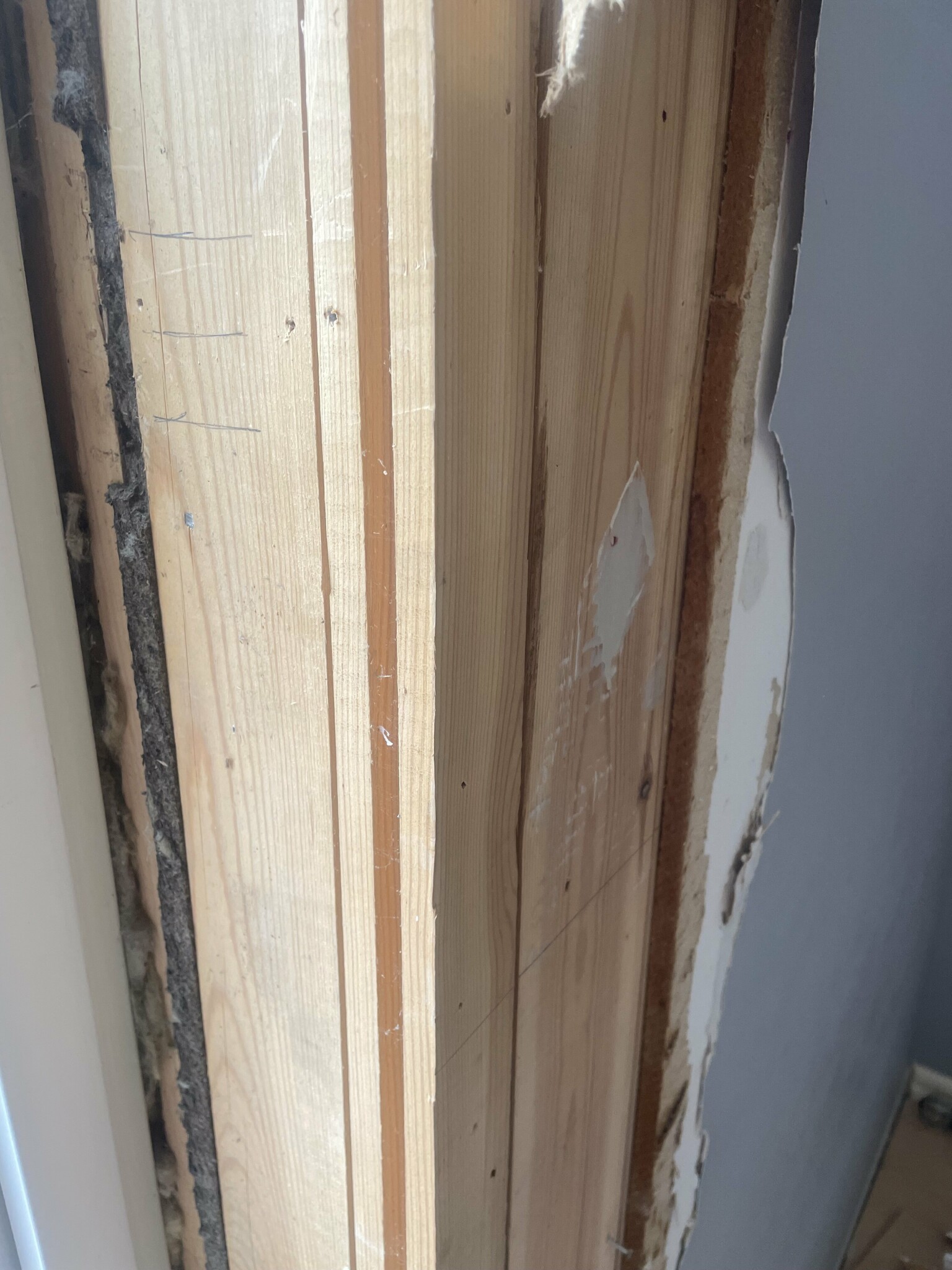
I'll need to tear up the floor on the upper floor and lay ducts in the intermediate joist space. Then the house should be better sealed. So I might as well tear down walls and check the plastic. However, there is no plastic, even though the building plans from '69 indicate it should be in the walls and ceiling.
It feels a bit sad to tear away the thick tongue-and-groove boards. Could they also be part of the structure? They are probably 1" thick.
Should I install plastic on the inside then:
Strapping, 10mm board, and gypsum? This reduces the room by 4cm.
I guess it's the same in the ceiling, but haven't gotten that far.
What problems have you had with the house, since the inspector recommends you install an FTX unit?
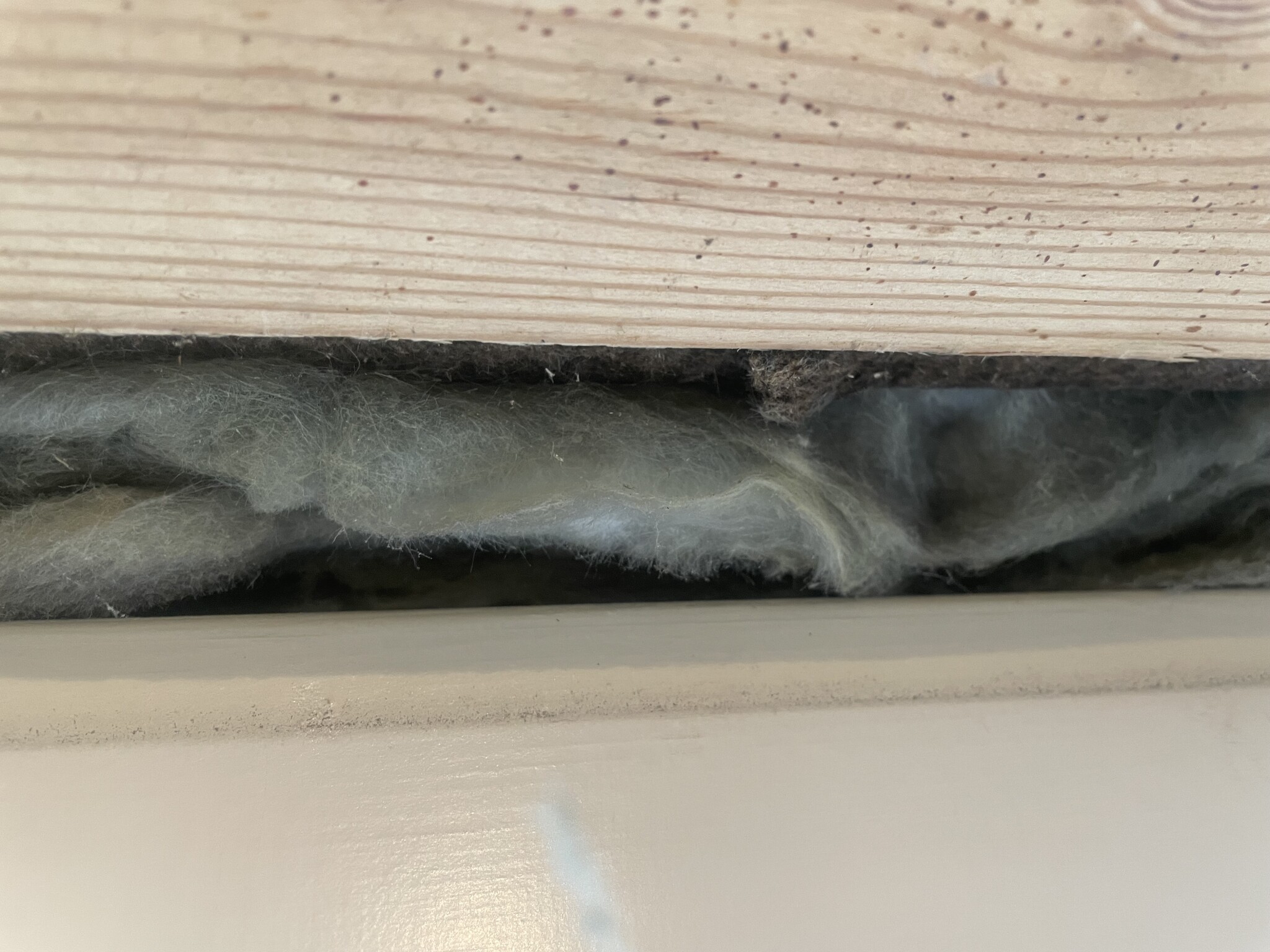
Correct, there is mold in the attic.
But I realize it's too much work to install an FTX unit in an old house.
It seems like there's no one who knows anything either. All the experts you talk to contradict each other.
Possibly for secondary market value.
It's just as well to install fresh hundred and fix modern pax fans.
However, I don't like having negative pressure in the house, I don't want to draw mold into the house.
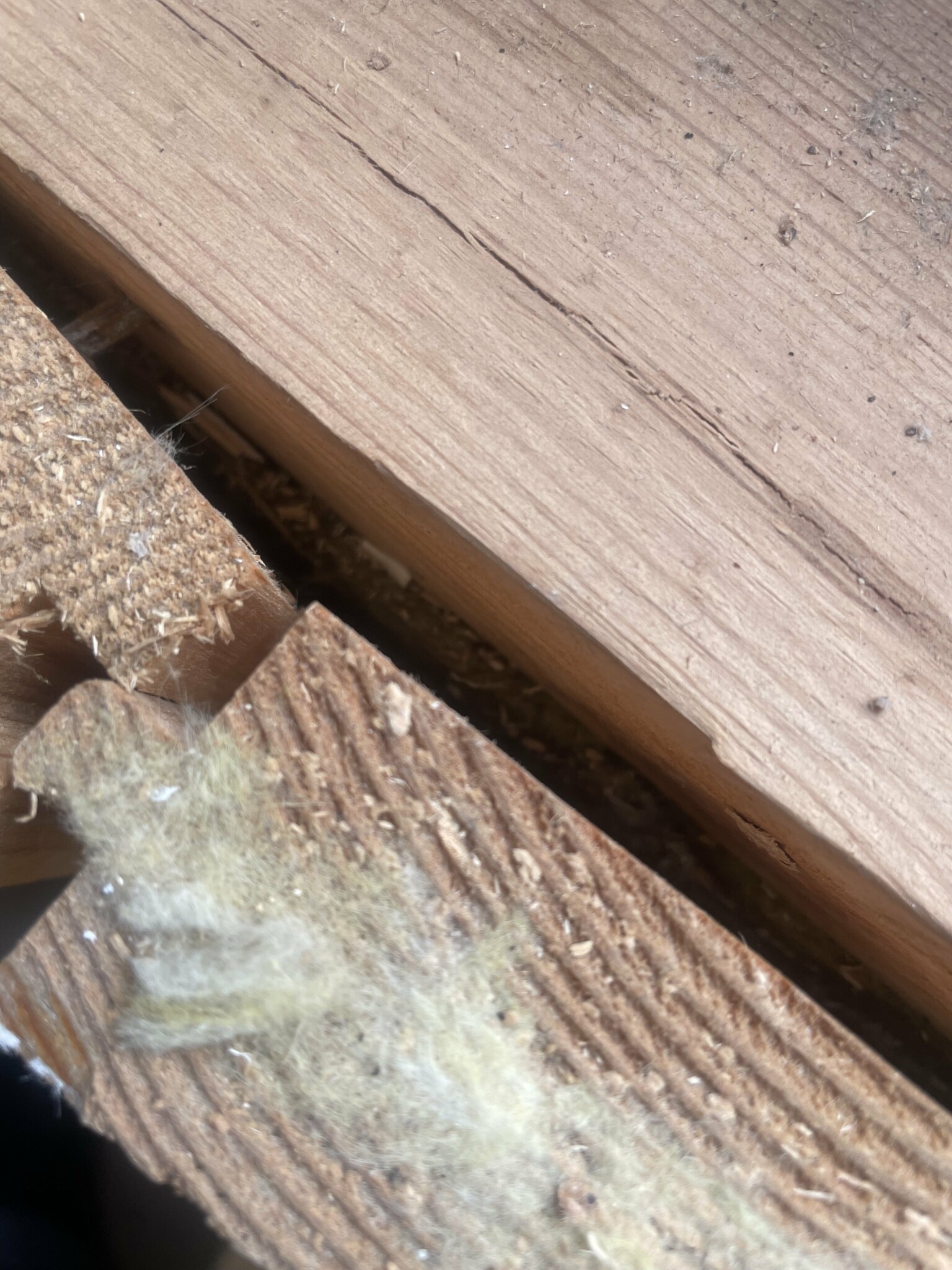
I hope I haven't messed up too much now that I've torn off the old boards, they probably served some function.
To address that problem, you need to wash off the mold/remediate and then install a dehumidifier.
Yes and no
Remediate to get rid of existing mold, yes.
But the cause is a house that is both too sealed and too leaky.
Walls and windows are too sealed, preventing new air from coming in. This can be solved with fresh vents.
At the same time, the warm indoor air is pushed up into the leaky/in some cases non-existent vapor barrier in the attic, where it meets the humid outdoor air, causing condensation which leads to mold.
It's best to prevent indoor air from getting up there.
Yes and no
Sanitize to remove the existing mold, yes.
But the cause is a house that is both too tight and too loose at the same time.
Walls and windows are too tight, preventing new air from coming in. This can be solved with fresh air vents.
At the same time, the warm indoor air is pushed up into the loose/in some cases non-existent vapor barrier in the attic, where it meets the humid outdoor air, causing condensation and mold growth.
The best solution is to prevent indoor air from rising.
No, if you have a cold attic, make sure it remains ventilated. An unsealed cold attic is a well-ventilated cold attic, and problems are rare there.
And by unsealed, I mean unsealed against outdoor air. Not unsealed against an underlying bathroom, for example.
No, if you have a cold attic, you should make sure it stays ventilated. A drafty cold attic is a well-ventilated attic, and there are rarely any problems.
And by drafty, I mean drafty toward the outdoor air, not drafty toward an underlying bathroom, for example.
It is ventilated there.
I mean vapor barrier/vapor retarder, that is, between inside and attic.
If the house adheres to the traditional standards from -69, it's likely equipped with a chimney and an oil burner in the basement? This was the case for most houses built up until the 80s, when electricity was relatively cheap, and oil had skyrocketed in price following the big and small oil crises of the 70s. Consequently, direct electricity became more or less standard in houses from the 80s.
The point is that all houses with a chimney received some warmth in the attic from the chimney, which was always warm. When the oil burner is then discarded and replaced with direct electricity, to which all heat pumps also count, the heat contribution to the attic disappears, meaning it becomes slightly colder. These few degrees difference in average temperature in the cold attic make all the difference between a dry and mold-free attic and a cold and damp moldy one. If the attic floor has also been additionally insulated, the problem becomes even greater.
The Trygghetsvakten, as far as I understand, is essentially a heating cable that performs the job that the previously warm chimney did.
Just ventilating the attic more makes it colder and damper.
A dehumidifier also works, but it requires the attic to be effectively sealed to function optimally.
Increased ventilation of indoor air (FTX) reduces the moisture contribution to the attic from the residence as indoor RH drops with FTX compared to traditional self-draft insulation.
There should be systems with active ventilation for the attic as well, but they do not seem to be common. At least not for regular houses, and therefore likely relatively expensive.
If the house from -69 has functioned without rotting with the existing construction, there is no reason to mess with plastic now, unless you plan to add insulation and seal it properly. But then much needs to be addressed simultaneously to manage the moisture that will become a much larger problem with more insulation and airtightness.
To address that problem, you need to clean away the mold/remediate and then install a dehumidifier.
One should not answer so confidently about things they know nothing about.
The dehumidifier is rather an emergency solution if you have inadequate ventilation. Addressing the house's ventilation is ALWAYS step 1 if you have mold problems in the attic. (unless there's an external leakage, of course)...
Placing a dehumidifier in the attic is actually one of the absolute worst solutions because you then permanently increase the house's energy consumption and haven't even addressed the root problem.
If the house holds traditional std from '69, it is probably equipped with a chimney and an oil boiler in the basement?
That's how most houses were built up until the '80s, when electricity was comparatively cheap, and oil prices had skyrocketed since the major and minor oil crises in the '70s. Consequently, direct electric heating became more or less standard in houses from the '80s onwards.
The point is that all houses with chimneys slightly heated the attic because the chimney was always warm. When the oil boiler is then discarded and replaced by direct electricity, which includes all VP systems, the heat contribution in the attic disappears, meaning it becomes slightly colder. These few degrees in the average temperature of the cold attic make all the difference between a dry, mold-free attic and a cold, damp moldy one. If the attic flooring has also been additionally insulated, the problem becomes even greater.
The safety guard, as far as I understand, is essentially a heating cable that does the job the previously warm chimney did.
Simply ventilating the attic more makes it colder and more humid.
A dehumidifier works too, but it requires the attic to be effectively sealed to function optimally.
Increased indoor air ventilation (FTX) reduces the moisture contribution to the attic from the house as RH indoors decreases with FTX compared to traditional passive insulation.
There should be systems with active ventilation for the attic too, but they don't seem to be common. At least not for regular houses, and therefore probably relatively expensive.
If the house from '69 has functioned without rotting away with the existing construction, there's no reason to mess with plastic now unless you're planning to additionally insulate and seal thoroughly. But then much needs to be addressed simultaneously to manage the moisture, which will become a much bigger problem the more insulation and airtightness there is.
Thanks for a thorough answer.
It is equipped with electric radiators from the beginning, and I still have that complemented with an air-air heat pump.
There is a maximum of 100mm insulation between the attic and the upper floor (1.5 stories).
The house was additionally insulated on the exterior walls and also the gables at the roof peak at some point. Not up against the outer roof, however, which I interpret as a good thing not done.
Very tempted to increase the insulation in the attic (above the ceiling), but a bit worried it might go wrong.
That matches with the safety guard. But the newer ones do it only when needed. When it is below (don't remember exactly, around 0), it's too cold, and the heating cable isn't needed; when the temperature is above a certain level, there's no risk of growth. The fan is supposed to start only when it's more humid in the attic than outside. It feels a little like a bluff, really. As you say, it's the heating cable that does the job, might as well have a heater with a temperature sensor in the attic. They obviously work, but not as they want to make it sound; few sellers mention the heating cable.
Regarding FTX, I'm a bit confused. As you say, they talk about lowering humidity. But I have about 30-40 today. If you read about FTX units, they don't just recover heat but also humidity. They strive to maintain a humidity level of about 60 indoors. In other contexts, they're also marketed as increasing humidity. "avoid dry indoor air" I probably have too dry air as we get dry skin in the family.
That might be because my ventilation isn't fully functioning today. So I'm not bringing in "enough" humid outdoor air into the residence.
Leaning towards getting an FTX unit but letting it run with slightly increased exhaust air to prevent moisture from moving up to the attic and prevent it from becoming slightly overpressure in the supply air rooms.
Probably need to do something on the attic as well.
For the attic:
1. Sanitize, or rather kill the existing mold. The FTX combination might be enough.
Thinking of lifting the insulation and replacing the vapor barrier but not putting plastic, where I can, and sealing around all the cable pipes drawn in the attic.
Whether to install a safety guard or dehumidifier as well.
Difficult to choose. Most say dehumidifiers draw more, but isn't that only in the beginning until it dries out?
Over a ten-year period, maybe the safety guard draws more instead.
I've also heard that the dehumidifier increases the insulation value of the existing insulation as it dries out the insulation (I have yellow, which I believe is fiberglass) No idea if that's true.
Also considering if I should additionally insulate and then use cellulose insulation as it absorbs moisture.
Old sawdust worked by absorbing moisture in winter and drying out in summer.
Might avoid the safety guard and dehumidifier then?
As you also state, the house is from '69, and there's black mold on the north side ceiling towards the gables but not decayed anywhere.
One should not respond so confidently on things they know nothing about.
The dehumidifier is rather an emergency solution if there is poor ventilation. Addressing the house's ventilation is ALWAYS step 1 if you have problems with mold in the attic. (unless there is an external leakage, of course)...
Placing a dehumidifier in the attic is probably actually one of the absolute worst solutions because then you permanently increase the house's energy consumption and don't even address the root problem.
Yes, you remedy an old house's moisture problem in a cold attic by making it more leaky (better ventilation), that is, installing gable vents and the like.
If the house has functioned with natural ventilation for all these years, I see no benefit in replacing it with an energy-consuming and noisy FTX system.
To install a mechanical ventilation system in there, you'll have to saw the framework to nothing. There's no significant health benefit to having the world's most modern ventilation system when the ceiling might fall on your head or when you collapse from exhaustion and die on a Saturday evening at the end of a sixteenth-hour workday week while desperately trying to pay for unnecessary renovations.
Oldboy has a lot of good things to say.
I would consider a solution as follows:
- Replace the glass wool in the attic with eco-fiber. It can handle a bit of condensation a few times a year and dries afterward.
- Ensure that the ventilation in the attic is good.
- Install a proper heat-retaining fireplace and connect it to the existing chimney or a newly-built brick chimney in the same place. Burn a few cubic meters of wood each year. It helps the heat pump during cold periods, keeps air circulation going, and keeps the attic dry. Modern modular chimneys are a hassle because they are so well-insulated that they don't keep the attic dry. It should be real classic brick masonry.
- Ventilate with open windows in summer when you are not using the fireplace.
Recommending FTX ventilation has almost become a formality in all inspection reports. Regardless of whether it works with the house or not. Regardless of whether it is economically reasonable. Since FTX is a modern standard in new constructions and is demonstrably missing in older houses, it is recommended as a routine.
Yes, you address an old house's moisture problem in a cold attic by making it more leaky (better ventilation), like installing gable vents, etc.
If the house has functioned with natural ventilation all these years, I see no benefit in replacing it with an energy-intensive and noisy FTX system.
No, what you're talking about risks having the reverse effect. The only thing that will guarantee lowering the moisture level in the attic is to have negative pressure in the house. Ventilating the attic can create new problems and more moisture.
However, I agree that if the house and the people in the house are doing well with natural ventilation, one shouldn't install FTX just because. But we're not talking about a house that's doing well
No, what you're talking about risks having the opposite effect. The only thing that will definitely lower the moisture level in the attic is to have negative pressure in the house. Ventilating the attic can create new problems and more moisture.
However, I do agree that if the house and the people in the house are fine with natural ventilation, then you shouldn't install an FTX system just because. But we're not talking about a house that's in good shape
It really depends on where in the country you live whether it's good or bad to ventilate, doesn't it? And of course, which season it is. If you live in southern Sweden without real winters, you basically have autumn weather all winter with humid air in your cold attic. Then it might be a problem to ventilate more raw and moist outdoor air in there.
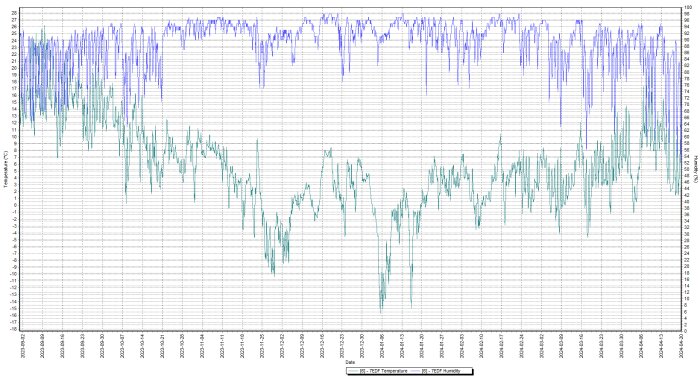
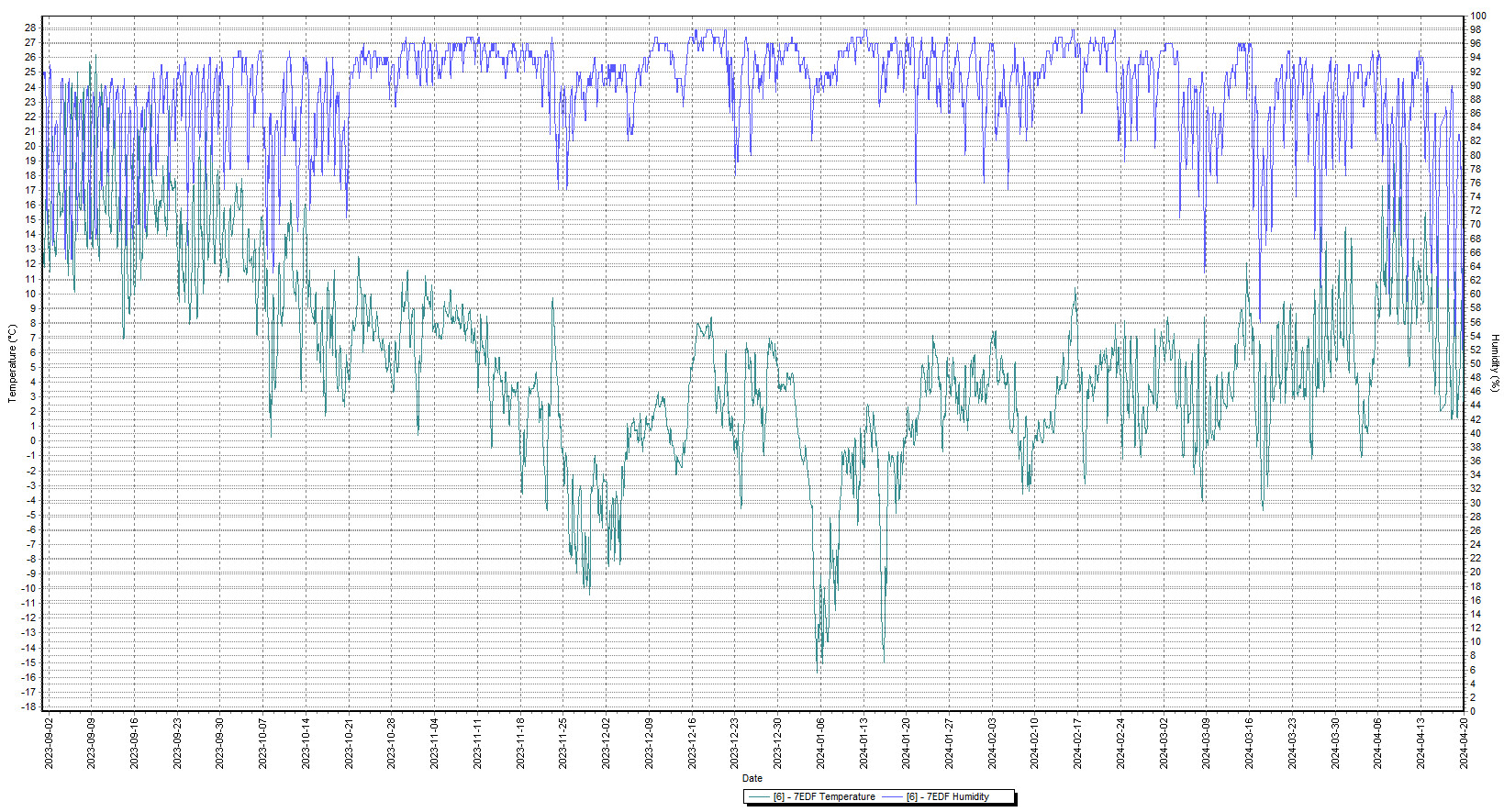
However, if you live like I do in inner Norrland, you have real winters. And when it's really cold outside, it's also low humidity. Then it can be good to ventilate. I've set up a logger in my cold attic, so I know what I'm talking about. On those winter days when it's freezing cold outside, I have the lowest temperature in the attic but also the lowest RH.
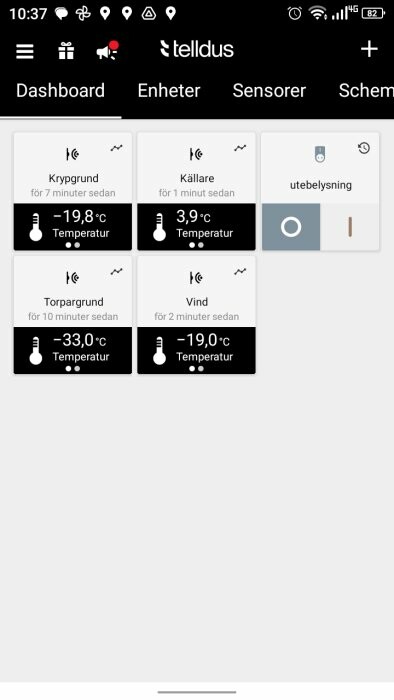
See for example my attached screenshots of my loggers in the root cellar, foundation, and in the attic.
This is outdoors. (Hope the image is clickable so that you can make out the details...)
Ok, no chimney. Electric heating from the beginning. I assume you don't know when mold started appearing in the attic?
It may have started as early as -69, but more likely it came after previous additional insulation.
That it's worse towards the gables and on the north side indicates these are the coldest places. The north side is always the most exposed because it's the coldest side with the least warming (=> drying) from the sun. Mold on the gables can also indicate that this is where the attic air mainly passes in/out. Depending on wind direction.
I think that heating/active ventilation of the attic is the best for TS. That is, probably the greatest positive effect (=> reduced moisture load) for the least intervention and cost. I have the impression that the operating cost isn't too bad, but one should try to find that out, (for comparable houses in a climate equivalent to TS's house). I'm not sure to what extent the size of the attic affects the operating costs. I think heating is always proportional to the size of what is being heated. TS mentions an attic above a 1.5-story house, which for me indicates the attic isn't that big, but of course, it depends on...
Just as previously mentioned, FTX is probably a recommendation that's as reflexively mandatory for old houses as labeling most of them as risky constructions. None of this is relevant unless there are significant problems, but it should only be kept in mind if you start changing anything. In principle, insulation and moisture risk are diametrically opposed. That is, a lot of insulation => high moisture risk and little insulation => low moisture risk. This means that old houses with thin insulation that have worked fine for many years are at strong risk of moisture problems if you increase the insulation, as the construction isn't made for it.
It's also good to know that the upper floor always has the most humid air and "overpressure", which means that if there are leaks in the roof between the upper floor and the attic, warm humid air will sneak up into the attic. So, a bathroom fan (if there's a bathroom on the upper floor) can make a difference.
As always, it depends on how big the respective problems are. For example, if there are small leaks via electrical penetrations, an exhaust fan on the upper floor can help, but if there are bigger problems like leaks as large as if the attic hatch were missing, it won't make a difference.
Click here to reply
Vi vill skicka notiser för ämnen du bevakar och händelser som berör dig.

Oldboy said:
If the house holds traditional std from '69, it is probably equipped with a chimney and an oil boiler in the basement?