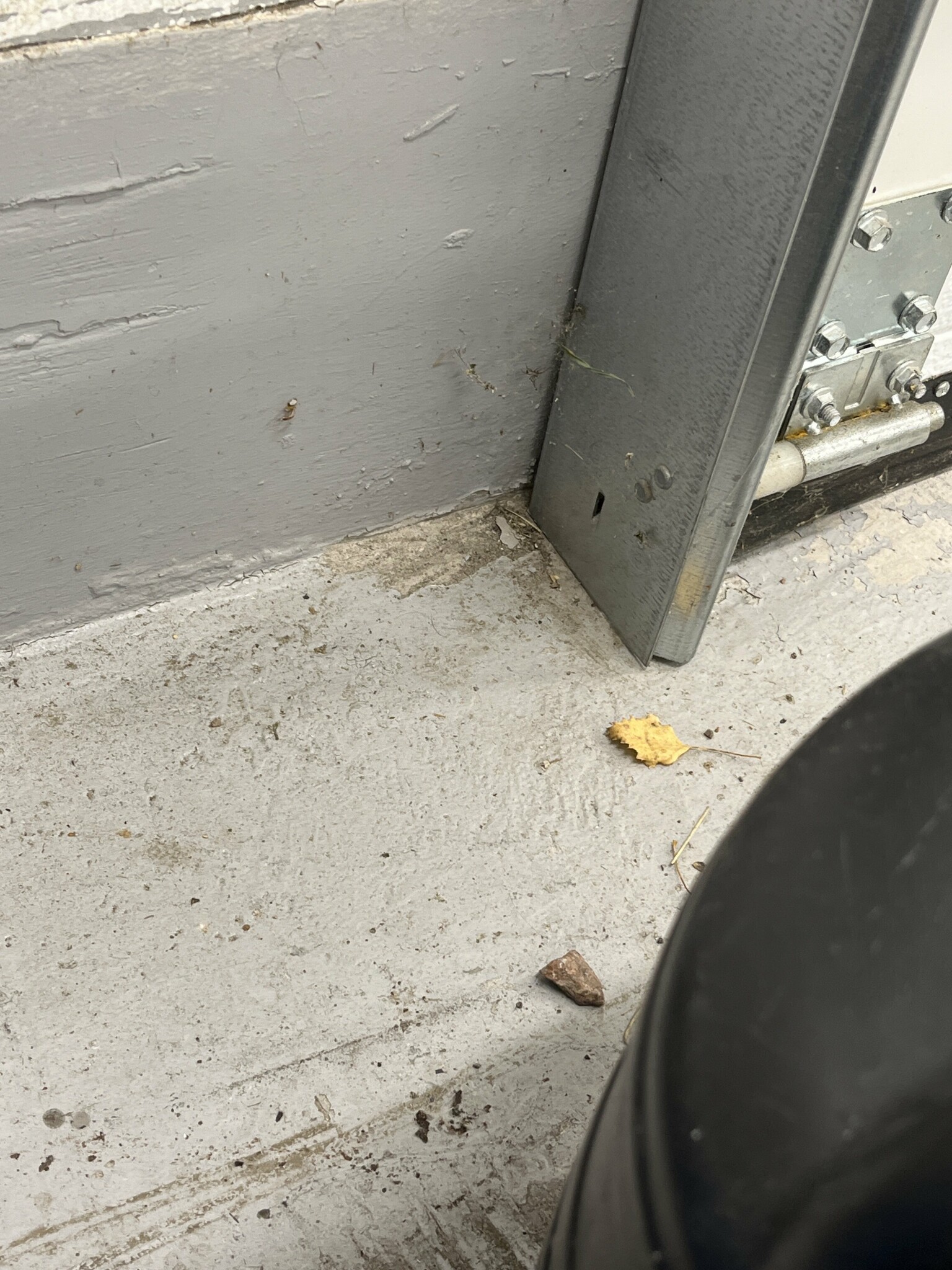
The image below is taken from inside our garage on the floor right at the opening out. In the gap (which is marked in red), it opens to the outside because that's where the door meets the trim and the trim meets the inside.
On the inside against the floor, we will use sealant and then lay tiles as a list along the floor.
Should we also seal with something from the outside, or is it enough to seal from the inside with regular tile sealant and then just press the tiles in place?
It can get quite wet and slushy on the garage floor, especially during winter, so I wouldn't have used plasterboard so close to the floor. Garage walls are often placed on a plinth precisely to protect the structure from moisture.
Is that frost we see in the picture, or is snow whirling in through the gap?
It can get quite wet and messy on the garage floor, especially during winter, so I wouldn't use drywall so close to the floor. Garage walls are often placed on a base to protect the construction from moisture.
Is that frost we see in the picture, or is snow blowing in through the gap?
[image]
How does this help the OP?
Drywall is preferably installed with a small gap against the concrete.
It can get quite wet and messy on the garage floor, especially during winter, so I wouldn't have used plasterboard so close to the floor. Garage walls are often placed on a plinth to protect the construction from moisture.
Is that frost we see in the picture, or is snow drifting in through the gap?
[image]
It's snow drifting in through the gap.
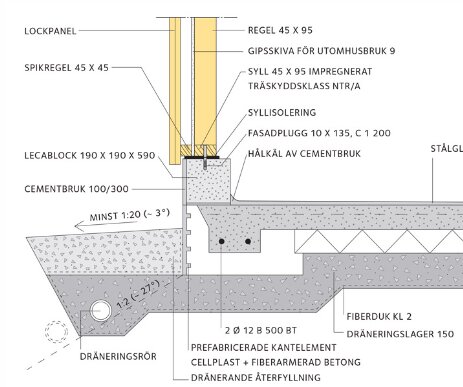
What do you mean by saying the walls should sit on a plinth?
It's on poured concrete, then pressure-treated studs and then regular studs.
The reason for the gap is that the siding and trim extend beyond the floor joists.
What do you mean by having the walls sit on a base?
It's on cast concrete, then pressure-treated studs, and then regular studs.
The reason for the gap is that the panel and trim extend beyond the floor joists.
A base is convenient because you avoid moisture in the walls since cars might release some moisture when they melt or when washing in the garage.
The gray part in my picture is the base that is cast in my garage.
The wooden wall starts where the white is.
You should seal the gap with something.
Personally, I would never use wood so close to the floor.
I see myself when I rinse off the floor, car, etc.
It gets wet.
Wood absorbs it.
Moreover, pressure-treated beams to enclose aren't that good either.
However, it's a garage, but in my opinion, pressure-treated is for decking, piers, and nothing else.
A plinth is convenient because it reduces the risk of moisture in the walls if, for example, cars might emit some moisture when they thaw or if you're washing in the garage.
The gray in my picture is the plinth that is cast in my garage.
The wooden wall starts where the white is.
Ok, good for you who has a cast plinth. But we don't.
That's why I'm considering putting tiles at the bottom.
But then to the question, what do I use to seal the gap BETWEEN the floor and the plasterboard/wood? And the gap that goes out?
Good answer.
But seal with whatever you want, it'll surely be fine.
Just explain how it's usually done.
And pressure-treated wood is usually not built in.
You might as well seal the gap with something.
Personally, I would never use wood so close to the floor.
I see for myself when I rinse off the floor with the car, etc.
It gets wet.
The wood will then absorb it.
Then pressure-treated lumber to build in is not so good either.
However, it's a garage, but pressure-treated is for decks, docks, nothing else in my opinion.
Ok, but it is what it is now. What should I use to seal the gap?
We are not going to wash, tinker, etc., in the garage. We are just going to park the car there. That's all.
Vi vill skicka notiser för ämnen du bevakar och händelser som berör dig.



Centano said: