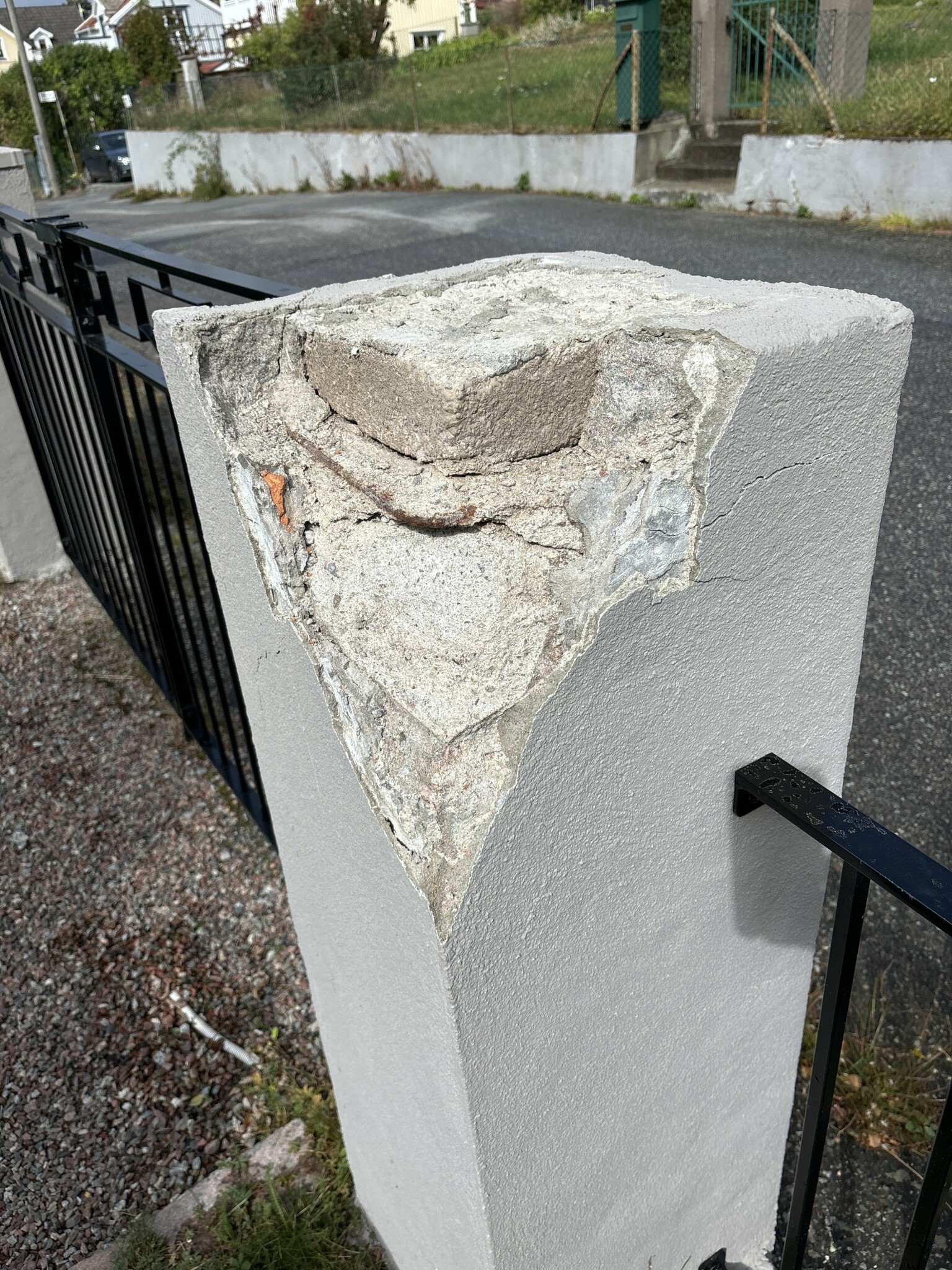
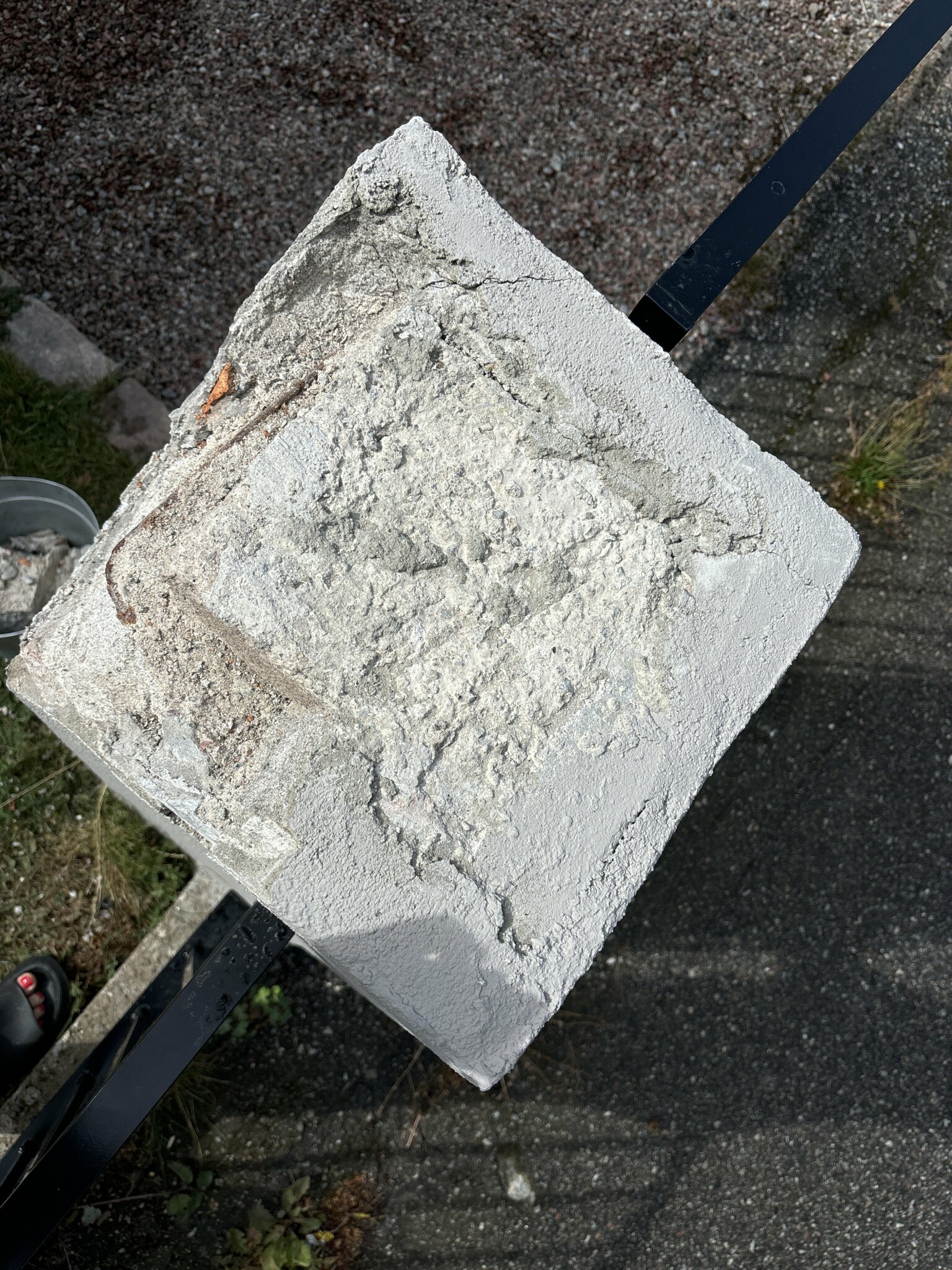
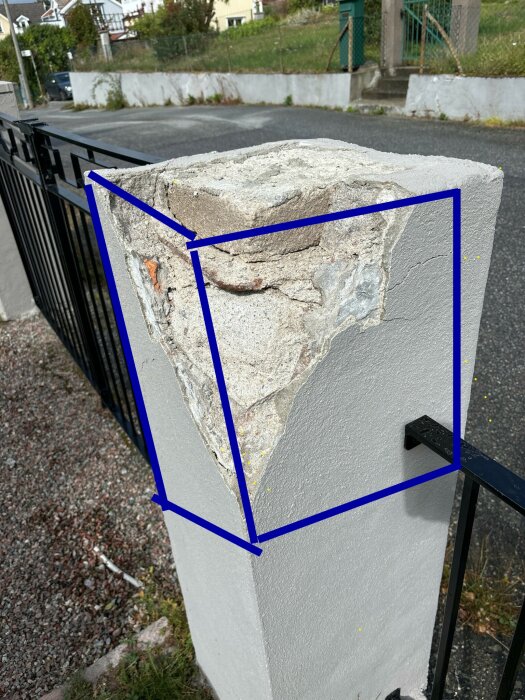
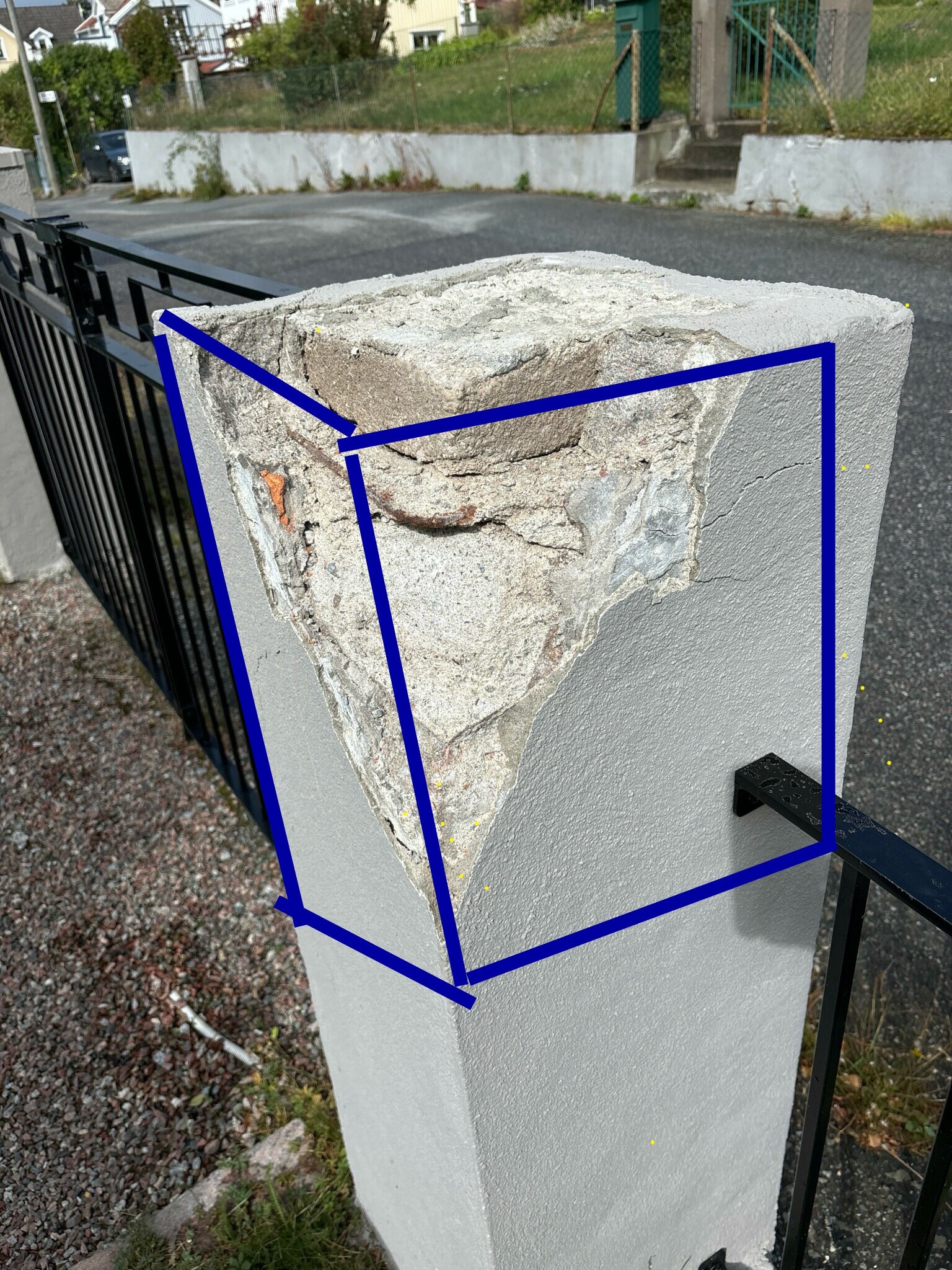
An old brick gatepost has cracked and we need to chip away all the loose material and fix it. We have tried to find craftsmen to do this, but the job seems too small to attract anyone. So we need to solve it ourselves. How do we do it? We know absolutely nothing about this.
I had knocked away all the loose parts and made a mold out of two plywood sheets, fastening them to the post with tension straps, then mixed fine concrete and filled it up.
Once it had hardened, I lightly sanded where needed and then painted the post with suitable diffusion-open paint. Silicate paint should work fine.
Gently knock away loose pieces, drill holes and insert some stainless steel screws that stick out a bit, take two boards and secure them with a tension strap around the post, mix concrete and pour into the hole, tap the boards with a hammer to release any air and ensure the mold is full.
They should be placed in the damage to clarify. They function as reinforcement for the new concrete, helping it adhere and hold better.
Good tip with the hammer as well, it positions the concrete correctly and releases some air.
Smooth out the new top of the post so it becomes smooth and nice, try to avoid creating a pit where water might accumulate.
Concrete needs to stay moist while curing. So after casting and curing, you should water the concrete for a few days or wrap the top of the post in plastic to retain the moisture.
Forms usually release well in my opinion, but if you're concerned, you can use a release agent on the inside of the form to help it release more easily. An example:
The surface appears rather plastered/rendered than cast, so if you don't want the repair to show, you should instead repair the damaged area with mortar and then plaster it - preferably the entire surface, but then you would need to chip away all the plaster on the sides with damages.
I agree, but I would have done as I described earlier. For the reason that applying mortar and plaster is more work and more time-consuming. Also, there's a greater chance of not getting it right if you are inexperienced. Plastering is an art.
A casting with subsequent light sanding if needed and then repainting, I believe will provide an almost invisible repair with minimal effort.
Thanks for the quick replies. It doesn't sound too difficult, so we'll give it a try. A couple of questions.
1. Finbetong - is it like Finja as in this link? https://www.finja.se/produkter/gjuta-mura-putsa-laga/finbetong?id=5511005
2. Does Plywood work? It doesn't have to be those brown boards (I don't know what they're called) that I've seen builders use when they cast, for example, foundations?
3. Reinforcement/Screw, is there any specific type of screw, thickness? Should it be plugged, or is it not necessary?
Thanks for the compliments on posts and gate. Hopefully, this will go well now.