
4,130 views ·
19 replies
4k views
19 replies
How to renovate a basement, step by step
Hello forum
I have just bought an EgnaHem house with a basement. I have carried out demolition basically down to the skeleton and am now exposing the drainage.
I am wondering what steps to follow next, and how I can build to achieve a good indoor environment.
I wish to install water-based underfloor heating connected to a BvVp in order to reduce moisture rising upwards. But how do I handle the walls? We will be draining with Platon mat and Isodrän on the outside. But how do we handle the interior walls? Both in bedrooms and bathrooms? Does it differ?
I want to build as future-proof as possible.
I have searched the forum and read some threads, but nothing really answers my concerns.
Grateful for guidance.
I have just bought an EgnaHem house with a basement. I have carried out demolition basically down to the skeleton and am now exposing the drainage.
I am wondering what steps to follow next, and how I can build to achieve a good indoor environment.
I wish to install water-based underfloor heating connected to a BvVp in order to reduce moisture rising upwards. But how do I handle the walls? We will be draining with Platon mat and Isodrän on the outside. But how do we handle the interior walls? Both in bedrooms and bathrooms? Does it differ?
I want to build as future-proof as possible.
I have searched the forum and read some threads, but nothing really answers my concerns.
Grateful for guidance.

Is the floor insulated? Otherwise, it is advised against underfloor heating. Partly because it is obviously catastrophically uneconomical, but also because moisture problems can occur if the underfloor heating is turned off.
Platonmat and Isodrän? Normally, one chooses one or the other method.
Platonmat and Isodrän? Normally, one chooses one or the other method.
It is a concrete slab that is not insulated, and there have been problems with moisture seeping up. Therefore, we need to review the foundation.
I do not agree that an oversized geothermal heat pump is catastrophically uneconomical. But that being said, we are certainly looking at something that goes against the slab before the tubing is laid out, foil insulation like this;
https://ventilation.se/sv/products/krypgrundsisolering-75kvm
I do not agree that an oversized geothermal heat pump is catastrophically uneconomical. But that being said, we are certainly looking at something that goes against the slab before the tubing is laid out, foil insulation like this;
https://ventilation.se/sv/products/krypgrundsisolering-75kvm
Well, I'm not talking about uneconomical in that way, but that the losses into the ground become very high. To put it a bit pointedly, it's like putting a submersible heater in the ocean to get warm bathwater. You need some kind of insulation. 20-30 cm is today's standard in Sweden for good heat economy, but even 5 cm, which is quite common in the USA, for example, is much better than nothing.Jockiebear said:
Reflective foil like that won't make any difference in this case as it's not about radiant heat inside the floor. However, it will act as a barrier, and if you were planning to place it on top of the floor, there's a risk it could cause problems.
No, stick to a proven construction. Experimenting with your own inventions requires knowing what you're doing to avoid issues.
The usual method if you want underfloor heating in an uninsulated basement is to break up the entire floor, dig out the floor 30-40 cm (or more if you want to increase ceiling height by lowering the floor). Often load-bearing walls need to be extended downward and water ingress managed. Then build up with 10 cm of capillary-breaking gravel, 20-30 cm of EPS foam insulation, and 10 cm of concrete in which the underfloor heating is laid. On the outside, you drain using the Isodrän method and then lay double boards for thermal insulation of the wall. There are countless variations of this, but as you can see, it's a huge project.
Search for "basement project" and there are several building threads available.
Thanks for the response.
However, I do not intend to experiment; that's why I'm starting the thread here—to get advice and support on a tricky subject.
I have performed several searches and have been a member here for a while but haven't seen any thread that really addresses the issues I'm facing.
Looking at https://golvvarmebutiken.se/kunskap...ttenburen-golvvarme/pa-befintlig-betongplatta, there are EPS insulation boards with grooves for heating pipes, which can be placed directly on the existing foundation.
However, I assume that you need to waterproof seal the floor (and walls?) beforehand. Perhaps with something liquid that is durable.
However, I do not intend to experiment; that's why I'm starting the thread here—to get advice and support on a tricky subject.
I have performed several searches and have been a member here for a while but haven't seen any thread that really addresses the issues I'm facing.
Looking at https://golvvarmebutiken.se/kunskap...ttenburen-golvvarme/pa-befintlig-betongplatta, there are EPS insulation boards with grooves for heating pipes, which can be placed directly on the existing foundation.
However, I assume that you need to waterproof seal the floor (and walls?) beforehand. Perhaps with something liquid that is durable.

We (or rather craftsmen) broke up the floor in the basement bathroom and replaced the existing gravel with expanded clay pellets. Then I don't remember if they put any insulation somewhere before they poured and installed water-based underfloor heating, but in any case, it worked, and the floor was warm without the heating costs skyrocketing. It's just a pity with the freezing bathroom floor in the summer when the water-based heating was turned off. This was over 15 years ago, so something new may have been invented since then.
I'm also wondering why you were planning to have both isodrän and Platon membrane. The Platon membrane would likely counteract isodrän’s capillary effect? We used only pordrän in the previous house, and it worked well for drainage, but it's unclear if it got warmer. However, ground moisture did rise through the slab, causing plaster to detach on the inner walls as well. This was probably aggravated by a previous owner having laid vinyl flooring in some rooms, as the moisture then has nowhere else to go but up into the walls. We left the vinyl flooring in place so that we could have things on the floor.
Old basements are rarely designed to be living spaces, and I am skeptical about trying to use them for things like bedrooms. We've slept in the basement when there are "tropical nights" in the summer, and it gets terribly humid. You can't open the window because then humid air from the ground outside pours in. In the previous house, we had to open the window anyway to avoid stale air, and we ended up having to carry duvets and mattress toppers upstairs to dry almost every day. In the current house, the "summer bedroom" is larger, so we don't need to open the window, but a dehumidifier is still needed during the day.
I'm also wondering why you were planning to have both isodrän and Platon membrane. The Platon membrane would likely counteract isodrän’s capillary effect? We used only pordrän in the previous house, and it worked well for drainage, but it's unclear if it got warmer. However, ground moisture did rise through the slab, causing plaster to detach on the inner walls as well. This was probably aggravated by a previous owner having laid vinyl flooring in some rooms, as the moisture then has nowhere else to go but up into the walls. We left the vinyl flooring in place so that we could have things on the floor.
Old basements are rarely designed to be living spaces, and I am skeptical about trying to use them for things like bedrooms. We've slept in the basement when there are "tropical nights" in the summer, and it gets terribly humid. You can't open the window because then humid air from the ground outside pours in. In the previous house, we had to open the window anyway to avoid stale air, and we ended up having to carry duvets and mattress toppers upstairs to dry almost every day. In the current house, the "summer bedroom" is larger, so we don't need to open the window, but a dehumidifier is still needed during the day.
Don't know if we had planned to have both(?) But wanted to at least update that the decision has been made that tearing up the entire floor is the way forward. It has also started and it's a pure hell to carry out the masses..
I have talked to a friend who says we should fill it in with 10cm EPS and then after that 5cm self-leveling screed, with embedded underfloor heating.
What are your thoughts on that?
And how do you proceed with the walls?
I have talked to a friend who says we should fill it in with 10cm EPS and then after that 5cm self-leveling screed, with embedded underfloor heating.
What are your thoughts on that?
And how do you proceed with the walls?
Everything depends on what you plan to use the basement for later. Making a fully habitable basement according to today's building requirements is very difficult, especially considering escape routes and accessibility. But it is entirely possible to create a nice hobby room, workshop, or storage. Most advise against bedrooms. A good drainage system is a good prerequisite, the pipes must lie on a gravel bed under the slab, with a slope. The downpipes should lead water away from the house, preferably to a separate stormwater facility. You have probably read that all organic material inside should be removed, as well as any loose plaster. The wrong kind of paint should be scraped off. Don't have blind faith in underfloor heating. If you can't/won't dig down 20 cm, let the concrete remain untouched. Otherwise, remove the concrete, dig down 20 cm, fill with insulation up to 10 cm below the intended floor surface, cast a new reinforced concrete floor, and then underfloor heating. I would skip underfloor heating and save a lot of money. We converted an old oil tank room into an indoor spa. Chipped away the thin concrete layer, hand-dug a bit, and filled with insulation where new plumbing was needed, then installed electric underfloor heating in the shower area and where you walk. Not under the bathtub. It turned out to be very comfortable. The rest of the basement is tiled, with rugs and slippers.
I have excavated about 30 cm in two rooms so far and am planning to do drainage as soon as possible, although the quotes are unreasonably high. The plan after this is EPS, and then self-leveling compound. Then, build a frame or use Leca blocks to close up a doorway. The wet rooms are left to professionals. Regarding the walls, I've already removed loose plaster, but there's definitely more to done there. There is wallpaper that must be removed in two rooms. There has also been a yellow-painted fiberglass(?) fabric that is almost completely torn off. The basement is more comparable to a basement in a hillside house, with windows that are 1x1m, at chest height, and glass doors on the other side of the floor. I welcome more tips regarding the walls. Attaching two pictures here of the status.T Thomas_Blekinge said:Everything depends on what you will use the basement for later. Getting a fully habitable basement according to current building regulations is very difficult, especially considering escape routes and accessibility. But it's entirely possible to create a nice hobby room, workshop, or storage space. Most people advise against bedrooms. Good drainage is a good condition; the pipes must lie in a gravel bed under the foundation, with a slope. The downspouts should at least direct water away from the house, preferably into its own stormwater system. You've probably read that all organic materials inside should be removed, along with any loose plaster. The wrong type of paint should be scraped off. Don't have too much faith in underfloor heating. If you can't or don't want to dig out 20 cm, let the concrete remain untouched. Otherwise, remove the concrete, dig 20 cm, fill with insulation up to 10 cm below the intended floor surface, pour a new reinforced concrete floor, and then add underfloor heating. I would skip the underfloor heating and save a lot of money. We've converted an old oil tank room into an indoor spa. We hacked away the thin layer of concrete, hand-dug a little, filled with insulation where new plumbing was needed, and then installed electric underfloor heating in the shower area and where you walk. Not under the bathtub. It became very comfortable. The rest of the basement has tiles, rugs, and slippers.
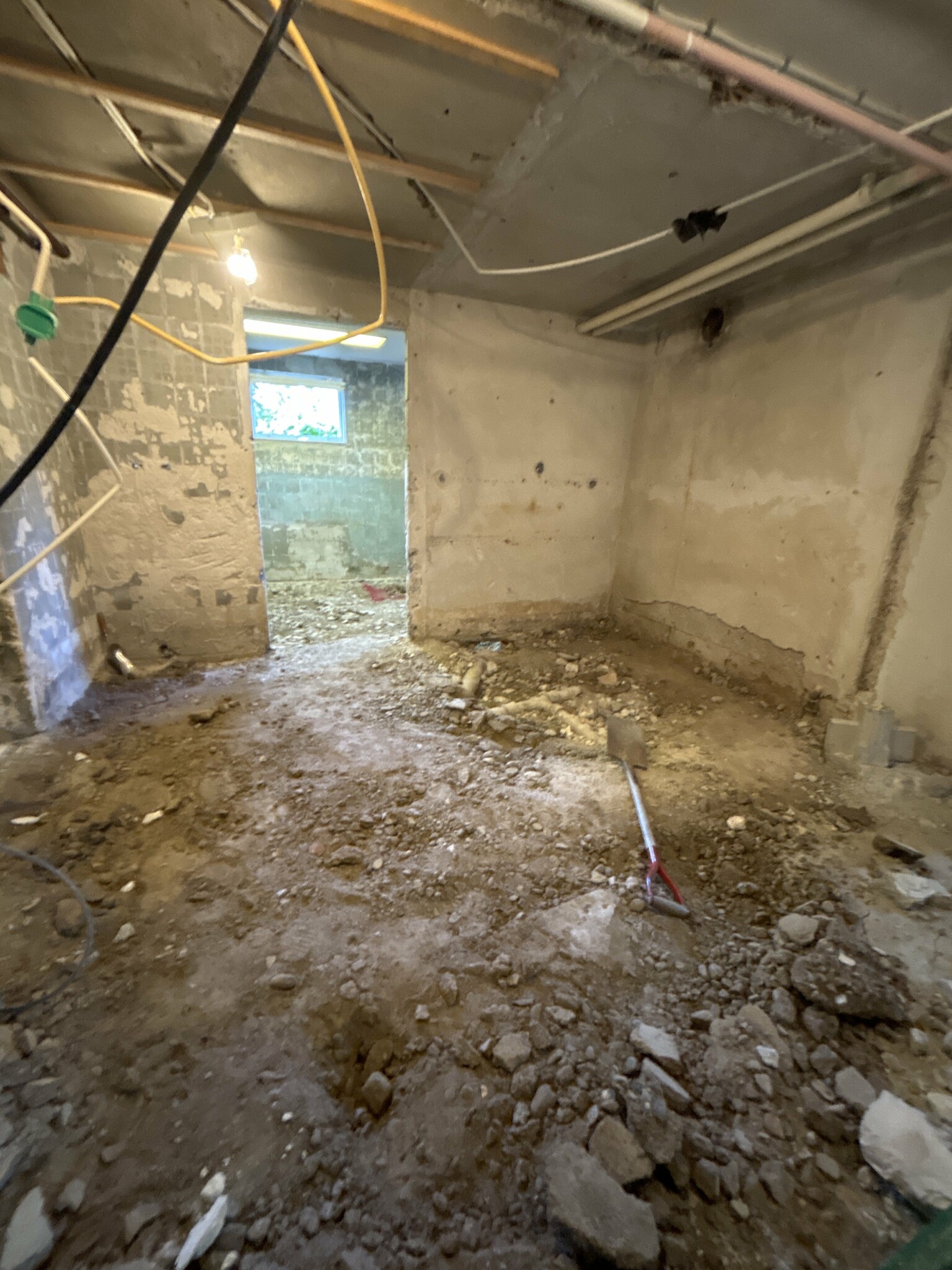
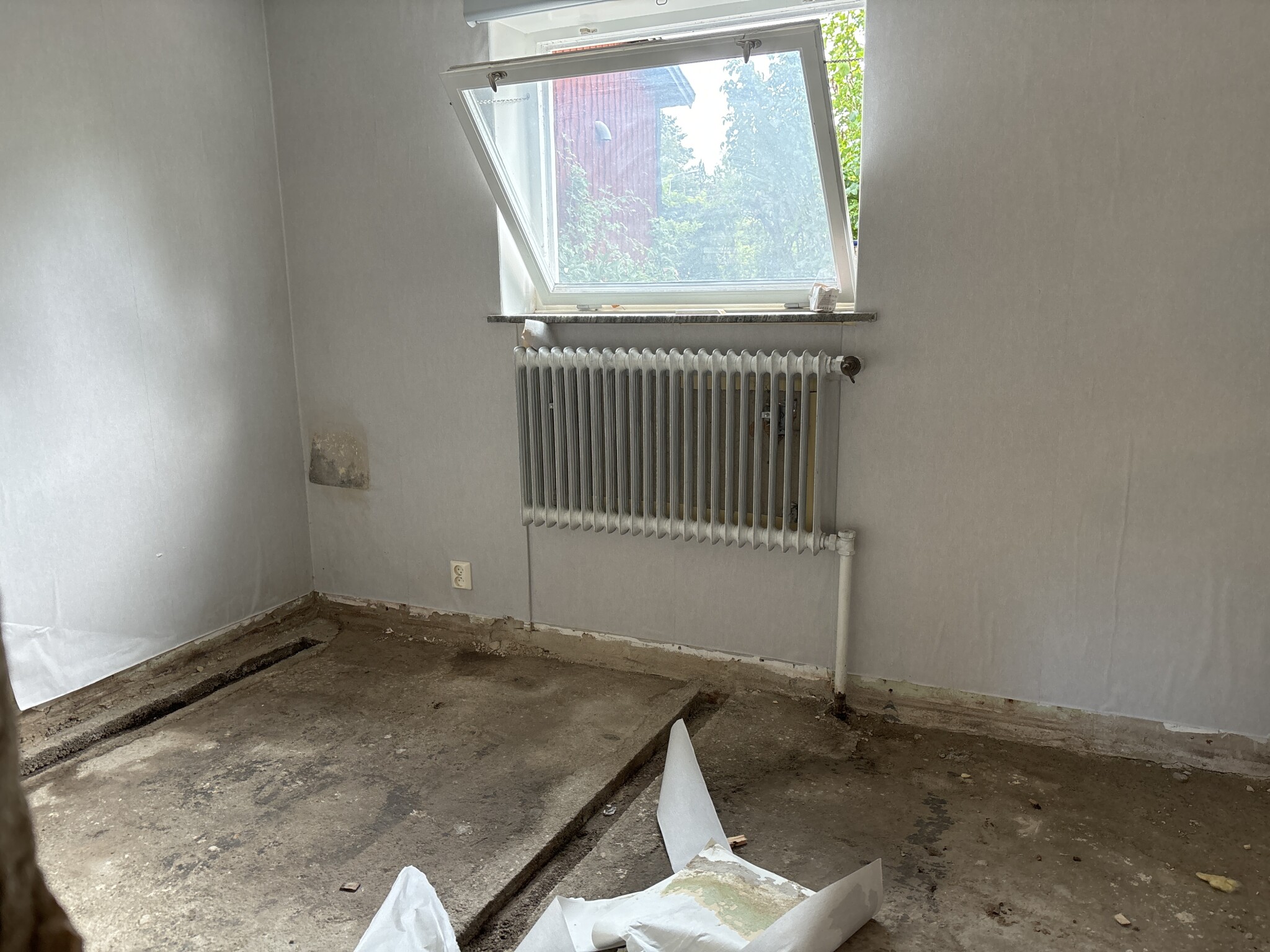
What opportunities!
I considered it as an option for my basement project (only doing one room), but dismissed it quite early.
The advantage of EPS concrete is that it fills every nook and has very high load-bearing capacity. The disadvantages are that the lambda value is about 3 x that of foam board (i.e., 10 cm foam board corresponds to 30 cm EPS concrete) and it's roughly 3 x as expensive. You still need a capillary-breaking layer underneath. Foam boards simply provide much more insulation for the money given the same total build height.
Floating in the underfloor heating is very quick and smooth and results in a super nice finish, but it's also very expensive. I floated about 3 cm on 12 sqm laundry room last winter and it cost 20'.
Thanks for the answer, appreciated.C cpalm said:I considered it as an option for my basement project (only making one room), but dismissed it quite early.
The advantage of EPS concrete is that it fills every nook and has very high load-bearing capacity. The disadvantages are that the lambda value is approx. 3 x polystyrene boards (i.e. 10 cm polystyrene corresponds to 30 cm EPS concrete) and is around 3 x as expensive. You still need a capillary-breaking layer underneath as well. Polystyrene boards simply provide much more insulation for the money given the same total building height.
Floating the underfloor heating is very quick and smooth and results in a super nice finish, but it is also very expensive. I floated about 3 cm in a 12 sqm laundry room last winter and it cost 20'.
Exactly how would you build it, step by step? I don't have a direct need for EPS concrete itself, would also be open to, for example, laying boards (but how do you make them completely sealed in all nooks?)
Based on your experience, one could have a 5 cm board and then cast a new slab, with a reinforcement mesh where you place the underfloor heating, 5-10 cm?
Which of these options do we think has the least moisture ingress from below?