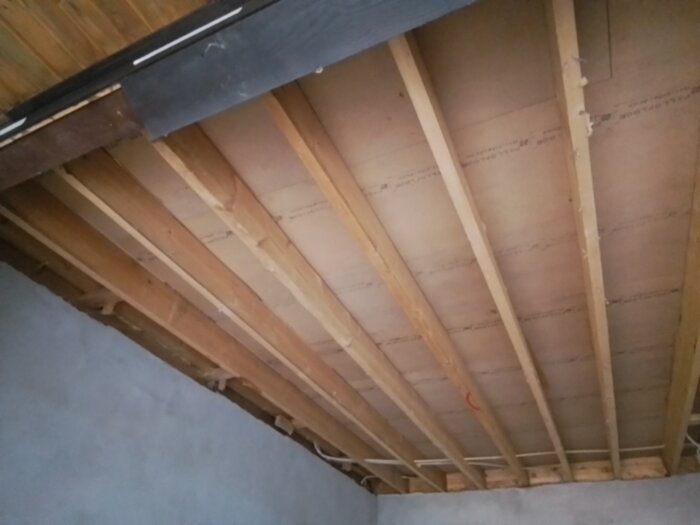
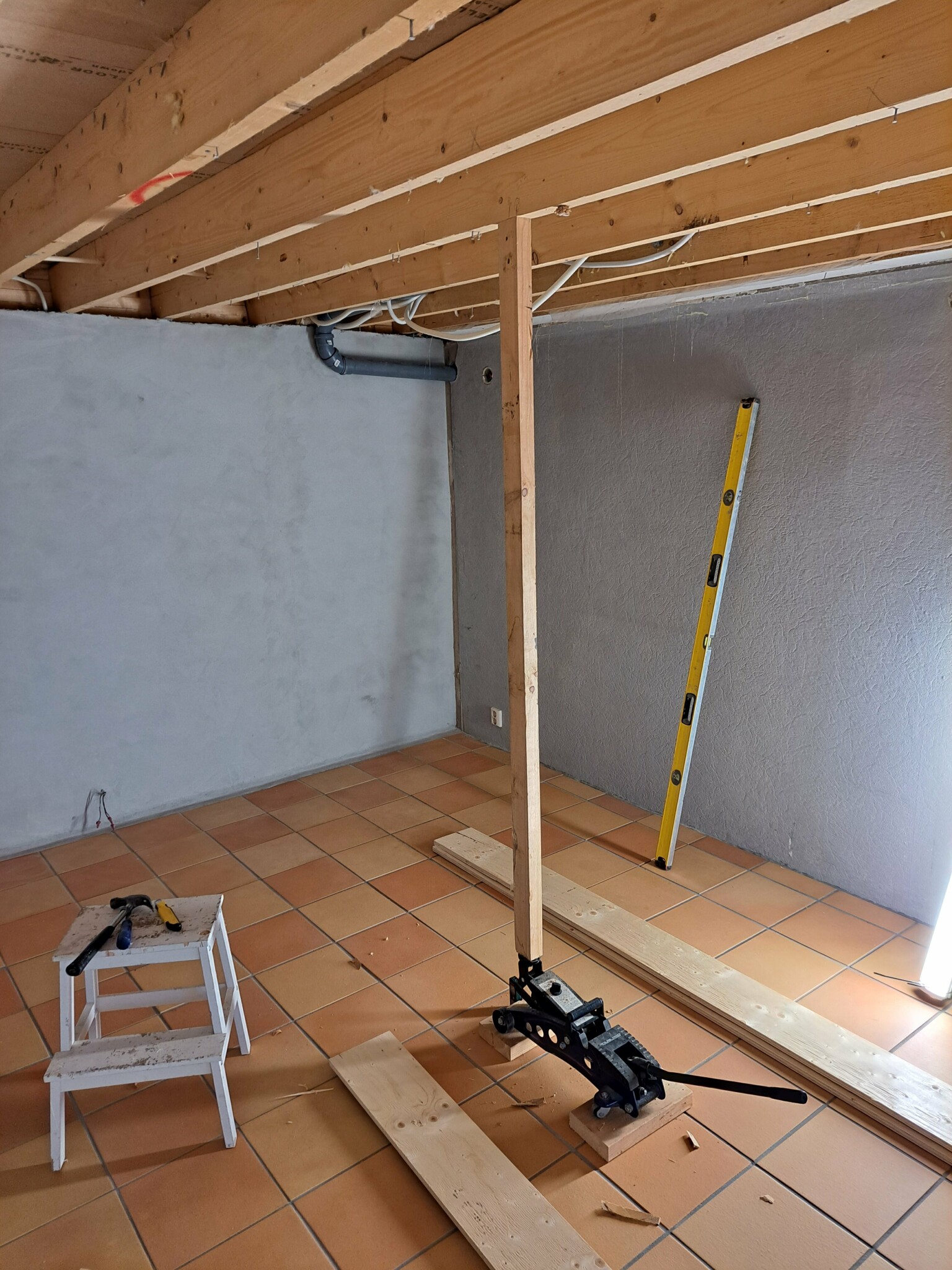
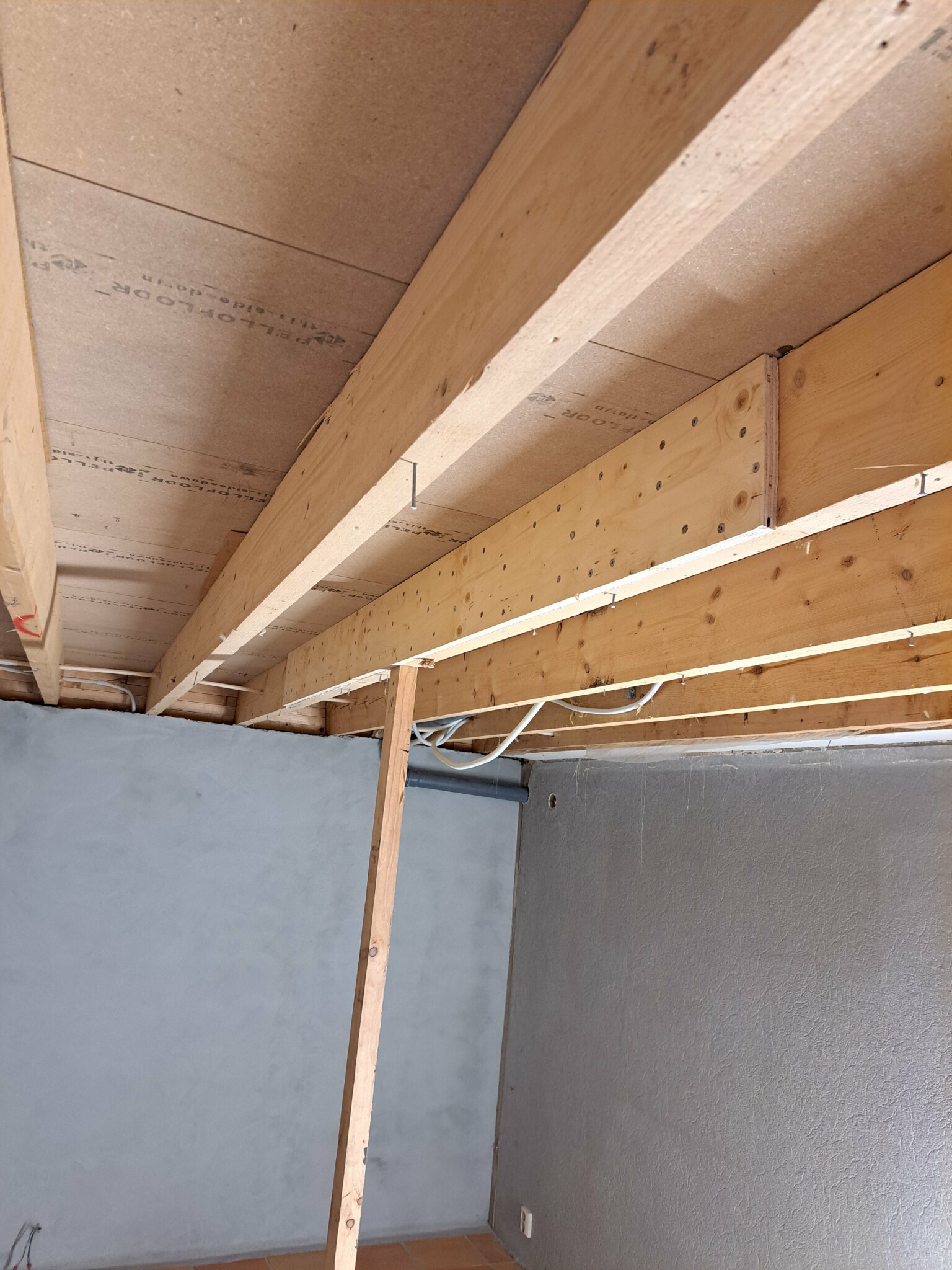
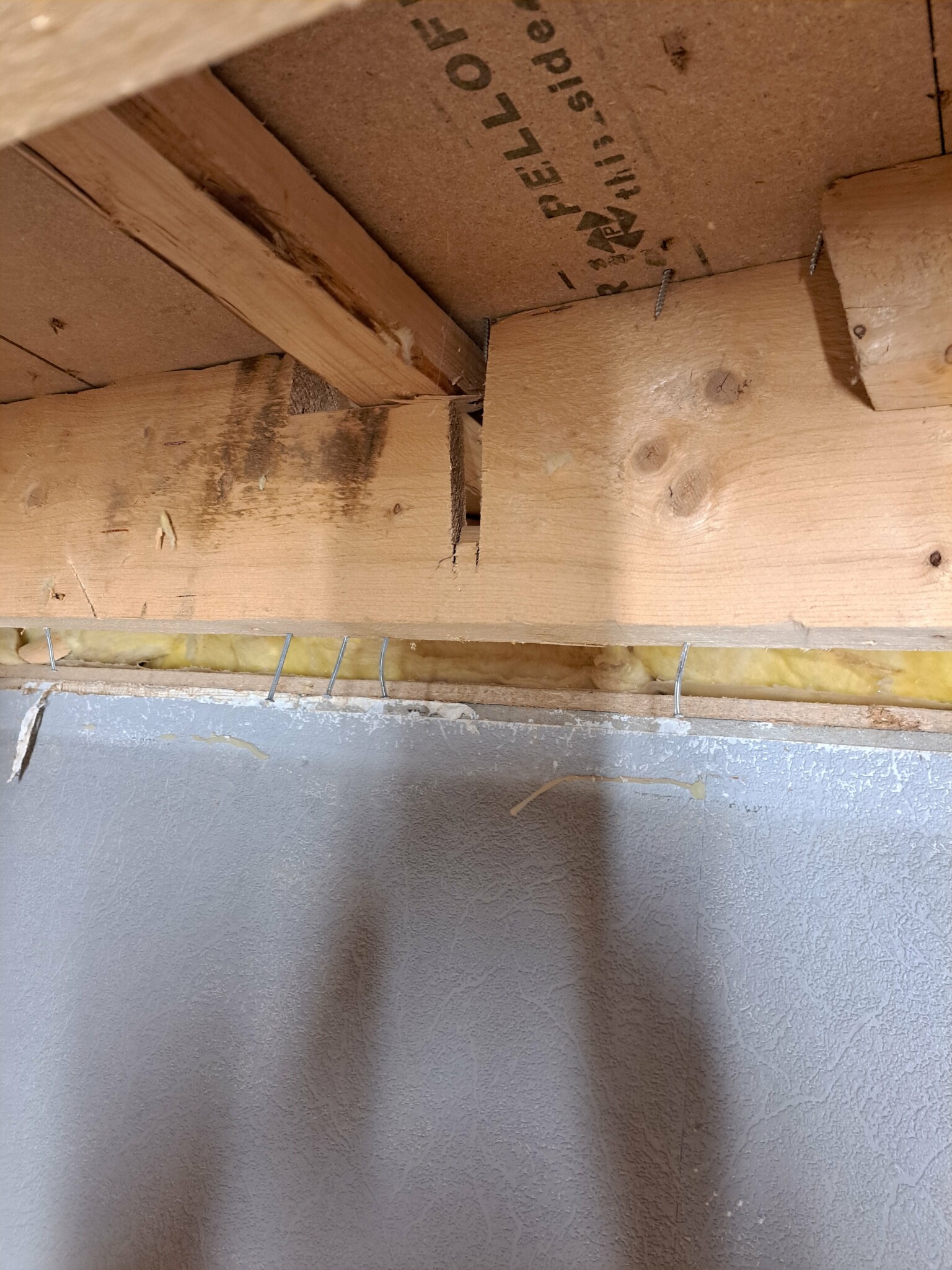
I have a floor structure that needs reinforcement, it is 45x195 and the span is 4900, cc is 400.
Can these be cut in the middle and attached up against something like two laminated 45x195?
I have a floor structure that needs to be reinforced, it is 45x195 and the span is 4900, cc is 400.
Can these be cut in the middle and attached to something like two glued 45 x195?
[image]
Cross bracing with two rows will strengthen well..
Yes simpler, but there will be no reinforcement, I want less flex.
I may have misunderstood what you mean by cutting off, but what is the difference between cutting and removing 90 mm from the existing ones and then screwing them into the new one compared to cutting the new one and screwing it into the existing ones? I know which one is easier, but do you get any difference in flex between the two options?
I may have misunderstood what you mean by cutting off, but what is the difference between trimming and cutting off 90 mm from the existing ones and then screwing them onto the new one compared to trimming the new one and screwing it onto the existing ones? I know which one is easier, but do you get any difference in deflection between the two options?
If I set double beams whole, I fasten them on each side, the span on them becomes about 3500 mm.
Had some give and there was rattling in the cupboards. Put a support under some of the beams to get tension, then took 45X145 which was pressed up against the floor and glued and screwed on the side and clamped tightly with clamps before screwing. The support was left in place overnight so the glue could dry.
Had the same with sagging and it rattled in the cabinets. Placed a support under some of the beams to create tension, then took a 45X145 that was pressed up against the floor and glued and screwed on the side and clamped with clamps to stay tight before screwing. The support was left overnight so the glue could dry.
Hi
Ok, I'll try to glue and screw a 45x195
and then check how many I will double.
You should place a support between the floor and the joist and tighten by using a wedge that tightens. This is called pre-tensioning before the reinforcement is done. It acts as a small lift of the joist and will sink a few mm after the support is removed, but will then have a slight upward lifting force.
You should place a support between the floor and the joist and tighten using a wedge to add tension. This is called pre-stressing before the reinforcement is done. It's like giving a small lift to the joist and it will sink a few mm after the support is removed, but it will then have a slight upward lifting force.
Hi
Lifting with a jack, and screw-gluing 18mm thick plywood, we'll see if it did anything
This is how I would have solved it.
2 rows of diagonal bracing
Glued and screwed a horizontal 45*70 on the underside.
Nailed sparse on the underside, cc300
With the beams in the ceiling so close together, you should stretch a couple on the side as well and then rearrange the braces, so you get a lift over a larger area; otherwise, it might only be on that one and the others might hold back a bit on the intended lift. It could result in slightly worse pre-tensioning on the one you reinforce.
With the beams so close together in the ceiling, you should tension a couple on the side as well and then relocate the braces, so you get a lift over a larger area. Otherwise, it might just be on that one and the others might hold back a bit on the lift that should be. It might result in slightly worse pre-tensioning on the one you reinforce.
Hi
Planning to rent a shoring post tomorrow to lift the rest, and then see how it goes, possibly cross bracing later.
Yep, to create tension, the floor structure should have a hump in the middle and be fixed at all ends. This is done with bridges; when building a concrete bridge, pipes are cast into it, and several stainless steel cables are placed inside the pipes. Once the bridge is completed, the cables are tensioned with hydraulics, causing the bridge to start moving downward. The bridge’s design makes it want to lift then, but it cannot, and the tension remains upwards, allowing the bridge to withstand high loads without sagging. The issue with a bridge breaking is that it begins to flex up and down, which causes microcracks throughout the structure. It won’t collapse immediately, but over the years, it loses its load-bearing capacity.
Vi vill skicka notiser för ämnen du bevakar och händelser som berör dig.