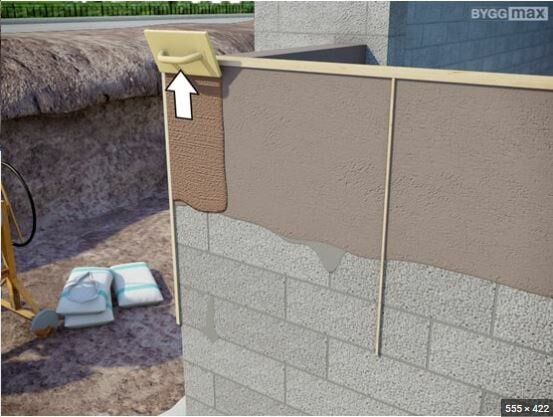
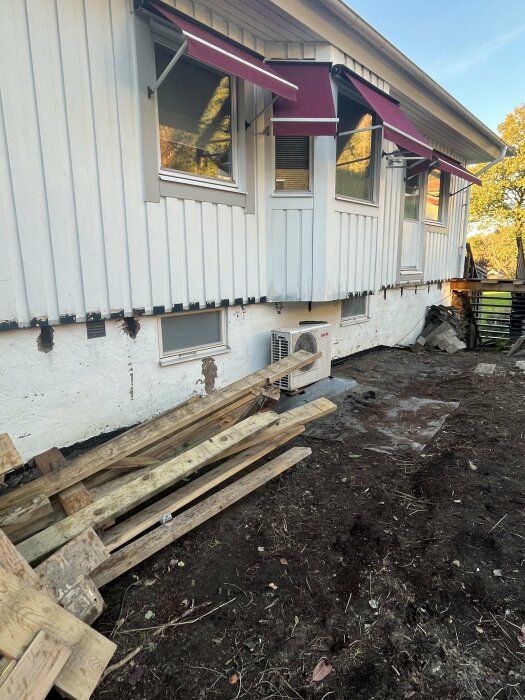
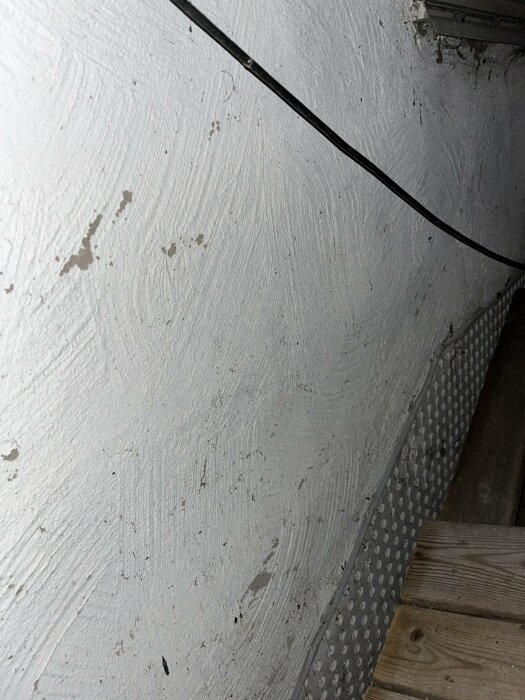
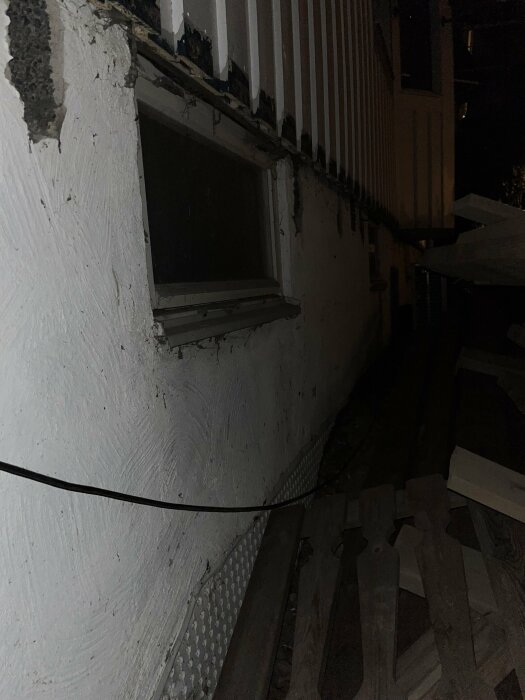
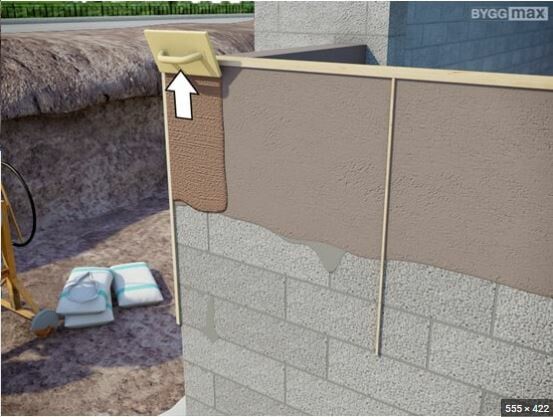
I have a split-level house where we have just demolished a deck, and now the concrete wall has become visible, and we're planning to restore the holes in it. When I start poking at the wall, I notice that the paint flakes off easily, and even the plaster seems a bit loose in places. What would you do to restore this? Just filling the holes and repainting doesn't quite feel right, does it? My thought was to replaster the entire wall with a nice plaster mix. I interpret that as attaching an elongated spacer to the wall and using this as a backing when scraping off the excess plaster. Should I also attach a mesh before that, and what do you use as spacers to ensure a layer of plaster that is even?
What will you have instead of a deck, something directly on the ground? Is there any value in making the holes usable for a new deck in the future? I would have added some C-puts with a discreet marker so you can reopen the holes again.
I have a hillside house where we just tore down a deck and now the concrete wall has become visible and needs to restore holes in it. When I start to poke at the wall, I notice that the paint flakes off easily and even the plaster seems to be a bit loose in some places. What would you do to restore this? Just filling the holes and repainting may not feel ideal, right? My idea was to replaster the entire wall with some fine plaster mixture. I interpret it as attaching a long spacer to the wall and using it as a brace when scraping off excess plaster. Should I also attach mesh first and what do you use as spacers to have as a brace so there's a layer of plaster that is even?
[image]
[image][image][image]
Hi,
It's a washed surface on the plaster, towards the ground plaster mortar B is the lowest class that can be used.
Just knock off the loose parts and water the surface, prime with an A mortar and then wash with a B mortar, then you can't see what color it is without taking a piece of the plaster with color to Brukspecialisten or an equivalent store, and they will assist you.
No, you must cut everything away then, better to renovate as I suggested.
Painting should be done to protect the foundation.
But not with silicate, instead with foundation paint.