
24,065 views ·
7 replies
24k views
7 replies
How to make plaster adhere to smooth concrete?
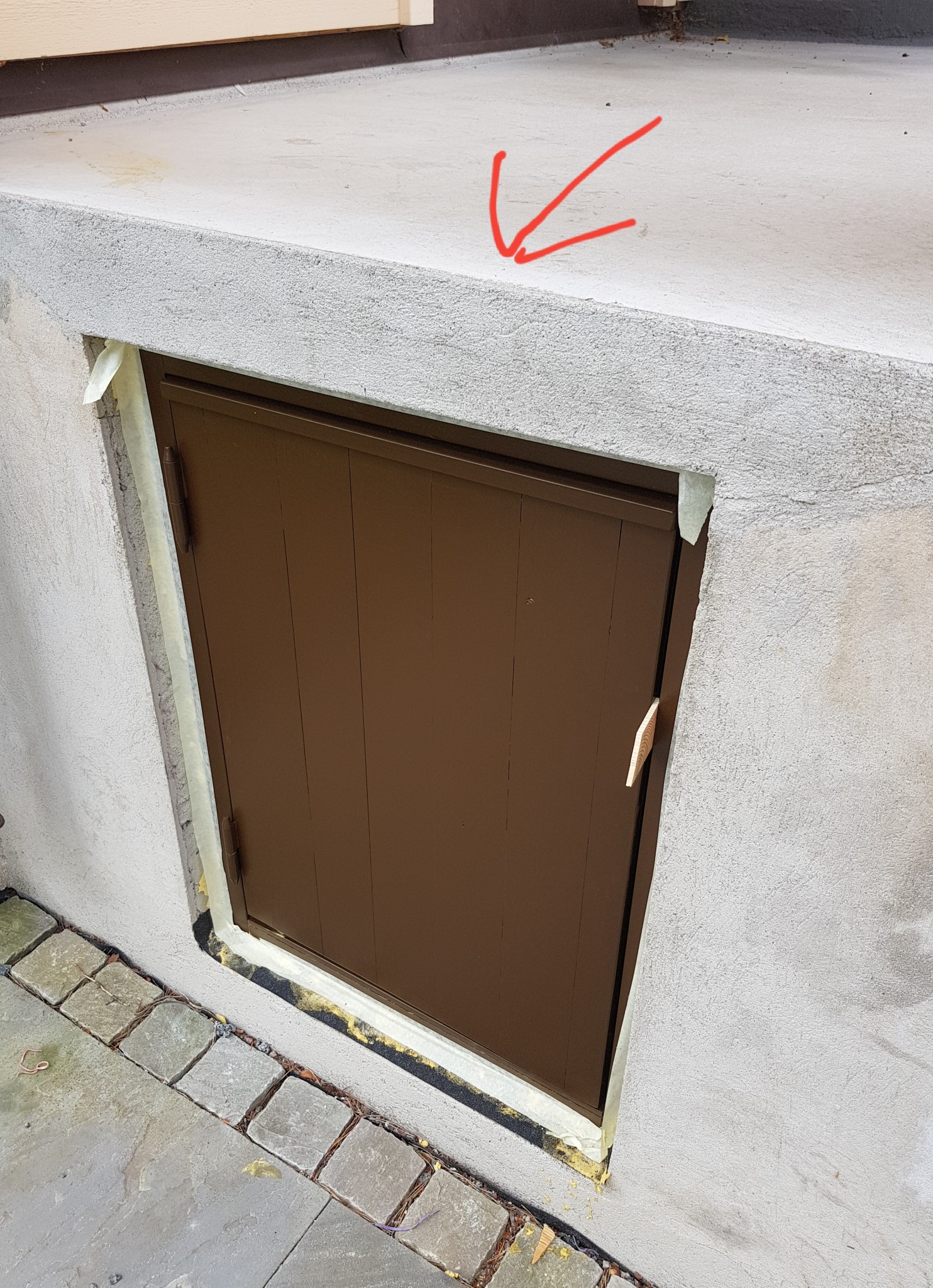
I have a concrete slab cast on a 1m high base of leca. The slab is in front of the front door.
I am going to build up for decking on the slab. But on one side of the slab, the concrete is so smooth that the plaster won't stick, despite attempts to chisel small grooves beforehand.
As you can see, it's just a "strip" about 10 cm x 1m.
How can we make the plaster adhere without having to use mesh? Is a harder (A) mortar better, or can you simply glue something with adhesive on the concrete before plastering?
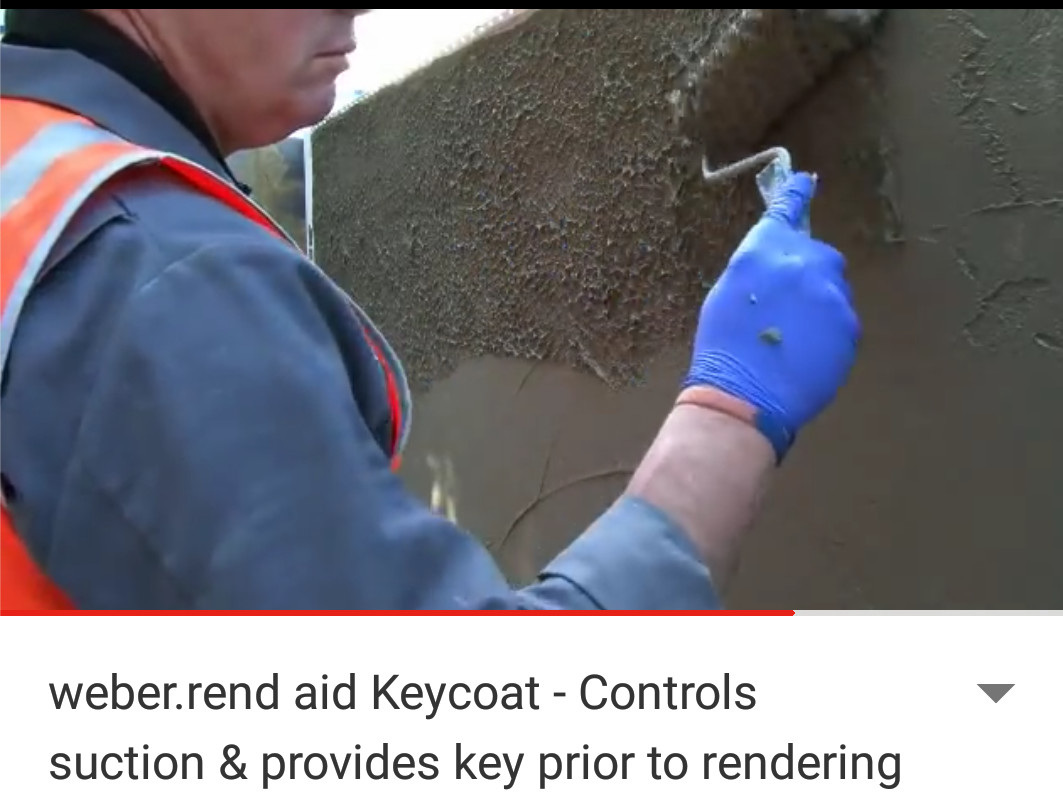
Weber has something called weber.rend aid that you roll on specifically for this (see image from YouTube), but I'm not keen on buying a whole bag for just this little...
I am going to build up for decking on the slab. But on one side of the slab, the concrete is so smooth that the plaster won't stick, despite attempts to chisel small grooves beforehand.
As you can see, it's just a "strip" about 10 cm x 1m.
How can we make the plaster adhere without having to use mesh? Is a harder (A) mortar better, or can you simply glue something with adhesive on the concrete before plastering?
Weber has something called weber.rend aid that you roll on specifically for this (see image from YouTube), but I'm not keen on buying a whole bag for just this little...

have plastered a basement, so that is the experience I have, i.e. limited.
Where I had difficulty adhering the plaster, I mixed a gruel of water and plaster mortar.
Slabbed it on with a brush and let it dry/set. Then I plastered as usual. It seems to be holding up well so far.
Where I had difficulty adhering the plaster, I mixed a gruel of water and plaster mortar.
Slabbed it on with a brush and let it dry/set. Then I plastered as usual. It seems to be holding up well so far.

Member
· Västerbottens län
· 18 051 posts
There is probably some sort of primer to paint on.
Check with Weber.
Protte
Check with Weber.
Protte
Thanks for the response, something that can create a little structure should hold up best, like when they roll on that special product in the Weber film.
Could try applying a slurry with the consistency that FGO describes, but I find it hard to believe it works well on smooth concrete?
Weber (their support is closed for vacation ) also has a pure primer, "Vidhäftaren":
https://www.weber.se/byggkemi/produkter-och-system/byggkemiprodukter/weber-vidhaftare.html
It can be mixed into mortar, for example when repairing concrete. However, one wonders if it really makes the plaster adhere better to a smooth surface.
Could try applying a slurry with the consistency that FGO describes, but I find it hard to believe it works well on smooth concrete?
Weber (their support is closed for vacation
) also has a pure primer, "Vidhäftaren":https://www.weber.se/byggkemi/produkter-och-system/byggkemiprodukter/weber-vidhaftare.html
It can be mixed into mortar, for example when repairing concrete. However, one wonders if it really makes the plaster adhere better to a smooth surface.
Interesting, and now when I was browsing some English pages it seems very common to make a "slurry" of the mortar and mix in some polymer-based additive "SBR", this becomes a primer that you scrape some horizontal grooves into before it sets.
I’ll give it a try, with or without additive then.
I’ll give it a try, with or without additive then.
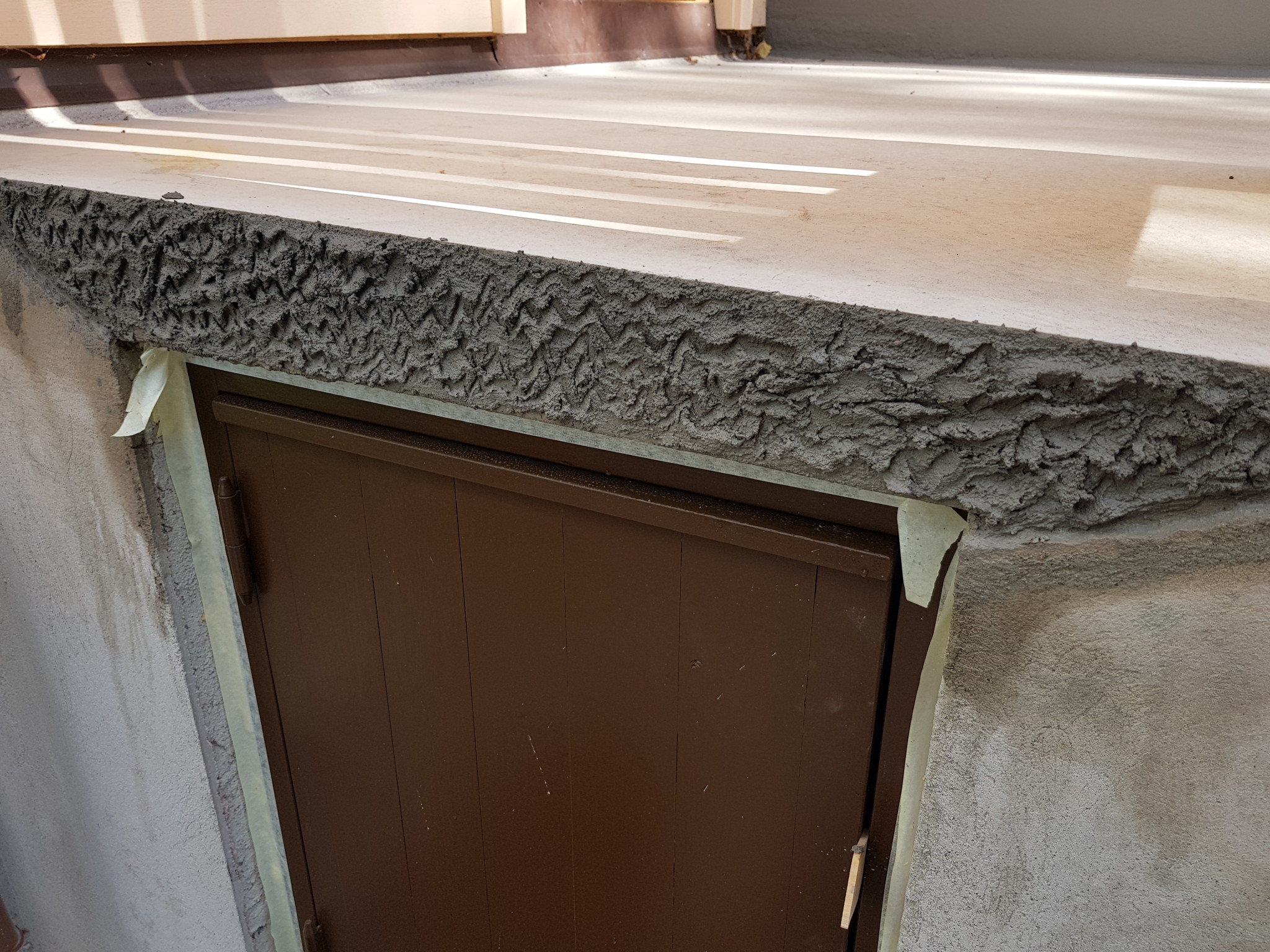
Follow-up: Bought 1L Weber Adhesive for 139. Mix 1:1 with water if used for slurrying/priming. Used A-mortar, consistency sufficiently thick to drag tracks in it. Should adhere extra well to the concrete so it can support 1 cm of C-mortar.
Adhesive can apparently even be used to glue concrete to concrete.
Adhesive can apparently even be used to glue concrete to concrete.
Click here to reply