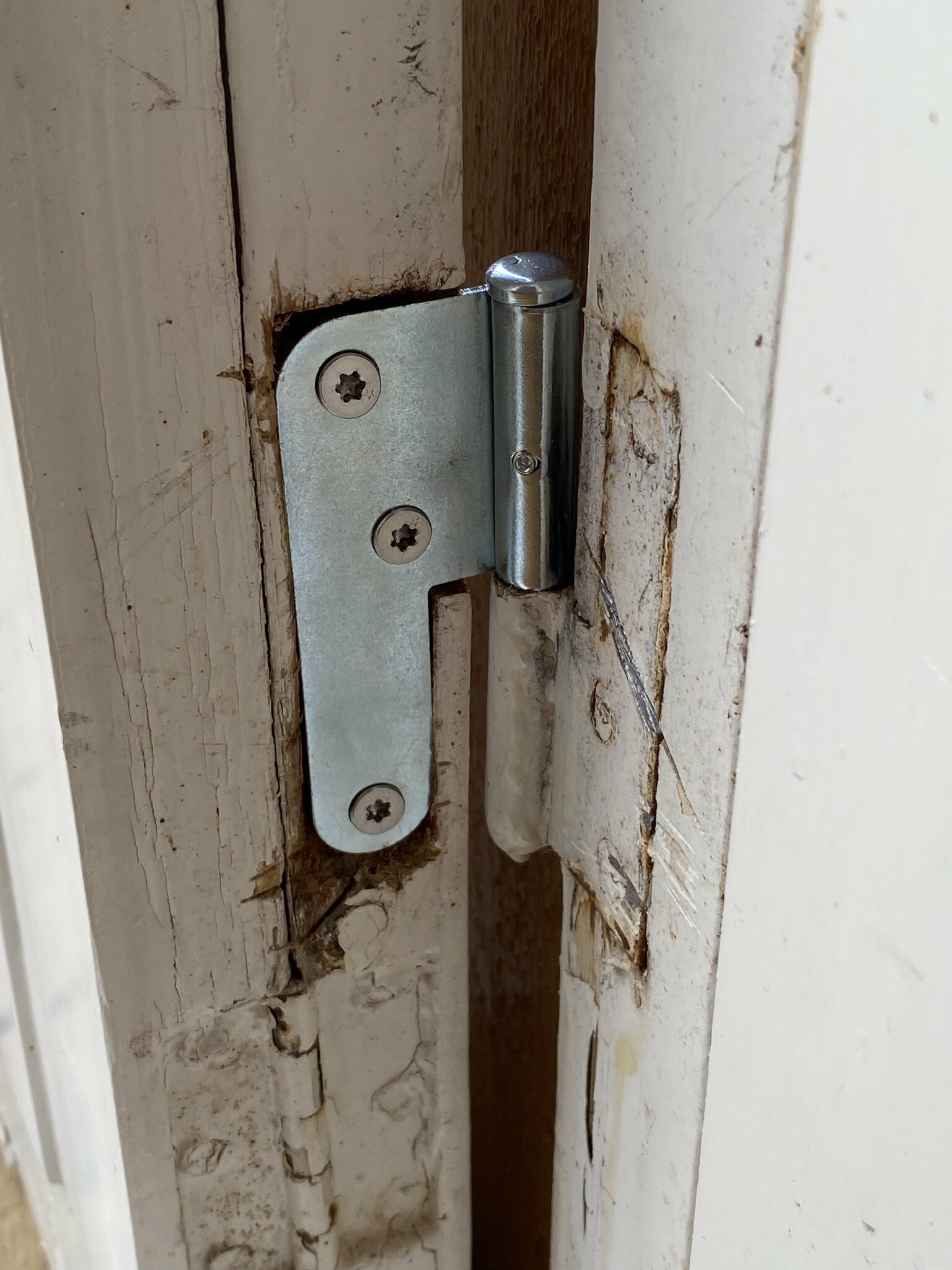
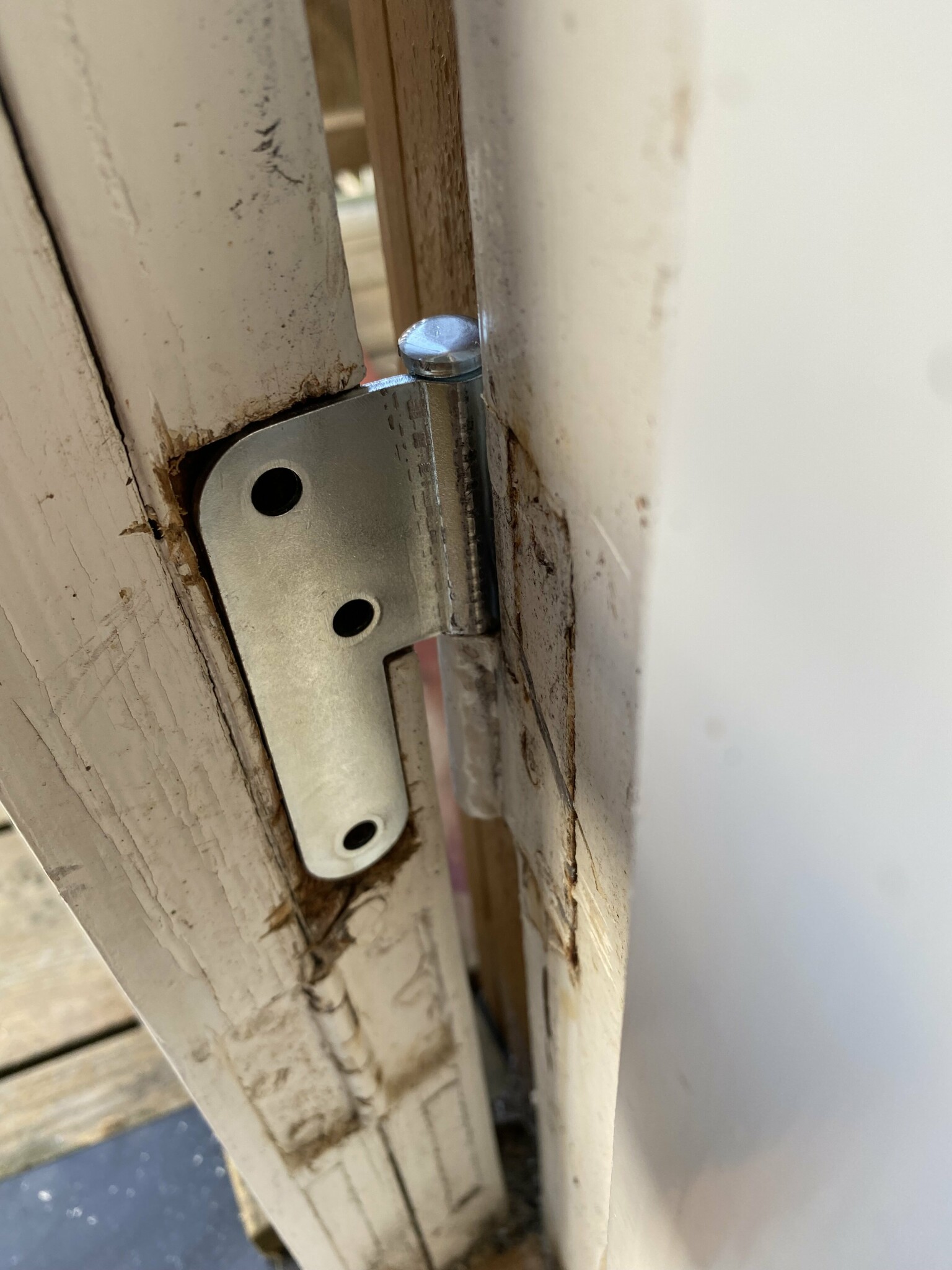
I have replaced one of the fittings on my terrace door. The old one was rusty and the screws broke off and had to be drilled out. Now I’m wondering how I can best attach the new one which ends up in the same hole... I can use thicker and longer screws, that should help, but can I also put something in the old holes and if so, what?
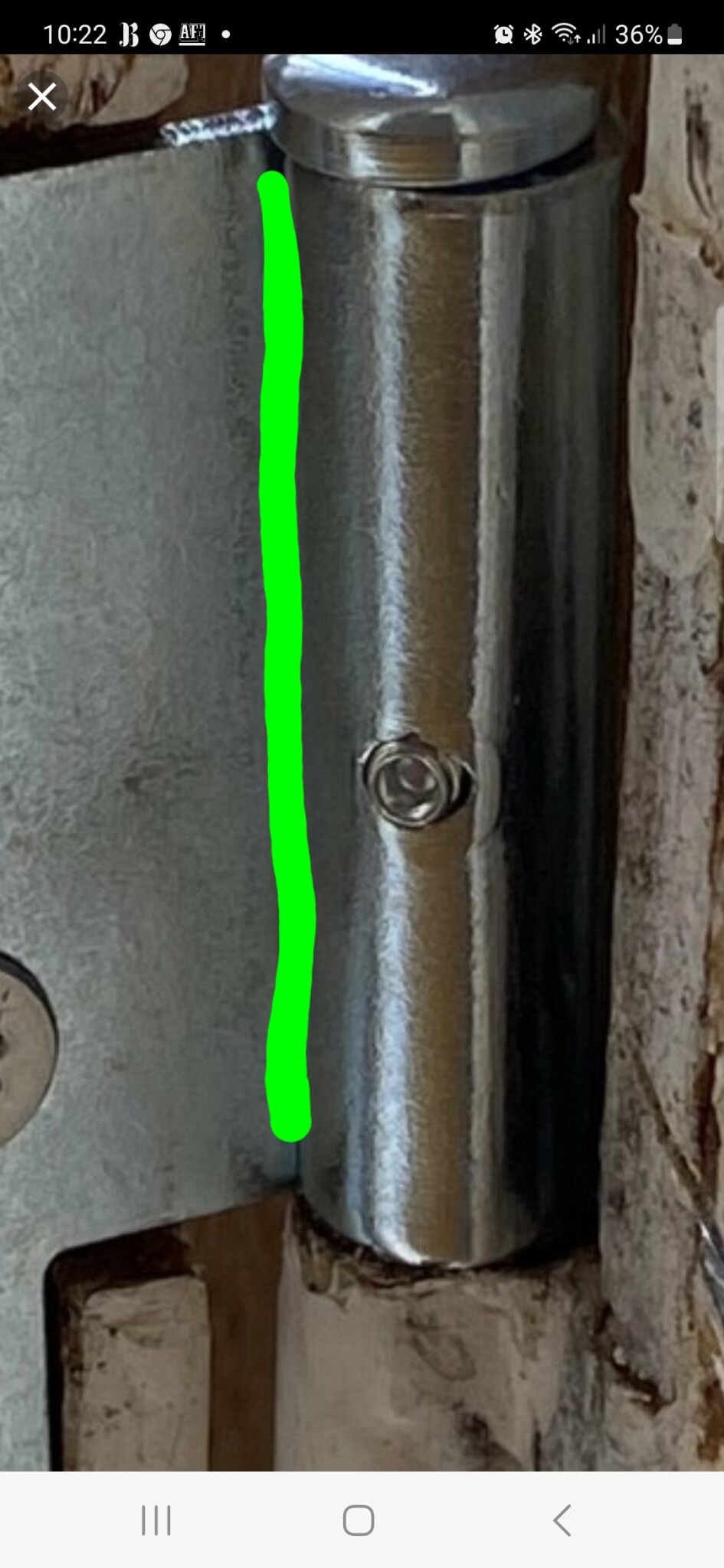
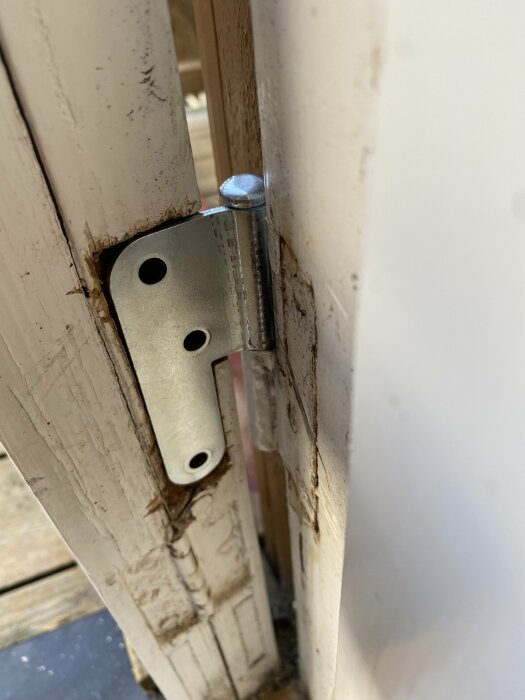
The hinge is for the wrong side, the countersunk holes are meant for countersunk screws.
The screws must be countersunk, otherwise they will interfere with the other part of the hinge and its screws.
If the screws were rusty, the wood closest to the screws is probably bad too. Drill out with a bit large enough so that only fresh wood remains. Glue in wooden plugs and then make new screw holes. Of course, you can cheat with longer screws, but that may result in a poorer outcome.
The hinge is for the wrong side; countersunk holes are meant for countersunk screws.
The screws must be countersunk, otherwise they will hit the other part of the hinge and its screws.
Screws are countersunk. Took the hinge I had and think it will work fairly well?
If you insert countersunk screws from the wrong direction into a countersunk hole and most of the screw head disappears into the hole, then hardly any of the screw will hold the hinge, and there is a risk that the screw head/screw hole will wear down, allowing the screw head to pass through the hole.
The closer the edge of the screw head is to the edge of the hole, the greater the risk that the screw will pass through.
The gap between the door leaf and the door frame is usually not many millimeters.
If you install countersunk screws from the wrong side in a countersunk hole and most of the screw head disappears into the hole, almost none of the screw will hold the hinge, and there is a risk that the screw head/screw hole will wear so that the screw head goes through the hole. The closer the edge of the screw head is to the edge of the hole, the greater the risk that the screw will go through.
The gap between the door leaf and the door frame is usually not many millimeters.
But I have checked that the door closes with the hinges in between. Had to adjust it a bit to close tightly against the other. Can't see that the screws can't be fully countersunk but will report back on how it goes.
However, checked that the door closes properly with hinges in between. But had to adjust it a bit to close tightly against the other. Can't see that the screws can't be fully countersunk but will report how
Ssepani said:
However, checked that the door closes properly with hinges in between. But had to adjust it a bit to close tightly against the other. Can't see that the screws can't be fully countersunk but will report how it goes
You were absolutely right, had to redo it with a newly bought hinge... longer screws fit perfectly... also beveled the threshold which is probably what broke the old one...


Demmpa said:
If you install countersunk screws from the wrong side in a countersunk hole and most of the screw head disappears into the hole, almost none of the screw will hold the hinge, and there is a risk that the screw head/screw hole will wear so that the screw head goes through the hole. The closer the edge of the screw head is to the edge of the hole, the greater the risk that the screw will go through.