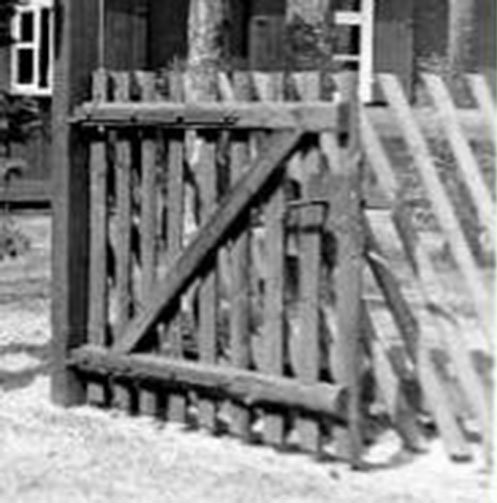
I have long considered wattle fences but at the same time been skeptical of the coarse appearance. Then I came across a variant that was something in between a wattle fence and a modern fence which I liked.
So now I'm thinking of sketching a drawing in SketchUp to be able to plan the cost of building this. I'm considering pre-split 6-7cm poles. Unsure what material to use for the actual "frame."
But, how far apart are posts usually placed and what height is typical for ranch fences around daycare centers and similar, 130?
I'm the one who likes standards. I think that municipal operations follow prescribed regulations and that it's wise to emulate them. There are farm fences everywhere, and it might be good to go with the most common ones so you can use their accessories/gates without it being odd.
I feel like I asked this question a bit too early.
I should have studied more fence pictures and decided how the posts and everything should look as that is probably quite crucial in the stabilization issue.
If you have such fences nearby, take a look at them and measure, feel how sturdy they are. It clearly depends on what is in the ground to anchor the posts. Distance is about 1.5 to 2 meters, a gate that's about 1-1.2 meters works quite well. The height is about 1.10 up but normally it's about 80 cm. I can't say if you need planning permission, but I seem to remember it's a maximum of 1.2 m without.
You see, there are many pitfalls you might fall into through various authorities' regulations and decisions as they say. If you have a corner property with streets next to it, it's even worse with the heights of a fence or hedge.
Hope you find someone who can suit your case, don't give up.
The most common problem with most wooden fences is that the end grain is unprotected upwards. This significantly limits the lifespan. Try to find a design where a cap provides protection.
Click here to reply
Vi vill skicka notiser för ämnen du bevakar och händelser som berör dig.