
1,507 views ·
6 replies
2k views
6 replies
How do I get the extra space straight?
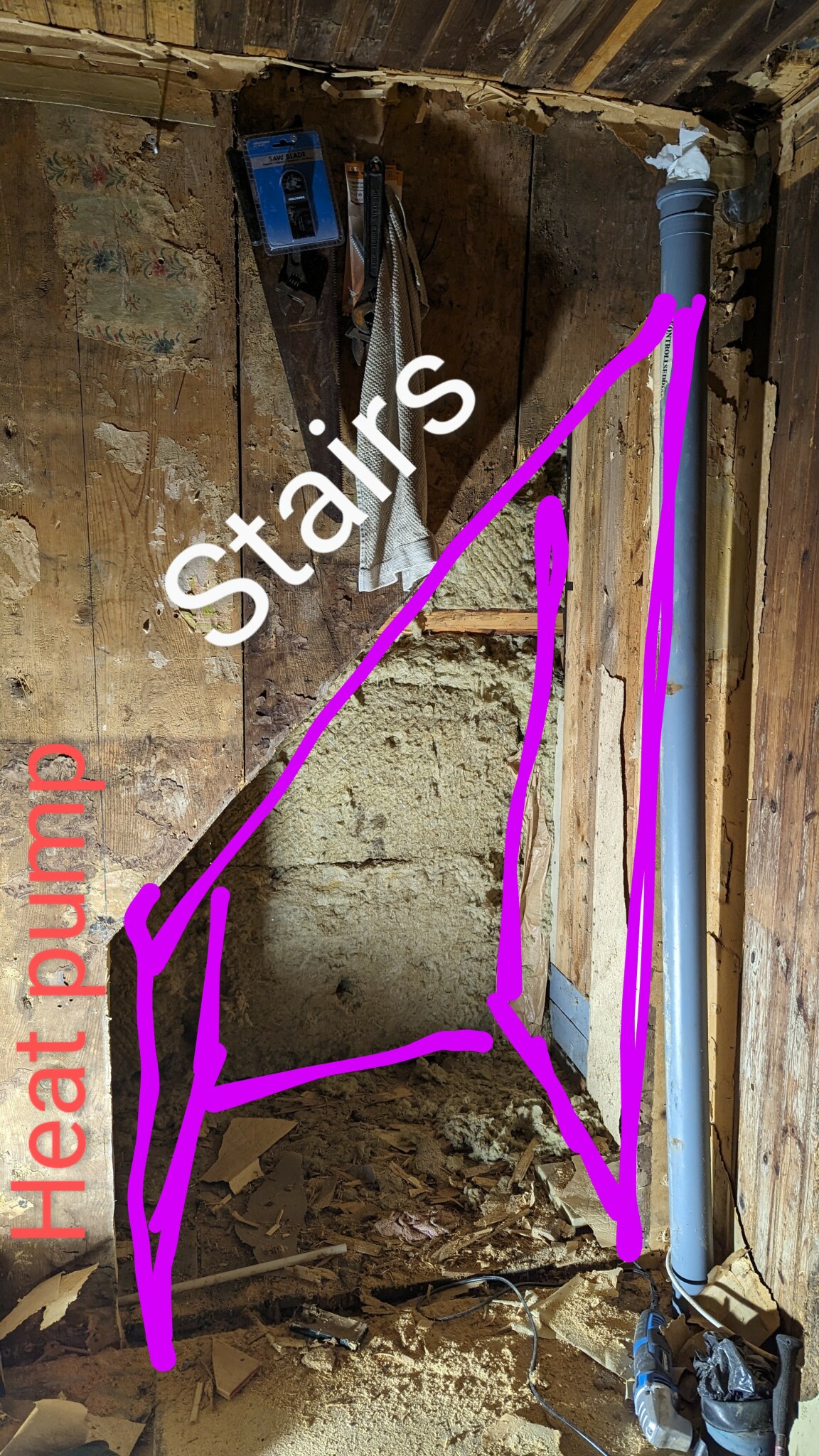
I am renovating the old part of our house, and here there was previously a pantry that became a bathroom before we moved in.
Now I will install an air-water pump on the left, move the hydropressor and more to the new space where I've opened up under the stairs. That hole is made by me
How do I make the purple part framed so that it is straight?
I'm considering putting an OSB on the rear part (furthest from the camera) first and framing on it, but how do I know where they should be in relation to the opening?
Can I use a cross laser somehow?
Now I will install an air-water pump on the left, move the hydropressor and more to the new space where I've opened up under the stairs. That hole is made by me
How do I make the purple part framed so that it is straight?
I'm considering putting an OSB on the rear part (furthest from the camera) first and framing on it, but how do I know where they should be in relation to the opening?
Can I use a cross laser somehow?
S
sinuslinus
Träskalle
· Östergötlands län
· 5 720 posts
sinuslinus
Träskalle
- Östergötlands län
- 5,720 posts
The Pythagorean theorem to achieve 90 degrees. Carpenters typically use a 3:4:5 variant to lay out right angles. One side 30 cm, the other side 40 cm, and the diagonal (hypotenuse) 50 cm.
Doubling the measurements gives 60, 80, and 100.
Doubling the measurements gives 60, 80, and 100.
So, you're thinking simply a large enough angle on the floor to get the lower points straight on the back wall?S sinuslinus said:
Then a spirit level against the front diagonal edge and mark the correct height at the back?
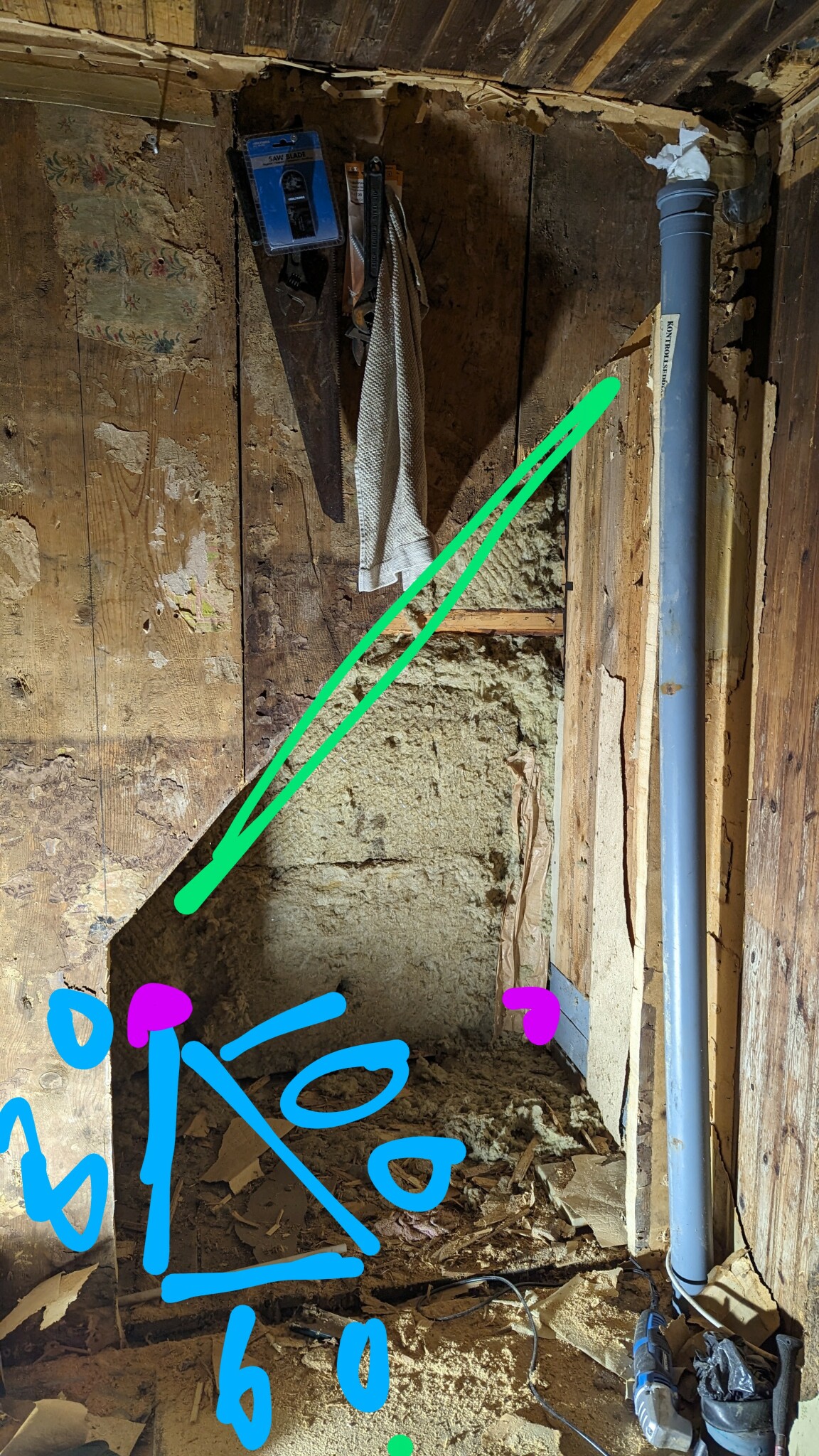
Do I understand you correctly if you want the space to be equally wide at the front as at the back? Or are you aiming for a 90° angle on the studs and the front edge?
You'll get pretty far with a spirit level and a ruler.
Are you planning to insulate and need a stud frame, or what is the idea?
You'll get pretty far with a spirit level and a ruler.
Are you planning to insulate and need a stud frame, or what is the idea?
No, you understand exactly, it should be the same size in every way at the back as in the front. It's the outer wall at the back, so I don't intend to insulate anything there, thinking about insulating between the sloped ceiling and the stairs mostly for possible soundproofing. I looked into cellulose loose-fill insulation to press in by hand through some discreet hatch.Semiproffset said:
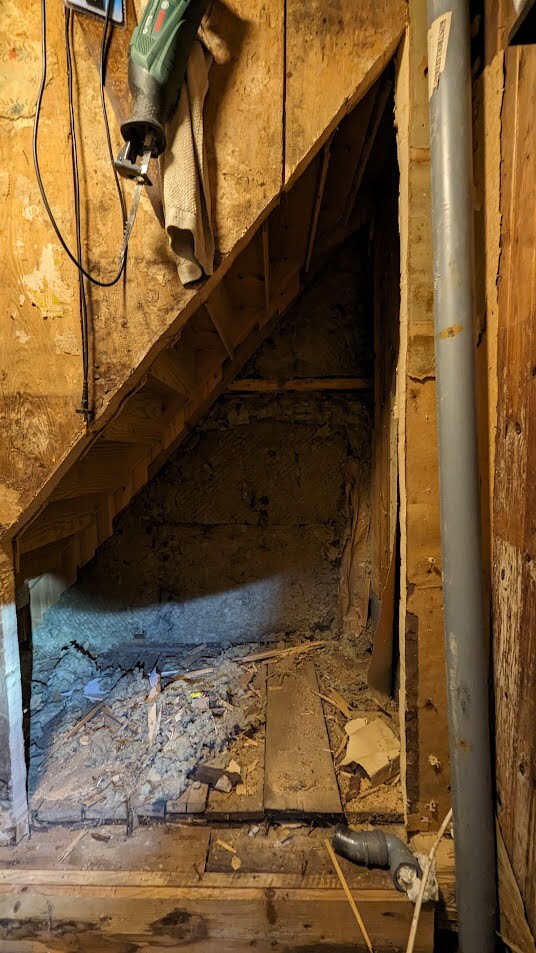
Here's a better picture I took today... thinking of placing a 45x95 horizontally around the nearest hole and letting it protrude 30mm so I can later align the rest of the wall straight to that level. The floor will of course be removed and re-insulated, and a vinyl flooring will be laid throughout since it will become a "boiler room" and utility toilet.
The question is how to construct the "walls" in this alcove or whatever you want to call it... Should I try to make an identical construction on the back wall and create a framework between them to attach OSB & drywall, or what suggestions do you have?
The question is how to construct the "walls" in this alcove or whatever you want to call it... Should I try to make an identical construction on the back wall and create a framework between them to attach OSB & drywall, or what suggestions do you have?

Click here to reply