1,526 views ·
19 replies
2k views
19 replies
How do I fix a bad drywall?
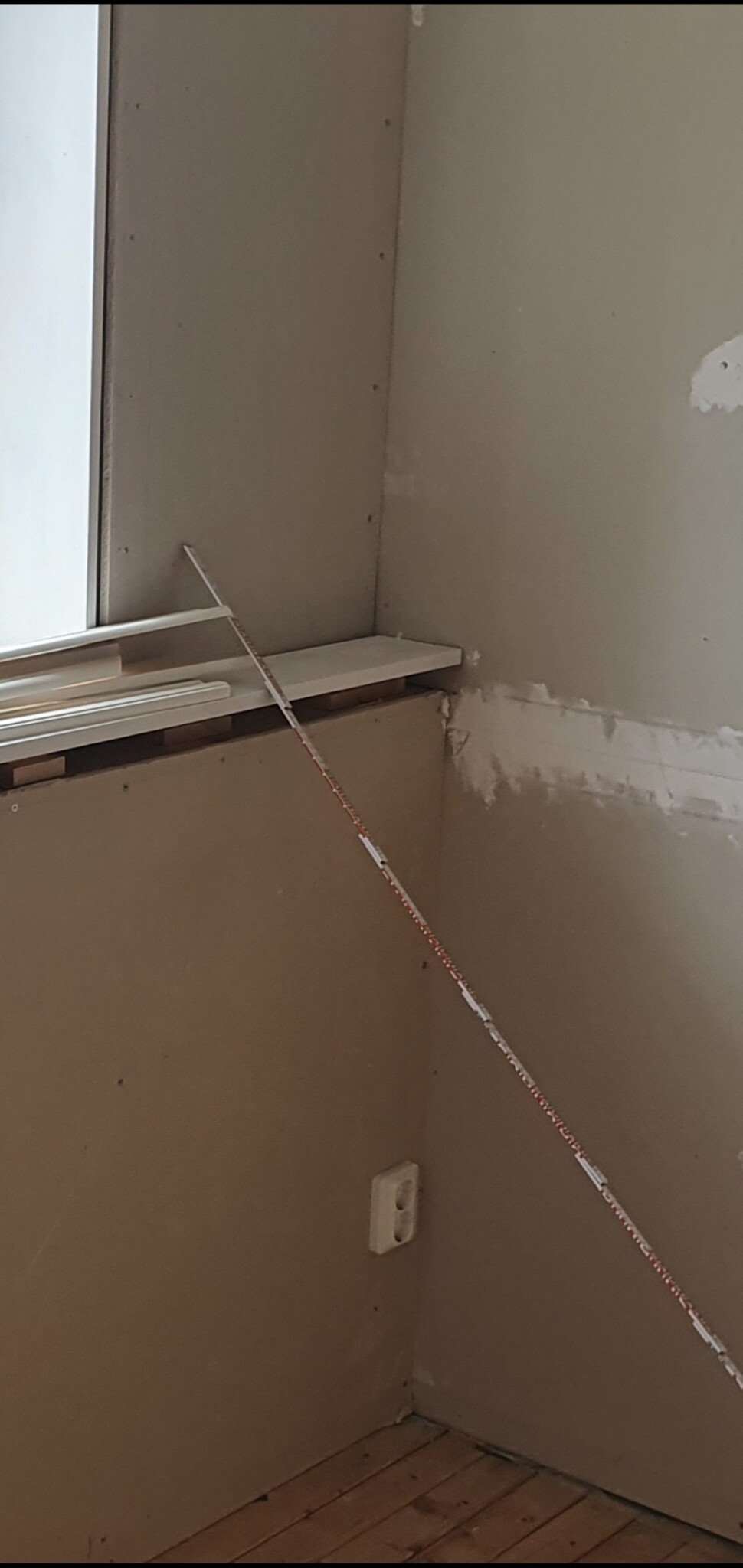
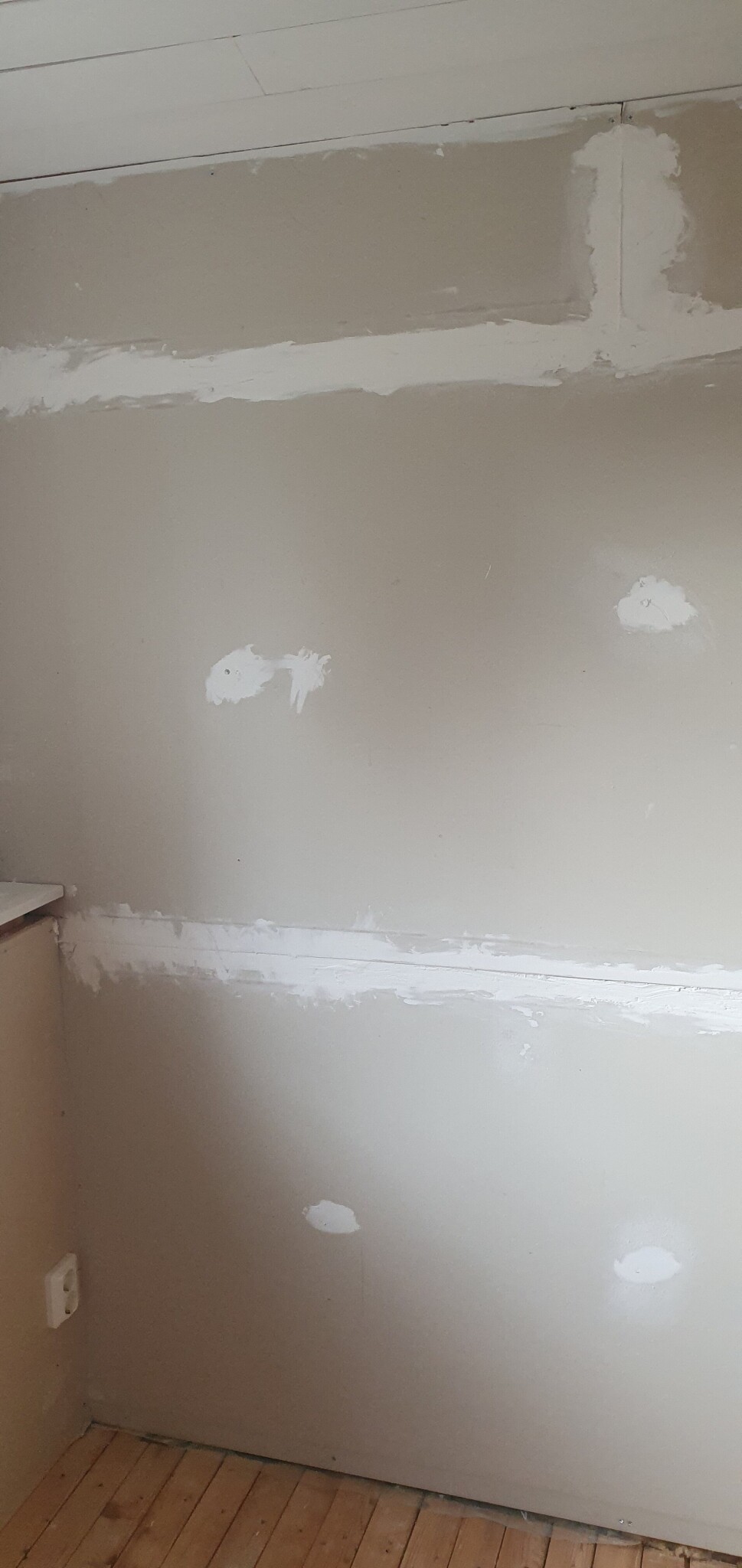
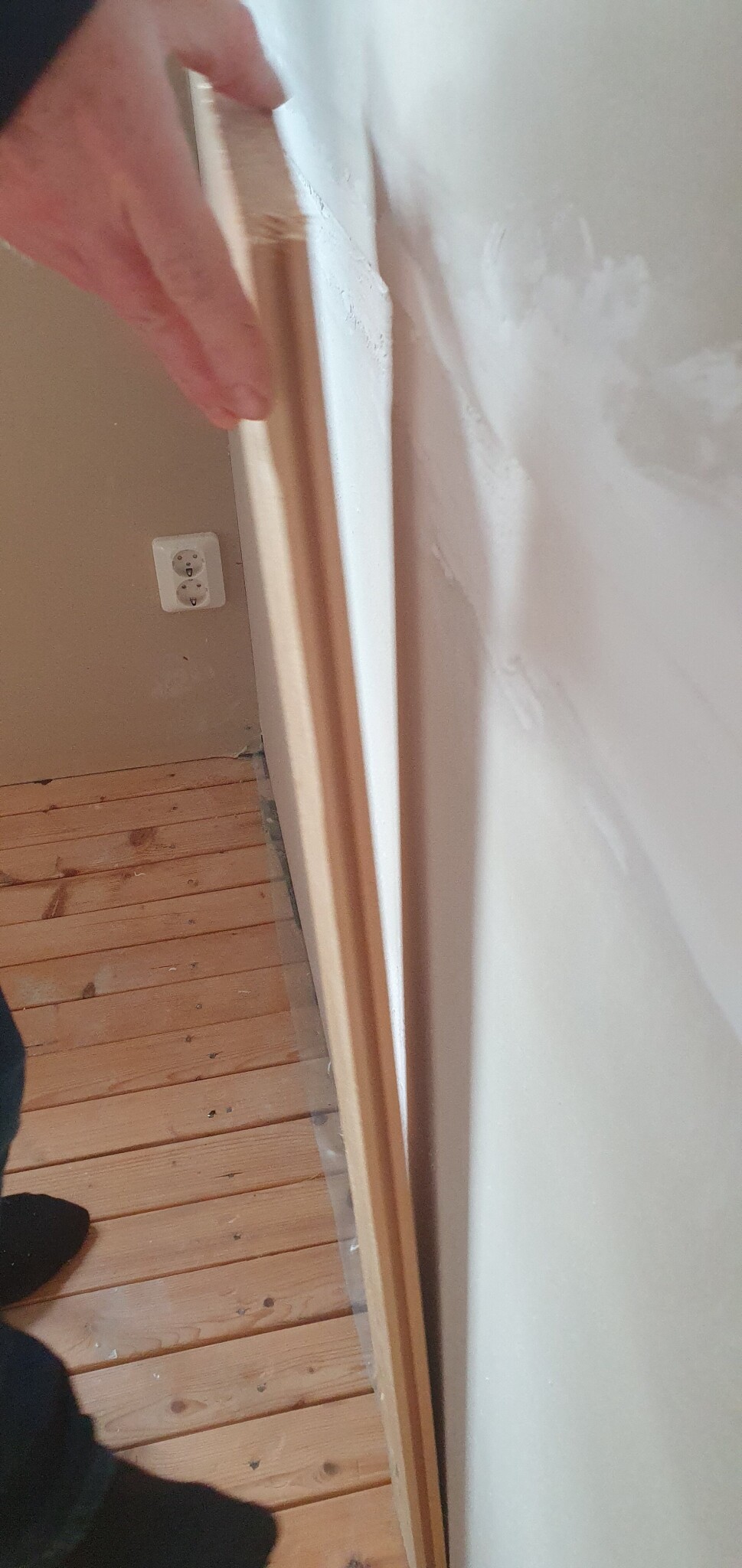
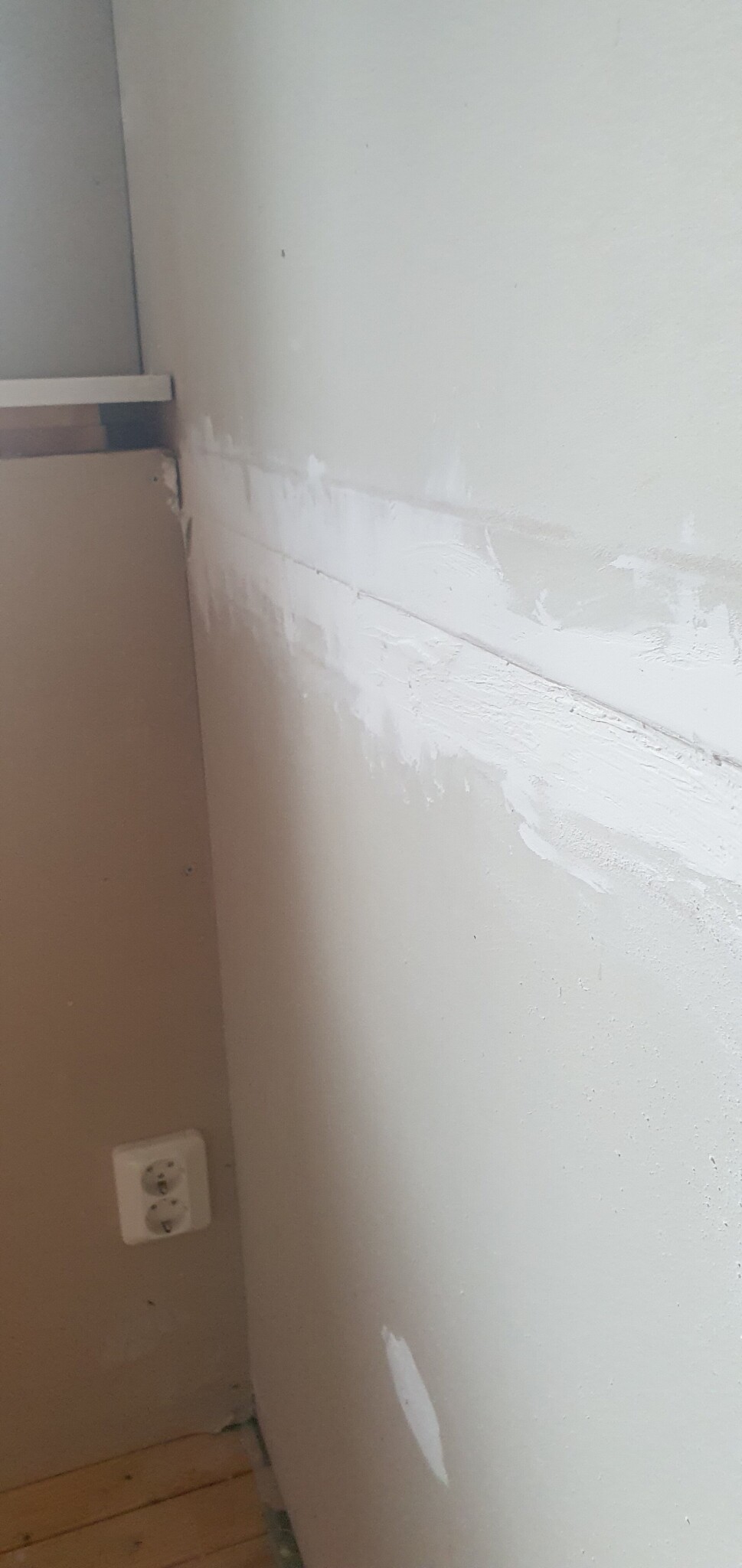
We inherited a wall with plasterboards attached to a couple of vertical studs, meaning there's nothing really to screw into at the edges. Do we need to redo it, or can we just plaster/paint/add moldings to hide the ugly parts? There's also a difference in depth between the boards about 95 cm up from the floor, but we plan to have wainscoting/paneling there, so I was thinking that I could make it vertical by using a little thicker construction adhesive under the joint? I understand this isn't "correct," but it would be nice to avoid redoing everything from scratch, as the whole place is of the same slapdash standard. We already have to demolish a lot of things, like breaking up the sparse paneling that someone bizarrely laid as flooring (?!). What do you think I can get away with here most easily?
Hobby carpenter
· Västra Götaland
· 1 496 posts
You might be able to shave off a strip of 45mm and fit in a stud, then put the drywall back and splice, but everything you do will affect the risk of cracks, and as it stands, this is not well done. I'm almost certain you will get cracks in that wall, so I would unscrew it and redo it.
I actually think that the easiest is to tear down and redo. If the groundwork is poor, it takes much longer with the remaining steps.
Replacing some drywall goes pretty quickly, just correcting the current spackle mess probably takes longer…
Replacing some drywall goes pretty quickly, just correcting the current spackle mess probably takes longer…


...it sounds like you're planning to continue with slapdash solutions to the problems. Tear down the drywall, straighten the studs, adjust the stud spacing for drywall, put up the drywall and preferably with a reinforcement board behind it.songforkaren said:

Leaning now towards putting up plywood underneath/instead, such as grooved construction plywood, and then just like renovation gypsum/wallpaper on top and then paint/wallpaper, what do you think?
otherwise there will be a lot of jointing with studs crisscross if you want there to be something to screw into under the plasterboards around.

Smart alek
· östergötland
· 2 814 posts
You have vertical studs?
Insert noggings at the floor and ceiling,
Add OSB and drywall
Insert noggings at the floor and ceiling,
Add OSB and drywall
Funny rule placement😀.
I have plywood with renovation wallpaper and paint. Jointed on the rule and it has worked for 4 years without cracks.
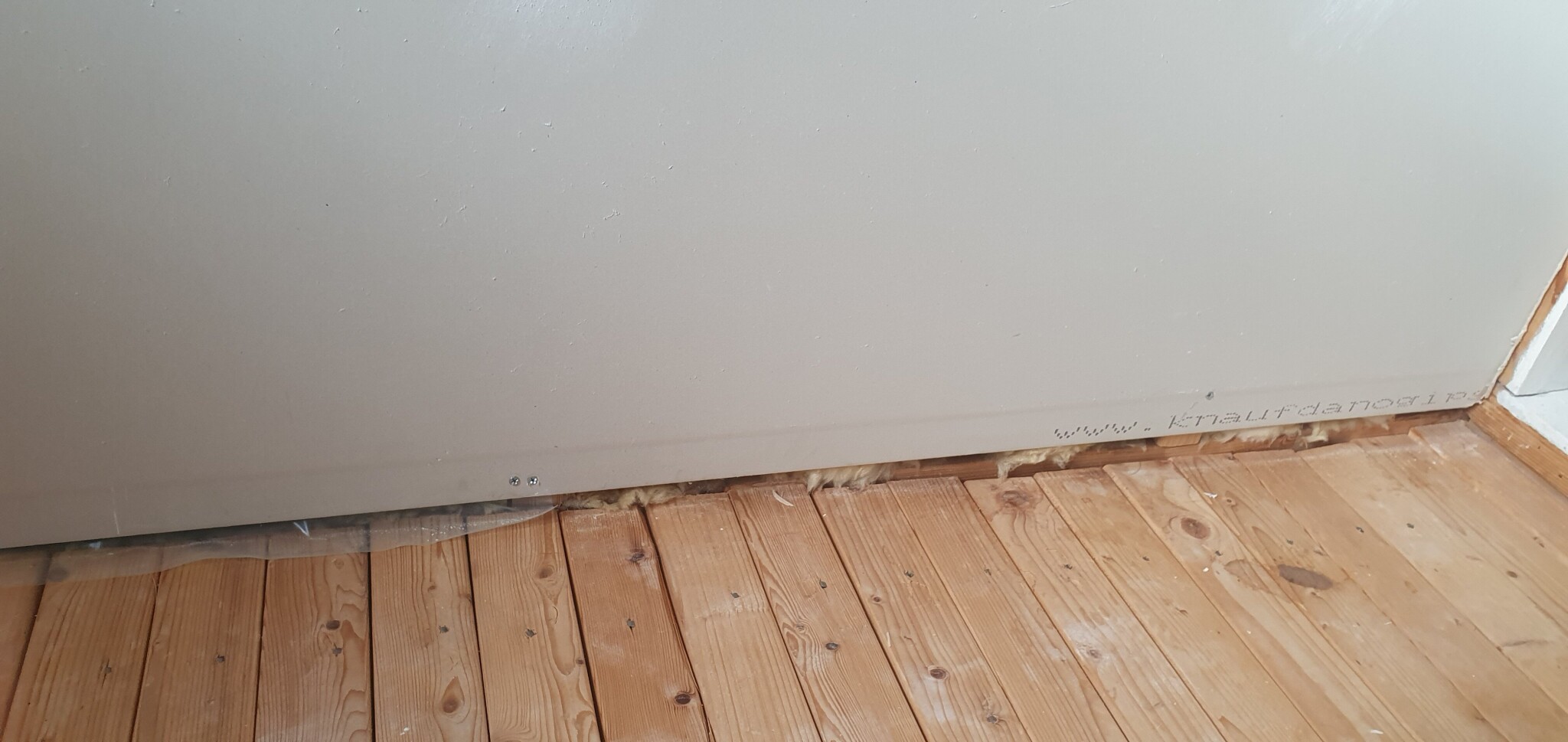
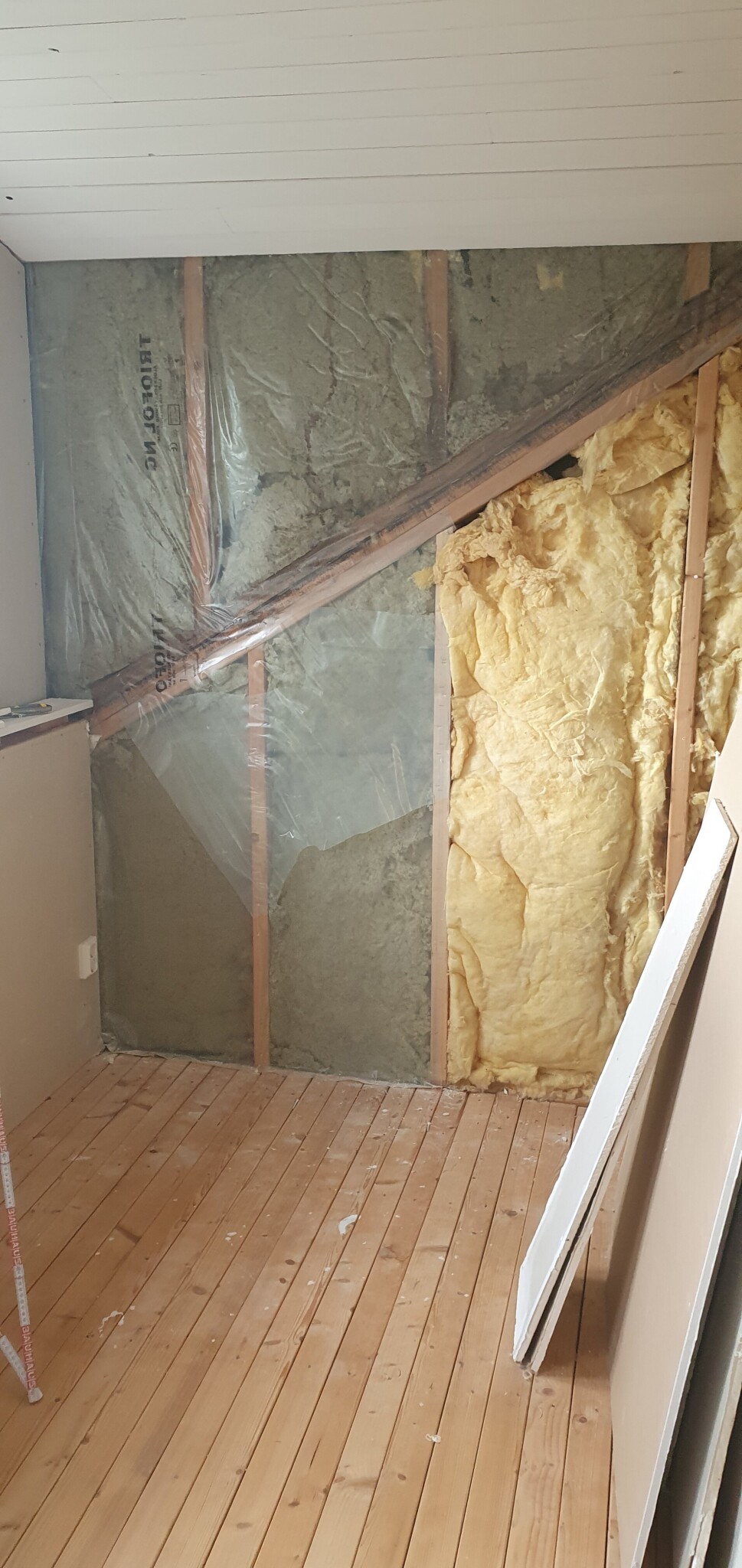
Is it an optical illusion or is there plastic missing on parts of the wall?
I have plywood with renovation wallpaper and paint. Jointed on the rule and it has worked for 4 years without cracks.
Is it an optical illusion or is there plastic missing on parts of the wall?
It becomes a bit problematic when there are no studs around, especially in the corners, it will inevitably crack there if the boards can't be screwed.
Since the plastic is still missing on part of the wall, I would have removed the insulation and installed noggings all around (up to the ceiling and floor) between the studs and against the surrounding walls.
Then you put new plastic on the entire wall. OSB/plywood and finally gypsum. Use regular 13 mm gypsum.
If studs are also missing in the corners behind the walls that haven't been torn down, you can insert a metal profile behind that then rests against the new stud.
Since the plastic is still missing on part of the wall, I would have removed the insulation and installed noggings all around (up to the ceiling and floor) between the studs and against the surrounding walls.
Then you put new plastic on the entire wall. OSB/plywood and finally gypsum. Use regular 13 mm gypsum.
If studs are also missing in the corners behind the walls that haven't been torn down, you can insert a metal profile behind that then rests against the new stud.
Not an optical illusion, I think the plastic is on the part that is the outer wall, the innermost two are against an adjacent room (I guess that's the reason?)M Mellanbarn said:
Smart alek
· östergötland
· 2 814 posts
There is a stud in the corner against the outside, so I managed to screw the gypsum board on the other side of the corner into something, but I will try to put one against it so it becomes a corner, so it's possible to screw the edge there too.mexitegel said:
It becomes a bit problematic when there are no studs around, especially in the corners; it will inevitably crack there if the boards cannot be screwed.
Since the plastic is already missing on part of the wall, I would probably remove the insulation and place noggings all around (up towards the ceiling and floor) between the studs and against the surrounding walls.
Then you put new plastic on the entire wall. OSB/plywood and finally gypsum. Use regular 13 mm gypsum.
If there are also no studs in the corners behind the walls that have not been torn down, you can push a metal profile behind it that then rests against the new stud.